






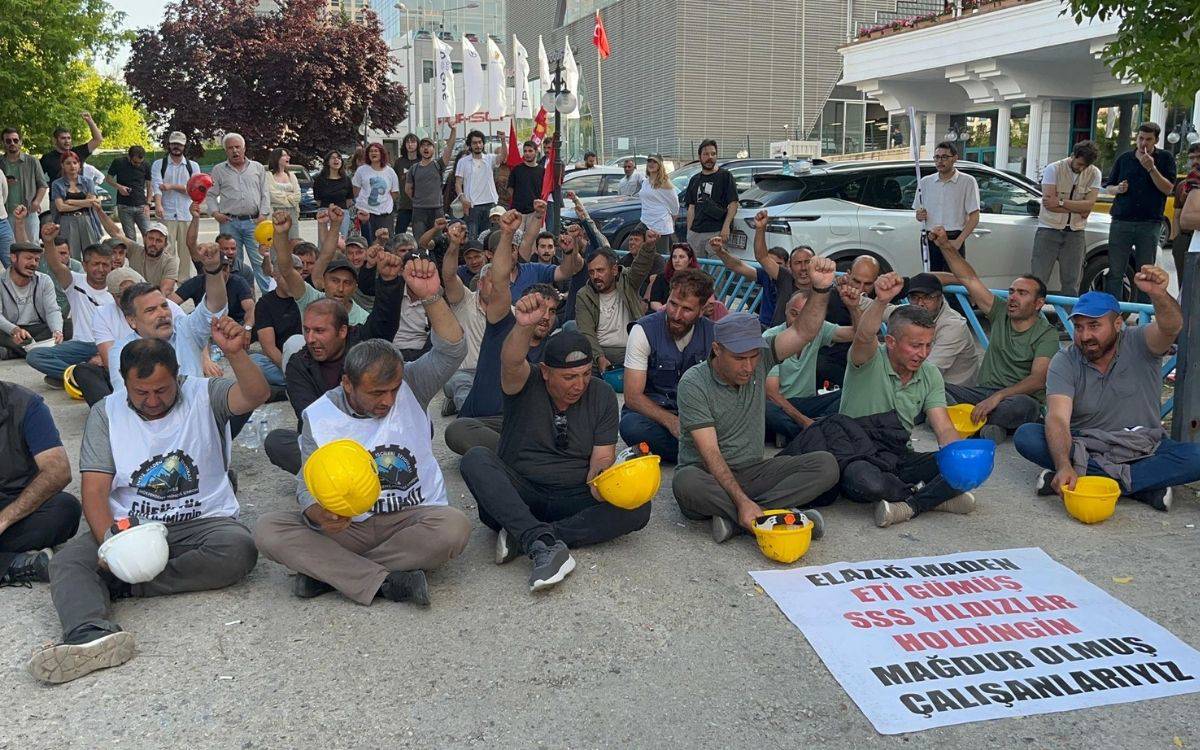



For years the Turkish government propped up the mining industry by guaranteeing the purchase of all extracted coal. Now the removal of state purchase guarantees beginning in 2020, along with other measures, has led to financial uncertainty across the industry, but instead of absorbing the costs, corporations have passed it onto workers in the form of layoffs and extreme wage theft.
This has left miners with few choices but to organize.
In June, Özşen Madencilik miners in Edirne locked themselves 1,200 meters underground in a strike over unpaid wages. Doruk Madencilik miners, who launched a strike and march from Eskişehir to Ankara, also received payments last month after being deprived of earnings for nearly seven months total.
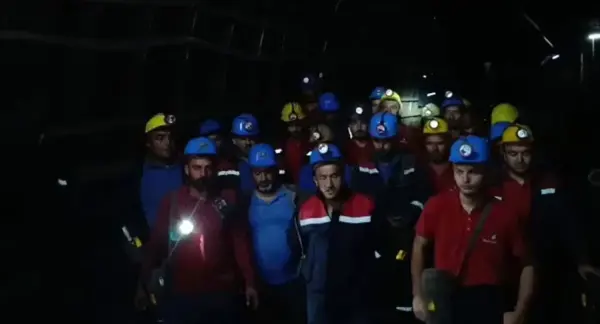
Edirne miners lock themselves 1,200 meters underground demanding unpaid wages
Both of these actions were organized by the Independent Mine Workers Union (Bağımsız Maden-İş) who, in contrast to more docile yellow unions, have been at the forefront of more militant resistance, engaging in wildcat strikes, hunger strikes and long-distance marches. Bağımsız Maden-İş organizing specialist Başaran Aksu said that workers have reached the limits of what they can endure.
“Today, if a worker misses one day of work, there is nothing to eat tomorrow,” said Aksu. “Landlords demand rent, children ask parents for money, parents cannot provide and feel humiliated in front of their own children — this is the reality that gives rise to resistance.”
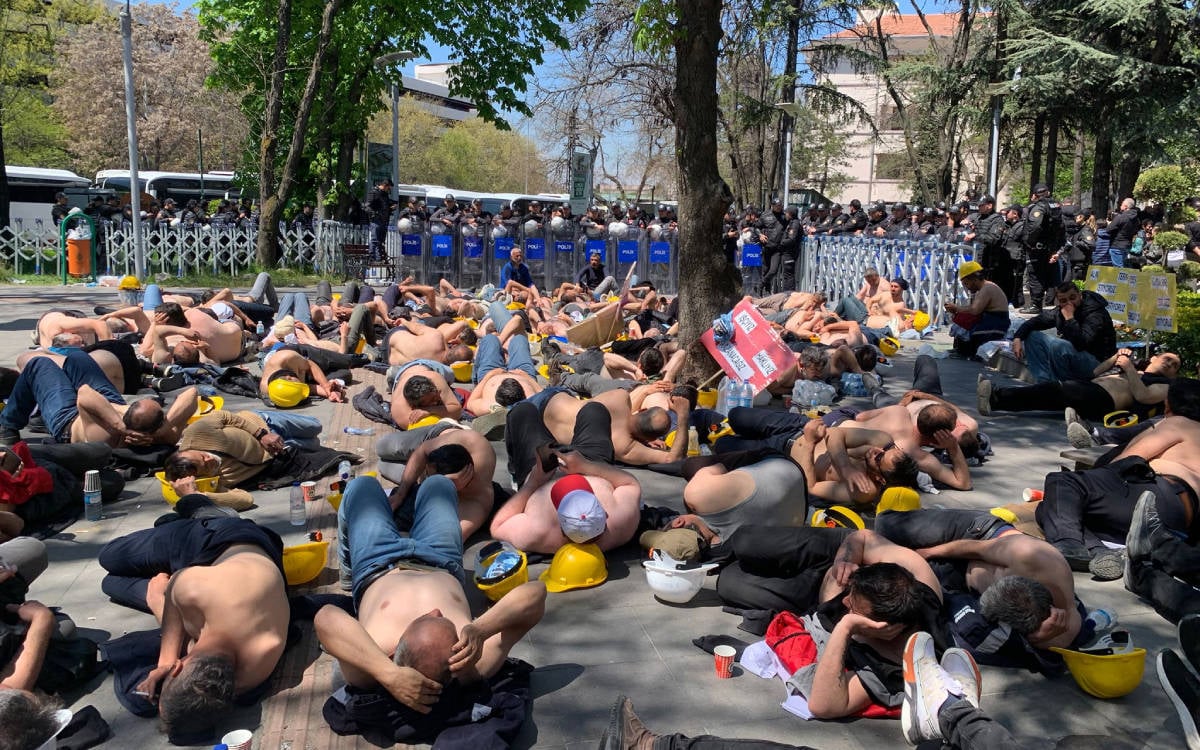
Doruk Madencilik miners resume protest after not getting paid despite guarantees
Dr. Coşku Çelik, a political scientist at Kadir Has University, said that Turkey is transitioning from the “coal rush” of the 2010s to what she calls a “coal dilemma.”
“The gradual removal of state purchase guarantees, growing competition from cheaper imported coal, and increasing feelings of uncertainty regarding future climate and decarbonization policies — they have all created uncertainty both for companies and for the miners,” she said.
Turkey ratified the Paris Agreement in 2021 and committed to achieving net-zero emissions by 2053. However, there has been no clear, public plan in this effort, making the future of coal even more uncertain.
“There is a dilemma here because coal extraction and coal expansion continues in Turkey," said Çelik. "New mining licenses are still being granted, new fossil fuel investments continue but at the same time in different parts … there are some shutdowns of the power plants as well,” said Çelik. “This contradiction, this dilemma creates uncertainty for all actors in mining, for the companies uncertainty stems not only from future climate relations, but also ongoing changes in the state support mechanisms.”
“We see both mine closures and mine expansions in Turkey, that’s what I call a coal dilemma,” she said.
Çelik stressed workers are often the ones who bear the costs of these uncertainties. She believes the recent labor protests are "precisely in response to this transfer of risk from capital to labor.”
A data-driven fight for nature against mega mines: We are racing against time
Workers fight for better conditions
After the 2001 financial crises, Ankara determined the mining sector would be a strategic part of Turkey’s development model. This was pursued through privatization, subsidies and large investment incentives, in addition to state-purchase guarantees. These policies resulted in “production pressure,” where workers were expected to extract as much coal as possible to maximize profits. This directly inspired the poor, unsafe working conditions that, according to Çelik, led to the Soma Mining Disaster of 2014, where 301 workers died.
In the mines Aksu described a work environment of rigid hierarchy, pressure from leadership, insults, mobbing, subcontracting, flexible and insecure employment and extremely dangerous working conditions — all resulting in what he calls “super-exploitation.” Mining companies often deprive workers of wages, overtime pay and other entitlements for periods of up to eight months. Even workers who have been employed for 10 years start to worry about their severance pay and seniority compensations when financial situations are uncertain, Aksu said.
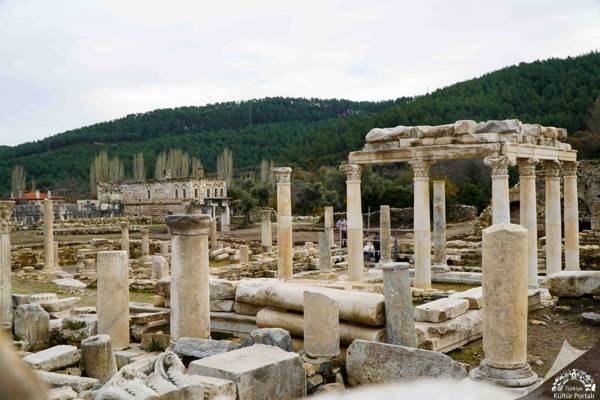
Turkey's fast-tracked mining expansion threatens archaeological heritage
Aksu added that nowadays a miner earning 45,000 lira monthly would receive only around 22,000 TL a month for retirement, in contrast to previously higher pensions. This forces many miners to continue working even after retirement.
Aksu believes the relationship between the ruling Justice and Development Party (AKP) government and large corporations allows companies to operate as they wish.
“In effect, the state and corporations work together in maintaining poor working conditions; their relationship with the political regime is structural,” he added.
One of the ways this manifests is in inspection protocols. Companies are often notified in a week or even three days before inspections that are mere formalities.
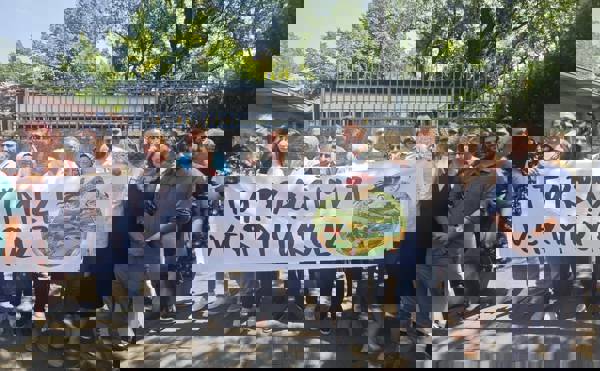
Olive groves turned into mining fields overnight: 'This is not just an environmental issue'
“Inspectors are shown only the places management wants them to see — the well-maintained areas,” said Aksu. “Reports are filed, and everyone goes home, the process continues until a mass workplace disaster occurs and exposes these failures.”
According to Aksu, companies view health and occupational safety as an extra cost burden to avoid. It’s these conditions that form the backdrop of increased activity from organized labor.
“Poverty becomes a question not only of material deprivation but also of dignity and honor … These protests are both an objection to the way the country is governed and to the humiliating conditions they face in their workplaces,” Aksu said.
Lack of industry accountability
Academic and Health and Safety Labor Watch (İSİG) researcher Dr. Aslı Odman agrees with Aksu that companies view health and safety measures as a cost to avoid. In turn, this makes payouts from worker deaths a mere expense of doing business.
Companies use various tactics to reduce worker death payouts as much as possible, at times as little as 1,000 euros.
“The companies approach the family of the deceased and say, ‘We'll give you some blood money, the penal case is going to last long, just get the blood money and don't follow your case, you're already in a difficult situation and don't make any noise and don't contact anyone.’”
“And this is what most families have to accept because the one who earns the bread was lost,” Odman said.
According to 2017 İSİG data, 1,571 miners lost their lives during the ruling Justice and Development Party’s tenure in power. Accountability laws exist on paper, but are often not applied in practice.
“If you don’t enforce laws they don’t exist … If you make a legal struggle in order to make the law enforced then you remain in impunity,” Odman said.
“The state protects the employers, the corporations, and also its own employees, its own public functionaries if they are involved, and most of the time they are involved because they don’t inspect,” she added.
Odman noted that there are only around 900 labor inspectors for about 2 million production entities.
“This is not because Turkey does not have money for labor inspectors, it is a way of not enforcing occupation health and safety through deliberate negligence and wiping out the area of labor inspection,” she said.
Both Odman and Çelik stressed that the relationship between mining companies and the government should not be understood as something that only happens between specific companies with close personal relationships to the AKP. It is a structural problem based on aligned interests between the government and capital.
They also stressed that the struggles of the miners and environmental issues are interconnected, not contradictory.
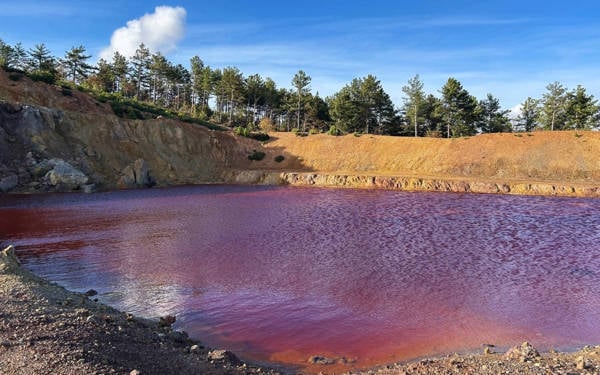
From Ida with a thousand springs to Kaz Mountains with a thousand mines
In Anatolia there are miners marching against unemployment and villagers defending their land and ecological livelihood against mining incursions. However, many of the miners are from communities that experienced this same process a decade ago, Çelik explained. Their lands were also stripped, leaving them few options to secure a livelihood.
“Many mining regions … have become highly dependent on the mining of coal as a result of the dissolution of their former agrarian structure, decades of dispossession, decades of the erosion of agricultural livelihood have left mining as one of the few available sources of employment for those communities — and this dependence creates an unhealthy power relationship between workers and employers, and this makes workers more vulnerable to the violation of their rights,” Çelik said.
She said both groups need a public claim which would secure their rights amidst market uncertainties.
“We are facing a structure shaped by the demands of capitalism — workers, laborers, and oppressed people around the world need to resist and object collectively,” Aksu said. (İK/VK)