



Two members of “the squatted community of Prosfygika” in Athens, Greece, have entered their 135th and 50th day of what they are calling a “hunger strike until death."
Aristotelis Chantzis, who began his strike on February 5, 2026, is at serious risk of irreversible damage to vital organs and even death, and Suzon Doppagne, who began her hunger strike on May 1, 2026, has suffered from daily hypoglycemia episodes along with severe muscular pain, weakness and fatigue. Both hunger strikers hope that their efforts can save Europe’s largest residential squat from the Attica Region government’s eviction plans.
Attica claims it wants to renovate the building and turn it into social housing, but residents believe this is merely an excuse to sell the building to commercial capital and end an effort that presents an alternative to capitalistic housing models.
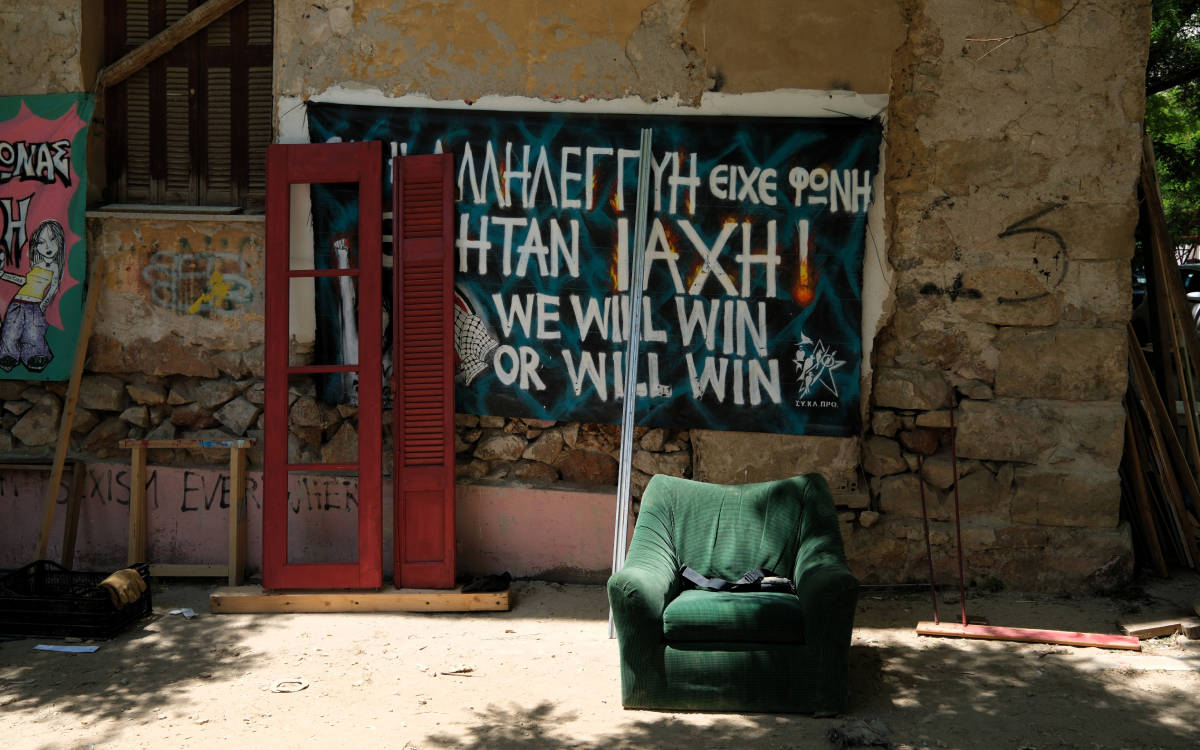
Chantzis and Doppagne are two of over 400 residents spread across the eight historic buildings that make up Prosfygika, which was declared a preserved historic monument in 2003 and 2008. These residents came together as a squatted community in 2012 and have taken it upon themselves to maintain the site, which they say would have been left to decay.
Historical legacy
The building was initially built in the 1930s to house refugees from Asia minor following the Greco-Turkish War and subsequent population exchange. Originally located on the outskirts of the city, the complex would go on to become a stronghold for left-wing militants during the Greek Civil War and as the city expanded would find itself in the center of Athens years later.
Prosfygika residents consider themselves the latest in the building’s left-wing legacy. For them, Prosfygika is a living monument of resistance, with an emphasis on living, rather than simply a historical landmark.
It is also one of few options available for some vulnerable residents, who worry that the state’s plans could leave them on the streets. The residents are disproportionately migrants, refugees, LGBTI+ and leftist political exiles. Many of whom are Turkish and Kurdish, but range from 27 different nationalities total.
For the state, Prosfygika is an eyesore on valuable real estate. Activists said the region government has repeatedly tried to sell the land to commercial capital, with the first efforts in the 1990s being to build a mall and parking lot. These previous efforts are part of why many residents remain unconvinced of both the state’s intentions and the proposal itself.
One of these residents, who goes by Apo and chose not to give his full name for security purposes, is a political exile from Turkey who faced several charges over revolutionary, communist activity. He arrived in Prosfygika in 2015 with the intention of learning about the political philosophy of democratic confederalism underpinning the squatted community. He described his experience as an ongoing learning process, for both himself and the community.
“As we were trying to build this process, we ourselves went through a learning process,” said Apo. “At the same time, we tried to connect what we were learning with our previous experiences — whether in Turkey or within the political structures we had been involved in … From our perspective, I think this has been a positive development.”
Evangelia, another long-term resident who chose not to give her full name, originally met and began volunteering with the community in 2019 and started living there in 2023.
“The houses here are also infrastructure of the community, shared sometimes with roommates so there is a collective program going on, which is the priority of everybody to cover according to the needs and [their] capabilities at the specific moment,” Evangelia said.
“[There are] a lot of meetings during the day, a lot of discussions to solve the problems that exist because problems arise and they exist in daily life because it's a human situation, but the difference here is that there is the commitment to solve those issues and to transform [the situation],” she added.
According to Evangelia, police have targeted the residents through raids, police brutality, arbitrary arrests and more, in an attempt to force residents off of the property.
“From a political and sociological perspective, they see this place as a threat to their system, to their way of thinking,” said Apo. “They are disturbed by an autonomous, libertarian, self-sufficient system that they cannot control, perhaps even more than by [lost] economic gain.
Alternative housing models
The proposed state-run social housing program would still remain incompatible with the vision of the squatted community because their structures function independent of the state. Residents work on the outside but have built lives on the inside that extend far beyond a place to sleep.
Residents hold community meetings, share household duties and operate structures to meet basic needs and provide enrichment. This includes a bakery, library, de-facto clinic, women's center, dances classes, cinema, and a cafe. A “technical workers structure” internally attends to any electrical and plumbing issues. Children in the community are also provided with various workshops and activities.
In response to the Attica Region government’s plans, the residents have created their own revitalization and restoration proposal. In this plan, the restoration process would be carried out by the nonprofit civil company “Residents and Friends of Prosfygika Alexandras Avenue” created by the residents and funded from grassroots efforts instead of public funds.
Dr. Stavros Stavrides, professor emeritus at the School of Architecture of the National Technical University of Athens, is a supporter of the squatted community and is skeptical of the region government’s proposal.
“I think this community has proven to be the most efficient and inclusive type of social housing efforts, so the fact that the administration of the region says that they have plans to create a social housing area there is just as crazy as it sounds” he said.
Contrary to the claims of some government officials, Stavrides said the building is not in dangerous condition. He and some architects and civil engineering colleagues from the university observed that the building’s problems were not structural in nature, and thus easily treatable without eviction.
This runs contrary to the claims of Attica Region Governor Nikos Hardalias who called the complex "severely neglected and extremely dangerous."
Stavrides added there are many vacant state-owned buildings across Athens that could have been used for social housing projects without evicting anyone.
“The fact that they are saying that they are going to do this by attacking one of the few schemes of self-government, of course, not coming from the state, but one of the few schemes that actually supports the most vulnerable, in practice producing social housing and community, makes me think that they are not intending that [to create social housing] — I believe that their intention is to evict,” Stavrides said.
This is not the state’s first attempt at shutting down the compound. According to Apo, forced eviction efforts have already happened four times throughout the years.
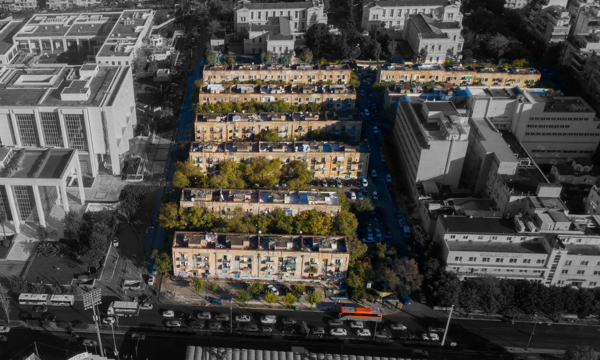
‘We will not give up a single inch of ground’: Prosfygika’s resistance against eviction
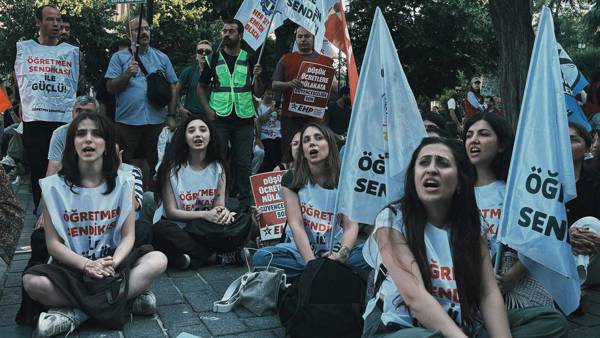
In an effort to stop the eviction, activists have held mass demonstrations, formed a legal defense team, demonstrated in front of legislatures and sent delegations to the European Parliament in Brussels. This is in addition to the current hunger strikes.
Prosfygika hunger strikers and community are demanding an immediate cancellation of the contract by the Region of Attica, the ability for all residents of Prosfygika to remain in their homes and concrete guarantees that the restoration of Prosfygika will be self-financed and done through their non-profit civil law company with no public funds.
Apo said that they are starting to receive support from a wider range of people in the community, many of which are also involved in other types of political causes.
“For a small neighborhood like ours, with relatively few people, I think that being able, in such a short period of time, to create a synergy that brings together people from different social groups and different struggles is in itself quite remarkable,” he said.
Solidarity protests have also spread across Europe. Activists held actions in front of Greek embassies and consulates in Germany, Austria, Serbia and England.
“What is happening here is a part of the battle between the world of the community, the world of the resistance, the world of the society against the world of state capitalism and authority and we believe that we will win,” Evangelia said. (İK/VK)