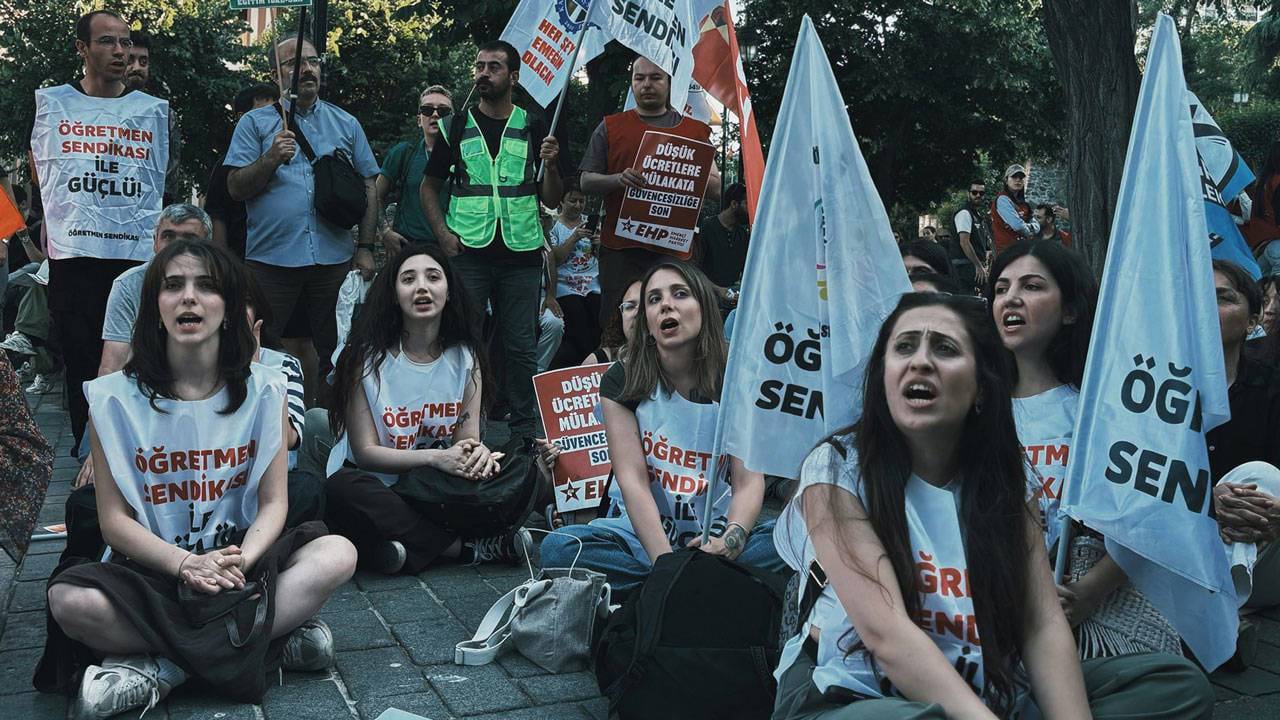







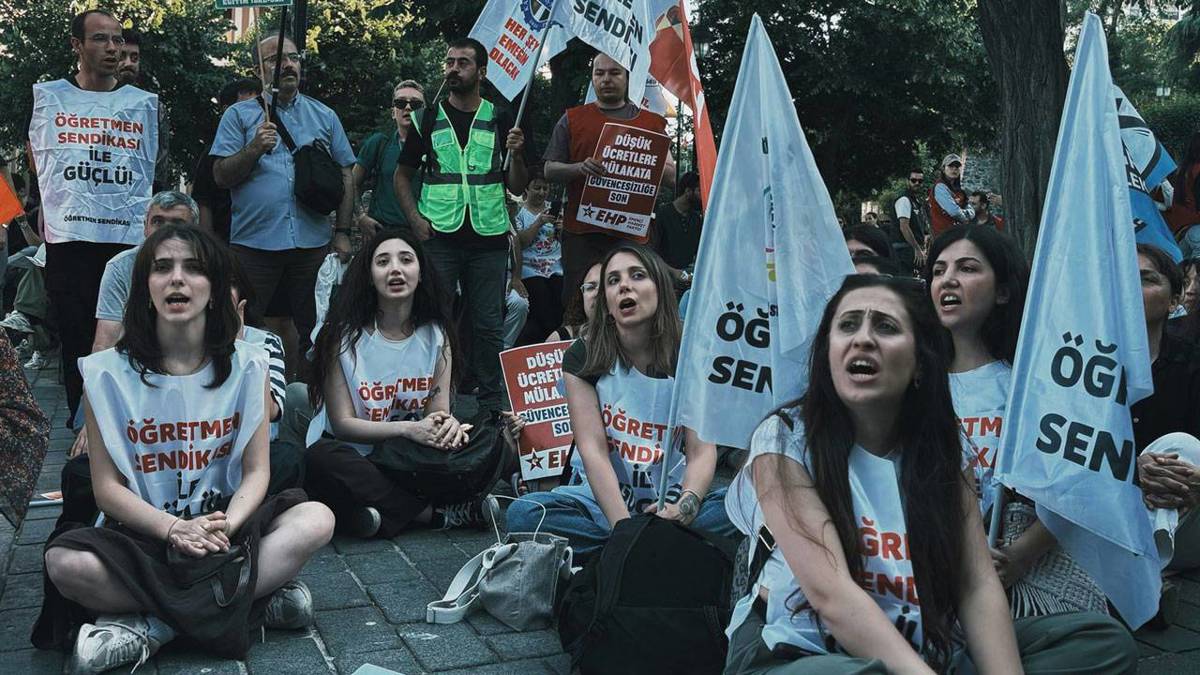



Arda Soydan graduated from Erciyes University with a diploma in education and a passion for children. Unfortunately, his passion doesn’t provide enough to cover his bills, which is why just a year later Soydan found himself over 300 kilometers away from his Kayseri classroom at Ankara's Kurtuluş park. He and about 70 other private school educators from across Turkey have been regularly commuting to the capital since June to demonstrate in hopes of better wages and work conditions.
Soydan loves teaching despite the low salary. He takes pride in crafting entertaining lessons that keep his three-to-five year-olds engaged, but said it’s hard not to have some regrets over his career.
“Half of my salary goes to my rent and my bills, and most of the time … I can only eat one time a day, … because I cannot afford more than that,” he said.
“It can be devastating for you to see you get a four-year, five-year education about teaching and after that your whole life is between the boss’s two lips,” said Soydan. “You think being a teacher is more than that, it’s teaching, it’s touching people’s lives, the world, the country, any other thing — but at the end of the day you only think about what can I eat cheaper today, how can I pay the rent, and in that case you don’t want to be a teacher.”
Soydan is one of many private school educators who do not enjoy the same stability and salaries as their public school counterparts. Private school teachers often work for around half of what public school teachers earn, on temporary contracts and report high workloads and pressure to perform additional uncompensated labor.
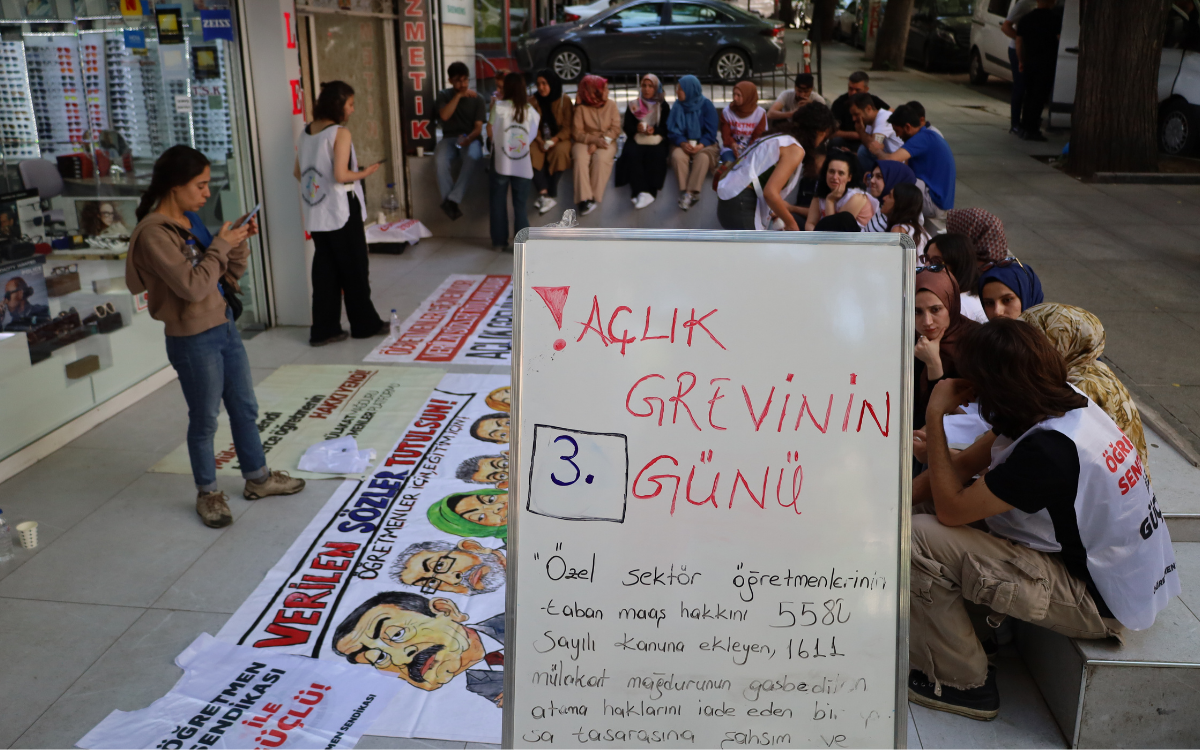
'I was already hungry': Private school teachers continue hunger strike in Ankara
Selin Pir, a private high school English teacher, said private teachers typically work yearly contracts and are forced to resign during the summer months so schools can save on their budgets. The school then re-hires these teachers for the start of the next school year, leading to a precarious employment situation. This model makes termination easier as the school can simply choose not to re-hire its former educators.
“When they offer you something if you say no, as you have just a one-year contract, they don’t have to even fire you, so the chances that you will get your rights is very low because they just have to wait until the end of your contract and they can just say ‘okay you can go find another job,’ so you don’t have much to say for your wages,” Pir said.
In May or June at the end of the school year, teachers negotiate their next year’s salary that they will receive after the summer holiday. This makes it very difficult to account for Turkey’s rapidly rising inflation rates, she added.
Seasonal jobs in the summer
Pir said that many of her colleagues work seasonal jobs to make ends meet, often in construction or hospitality as service workers at vacation areas. And during the school year, teachers are often expected to work long, uncompensated hours.
For Soydan many of his additional work hours were spent at a shopping mall doing marketing for the school instead of lesson plans or tutoring. He is also expected to make social media content for the school.
His school had him host an exhibition at the mall for this marketing campaign. His responsibilities included creating an accompanying dance choreography, teaching it to his students for them to perform, creating a puppet show and handing out free tickets to passerbys.
“I was just like what am I doing at a mall, with these free tickets and trying to market our school? I'm only a teacher. My only thing is teaching English to the people, the kids, but now, where am I?”

Summer is 'job-hunting season' rather than vacation for private school teachers
Soydan said his work schedule is more reasonable than many of his peers, but acknowledged that many of them work 10-12 hours a day.
“They demand this kind of thing, and they give you a chance to not accept it, but when you say something like ‘no, I cannot do 12 hour class today,’ when you do it more than once they’re going to say ‘I think you should check out other jobs, okay?’”
“If you’re not accepting overwork more than once I think you would get fired in Turkey,” he added.
Oral interview barrier
Most teachers hope to land public sector teaching jobs to avoid these conditions, but this remains out of reach for many. All applicants must take the Ministry of National Education Academy Entrance Examination. After the exam the state shares the number of teachers they intend to appoint per subject. However, the appointee numbers are low, and Pir and Soydan said the process is marred by injustice.
The Private Sector Teachers Union, which Pir and Soydan are both part of, has also been protesting on behalf of what they call “interview victims.” 1,611 high scorers on the exam were screened out during oral interviews.
Soydan said that there were inconsistencies in the way the interviews were scored and some questions seemed to screen for political preferences, asking the candidates their thoughts on the Minister of Education.
“The need for [public sector] teachers is not very low actually, but they’re not doing the appointments, the state is not doing enough appointments, so teachers are forced to work in the private sector,” Pir said.
Prior to 2014, a clause in Law No. 5580 guaranteed that private sector educators would not be paid lower than their public school counterparts. Pir believes the law was abolished because the government wanted to promote the expansion of private school education. According to many teacher organizations, this change led to the widespread issues facing many private school teachers today.
Still 'honored' to be a teacher
Soydan said he's honored to be a teacher despite the poor working conditions. He mentioned that even the word “hoca” or “teacher” in Turkish has roots in Farsi that refer to a noble person with a good reputation — he doesn’t take that lightly.
“Every kid changes the world and the world changes the kid, in a dialect, and I really like to be part of the world and the kid,” said Soydan. “Being ‘hoca,’ being öğretmen (teacher), being a teacher, is both — it is being part of a world and … you stay in the kids’ hearts, minds or any kind of thing, and you can have a really big part of their life.
Soydan’s students are too young to know about the protests that he and his peers are organizing, but the parents have remained mostly neutral.
Pir, though, said her students are aware and supportive of their efforts to secure better working conditions.
“They [the students] are mostly supportive because it is also their future too, nobody right now, nobody, feels secure in Turkey because whether you become a teacher or whether you become an engineer, the working conditions are the same — the wages are low,” she said.
“So they are supportive because they are first-hand seeing the conditions of teachers, they see the workload of teachers, so yeah, most of them are supportive,” Pir said.
Pir hopes others will also rally behind their cause and show support similar to that of her students.
“We just want our rights to be met, because education is an issue that must be important to everyone because it's the future of not just our nation, but it is the future of the planet that we share,” she said. (İK/VK)