







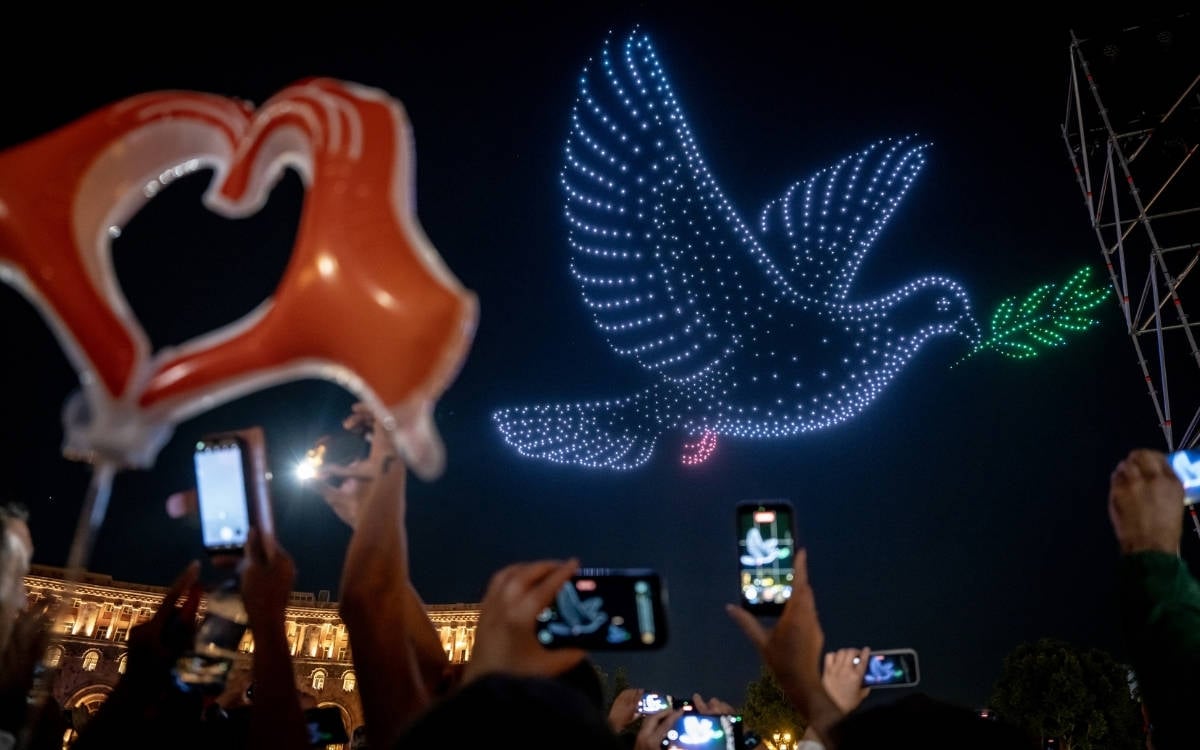



Prime Minister Nikol Pashinyan’s Civil Contract Party secured a majority by winning 61 of 105 seats in the parliamentary elections held in Armenia on Jun 7. The Civil Contract Party received 49.81 percent of the vote.
Businessman Samvel Karapetyan’s Strong Armenia Alliance obtained 23.29 percent of the vote, followed by former President Robert Kocharyan’s Armenia Alliance at 9.94 percent, and the Prosperous Armenia Party at 4 percent.
Congratulating the people of Armenia on the election results, Pashinyan said, “With their vote, the people of Armenia protected the state, protected independence, protected the future, protected peace, and protected the Republic of Armenia. The tripartite party of war has suffered a heavy defeat. The people clearly demonstrated their will that the tripartite party of war and its associated criminal-oligarchic system must be eradicated from Armenia.”
Journalist Vartan Estukyan a member of Turkey's Armenian community, evaluated the Armenian society’s choice to re-elect Pashinyan, despite the territorial losses and military defeat in the Karabakh process, as a decision made in favor of peace and normalization.
According to Estukyan, Pashinyan also used the conditions created by the war economy to his advantage. He transformed into a stronger political figure domestically by moving away from Russia and turning toward the European Union and the US.
Did his approach to domestic policy, in addition to his stance on foreign policy, play a decisive role in the election outcome? During the election campaign, we also witnessed protests against Pashinyan, and objections regarding Karabakh were at the center of those protests. There were also numerous detentions and arrests during that same period. Was there a connection between the protests and the church?
Yes, one of the most significant challenges Pashinyan faces in domestic politics is his relationship with the church. Tensions between the government and the Armenian Apostolic Church became particularly visible in the post-Karabakh period. In Armenia, the church stands out as a powerful political and social actor due to its influence on society. Following the collapse of the Soviet Union, the resurgence of religious identity in Armenia has amplified the church’s social influence.
The current tension between Pashinyan and the church, however, has garnered more limited social support compared to the Sarkisyan era. For this reason, I believe the political impact of the conflict between the government and the church remains a subject of debate. The protests you mentioned were more limited and fragmented rather than a mass movement. But of course, this does not mean the opposition sphere is entirely weak. The church’s indirect influence has created an environment where criticism of the government can be expressed more freely. Objectively speaking, the tension between the church and the government continues intensely, and in my view, both sides occasionally strike at each other from highly unethical angles. Given this ongoing, mutually hostile rhetoric that never loses its intensity, achieving a lasting reconciliation seems difficult.
From an economic perspective, Armenia is in a more vulnerable position compared to Turkey and Azerbaijan. For this reason, a significant portion of society believes that dialogue and normalization could yield economic benefits through a pragmatic approach. But of course, there are serious concerns within society as well, and some of these anxieties are entirely understandable.
MASİS KÜRKÇÜGİL ON TURKEY-ARMENIA RAPPROACHMENT
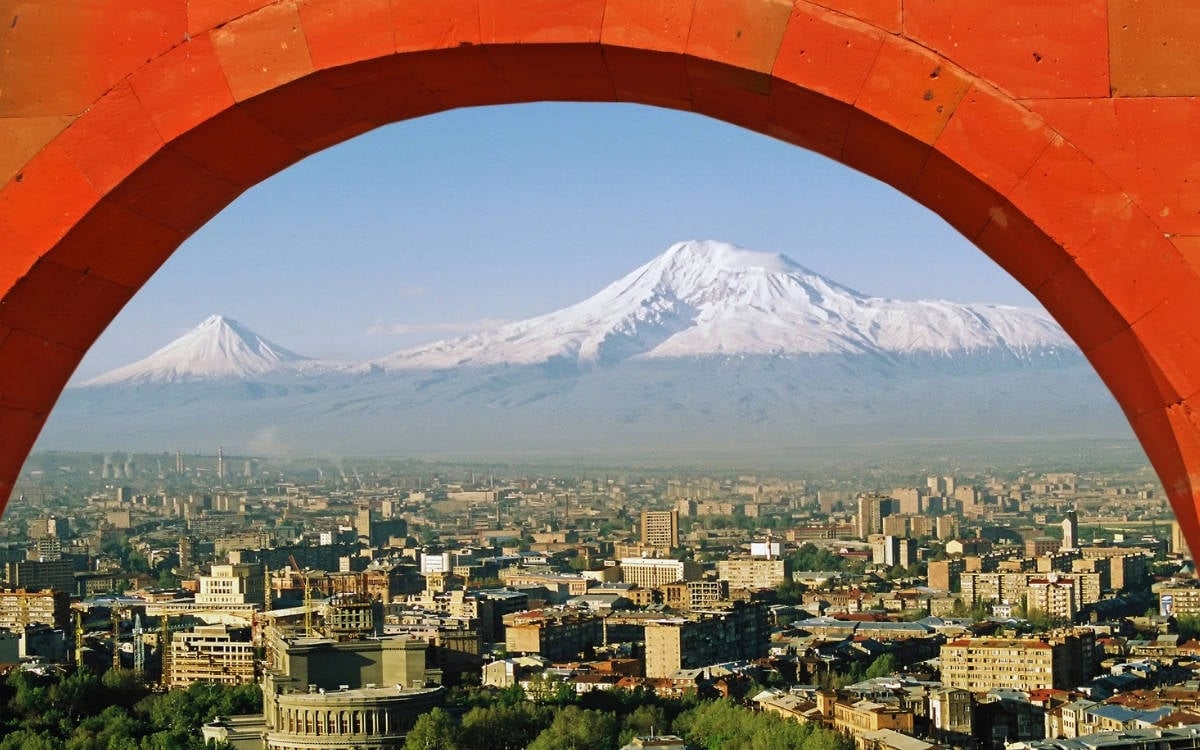
'Armenia is looking for ways to breathe'
Anti-Russian sentiment among Armenians
Due to his stance on both domestic and foreign policy, Pashinyan’s third term is viewed as a critical threshold. How do you assess this?
If he continues in office without incident, Pashinyan’s total time in political office will reach 12 years. This will naturally bring discussions of “authoritarianism” in the coming years. However, Armenia is seeking a multifaceted balance in foreign policy. While there is a continuing trend of distancing from Russia, it is also striving to strengthen its relations with the EU and the US. The warming of relations with France and the meetings with Macron are also part of this process. Of course, the strong Armenian diaspora in France plays a significant role in this relationship. We are talking about an Armenian population of over 500,000 in France. Consequently, the Armenian issue represents a significant voting bloc for Macron. In this context, they have also signed a military cooperation agreement with Armenia.
On the Trump front, however, the picture is more uncertain. Due to the unpredictable nature of U.S. politics and Trump’s approach, there is not yet a solid foundation of trust for Armenia. For this reason, I am among those who believe Yerevan is “investing” more in the EU than in the U.S. I also observe and read that this trend is gaining traction within society.
One of Pashinyan’s strongest areas is his anti-Russian stance. This position, combined with public backlash stemming from oligarchic structures and economic ties with Russia, generates significant political resonance. The failure of Russia to provide the expected support during the Karabakh process further reinforced this shift. During this period, Armenia consciously chose to establish a new foreign policy direction. Although this choice entailed both military and political costs, it found a certain resonance within society as conflicts subsided.
As of today, there is a stronger public sentiment on both the Armenian and Azerbaijani sides in favor of opening borders and normalizing relations. The normalization of relations with Turkey, however, is a topic that is generally viewed more positively in both societies. The increasing number of visits from Turkey to Armenia and, for example, the flow of journalists for election coverage are among the indicators of this change.
Turkey, Armenia set to resume direct trade
'Armenia is no longer alone'
How will Pashinyan maintain his stance in the peace and normalization processes with both Azerbaijan and Turkey during his new term?
As we mentioned earlier, Armenia’s foreign policy orientation has increasingly shifted toward distancing itself from Russia, developing relations with the EU and the West, and normalizing ties with Turkey. Pashinyan is, of course, inclined to continue along this path. However, the process is more complex when it comes to final agreements and critical issues such as constitutional amendments. Azerbaijan also has certain demands in this regard. Based on the results, Pashinyan does not have the majority in parliament to push through constitutional amendments on his own. Therefore, while he has the capacity to form a cabinet and government, he must reach an agreement with the rivals he ran against in the election and secure their support for structural reforms.
The agenda of opening borders with Turkey and resuming trade is also one of the most concrete indicators of this new era. The opening of border crossings, contacts between businesspeople and chambers of commerce, and the commencement of direct flights, in my view, indicate that the process has reached a point of no return. Indeed, when we look at it, relations along the Armenia-Turkey-Azerbaijan axis are increasingly shaped by economic interests and regional pragmatism. I say this partly because the fact that the government in Turkey has remained unchanged for a long time is also reflected in election promises in Armenia. During the election campaign, nearly all opposition parties and coalitions in Armenia pledged that the dialogue initiated with Turkey and Azerbaijan would continue. This is actually a rather critical point. Because even if the government changes, we have seen that the normalization process initiated by Pashinyan will continue. Even if opposition figures like Robert Kocharyan or Samvel Karapetyan come to power, a political framework has been established indicating that this relationship will not be completely severed. At least, that was the tone of the campaign rhetoric. This situation could strengthen Pashinyan’s hand regarding a potential constitutional amendment process. Still, the decisive factors will be how much Azerbaijan is willing to concede and on which points an agreement can be reached.
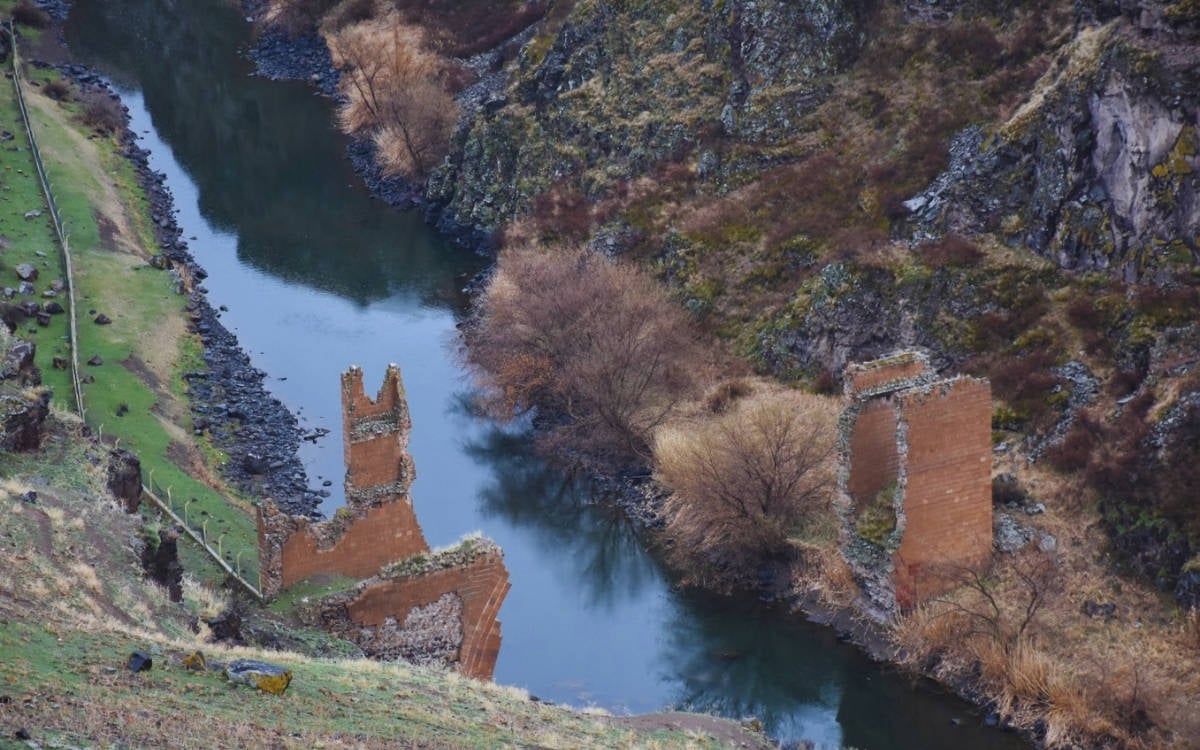
Turkey, Armenia agree to restore historic Ani Bridge
Why do you think Azerbaijan will make concessions?
Because Armenia is no longer isolated as it was during the Karabakh process; it has strengthened its ties with the EU and the US. This enhances its negotiating power.
What can you say about Armenia’s current demographic structure, economic situation, and the socio-political atmosphere within the country?
The issues you mentioned are highly contentious for Armenia. In recent times, Armenia’s situation has changed significantly. The influx of a large number of Russian citizens into Armenia following Russia’s invasion of Ukraine has transformed the country. Unlike Georgia, Russian is still widely spoken in Armenia, making the country more attractive to Russians. This migration, on the one hand, revitalized the economy, particularly expanding the IT and software sectors; but on the other hand, it drove up housing prices, creating a serious housing crisis. Despite this, an unexpected development emerged even during the war: the Armenian dram appreciated against the dollar. In other words, Pashinyan even leveraged the war economy to his advantage and emerged as a stronger figure domestically. It was not just diplomacy but this economic transformation that strengthened his position. As a result, at this point, Armenia is no longer in a position to be viewed as a “weak country.”
I think one of the topics we need to address when discussing Pashinyan is his social media presence. Amid all these serious political issues and crises, we suddenly come across videos of him dealing with heartbreak. How do you assess this communication style? What kind of leader do you think Pashinyan is?
Pashinyan’s leadership style is entirely built on visibility. He’s active on social media, communicates directly with young people, rides a bike to work, eats on the bus, listens to alternative music, plays music himself, and portrays a “one of us” image. This is, of course, a deliberate image management strategy, and it works to a large extent. Let’s recall that when he came to power through the Velvet Revolution, his biggest supporters were young people, and a large portion of his cabinet was made up of young people.
But Armenians don’t always laugh at these videos as much as we do. Without getting into sharp criticism, what I mean is: Amid economic hardships and political tensions, this “one of the people” image isn’t convincing for everyone. For example, one of his close associates, the Mayor of Yerevan—who is also an actor—began “mocking” Pashinyan’s videos after parting ways with Pashinyan and his party. He created a parody of Pashinyan and is now posting these counter-videos on his YouTube channel.
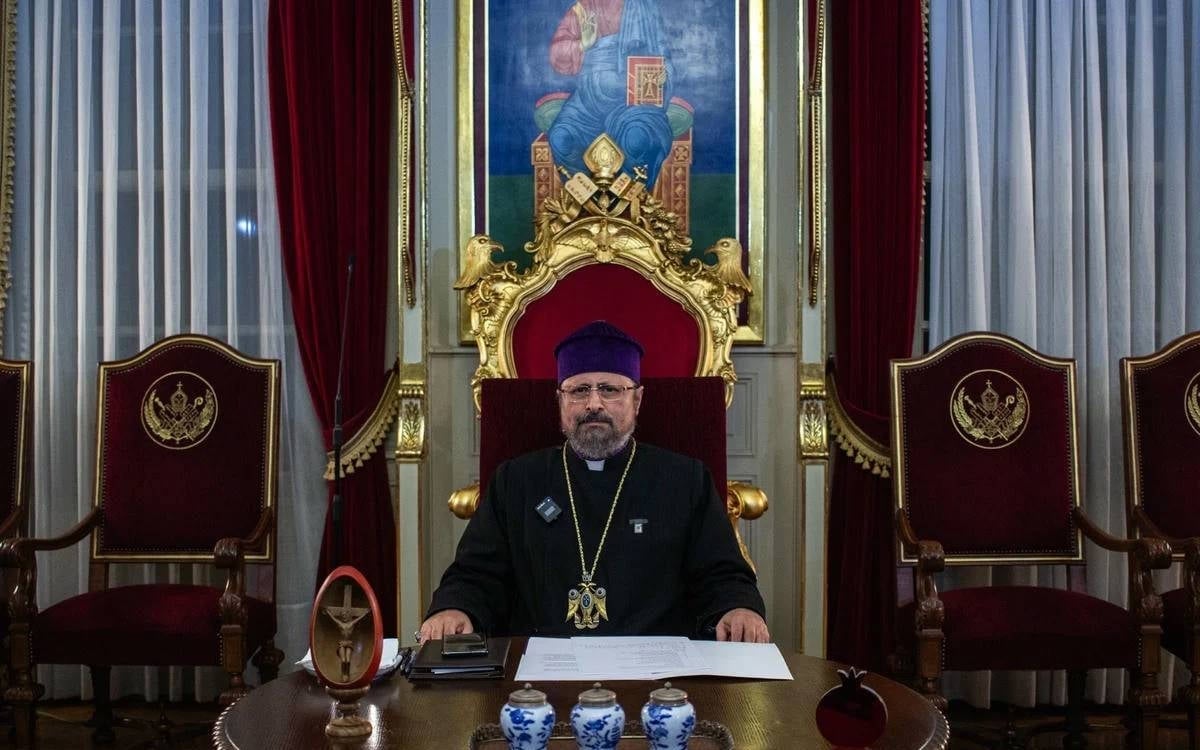
Armenian Patriarch: Neither denial nor obsessive hostility heals wounds
The rapproachment and Hrant Dink’s contribution
Finally, as an Armenian from Turkey, I’m curious to know how you assess the rapproachment process.
Azerbaijan may be more limited; but the normalization of relations with Turkey is a process that has been met with considerable positivity in both Armenia and Turkey. Recently, there have been many people traveling from Turkey to Armenia, and the majority of their experiences have been positive. If you recall, in some vlogs filmed on YouTube two years ago, prejudices like “I faced a reaction when I said I was Turkish” were prominent. At that time, a one-sided perception based on preconceptions was dominant. With the opening of borders on the agenda, the process has now begun to take concrete shape. For example, last week businesspeople arrived in Kars by land. While these visits may be portrayed in some places as “strange” or unexpected developments, they are actually the first steps of the new era. The large meeting held in Kars was attended not only by representatives from Kars but also by chamber of commerce representatives from neighboring cities like Erzurum and Iğdır.
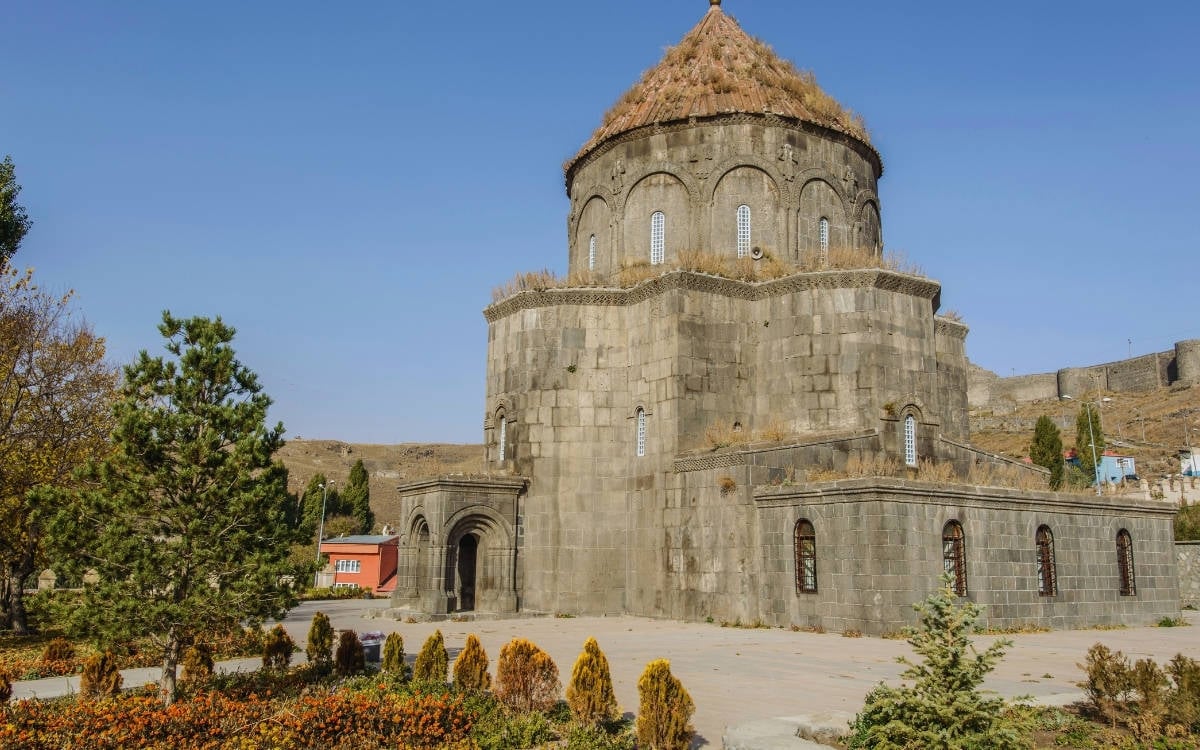
The project to repair the Ani Bridge is also one of the most symbolic aspects of this process. Pashinyan’s visit to Turkey after many years was also recorded as one of the symbolic steps toward normalization. Once the borders open, not only will trade resume, but the long-standing economic embargo will also largely be lifted. While the process is often discussed in terms of the Armenian economy, it is clear that the Turkish economy also has a certain need for this opening. Therefore, this process is not merely a relationship of “aid” or “one-sided gain,” but a structure shaped by mutual economic interests.
Actually, when I speak with Armenians older than you, I notice that they haven’t fully embraced the rapproachment, and the feeling that “it might not work out this time either” is more prevalent. There’s a widespread belief that the same rhetoric has been repeated for 30 years, yet in practice, very little has changed. What are your thoughts on this?
The generations before us experienced all the ups and downs and the ugliness of this process firsthand. They come from a longer historical experience and have faced more disappointment. That’s why they hold a slower, more cautious optimism. We need to understand this attitude. I, on the other hand, see the present. I know what happened 30 years ago only through reading and watching—I didn’t live through it. Therefore, from my perspective, I am more inclined to believe in the possibility of change. The protocols signed in recent times, the contacts established, and the diplomatic channels opened also reinforce this feeling.
Turkey today is not the same as it was 30 years ago, and Armenia has also changed significantly. Moreover, today’s Armenian Prime Minister is pursuing a course directly aimed at normalization and is taking serious political risks to achieve it. In contrast, the international balance of power has also shifted. While all these factors reduce the likelihood of a reversal in the process, of course, everything we’ve discussed is part of the states’ policies. Politics, by its very nature, is a field that can change very quickly. What seems possible today may become impossible tomorrow. We see this most clearly in domestic politics here. While we were discussing entirely different things regarding Kurdish politics just yesterday, today we are once again debating the peace process.
At this point, it is important to remember Hrant Dink. Because he was one of the most important representatives of the generation from 30 years ago. His generation adopted a much more cautious and prudent stance compared to today’s. Dink’s writings, his words, and the language he cultivated laid an important foundation for where we stand today. Perhaps he wasn’t the sole determining factor; but he made a critically important contribution to the reconciliation of the two peoples. Especially from the perspective of the Turkish public, his influence was very evident in softening perceptions regarding Armenia. His writings and the language of engagement he established became one of the elements that prepared the social groundwork for the normalization process we see today. There was a corresponding response on the Armenian side as well; however, the impact he created in Turkey was more visible and decisive. The imprint he left is still felt in the formation of a more comfortable ground for dialogue between the two countries today. (TY/VK)