
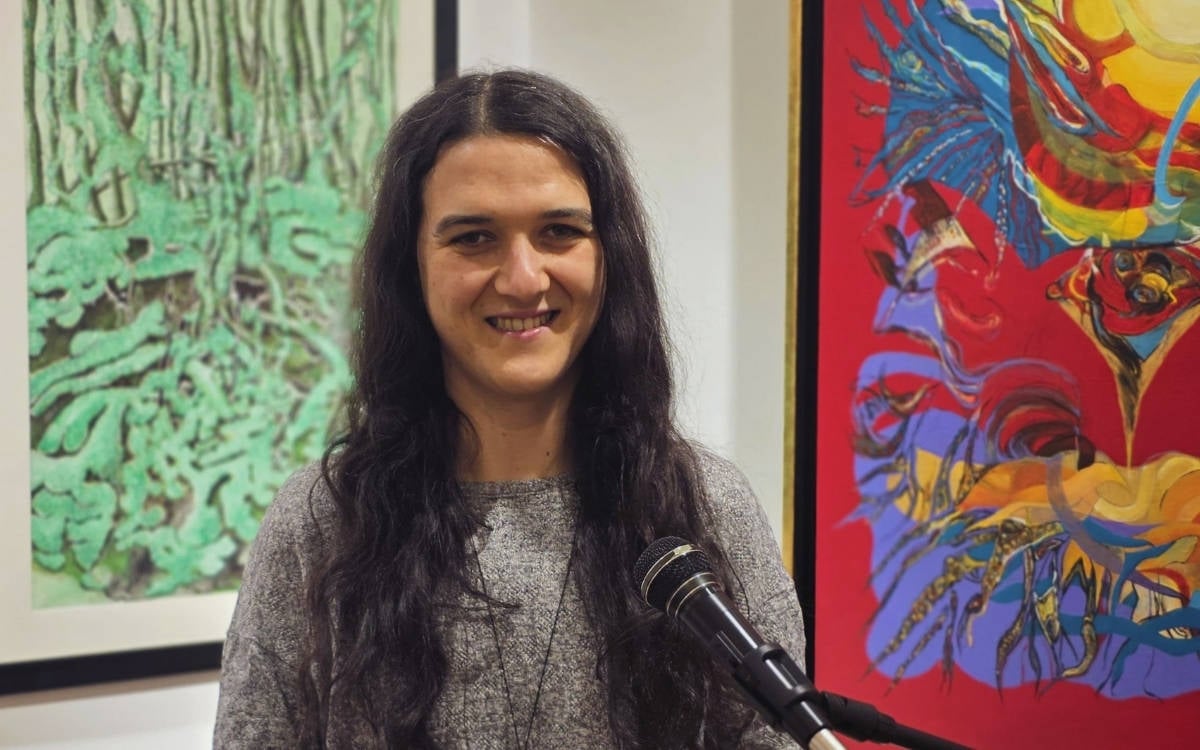



Zoe Lila is a graduate of the English Language Teaching Department at Marmara University. For about five years, she worked as a middle school English teacher at Özel Açı Schools in Sarıyer, İstanbul.
Zoe, who says she built strong relationships based on mutual trust with her students, parents, and colleagues, also played an active role in social responsibility initiatives to contribute to the school’s democratic and inclusive approach to education.
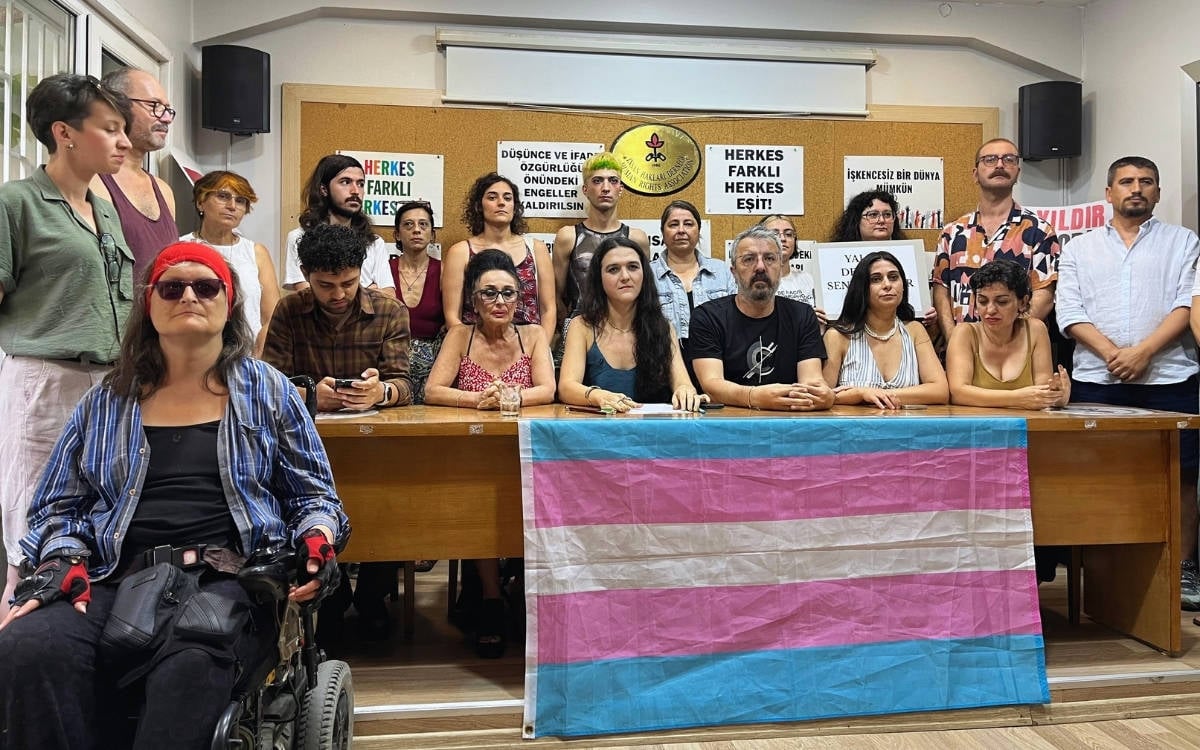
Zoe planned her gender affirmation process in collaboration with the school administration in accordance with pedagogical principles and shared it with her students and parents, receiving support from the school and many parents. However, following a hate campaign targeting her identity as a trans woman—orchestrated by media outlets close to the government—her contract was not renewed.
As Zoe described the human rights violations she faced, her security concerns, and the legal battle she waged, her attorney, Furkan Yurt, assessed that the process involved multi-layered human rights violations ranging from the right to privacy to the right to work.
The affirmation process
Could you tell us about your teaching career and the areas in which you’ve worked?
For the past two years, in addition to teaching English, I’ve also served as a homeroom teacher. This role aimed to support students’ social and emotional development. I’ve been involved in nonviolent communication practices for about three years. In addition, I participated in one of the training sessions organized by the “Another School Is Possible” movement. Since then, I have continued to develop myself as an educator working on democratic and alternative educational models.
For five years, I worked in a very positive school environment. I served on the social responsibility committee and was a member of the inclusion committee. I was already someone who was sensitive to issues of gender equality and inclusion. The school, too, was striving to create a more positive climate in this regard every year.
About two years ago, in 2024, I began my gender affirmation process. As soon as I made the decision, I shared it with my department coordinator and the school principal. We had a very egalitarian relationship. They told me they would support me, that we were a human rights-based school, and that they would stand by me on this matter. I started hormone therapy in August. I also shared that I would be having surgery right after school ended this year. My name change took place in December or January. Despite this, my assigned name continued to be used at school for a while longer. They explained that the reason for this was that they wanted the process to be carried out in a comprehensive manner by the end of the academic year.
When I saw that my old name was listed in the contract sent for the new school year, I refused to sign it. I stated that this would not be legally correct. Following this, the school sought external consultation to plan the process. The school administration consulted with the school’s psychiatrist and another psychiatrist regarding how the transition process should be carried out from a pedagogical perspective. These discussions took place without my direct involvement. However, since I knew and trusted the other psychiatrist, I also wanted to speak with him. We discussed how I could come out to the students and what the pedagogically sound way to handle this would be. I described the speech I planned to give. He said a short, clear, and simple explanation would be appropriate.
'Have you seen the news?'
On June 11, I came out to the middle school teachers. I shared my story at a meeting attended by about 30–40 teachers. Everyone was extremely supportive. People came up to me and hugged me. I cried, and they cried. I received very positive feedback both about my courage and the school’s stance on this issue. The following Monday, I met with my students. I had about 125 students in fifth and sixth grade. It was a group I’d been with for two years and with whom I’d formed strong bonds. We also had very good relationships with the parents. The students loved me not because of my identity, but because of the relationship of trust we’d built.
That day, a guidance event was scheduled for the last class period. The topic of the lesson was combating discrimination and bullying. We did empathy exercises based on scenarios like, “What would we do if a student who didn’t speak Turkish joined our class?” During the activity, I also went into the classrooms and gave a short speech of five or six sentences. I told them that from then on, I would continue my life as Zoe.
The children’s reactions were very varied. Some were very surprised; some stared at me for a long time; some couldn’t meet my gaze; and some were worried about me. But there were also those who looked at me with compassion, those who were happy, and those who smiled as if to say, “I already knew.” It was a very difficult but very valuable experience for me.
After classes ended that same day, the school sent out an announcement to parents, informing them that my name would now be Zoe. That evening, there was a parent seminar on gender identity development led by the school psychiatrist. I attended the seminar anonymously to gauge the parents’ reactions. Most were very supportive. Some said, “This doesn’t change anything—our teacher is still the same teacher.” Only one parent mentioned that their child had come home with some questions—for example, feeling confused about whether I would wear a wig—and expressed some reservations about the school’s approach. Other than that, the general attitude was positive. The psychiatrist also explained to the parents that they could give their children short, honest answers to their questions and that it was okay to say “I don’t know” when they didn’t know the answer.
I continued attending classes on Tuesday, Wednesday, and Thursday. At school, there was a natural adjustment period as students tried to get used to my new name, asked questions, and came up to hug me. On Friday, however, two guidance counselors came into the classroom in the middle of class and called me outside. They asked me, “Have you seen the news?” I told them I hadn’t…
'I couldn't even say goodbye to my students'
What happened next?
They showed me the news article at school. It was a horrific article containing my personal information, my old and new names, and my photos. The photo was a snapshot from our class group chat. A photo featuring one of my students had been cropped and published. I don’t think anyone other than someone from within the school could have done this.
I was in shock. I cried. I packed my things and left the school without even being able to say goodbye to my students. It was a very difficult moment for me. I went home, and my friends came to be with me. On Friday, the news began to spread more widely. On Saturday, I received a message containing death threats from an uncle I hadn’t seen in a long time. Other relatives I’d never spoken to before started adding me on social media. Strangers who had seen the news kept sending me messages. I left my home because I didn’t feel safe. I’m currently staying at my own home, but in the first few days, I stayed somewhere else out of safety concerns.
I had surgery that Thursday. I spent the weekend under a lot of stress. I didn’t go to school on Monday or Tuesday. During that time, my coordinator called me. Following the news, many parents had started sending messages of support to the school and to me. About 10–15 parents emailed me directly. I received messages saying, “We’re with you,” and “We saw the news; we’re so sorry.” I learned that supportive messages were also being shared in teachers’ WhatsApp groups, that a parent who is a lawyer had met with the school administration, and that some parents had started collecting signatures. For this reason, despite the entire hate campaign, I felt that the parents were on my side.
The day before my surgery, on June 24, the school wanted to meet with me. I explained that I wasn’t in a condition to go out and didn’t feel safe, so I asked for the meeting to be held online. The school principal and the general director attended the meeting. They told me that throughout that week, school officials had met with representatives from the Ministry of Family and Social Services, the Ministry of Labor and Social Security, and the Ministry of National Education (MEB). I do not know the details of those meetings. However, they stated that they had done everything in their power, yet they would not be renewing my contract for the following year. This was devastating for me. I was scheduled to have surgery the next day, and I suddenly felt completely abandoned.
I had my surgery. At the same time, I received official notification that my employment contract had been terminated. My salary and severance pay had been deposited, and the process had been officially concluded. I went into surgery the next day, and I’ve been trying to recover ever since.
I’m curious about this, too. Many people might choose to step back after going through a process like this. What motivates you to keep fighting until the very end?
I think my most fundamental motivation is my belief in peace and in us. Also, the support I’ve received from students and parents at school has strengthened my hope in people. I’ve always held on to the concept of “active hope.” I know that human rights violations occur. I’m not the first, and unfortunately, I won’t be the last. But I also knew that one day I might become a victim of this myself.
Just as I’ve spoken out against human rights violations committed against others, today I will fight for myself, for queer people, for queer children, and for trans children. This is what gives me the energy to live. I know that solidarity exists. I will continue this fight with the love and self-compassion I have for myself.
If the legal process in Turkey does not yield results, do you plan to appeal to international mechanisms?
Yes. If I cannot get a resolution here, I plan to appeal to the European Court of Human Rights (ECHR). I have also spoken with some media outlets abroad. I will follow this process through to the end. Because this is a clear human rights violation.
It is unacceptable that my right to work was taken away solely in the wake of hate campaigns, even though everything was going well and I was receiving positive feedback from the school and parents. We will also be launching a campaign in the coming period. We need the support of unions, civil society organizations, and the public. I want this incident not to be forgotten. I hope people will see that this is not just my issue, but a matter concerning fundamental human rights. I want people to speak out against this human rights violation, just as they do for all oppressed communities.
Is there anything else you’d like to add?
Even if they try to silence us, I was an educator yesterday, I am an educator today, and I will be an educator tomorrow. What others say about me or whether I’m working today or not doesn’t change that. We are here, and we will continue to exist.
'Multi-layered rights violations'
Zoe’s attorney, Furkan Yurt, notes that the legal process is proceeding under multiple headings.
Describing the efforts undertaken—from applications to block access to the news article in question to the demand for reinstatement—Yurt said that the events cannot be viewed merely as a labor dispute; rather, they involve multi-layered rights violations encompassing the right to privacy, the principle of equality, and the right to work:
"First, we filed separate applications with both the Istanbul Chief Public Prosecutor’s Office and the Istanbul Criminal Court of First Instance to block access to content published on digital news sites. In addition, the Istanbul Chief Public Prosecutor’s Office initiated an ex officio investigation into the violation of the right to privacy. That investigation is still ongoing.
"Meanwhile, following news reports about the university and pressure from the Ministry of National Education (MEB), the school decided not to renew Zoe’s contract. In response, we initiated a mandatory mediation process regarding her unpaid wages and her request for reinstatement. This process is also ongoing. We have also filed complaints with the Turkish Human Rights and Equality Agency and the Information and Communications Technologies Authority.
"With the publication of these news reports, the right to privacy—guaranteed under Article 20 of the Constitution—has been blatantly violated. The disclosure of my client’s former name, assigned gender information, and personal health information regarding their gender affirmation process constitutes a direct interference with their private life. Furthermore, we believe that their rights guaranteed under Article 17 of the Constitution have also been violated. From a labor law perspective, Article 5 of the Labor Law No. 4857 stipulates the employer’s obligation to treat employees equally. We are of the opinion that this principle has been violated by both the employer and the public authorities involved in the process.
"From the perspective of international law, there have also been serious violations under Article 14 of the European Convention on Human Rights, in connection with Article 8 of the Convention. The European Court of Human Rights has issued similar rulings on this matter.
"Furthermore, these events must also be evaluated in light of Article 49 of the Constitution. My client did not merely lose her job; he has effectively been removed from the workforce due to the administrative investigation conducted by the Ministry of National Education. As long as the investigation continues, he has no opportunity to work either in the public or private sector. These violations are not limited to personal rights alone. The process also has economic consequences, and this situation leads to further rights violations over time. Therefore, we are not dealing with a single violation here, but rather a multi-layered chain of rights violations that feed into one another."
(TY/VK)