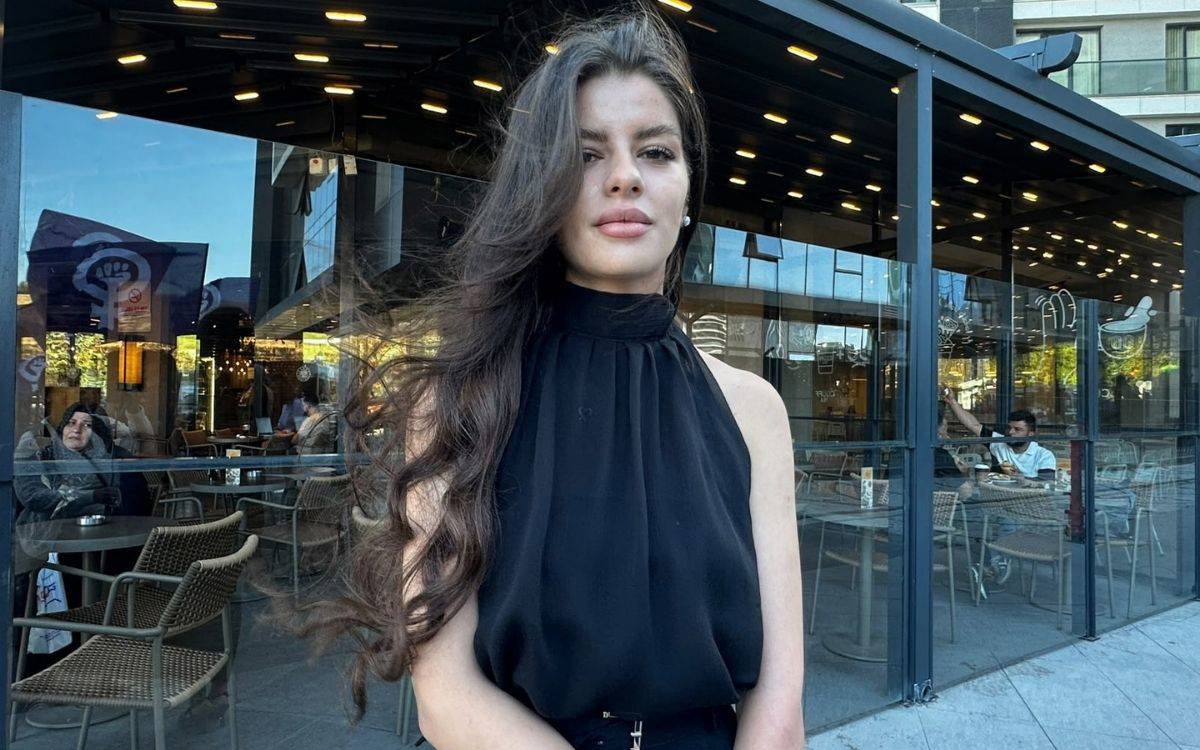

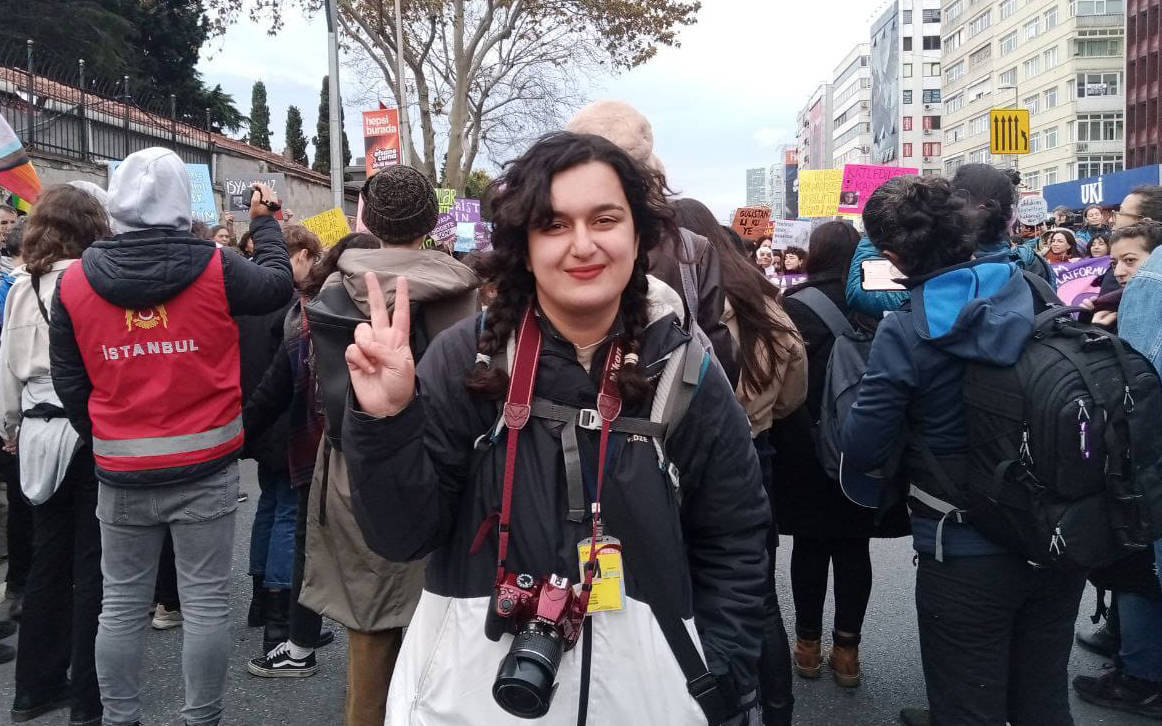



In her responses sent from Bakırköy Women’s Closed Prison, ETHA news agency reporter Elif Bayburt describes both life behind bars and the state of press freedom in Turkey.
Bayburt says she spends her days in prison “following the news, reading, and writing.” At the same time, she draws attention to serious rights violations she has witnessed inside: “Every day, I observe the difficulties prisoners face with different illnesses... There are people who are not released even though they have completed their sentences.”
According to Bayburt, journalism requires continuing to bear witness no matter the circumstances: “A journalist’s duty is to bear witness under all conditions and to convey that testimony to millions.”
Continuing journalism in prison
How does daily life unfold in prison? How do you spend your days, and what are you reading?
In fact, friends of ours who had been imprisoned before always used to say, “Prison has its own agenda,” but I never really believed it. Now I see that it really does. Here, organizing daily life, from cleaning supplies bought at the prison canteen to meal times, water, or even the hatch opened for that reason, occupies an important place. If I were to describe the daily routine in detail, hour by hour, but in general the day passes with these things, along with following the news, reading, and writing.
What am I reading? With the many recent developments and debates surrounding the third imperialist war of division, I had already thought that it might be useful to look back again at earlier imperialist wars of division and to read theoretically about imperialism as well. I had begun reading in that direction outside, and I am continuing it here. More specifically, I am reading about the Weimar Republic after the 1918 German Revolution and, ultimately, Hitler’s fascism, where revolutionaries stood in that historical process, what they did, and also about the October Revolution that took place in the same period and the early years of the USSR. I think this is also important for understanding the present day.
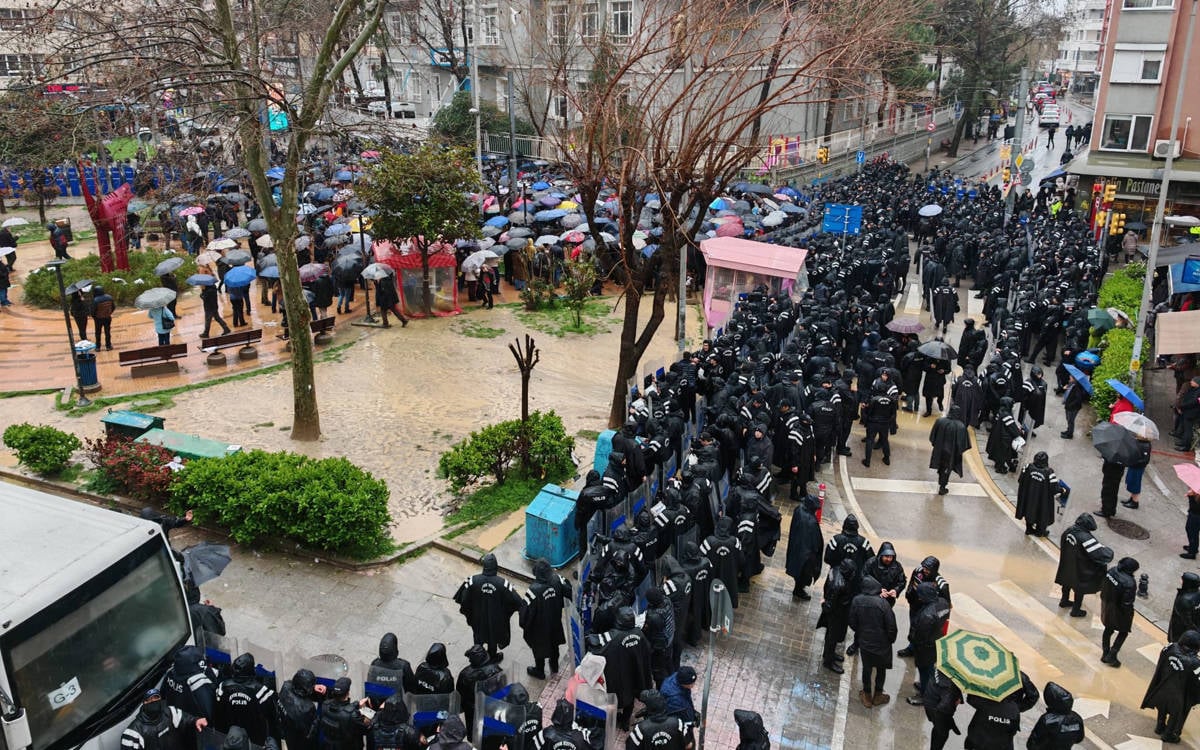
For journalists in Turkey, fighting court cases is becoming part of the job
What is it like to practice journalism under these conditions? How does imprisonment affect the picture?
We live in a geography where there is no press freedom. For that reason, we face accusations over what we write and the reports we produce. Our social media accounts are shut down, our news sites are blocked, newspapers are confiscated, and reports are censored. We are subjected to police violence while covering protests. We are detained, and even arrested. And throughout this process, we try to remain in solidarity with our colleagues.
Under these conditions, life becomes extremely difficult in prison for journalists who do not submit to those in power. They face pressure. I can say that, under all this pressure, the possibility of being arrested never really leaves our minds.
Of course, being confined to a narrow space, cut off from life as it moves in the streets, and especially being unable to be present at the most intense moments of the struggle of women, young people, workers, and laborers is very difficult. In this process, we are also trying to continue our profession from inside.
I was detained while covering March 8. The March 21 Newroz period has already passed. May 1 is approaching. We write articles, we continue our reporting. A journalist’s duty is to bear witness under all conditions and to convey that testimony to millions.
After I was arrested, I thought this: at this moment in history, I will bear witness from Bakırköy Women’s Closed Prison. But that has its limits. Because of the court process and censorship over the press, doing journalism becomes more difficult. Over the course of the week, I follow television channels.
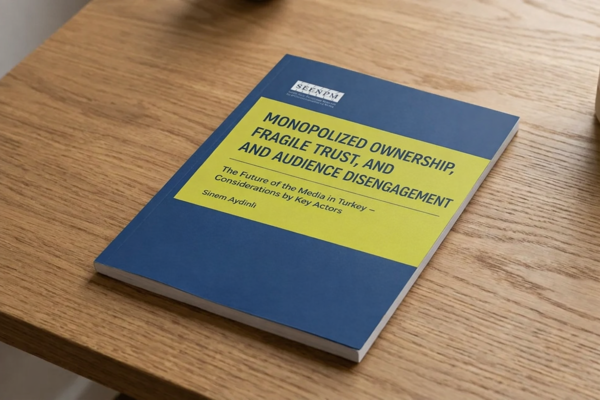
Turkey's media landscape: multiplicity without pluralism
People not freed despite completing sentences
What would you like to say about the condition of sick prisoners you have witnessed in prison?
I am observing Elif Vural, a sick prisoner of 32 years, with whom I stayed in this same prison in 2009. Every day, I observe the difficulties prisoners face because of different illnesses. If I were outside, I would be reporting on how these patients are not being treated. Even though Elif completed her 30-year sentence, she was not released.
I saw it with my own eyes, the doctor, the guard, the prison director...
I witnessed prisoners in the prison suffering from illnesses at various levels of severity. At Bakırköy Prison, for example, there is an 86-year-old sick prisoner.
For example, Fatma Saygılı had just undergone surgery when she was detained. After being discharged from the hospital, she was detained again.
For example, Songül Aktaş has undergone 23 operations and 3 angioplasties. She has serious heart and bone conditions. Even though a doctor said an urgent decision was necessary, she was not released.
These are just examples, and I witnessed all of them. And I saw that not one of them was treated. I witnessed how prisoners who had completed their sentences were still not released.
I continue writing about the situation I have witnessed and am trying to convey to the public as a journalist. Final words: As we talked about before, as women stay in prison, life passes by quickly. It becomes difficult for your voice to spread. One phone call per week, letters are more limited. Because we are numerous in prisons, it’s more difficult to be visible here.
BIA Media Monitoring Reports
How do you assess the prison as a living space and experience? How does being a woman change this experience?
Prison is actually a very interesting space. It provides numerous opportunities to observe and draw conclusions about both yourself and your life outside. Living within the confines of a certain space and with limited resources, those trying to rebuild life, develop themselves, and produce, can see it as a space of expression. I try to perceive life here in this way.
Being a woman within the context of prison reality can be defined as a place where some of the basic anxieties are alleviated. Here, you are not only restricted to living in a particular space, but it also involves a serious break from the reality outside.
However, here, the clothes you wear, the slippers you put on, the soap you get, and the food you order all emphasize that, outside of the conditions you are imprisoned in, there is no space for life. Women work to maintain life in prison. Many tasks are carried out by women, and they receive very modest wages. In fact, the invisible labor, the invisible female labor, is the most noticeable dimension in prison.
How accessible is the flow of news and information inside? How does solidarity from outside reach you?
Inside the prison, despite not having access to the internet, we do have access to a very limited number of newspapers/news channels. We try our best by reading daily newspapers and books. We’ve also made an effort to write about this process and send it to you. Apart from that, we’ve tried to make efforts towards writing about social media.
Throughout March, we received many cards from our colleagues and from our friends in women’s organizations. We also received many updates about the solidarity shown to us from outside. This made us very happy. Of course, continuous solidarity is essential. Everyone needs to see solidarity with us, not just as something done for us, but as part of a broader social liberation. Therefore, I want to thank once again everyone who has helped grow this solidarity with us.
How do you assess press freedom in today’s climate? What would you like to say to the outside world?
In today’s climate, it is difficult to talk about press freedom. What we are going through is just a part of a broader attack. Every day, we are confronted with new bans and operations. We are going through a process in which the government deepens its policies of war and censorship, trying to legitimize its political agenda with propaganda tools and suppress the public’s reaction. In this process, journalists, as well as everyone who seeks the truth, are targeted. Given the increase in detentions, arrests, and practices, we need to stand together in the face of these attacks.
For me, the most challenging part of imprisonment is not the physical conditions of the prison, but the state of being cut off from communication. Therefore, trying to connect the inside with the outside is probably one of the most meaningful steps we can take.
As political prisoners, journalists, unionists, representatives of political parties and women’s organizations, and socialist women fighting in the struggle, we are not alone despite being imprisoned. What we trust is the fact that the struggle continues outside. That’s why we thank everyone who is part of strikes, workers' resistance, marches against femicides, youth actions, and movements where the people shout their demands. Seeing the growth of the struggle gives us strength.
We believe our colleagues will also be the voice of this struggle and work tirelessly for it. Not only do we miss being among you, but we also try to be the voice of political prisoners here, putting effort into maintaining our strong connection with you.
'The struggle for a free future continues'
How have you observed the solidarity of press and professional organizations after your arrest? What areas do you see as lacking in this regard?
On the day of our arrest, we learned about the press statement held in front of the courthouse with the participation of press organizations and our journalist friends through our comrades. Later, there was also a press conference, but it didn’t get coverage. We think the reason for this is the censorship environment. Our social media accounts were blocked during our detention. Still, general news is being produced. Many solidarity reports are made, but they often fall short. For example, actions held by the women’s councils of the DEM Party and HDK in front of the prison were reported as weekend news. News outlets like Sendika.org, BirGün, Evrensel, and Yeni Yaşam have reported. Some of our colleagues have also mentioned the social media posts made at times. However, there isn’t much of a flow of information regarding what is happening outside. Therefore, we can't fully gauge the extent of solidarity.
After March 8, we received cards and letters from our colleagues at MA, Jinnews, TGS, and some unionized colleagues. MA and TGS lawyers visited us. However, most of the communication could not be established directly due to transportation issues. I believe this is an important problem. From time to time, our detention is brought up on Halk TV. The letter I sent to Halk TV was read. The solidarity of the working class is stronger, but it is not reflected enough to us. These news could be made and accessible. BirGün newspaper has played a crucial role in this. Living with the visibility of numerous prisons outside is not easy. The number of detained journalists is not negligible, and I hope information about what’s happening outside will be sent to us.
How should the fight for press freedom be carried out for detained journalists? What kind of collective struggle is needed?
The struggle for press freedom occupies a critical place. When journalists are outside, the news we produce represents the truth; within prison conditions, it becomes the struggle for solidarity with the truth inside, and for amplifying that voice.
Journalists detained from Kurdish media and socialist revolutionary press are not being sufficiently covered in the media. This is actually an important issue. Because this isn’t just the struggle to free individual journalists, but part of the broader struggle for press freedom. Unfortunately, this is a situation we encounter often. We need to put an end to this first and foremost.
The relationship between press organizations and detained journalists is also not at the level it should be. Many journalist friends are fighting for our release. Their efforts are very valuable, and I thank them all. However, in order to achieve results, this struggle needs to be organized. The efforts of individual people will not bring about the result we want.
What needs to be done during this period when journalists are detained is clear. A struggle should be initiated under the leadership of journalist friends, press organizations (unions, associations, platforms), and human rights organizations. This will include the participation of working classes, workers, women, youth, environmental defenders, Alevis, and the Kurdish people, as part of defending the right to access news. The struggle for free futures will continue both inside and outside. There is something everyone can do. Through you, I want to send my love to all the journalist friends involved in this struggle.
*On Feb 3, during an operation targeting the Socialist Party of the Oppressed (ESP) in 22 cities centered around İstanbul, Gayıp was arrested on February 5 and has been in prison for nearly two months. Journalists Nadiye Gürbüz, Elif Bayburt, and Müslüm Koyun, employees of ETHA, were also arrested within the same investigation. (EMK/VK)