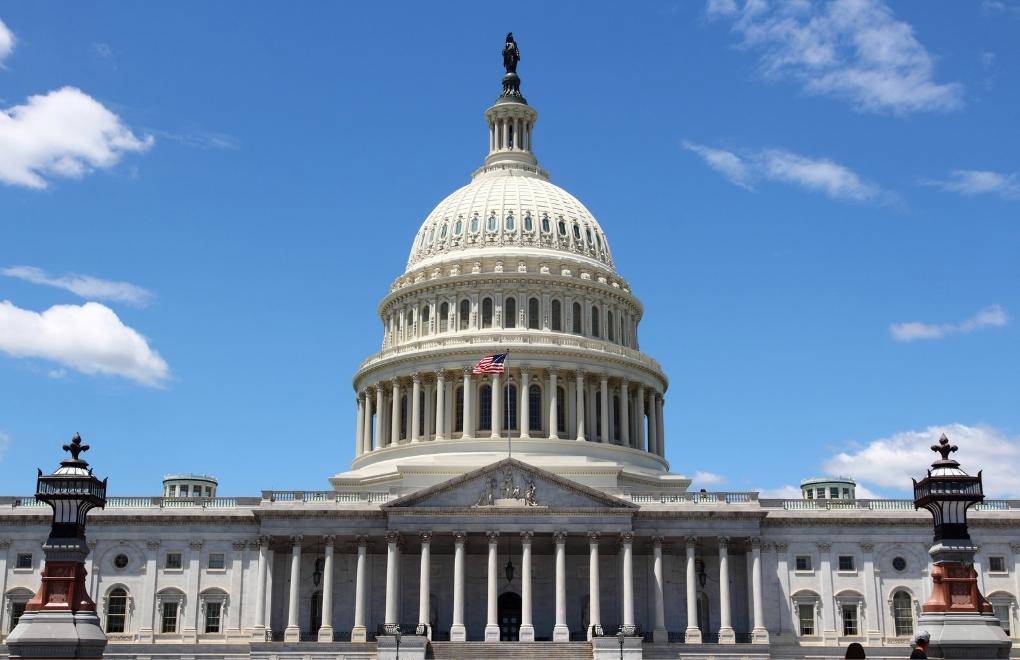




The US Constitution regulates the powers of the President and Congress. It grants only Congress the power to declare war, while allowing the President, as head of the armed forces, to intervene in the event of an attack on the US or its military. Trump's attack on Iran following the operation against the Venezuelan president, without seeking congressional approval, has accelerated the ongoing debate over the war power. The US Constitution is structured around the principle of separation of powers and maintains a system of checks and balances. While the President alone holds executive power, his powers are limited by Congress and the judiciary. For example, the appointment of secretaries and high-level executives, along with the approval of treaties, are subject to Senate approval, and executive orders can be subject to judicial review.
On the other hand, while the separation of powers between the President and Congress is established as a basic principle, the Constitution also dictates that in some cases, the powers of the executive and Congress can be exercised jointly. The constitutional articles designed to regulate the use of armed forces are seen as a good example of concurrent powers.
The power struggle between the president and congress
Regarding the use of armed forces, Article II of the Constitution states that "the President is the commander-in-chief of the armed forces of the United States and of the militia of the states." Article I, which regulates the powers of Congress, states that "the power to declare war belongs to Congress."
In general, presidents have interpreted the provision designating them as commander-in-chief of the armed forces to mean they have been granted discretionary power over the use of the military. Although this approach has often met with objections from Congress and some scholars, it has gained a certain acceptance and continuity since World War II.
Meanwhile, disputes over war powers between the President and Congress have been ongoing for years because military operations initiated by presidents often lead to conflict without prior notification to Congress. Despite accusations of constitutional violations, presidents almost always claim that Congress's power to declare war was not violated, maintaining that they only conducted limited-term military operations with specific purposes. In other words, they defend themselves by claiming they acted within the limits of their granted powers.
Throughout the more than 200-year history of the United States, despite the nation engaging in numerous military operations and wars, Congress has only used its war powers 11 times. All other operations or conflicts were carried out without congressional consent. These include multiple interventions in Central America, as well as the Vietnam, Afghanistan, Iraq, and Libya operations. Meanwhile, in some cases, the President initiated military operations, and Congress subsequently granted authorization to continue them without formally declaring war.
The 1973 War Powers Act
In the final years of the Vietnam War, in 1969, President Nixon ordered the bombing of Cambodia without informing Congress, and in 1972, he ordered the mining of North Vietnamese ports to counter the risk of collisions with Soviet and Chinese submarines. He then ordered the heavy bombing of Hanoi, again bypassing Congress, and in 1973 initiated negotiations to end the war. With the death toll approaching 60,000 US soldiers, public pressure mounting, and prior congressional attempts to limit executive decisions failing, Congress passed the War Powers Act in 1973 with a two-thirds majority, overriding Nixon's veto. This act was seen and hoped to be a significant step in binding presidential authority.
According to this law, the President is authorized to send armed forces abroad only upon a declaration of war by Congress or in the event of an attack on US territory or the military. It requires the President to notify Congress within 48 hours of deploying troops and mandates their withdrawal within 60 days unless Congress declares war or grants an additional 30-day period.
In fact, this law aimed to compel presidents to work in coordination with Congress when making decisions regarding military operations. However, the attitude of presidents in the post-1973 period has not differed from before, and the desired coordination has not been achieved. Presidents have often chosen to inform Congress by sending a report after an operation has already begun, despite objections. An analysis of these reports indicates that presidents, regardless of the scale of the operations, claim they initiated military operations within executive authority without using the word war, asserting that no constitutional violation occurred.
For example, President Obama argued that the military operations he initiated were not constitutional violations and were instead limited-term, purpose-bound interventions. When Obama decided to participate in NATO airstrikes against Libya in 2011, he argued that prior congressional approval was not necessary, maintaining that the limited deployment was not a war as defined by the Constitution and that the War Powers Act authorized him to conduct military operations for up to 60 days.
On the other hand, the power of Congress to prevent military operations by limiting or rejecting budget requests has also proved insufficient. A law aimed at defunding an operation can be vetoed by the President, making it difficult to pass the legislation again with a two-thirds majority.
In 2019, Congress made a renewed effort to end the ongoing power struggles with the executive branch, calling for a fundamental reform of the 1973 law. The call stated that "the constitutional balance of power to declare war has largely shifted to the president," emphasizing the need for Congress to reassess its own privileges and responsibilities to restore the balance mandated and enshrined in the Constitution. In short, the effort was aimed at updating the 1973 law, or more accurately, fundamentally reforming it, to restrict unilateral presidential actions.
On the other hand, Congress is criticized for not always opposing the unilateral use of armed forces by presidents, often remaining silent or failing to take preventive measures, thereby implicitly approving the actions.
President Trump's use of authority
President Trump faces increasing criticism for allegedly violating the Constitution and the founding principles of the United States by continuing to order military attacks against certain countries without congressional authorization or an imminent threat to the US.
During Trump's first term, Congress passed resolutions twice under the War Powers Act: in 2019 to force an end to US involvement in the Saudi war in Yemen, and in 2020 to prevent escalation after the killing of an Iranian general. (H. Con. Res. 83, Congress.gov.)
Meanwhile, more than 100 US-based international law experts, institutions, and NGOs issued a statement emphasizing that the US and Israeli attacks against Iran on Feb 28, 2026, constitute a clear violation of the United Nations Charter. The manner in which the conflict is being conducted and statements made by high-ranking US officials raise serious concerns regarding violations of international humanitarian law, including potential war crimes.
While criticism and debate surrounding the conflict continue, the House of Representatives' adoption of a resolution aimed at halting further military action by Trump, passed by a vote of 215 to 208 on Jun 3, 2026, is seen as a significant development. However, President Trump's characterization of the vote as "meaningless" and his criticism of the four Republican signatories as "unpatriotic" and "show-offs," saying they "should be ashamed of themselves," reveals his well-known position on executive authority.
Conclusion
In short, alongside the inherent difficulty of amending the US Constitution, it is evident that congressional attempts to curb executive power through legislation and resolutions have failed.
Given the president’s role as commander-in-chief and the relative flexibility granted by the Constitution in foreign policy, presidents will likely continue to exercise war powers without consulting Congress. Consequently, the conflict between the executive and legislative branches is expected to continue in the coming years. (NT/VK)