



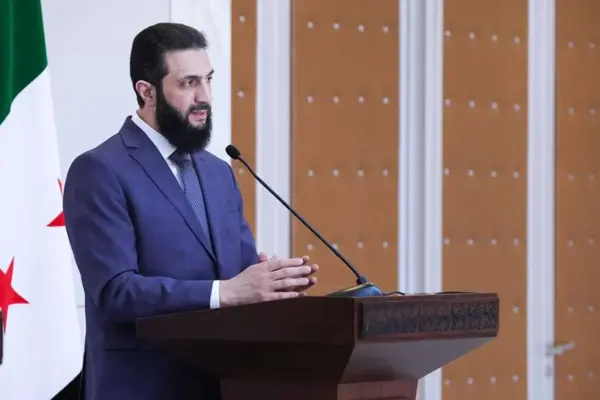
Syria's new temporary constitution, effective as of Mar 16, 2025, created a presidential regime, unified all powers in Interim President Ahmed al-Sharaa's hands, and failed to introduce necessary arrangements for the recognition of minorities.
Overview of the Constitutional Declaration
Syria's interim constitution, known as the Constitutional Declaration, establishes a five-year transitional framework signed by interim President Ahmed al-Sharaa. The Declaration explicitly grants vast power to President al-Sharaa for a period of five years, without any checks and balances. The President holds executive power as the head of government and Supreme Commander of the armed forces. He appoints one or more Vice Presidents, his Cabinet, and ambassadors, and he also heads the National Security Bureau.
Furthermore, he appoints a committee that will elect two-thirds of the People’s Assembly, the Syrian parliament. He directly appoints the remaining one-third of the assembly. Although the judiciary is declared independent, all seven members of Syria’s highest court, the Supreme Constitutional Court, will be appointed by the President. The former Constitutional Court is abolished. The Declaration is also silent regarding the duration of a judge’s tenure, which is essential for judicial independence. [1]
The Declaration enshrines an impressive list of human rights, including cultural and religious diversity, the right of women to education and work, and freedom of expression, as well as all the rights and freedoms in international human rights treaties ratified by the Syrian Arab Republic. However, many of these rights are not in compliance with other provisions in the Declaration. For example, the right to be free from religious discrimination and the right to freedom of belief are incompatible with provisions requiring that the President must be a Muslim and that Islamic jurisprudence is the principal source of legislation. These provisions favor Islam and specifically prioritize Abrahamic religions, meaning Islam, Christianity, and Judaism, rather than granting protections for all beliefs and religious practices.
The Declaration emphasizes the need to preserve the unity and integrity of Syria, its land, and its people. It criminalizes calls for division and secession, and requests for foreign intervention or external support. Article 1 further states that Syria is an indivisible geographical and political unit. Interpretation of these constitutional arrangements makes it clear that the traditional centralist, unitary state approach does not allow any discussion about the possibility of any form of autonomy or power-sharing. [2]
‘It's a recipe for one-man rule’: Syria’s new constitution shatters hopes
The Declaration from a minorities’ perspective
As seen from the overview above, the transitional period is codified through the Constitutional Declaration, yet the legal status of minorities in Syria remains largely unaddressed. This failure has created significant uncertainty about the future and rights of minorities. In other words, although interim President Ahmed al-Sharaa pledged to protect minorities, the declared constitution and enacted legal framework have faced serious criticism for failing to provide clear, enforceable, and practical protections for religious and ethnic minorities.
Furthermore, the Constitutional Declaration establishes a centralized state under the name "Syrian Arab Republic," recognizes Islamic law as the main legislative source, and declares Arabic as the official language of the country. Besides these provisions, the Declaration stipulates that the president must be a Muslim. These lines demonstrate that the Declaration has adopted Islam as the main pillar of the interim constitution. In Syrian history, the dominant status of Arab identity and Islam in the constitution has served to strengthen the power of the ruling elite while causing significant social, sectarian, and political tensions.
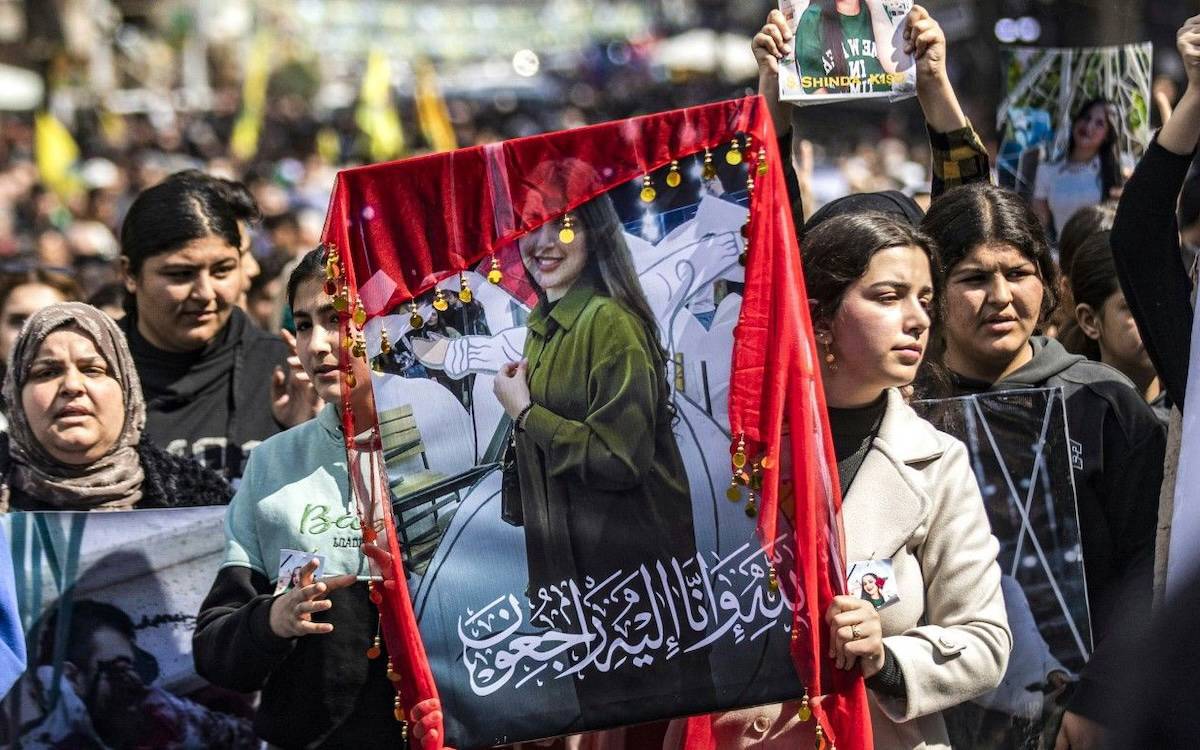
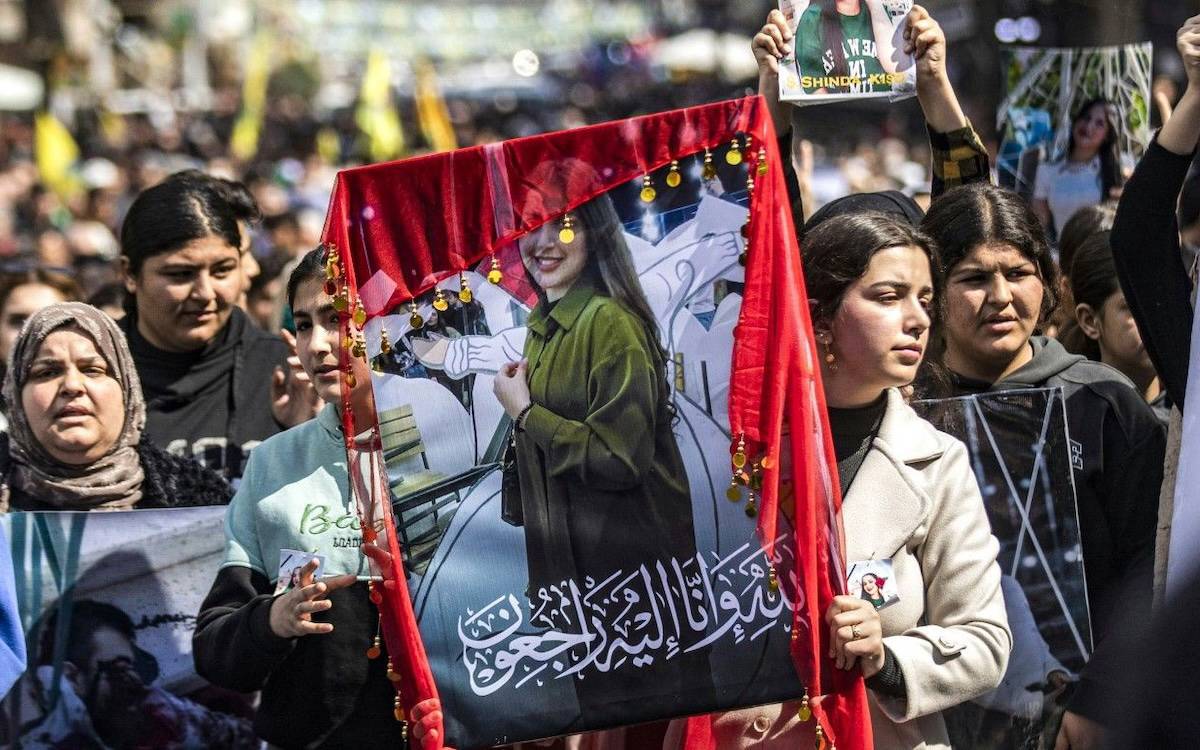
Consequently, this constitutional arrangement has raised significant concerns regarding the rights and safety of religious minorities, such as Christians, Alawites, and Druze, as well as ethnic minorities, like the Kurds, due to the lack of explicit protections and the failure to recognize non-Arab ethnic identities. Additionally, despite the President’s promises of inclusion, religious minorities continue to face targeted attacks, including assaults on Christian churches and retaliatory violence against Alawites.
Meanwhile, as of Mar 2026, authorities in Damascus under the new Islamist-led government have imposed strict bans on the sale and consumption of alcohol in restaurants and bars. As an exception, alcohol sales are restricted to sealed bottles for takeaway in specific, predominantly Christian neighborhoods.
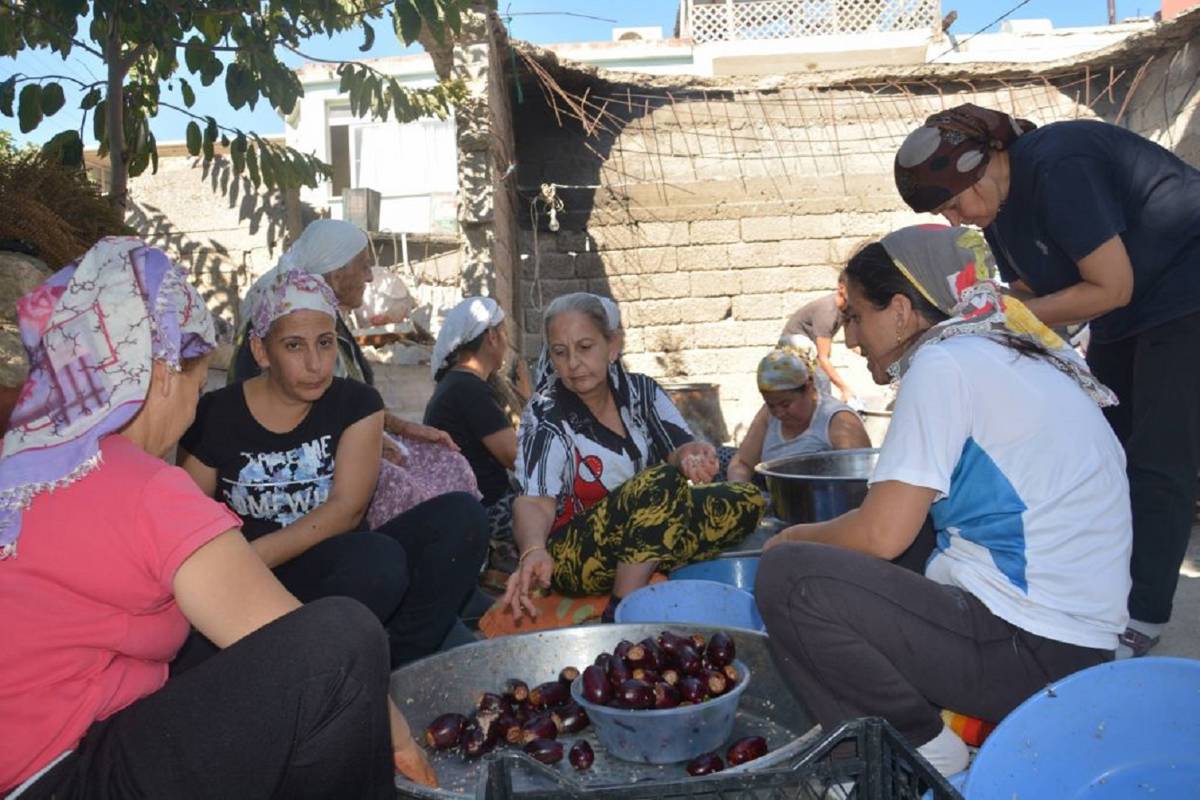
ALAWITES IN TURKEY AND SYRIA
A struggle for identity beyond invisibility and fear
Minorities are striving for recognition
Minority groups in Syria, including Kurds, Druze, Alawites, and Christians, have actively started demanding formal recognition of their identities, rights, and representation within a new decentralized state structure. As of May 2026, several international media agencies reported that due to constitutional uncertainty, the transitional period has been dominated by political negotiations and conflicts between the government and minorities seeking recognition. The political landscape remains highly volatile, as these minorities face an uncertain future under the new dominant Islamist transitional government.
After raised expectations turned to disappointment during this period, Kurdish political and military leaders entered negotiations with central governments across the Middle East to secure constitutional recognition of their identity, language, cultural rights, and regional autonomy. In January 2026, following intense clashes, the President announced a decree recognizing Kurdish as a national language and restoring citizenship for Kurds. However, despite this formal recognition, the Kurdish language continues to face difficulties in public institutions and education. Officials in Damascus have classified Kurdish as a foreign language. This means Kurdish students in some regions are expected to learn core subjects, like math and science, in Arabic first, rather than using Kurdish as the primary language of instruction. This approach, following the declaration of Arabic as the official language, keeps the legal status of Kurdish restricted to an abstract national language term. Consequently, there is no official equality with Arabic in public affairs, or even in the education of Kurdish students, even in regions dominated by the Kurdish population. [3]
Early in May, the Syrian Justice Ministry removed the Kurdish nameplate from the Hasakah Palace of Justice, replacing it with an Arabic and English one. This intervention sparked massive public outrage and protests across the region, with Kurdish advocacy groups arguing that their language is a core part of Syria's indigenous identity and not a foreign imposition. In short, conflicts over the status of the Kurdish language in public institutions and education are still ongoing and remain unresolved.
Alawites, the dominant minority group under the Assad regime, have been the target of violence and revenge attacks by armed groups and informal militant groups acting on behalf of the new leadership following the fall of Bashar al-Assad. According to figures provided by the UN, massacres have resulted in the deaths of over 1,400 Alawite civilians, and tens of thousands have been forced to flee their homes. UN human rights experts underlined that war crimes may have been committed in predominantly Alawite areas of Syria during a wave of deadly violence earlier this year. Having lost their former status, Alawites are suffering from insecurity and economic deprivation. Many in the coastal heartland fear vengeance and are seeking a safe place within the new political framework. [4]
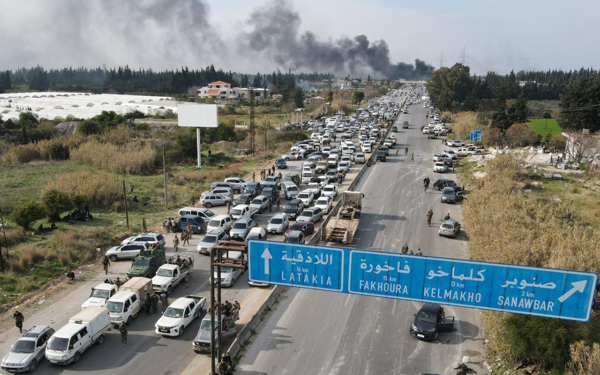
WITNESSES OF THE SAHEL MASSACRE
Zaynab from Latakia: We just want to live in security and peace
The Druze community in southern Syria, particularly in Suwayda, has developed a high degree of local autonomy and acts as a buffer zone near the Israeli border. Although there is no unified consensus, the Druze community has maintained a region under the influence of Israel and advocates for a democratic, decentralized Syria. Israel has used military force to defend the Druze minority to establish a buffer zone with a loyal community, aiming to prevent hostile regional powers from gaining ground.
Christian and other religious minorities also seek to preserve their communities' identities against a rising Arab-Islamist regime influenced by HTS. While religious freedom was theoretically promised, Yazidi communities have reported destroyed shrines and fear increased marginalization. [5]
Furthermore, the Declaration explicitly adopts international human rights law, stating that all rights and freedoms stipulated in international human rights treaties, charters, and agreements ratified by Syria are considered an integral part of the document. Although these provisions are theoretically significant for protecting minority rights, the government fails to honor them in practice. This authoritarian political stance has caused widespread disappointment among minorities regarding their future, as conflicts over recognition continue.
Conclusion
Historical experience proves the existence of a close relationship between the legitimacy of political systems and the recognition of minorities and identities. In today's understanding of multiculturalism, cultural differences are not considered a threat, but rather a social asset representing the diversity of a society, serving as the foundation of social peace, stability, and a secure, pluralistic democratic society.
In brief, this existing constitutional structure of Syria, based on a single Arab-Islam cultural group, fails to recognize and instead ignores other cultural groups and identities. This raises questions about the legitimacy of the system and fuels ongoing conflicts. If the permanent Syrian constitution to be drafted after five years fails to accommodate minorities, it may fail to end the ongoing conflicts and the instability of social fragmentation. In order to end these conflicts and establish a peaceful social order, the new constitution must adopt an inclusive approach, designing power-sharing arrangements that recognize all social groups, minorities, and identities.
In other words, to form a democratic structure and bring peace and social order to Syria, the transitional government must accommodate all differences and identities, as they constitute the primary elements of a multicultural social structure. (NT/VK)
References
1) https://syriaaccountability.org/a-problematic-constitutional-declaration/
2) https://constitutionnet.org/sites/default/files/2025-03/2025.03.13%20
3) https://www.kurdishpeace.org/research/kpi-qamishlo/multilingual-education-will-help-syria-s
4) https://news.un.org/en/story/2025/08/1165649
5) https://newlinesinstitute.org/middle-east-center/preventing-another-sectarian-authority