










Facing the Srebrenica genocide requires recognizing the brutal reality of the worst atrocity on European soil since World War II. In July 1995, Bosnian Serb forces systematically executed at least 8,372 Bosniak Muslim men and boys and forcibly expelled approximately 30,000 women, children, and elderly people from a UN-designated 'safe area'.
In 2024, the UN adopted July 11 as the International Day of Reflection and Commemoration of the 1995 Genocide in Srebrenica. With the adoption of this resolution, the General Assembly made the genocide committed in Srebrenica a subject of international justice. At the same time, facing this dark chapter of history and the political denial by the parties behind these massacres must be addressed while victims still await justice. Thousands of families of victims of the Srebrenica genocide continue to be denied justice, truth, and reparation, as the world marks the anniversary of the genocide that left more than 8,000 people dead, and more than 1,000 victims remain missing.
The Srebrenica genocide, one of the worst crimes committed on European soil after the Second World War, must be assessed as a serious warning of potential violence if the world fails to act in the face of atrocities.
The genocide
The conflict in Bosnia and Herzegovina was the most violent fighting after the breakup of the former Yugoslavia. Throughout the conflict, the three major ethnic groups in the region, the Bosnian Serbs, Bosnian Muslims, and Bosnian Croats, struggled to gain territorial control. In eastern Bosnia, at Srebrenica, violence targeted primarily Bosnian Muslims as Bosnian Serb forces sought to establish ethnically homogeneous territories.
Amid the conflict in the Balkans during the 1990s, Srebrenica was identified as a 'safe area' by the UN for civilians fleeing fighting between Bosnian government and separatist Serb forces. On July 11, 1995, Serb forces under the command of Bosnian Serb General Ratko Mladić attacked Srebrenica and conducted a 10-day operation of ethnic cleansing. More than 8,000 people were killed, mainly Bosnian Muslim men and boys.
Both the International Criminal Tribunal for the Former Yugoslavia (ICTY) and the International Court of Justice (ICJ) concluded that the mass killings committed in Srebrenica in 1995, during the wider conflict in Bosnia and Herzegovina (1992–1995), constituted genocide.
The ICTY indicted 161 individuals for war crimes. Ninety were sentenced, including 62 Bosnian Serbs, while 13 cases were referred to national jurisdictions. Leading figures such as Radovan Karadžić (2016) and Ratko Mladić (2017) were sentenced to 40 years and life imprisonment, respectively, on grounds of genocide.
Srebrenica survivors still searching for remains of buried relatives
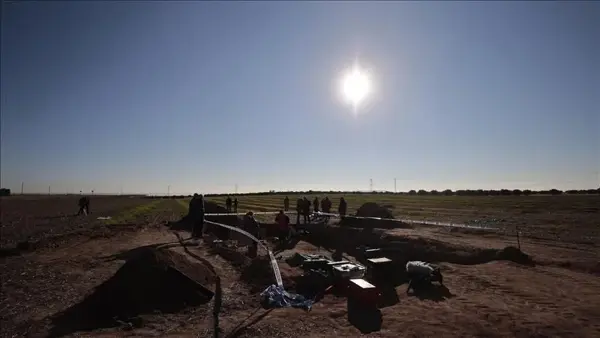
Exhumations of victims buried at various gravesites displayed the scale of violence committed by Serbs in Srebrenica. In the course of trials, the courts reviewed evidence from 21 mass graves exhumed by the ICTY between 1996 and 2000. Of these, 14 were designated as 'primary gravesites', where the victims' bodies were buried immediately after they were killed. Bosnian Serb forces subsequently altered eight of these primary gravesites in an attempt to cover up their crimes. Over several weeks in Sep and Oct 1995, they removed bodies from primary graves and reburied them in secondary gravesites. Seven of the 21 mass graves were classified as secondary burial sites.
Determining the exact number of bodies in each mass grave proved nearly impossible, as Bosnian Serb forces dismembered many remains using heavy machinery to exhume and rebury them. As a result, the remains of a single victim could be found in separate mass graves. According to experts who worked at the gravesites, the minimum number of bodies contained in all discovered graves was 2,028. In Aug 2001, prosecutors identified 18 other mass graves that had not yet been exhumed. The 2,028 exhumed bodies do not represent the total number of Bosnian Muslim men and boys killed at Srebrenica.
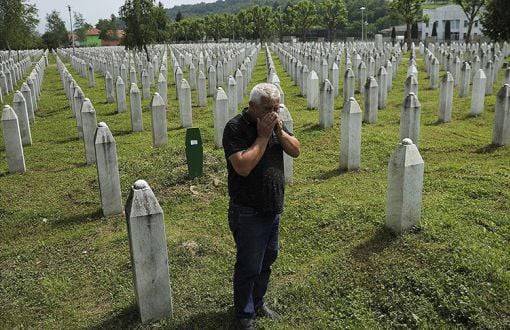
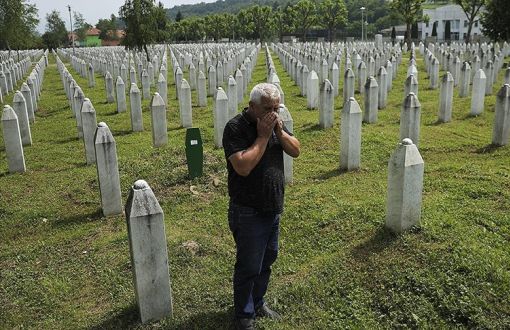
On the other hand, as the identifying DNA analysis the remains of victims seen as a very slow process, many families choose to postpone the burials ceremonies, with the hope that more matching bones would be recovered to complete their loved ones' remains. And, under these conditions, observed that every year on July 11, newly identified and verified remains are laid to rest at the Srebrenica-Potočari Memorial Cemetery with annual Collective Funerals. ( https://www.fidh.org/en/issues/international-justice/srebrenica-25-years-after-the-genocide-victims-are-still-fighting-for)
Conclusion
Systemic denial is seen as the official position of high-ranking politicians in Serbia and the Republika Srpska entity, as they continue to publicly deny the genocide and often glorify convicted war criminals. Human rights organizations, including Amnesty International and the Council of Europe, warn that this persistent political denial and revisionism deeply divides communities and blocks efforts to achieve justice as well as legal and social reparations.
More than 1,000 victims remain missing, and search operations continue decades later. DNA identification processes move slowly, leaving families waiting years to bury their loved ones.
Many lower-ranking participants and co-conspirators still live freely without facing trial. Local courts in Bosnia and Herzegovina struggle with a massive backlog of unresolved war crimes cases due to a lack of resources and political will.
The 1995 genocide in Srebrenica, alongside the 1994 genocide against the Tutsi in Rwanda, shaped the development of international criminal justice and the global resolve to prevent genocide. Today, efforts to establish accountability and search for the missing remain essential to identify victims and preserve testimonies, ensuring justice for all victims and upholding the promise of "never again." (NT/VK)