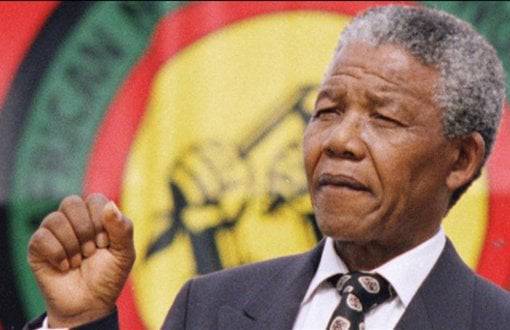







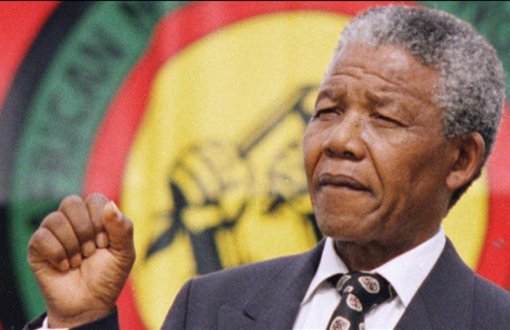



As of November 2009, in recognition of his contributions to the promotion of a culture of peace and freedom, the UN General Assembly declared Mandela's birthday, July 18th, as "International Nelson Mandela Day." It acknowledges Mandela's values and commitment to service in race relations; the promotion and protection of human rights; reconciliation; gender equality and the rights of children and other vulnerable groups; the fight against poverty; and the promotion of social justice. This resolution also recognizes his international contributions to the struggle for democracy and the promotion of a culture of peace worldwide.
Nelson Mandela is among the world's most respected leaders for his struggle against the racist white minority regime, his peaceful and conciliatory approach after long years in prison, and his leadership in his country's transition to a democratic system. Mandela's strong will and personality, his resilience, and his unwavering commitment to the ideal of "freedom for all blacks" have placed him in a special position in the history of freedom struggles.
Mandela was born on July 18, 1918, in Transkei, into a family belonging to the Madiba clan, a subgroup of the Thembu tribe. One of thirteen siblings, Mandela was the first in his family to attend school. At the age of 19, he had the opportunity to attend one of the few colleges that provided education for blacks. He wore pajamas and brushed his teeth for the first time in his life. He met Oliver Tambo, his close comrade who would later lead the ANC and with whom he would establish the youth wing of the ANC.
As one of his country's first black lawyers, Mandela dedicated his professional life to this cause. His work in the youth wing of the African National Congress, and subsequently as leader of the ANC's armed wing, achieved great success in securing the support of the international community, particularly African countries. However, although he managed to convince the ANC to start an armed struggle and secured the support of Blacks, he was soon captured and sentenced to 27 years in prison.
Prison years
Nelson Mandela concluded his four-hour defense at his 1963 Rivonia trial—where he was sentenced to life imprisonment—with these historic words: “Throughout my life I have dedicated myself to the struggle of the black people. I have fought against white supremacy, and I have fought against black supremacy. I have cherished the ideal of a democratic and free society in which all persons live together in harmony and with equal opportunities. It is an ideal which I hope to live for and to achieve. But if needs be, it is an ideal for which I am prepared to die.”
Mandela's prison years, which began in 1964 on Robben Island when he was 46, demonstrated his remarkable ability to endure harsh conditions. In the small cells where they were kept, prisoners slept in their clothes under thin, worn blankets during cold weather and bathed with cold water. Every day they had to get up at 5:30 a.m., empty their toilet buckets, and endure inadequate, low-quality meals.
As soon as they arrived on Robben Island, Mandela emerged as the informal leader of the group. He and his close friends from the Rivonia Trial made it clear to the authorities that they would not negotiate or accept any privileges in return for cooperation. Anti-apartheid veteran Ahmed Kathrada detailed in his books how the apartheid prison administration frequently offered preferential treatment and lighter conditions to political prisoners in exchange for cooperation. Nelson Mandela consistently rejected these privileges, refusing to accept any favors that were not extended equally to all of his fellow inmates.
From their first days in prison, they were forced to break stones in a lime quarry, during which they were forbidden to speak to each other. This hard labor lasted for 13 years. To get news from the outside world, they searched for scraps of newspaper that the guards used to wrap their sandwiches. Restrictions on communication and correspondence were strictly enforced to ensure the prison administration maintained full control over Mandela. He was prevented from contacting his lawyers, and most letters addressed to him were withheld. His wife, Winnie, visited him for the first time three months after his arrival, but had to wait two years for their second meeting. He was also unable to attend his mother's funeral. As the leader of the political prisoners, he was in constant conflict with the administration and, whenever possible, explained the harsh prison conditions to political visitors. Thanks to his legal education, Mandela drafted various appeals to the administration regarding their mistreatment, though they went unanswered for many years.
In 1977, the forced labor in the quarry finally ended, and he was allowed to cultivate a small garden of tomatoes and onions in the prison yard. In 1978, the prison responded to requests for radio access by establishing its own internal broadcast system. Finally, in 1980, they were allowed to receive newspapers, though "objectionable" news and articles were still cut out before delivery. In early 1980, after the government decided to contact Mandela, his treatment by the prison administration began to improve. In 1982, his 18-year imprisonment on Robben Island came to an end when he and his comrades were transferred to Pollsmoor Prison in Cape Town, where conditions were much better. There, he continued his hobby of growing vegetables in halved barrels on the prison roof. In December 1988, he was transferred to Victor Verster Prison, from which he was finally released on February 11, 1990.
Leadership in difficult years
A key feature that made Mandela special was his extraordinary, conciliatory leadership as the country's first Black president during the transition of power from the white supremacist minority to the Black majority. After 27 years in prison, he set aside personal animosity and anger, initiating a reconciliation process with the white minority and embracing the entire population. His efforts in implementing transitional justice mechanisms prevented Black-white conflict and played a primary role in establishing peace in the country.
The political climate during the negotiations with the white administration was highly unstable; armed white supremacists sought to obstruct the talks, while numerous deadly armed attacks undertaken by certain Black factions added to the difficulties of the process. In short, during the negotiations, the high number of Black casualties sparked a wave of anger within ANC circles, and cadres began calling for a return to the armed struggle and holding the government accountable.
On April 10, 1993, the assassination of Chris Hani—leader of the Communist Party, head of the armed wing of the ANC, and a close friend and confidant of Mandela—by a white supremacist plunged the country into chaos, resulting in 70 deaths and widespread protests. During this period, De Klerk’s government proved too weak to settle the conflict, and Mandela's leadership emerged as the stabilizing force, successfully preventing the chaos from escalating through his televised appeals.
Furthermore, violence continued even after the provisional constitution was approved by parliament on December 22, 1993, and throughout the election process. On March 28, 1994, attacks by those dissatisfied with the compromise resulted in the deaths of 53 ANC members at the ANC headquarters in Johannesburg. The ANC once again took to the streets, staging mass demonstrations, but these protests were met with another tragedy. Earlier, on September 7, 1992, during a protest march against the Ciskei homeland government attended by 70,000 people, 29 people had been killed by soldiers.
Mandela insisted on peace
In short, the 1990–93 period during which negotiations were carried out was also the period of the most violent clashes and the highest death toll. A total of 14,000 people are recorded as having died during this time. Despite the ongoing violence, Mandela—while advocating firmly on behalf of the Black majority—made a special effort to resume and continue the interrupted negotiations to achieve peace.
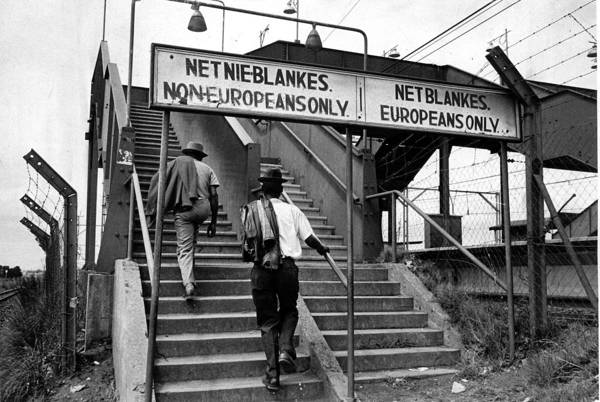
Following Mandela's resistance and efforts for peace, the apartheid system of racial segregation in South Africa came to an end. In 1993, he led the process that ended the apartheid regime and, together with President F.W. de Klerk, was awarded the Nobel Peace Prize.
In 1994, he became the first Black president of South Africa in the country's first fully democratic elections. Through his peaceful and conciliatory leadership, he achieved significant success in promoting a culture of peace and reconciliation to diminish the culture of conflict that had accumulated over the decades, earning immense respect within the international community.
After his term as president, Mandela dedicated himself to tackling social and global issues, primarily the fight against AIDS. When Mandela died on December 5, 2013, he left behind millions who mourned him but carried on his belief in equality and freedom.
References
-Nelson Mandela, Autobiography, Long Walk to Freedom. Little, Brown and Comp., New York, 1995
-David Welsh, The Rise and Fall of Apartheid, Jonathan Ball Publishers, Johannesburg & Cape Town,2009
-Ahmet Kathrada, Simple Freedom, Wild Dog Press, South Africa,