



Germany’s process of facing the past, including the policies developed and actions taken to discuss responsibility and accountability, is widely regarded in the literature as a universal model for dealing with past crimes and traumas. What can be learned from the German experience is that it is a long-term, continuous process, carried out over decades by politicians and civil society, with new questions raised by successive generations.
Germany’s “exemplary” process of confronting the past was shaped not only by politicians but also by decades of pressure and effort from human rights activists, victims, and local initiatives. It is important to underline that civil society and citizen initiatives played a crucial role in bringing this issue to the attention of political elites and the media.
Germany’s ongoing engagement with its past—especially the Nazi era and the Holocaust—has deeply shaped its political culture, public perception, and discourse. This process goes beyond historical memory; it actively influences how Germans think about nation, identity, politics, media, morality, justice, and the role of the state.
In this sense, Germany’s experience occupies a central place in academic and public debates as a model process, still discussed from historical, sociological, and educational perspectives.
This article briefly outlines the historical development and main approaches to dealing with the past (excluding colonial history), as well as their impact on national identity, memory culture, responsibility, and accountability.
The German term Vergangenheitsbewältigung, meaning “overcoming” or “coping with the past,” refers to the collective effort of German society to confront and understand the moral and political implications of Nazism, the Holocaust, and related crimes. It is not merely historical analysis but also a cultural commitment to acknowledgment, learning, and prevention.
Today, facing the past has become a central issue in public discourse, particularly in terms of its ethical dimensions and its influence on social and cultural policy. Measures such as the criminalization of Holocaust denial, the integration of Holocaust education into school curricula, and the presence of memorials, museums, and artistic productions all contribute to maintaining historical awareness in everyday life.
In short, Germany’s efforts to confront its past have expanded across political, legal, educational, and cultural domains, reflecting its acknowledgment of the crimes committed during the Nazi era (1933–1945).
After World War II
In the post-war period, there was no consensus on the meaning of 8 May 1945. Depending on political and social perspectives, it was seen either as a day of defeat or liberation, a national disgrace or a moment of celebration.
In the early years of both the Federal Republic of Germany and the German Democratic Republic, responsibility was largely attributed to Hitler and the Nazi leadership, allowing broader society to distance itself from accountability. This approach reflected a widespread tendency to avoid confronting collective complicity.
As a result, for decades, many citizens did not see themselves as complicit in Nazi crimes, and public debate on this issue remained limited.
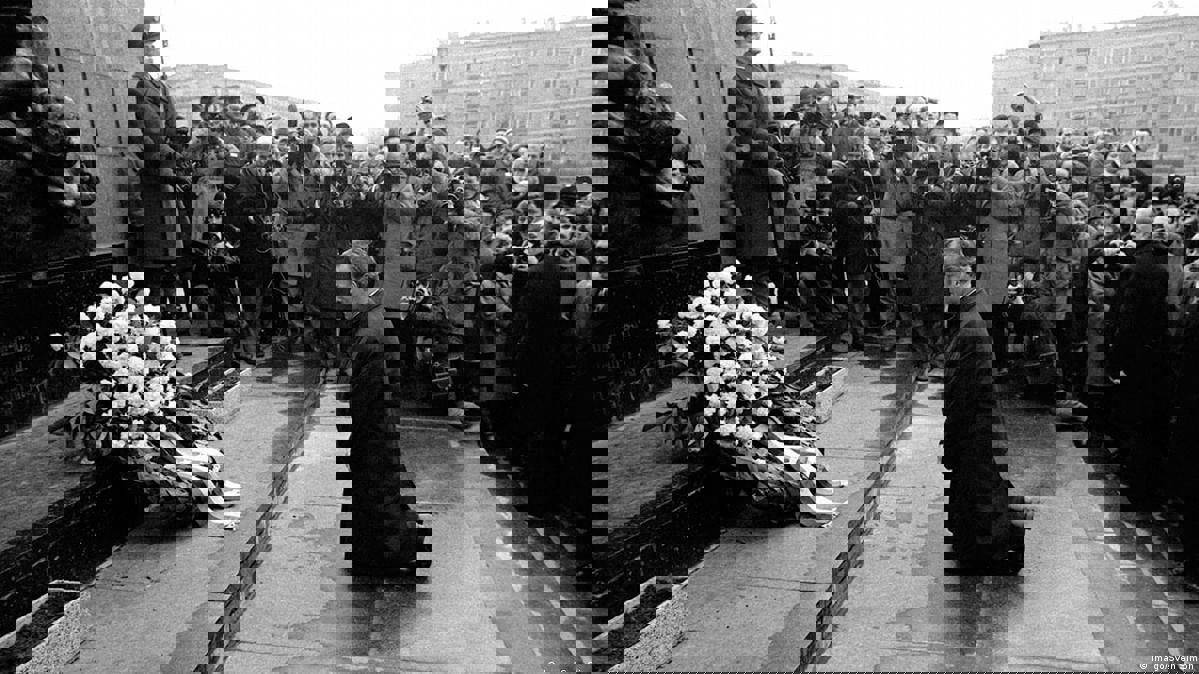
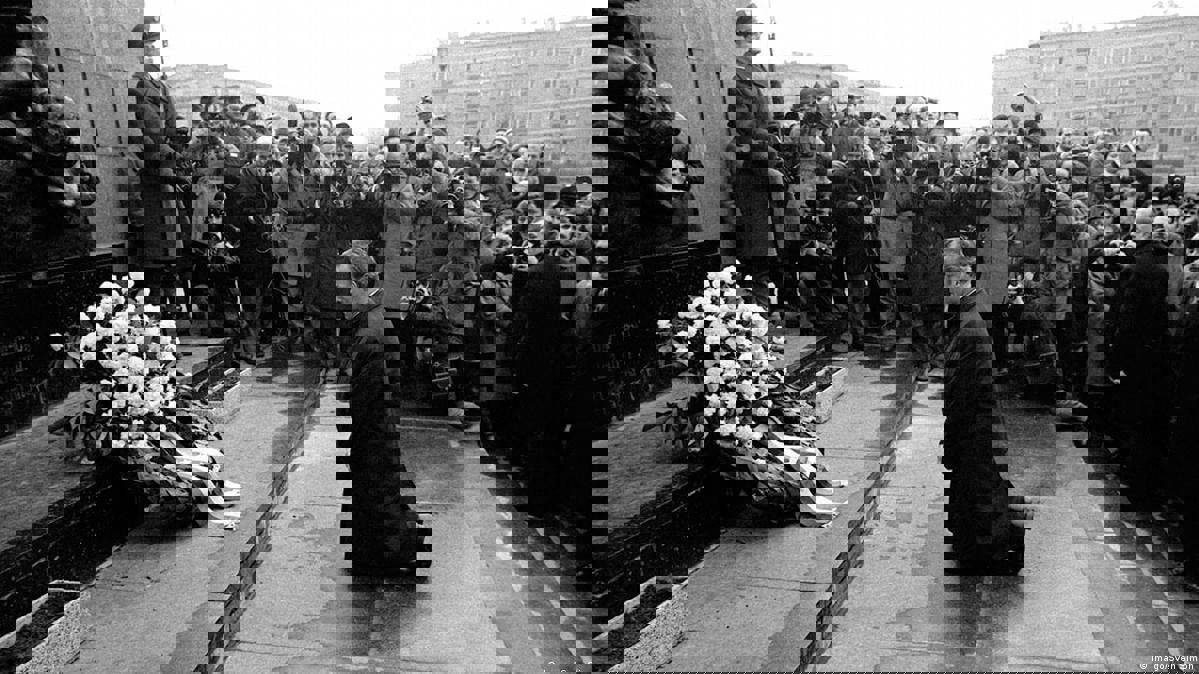
A turning point came with Willy Brandt’s kneeling at the Warsaw Ghetto Memorial in 1970, widely recognized as a powerful symbolic act acknowledging German responsibility.
Later, President Walter Scheel (1975) and President Richard von Weizsäcker (1985) further advanced the discourse by emphasizing collective responsibility and the historical roots of Nazi crimes.
Despite these developments, debates continued, including controversial attempts to frame Germans as victims of the war, which critics argued risked blurring the distinction between perpetrators and victims.
Even today, a gap persists between official acknowledgment and segments of society that resist accepting responsibility, highlighting the ongoing nature of this process.
Academic and Intellectual Debates
Academic discourse in Germany has never been uniform or uncontested. The “historians’ dispute” of the 1980s, for example, revealed deep disagreements over how to interpret Nazi crimes and their place in history.
These debates demonstrate that historical memory is not static but constantly evolving, shaped by scholarly work and public discussion.
Scholars such as Jürgen Habermas argue that modern German identity is grounded in a commitment to democracy and human rights developed through confronting past atrocities.
Today, political discourse frequently invokes historical responsibility, particularly in debates on immigration, integration, and antisemitism.
At the same time, media, education, and public institutions continue to sustain awareness, contributing to a broader societal sensitivity toward the past.
Conclusion
Germany’s confrontation with its past is a long-term, evolving process that combines education, public debate, legal measures, and cultural practices. It reflects a sustained effort to ensure accountability and prevent the repetition of past atrocities.
As a concluding remark, it is important to emphasize that Germany’s experience offers valuable lessons for other societies. The process of facing the past has played a crucial role in shaping modern German identity, grounded in pluralist democracy, human rights, and a strong commitment to “never again.” (NT/VK)