










Turkey’s official position on the US and Israel war on Iran may be neutral, but that does not mean uninvolved. NATO security systems intercepted an Iranian ballistic missile that crossed into Turkish airspace on Mar 30 in what was the fourth such incident since the start of the war.
A statement released by the National Defense Ministry said, “All necessary measures are being taken decisively and without hesitation against any threat directed at the country’s territory and airspace, and all developments in the region are being closely monitored with priority given to our national security.”
Turkey hosts significant NATO resources, such as İncirlik Air Base, Konya Air Base and Kürecik Radar Station. Iran has repeatedly denied targeting Turkey and has offered a joint investigation into the matter.

Iran denies firing missiles at Turkey after third interception in 10 days
These missiles come amidst a series of retaliatory strikes from Iran in reaction to the US-Israel war that has killed more than 1,500 Iranians as well as the country’s top officials. Iranian strikes have targeted Israeli and US military infrastructure across the region, including in Jordan, Kuwait, Bahrain, Saudi Arabia, Qatar and the United Arab Emirates. One report from the Center for Strategic & International Studies (CSIS) showed that these strikes have caused about 800 million US dollars in damage to US military infrastructure.
'Iran wouldn't attack a NATO member'
Iranian journalist and researcher Reza Talebi believes that the intercepted Iranian missiles were not actually intended for Turkey, but rather bases in Southwestern Cyprus. The missiles were then shot down by the NATO installations based in the Mediterranean along the way, with some debris landing in Turkish territory.
“There has been no confirmed ballistic missile launch towards Turkey,” he said.” What we have seen are interceptions by US naval systems, especially SM-3 middles outside the atmosphere — the debris from this interception has fallen inside Turkish borders.”
Talebi stressed that attacking a NATO member, especially one on its borders, would be highly irrational because it could invoke Articles 4 or 5, which allow members to bring issues of concern to the North Atlantic Council and state that an armed attack on any member will be considered an attack on all members.
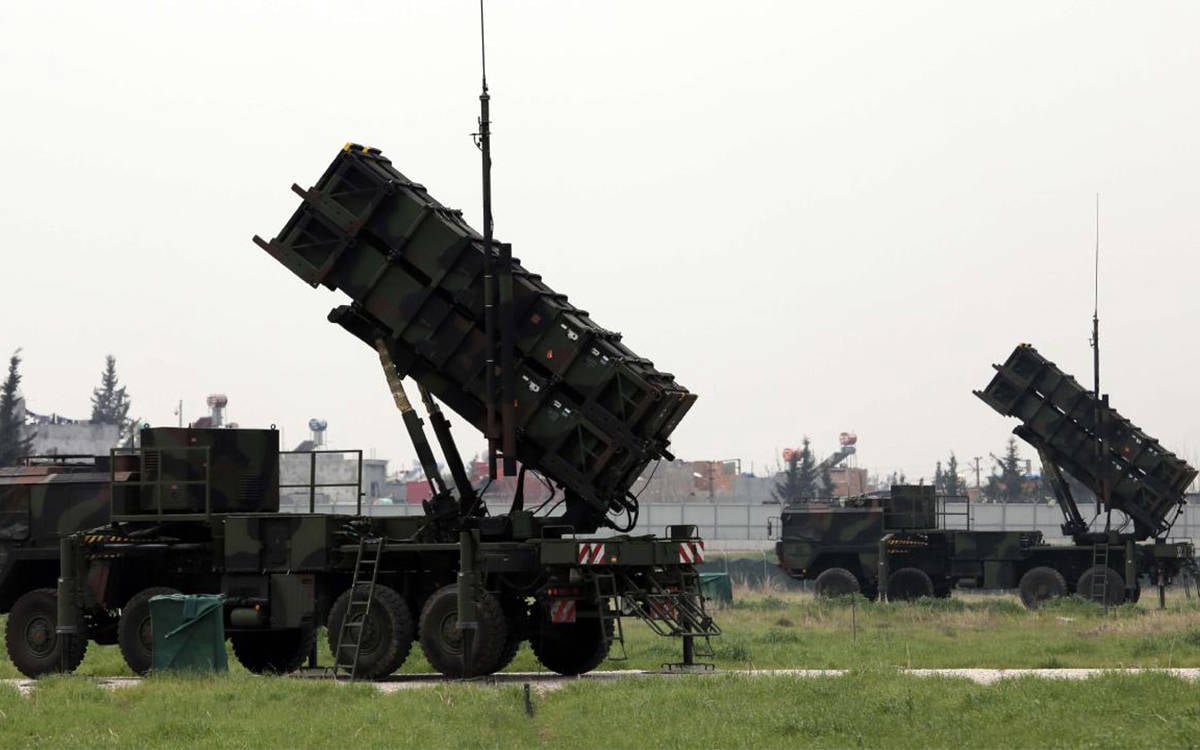
Patriot air defense system deployed in Malatya
Talebi noted that Israel’s involvement creates a general sentiment against the war within Turkey, despite ideological differences between the two countries. People are critical of Israel and concerned about the crisis spreading.
“The real concern of Turkish citizens is not a direct attack but the spirit of instability and migration — it's a massive problem for Turkish people and Iranian borders,” Talebi said.
Despite this, President Recep Tayyip Erdoğan was adamant that Iranian missiles entering Turkish airspace “cannot be excused for any reason whatsoever” in a Mar 10 phone call with Iranian President Masoud Pezeshkian. His other statements have largely reflected a desire for stability in the region, mainly holding Israel responsible for the war.
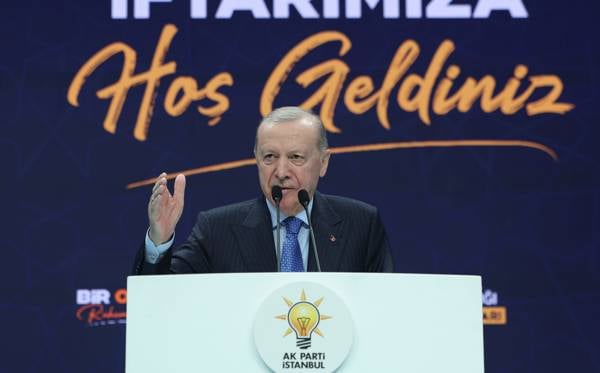
Erdoğan expresses concern over war on Iran initiated by 'Israeli provocation'
Foreign Minister Hakan Fidan has both criticized Israeli expansionism and condemned Iranian attacks on US and Israeli infrastructure in neighboring countries.
Nationalist Movement Party (MHP) leader Devlet Bahçeli, a key ally of Erdoğan, has reflected a similar stance.
“Today, the US’s strategic approach that puts Israel at its center attempts to redesign the security in the region,” he said in a Mar 14 statement. “It is the second time that the fate of the Middle East faces an attempt to redesign it with foreign intervention.”
“America cannot be great again by following bloodthirsty Netanyahu,” Bahçeli remarked during another statement on Mar 31, referring to US President Donald Trump’s slogan.
In totality, these statements from Turkish leadership are reflective less of an inactive neutrality, but rather an involved balancing act to maintain Turkey’s geopolitical position. Reports indicate that Ankara hopes to secure a mediation role in future negotiations.
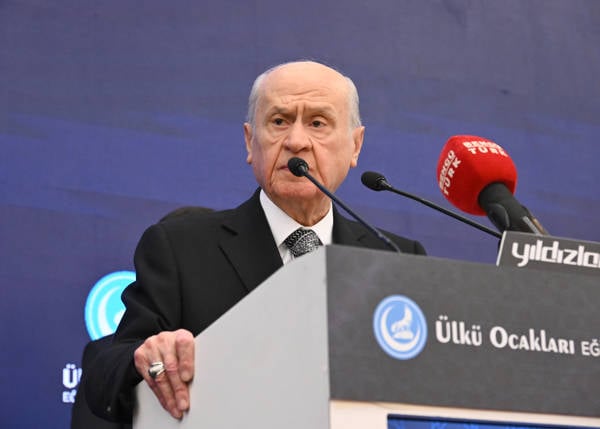
Political leaders in Turkey oppose US, Israeli war on Iran
Maintaining regional status quo
Political analyst Mehmet Akif Koç described the Middle East as dominated by four main actors — Turkey, Iran, Israel and the Gulf states, with Turkey preferring that the other three balance themselves out through competition and conflict. Turkey maneuvers and shapes its foreign policy according to this framework, he said.
“Not mainly Iran dominating the Middle East, not Israel … [for] Turkey neutrality is a vital thing to maintain the status quo in this region." Koç said.
Like Talebi, Koç also noted Ankara’s interest in stability partially stems from the potential influx of refugees and reports speculating that Washington could seek to recruit and arm Kurdish forces. Several Kurdish groups across the region, such as the Kurdistan Regional Government (KRG) have rejected this idea, calling the reports false and intentionally circulated. Koç believes it’s too soon to definitively make any assumptions about whether Kurdish groups will be armed by Washington or Israel.
Duran Kalkan, a senior figure of the Kurdistan Workers’ Party (PKK) said the PKK refuses to take sides and encouraged those in Iranian Kurdistan to find freedom within a broader democratization process. “'Kurds are not anyone’s soldiers,” he said in the early days of the war.
Despite concerns about the war’s impact in Turkey, Talebi said it has not caused any major rifts between Ankara and Washington and likely will not unless there are major changes.
Call for active diplomacy
Prof. İlhan Uzgel, a foreign policy advisor for the main opposition Republican People’s Party (CHP), suggests that Turkey should take a more active role in diplomacy and wished that it had gathered regional countries to issue a strong statement against the war.
He said Turkey should not let the US use its airspace and military facilities for attacks against Iran, which is not happening according to Ankara.
“We are against this war, that’s a war of choice … Iran was already negotiating with the United States when the attacks started,” said Uzgel.
Many possibilities remain open as the war remains in its early stages, but ultimately, people across borders share little stomach for the violence that accompanies it, especially when it's so close to home.
“I can only say that war is an absolute evil, none of us are different, Turk, Kurd, Iranian, Arab," said Talebi. “We will no longer be the same people we were [before].”
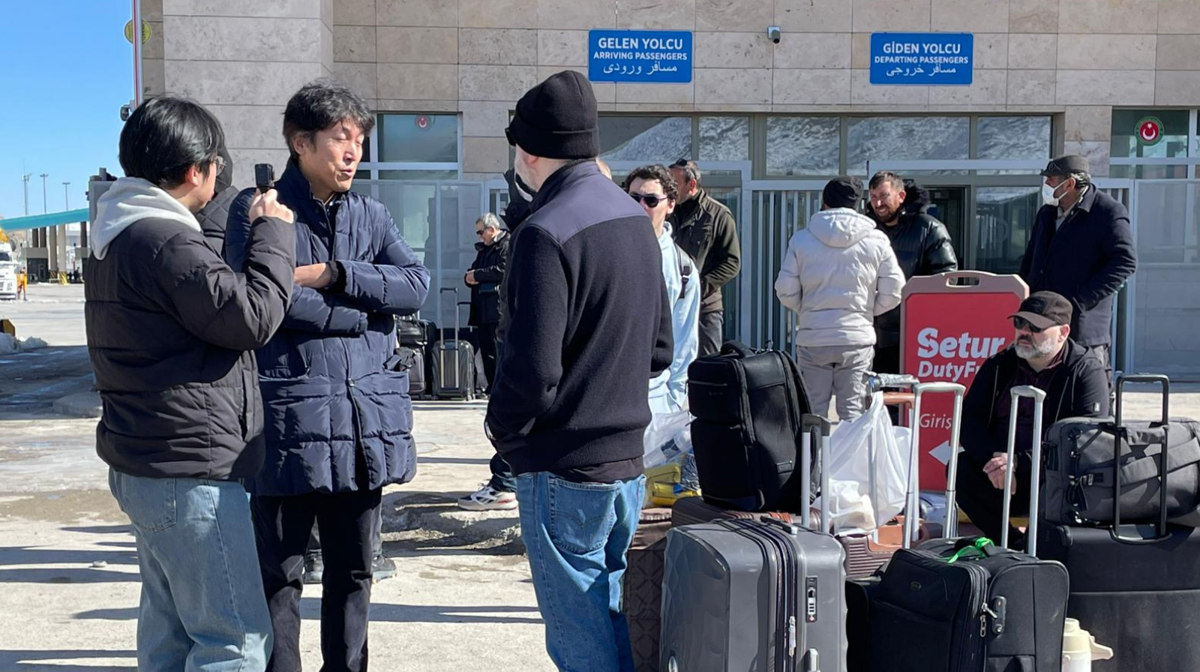
War across the border leaves Van facing anxiety and economic loss
(İK/VK)