



Turkey's textile industry, historically one of the world’s largest exporters, is facing its deepest crisis in decades — and as the industry struggles to stay alive, so do its workers. At least 64 Antep textile workers have died on the job over the last 13 years in what workers call “the slaughter house system.”
Inflation and raw material costs have reduced profit margins, prompting much of the industry to relocate to countries like Egypt. Manufacturers have directly shifted these rising costs onto workers, who report mass layoffs, long hours, low pay, wage theft and dangerous working conditions — conditions that already existed but have intensified over the past years.
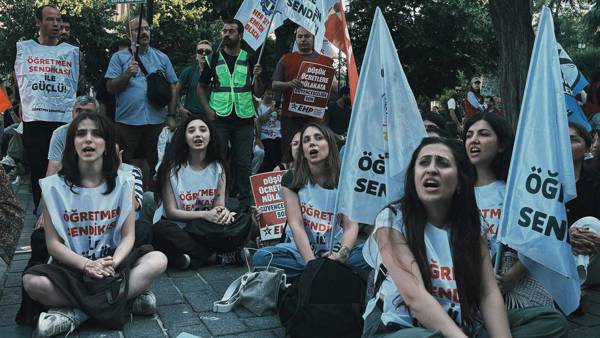
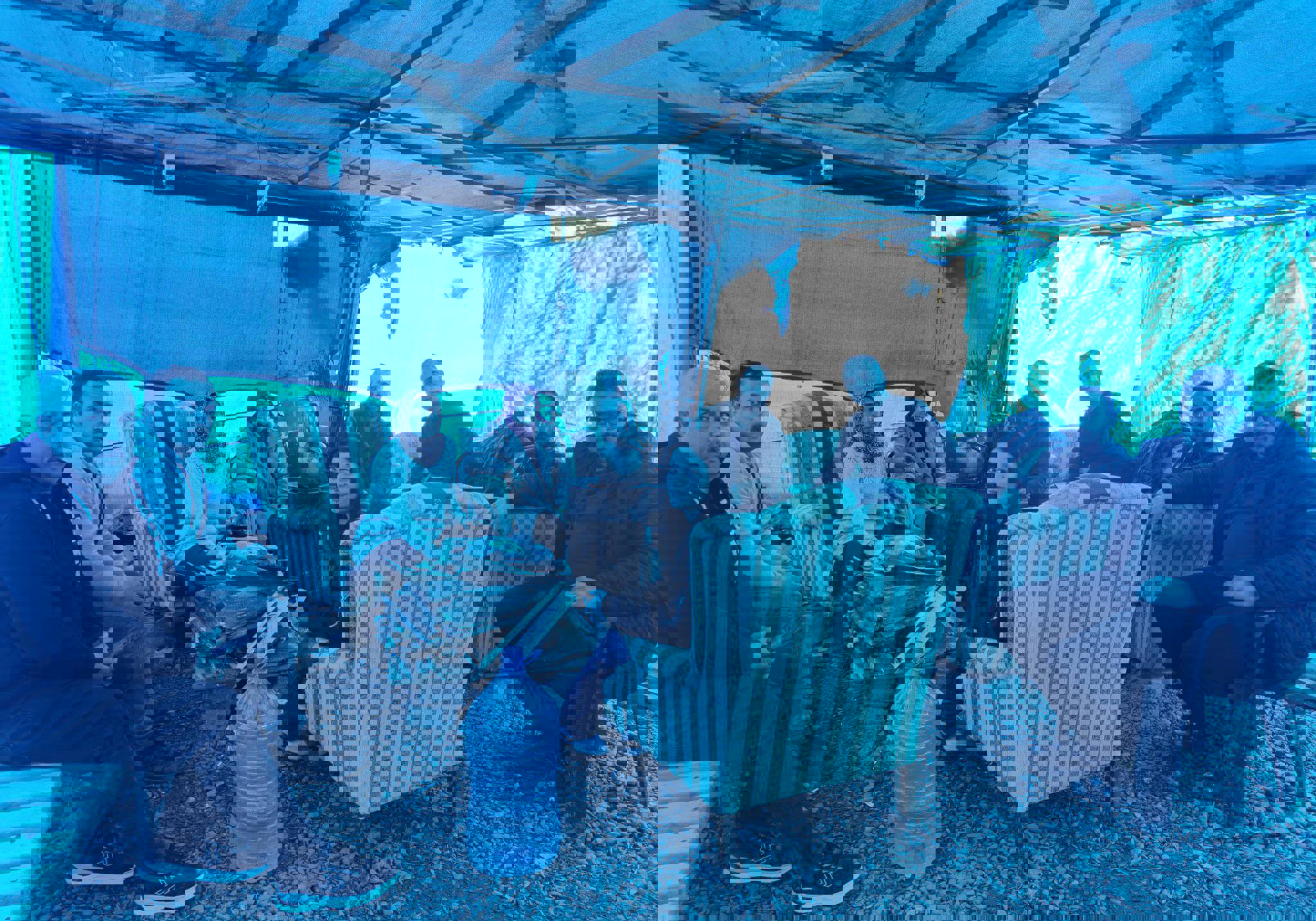
Workers who have attempted to organize against such poor conditions, such as Mehmet Türkmen, the general president of the United Textile, Knitting, and Leather Workers Union (BİRTEK-SEN), often find themselves under pressure. Police detained Türkmen following a May 13 protest by Sırma Halı carpet workers over months of unpaid wages.
Overtime ‘effectively mandatory’
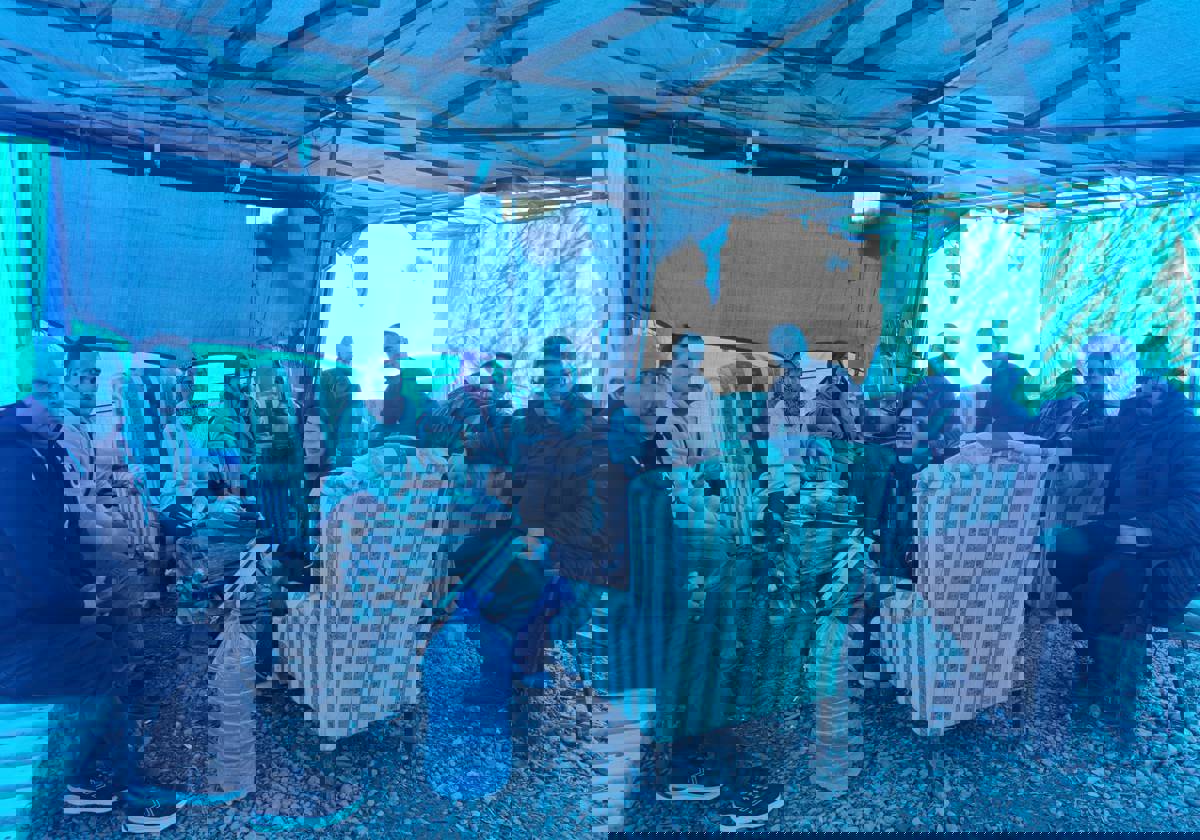
Mikail Kılıçalp, the General Secretary of BİRTEK-SEN, has worked in the industry for about 50 years, starting when he was just 10-years-old. He said that workers’ struggles have led to significant progress in his lifetime but this has been followed by pushback from employers. And as economic conditions worsen, so do working ones.
Kılıçalp has seen workers win eight-hour work days only for bosses to add an extra eight hours in overtime. He also mentioned that despite winning Sunday weekends, some bosses still pressure employees into working 7-day weeks.
Overtime is “effectively mandatory,” according to Kılıçalp. Workers who refuse risk being fired, having their daily wages cut or losing benefits.
“Employers often use the [economic crisis] as an excuse to fire workers and increase the pressure on us, workers fearing unemployment are forced to accept these conditions,” Kılıçalp said.
According to a report from the Health and Safety Labor Watch (İSİG), a group monitoring work-related deaths, Antep has the second highest reported deaths in the textile industry after İstanbul. Textile worker deaths are at 12 percent, about four or five times more than the national average. Many workers also report injuries on the job, losing fingers, hands, limbs or other body parts.
Some of these workplace accidents are hidden from official records. Private hospitals give treatment without registration or label it a "personal accident,” thus leaving incidents unrecorded by both the hospital and the police, denying workers an opportunity to receive justice, the report said.
Workers forced to settle in workplace accident cases
Tugay Bek, a lawyer representing Türkmen, said that because workplace accident lawsuits drag on for years, disabled or injured workers are often forced to accept whatever settlements their employers choose to provide. In these compulsory settlements the worker loses the right to file complaints.
For employers, accident compensation is simply a cost of doing business because in this environment compensating victims is cheaper than implementing preventative health and safety measures, he explained.
“The practice of impunity after accidents encourages employers to violate the law, for all these reasons, workplace accidents in our country increase with each passing year,” he said.
İSİG data indicates that workplace fatalities have generally increased since 2013.
For organizers like Kılıçalp and Türkmen the fight for more humane working conditions is not just against employers but often the state. In addition to detaining and arresting much of BİRTEK-SEN’s leadership at the behest of management, police have also arrived at factories to publicly accuse BİRTEK-SEN of being terrorists and communists in an effort to discredit the union.
“We are fighting to change this [poor working conditions], but we face employers, the power of the state, and pro-government unions trying to block us,” Kılıçalp said.
“Whenever a worker faces a problem, they contact our union directly, and we take action — whether it’s unpaid wages, dismissal, or compensation issues, because of this, our leadership is targeted, detained and arrested due to complaints from employers,” he added.
Obstacles to unionization
Bek said that increasing authoritarianism and anti-democratic practices in Turkey obstruct labor organizing. The freedom to unionize cannot be exercised effectively in an environment where court decisions are not recognized and constitutional rights are effectively suspended, he explained.
Türkmen’s case is just one example of this.
According to Bek, although the right to unionize is guaranteed by the Constitution, in practice, many workers who join unions are immediately dismissed and employers who do not accept workers’ rights to unionize often do not face legal consequences.
Turkey’s unionization rates were about 15 percent in 2025 — about half that of 1970s levels.
“The rights of our workers to unionize and organize are being obstructed so our country can become a cheap labor paradise for international capital,” Bek said.
Kılıçalp works as a weaver and has witnessed layoffs first-hand. He said that in the 2000s one machine required three workers, then it was reduced to two and now, among some major companies, one worker does a job formerly intended for three. Wages have decreased despite this. Previously a skilled weaver could earn four times the minimum wage, now it is only double at about 55,000 - 56,000 TL, he said.
According to Kılıçalp, many of the policies presented by the state as solutions have actually kept workers trapped in cycles of debt, thus dependent on their employers and harder to organize.
Loans offered by Turkey's Housing Development Administration (TOKİ) coerce workers into tolerating poor conditions out of fears of losing their jobs and homes. Additionally, banks have frequently given credit cards to workers since the 2000s, who are often unable to pay off the balance and saddled with debt, he said.
Kılıçalp said these don’t get to the heart of what workers truly need.
“Workers want safe conditions, they don’t want to die or be injured at work,” said Kılıçalp. “They want full union and social rights, control over their leave, job security, and a living wage; we are trying to fight for these demands.”
“This is class struggle — between workers and those who exploit them,” he added.
Kılıçalp hopes that more workers will support and join their movement.
“Don’t leave us alone, this needs to be a common struggle — the world’s working class needs to unite, first locally in Antep, then in Turkey, then all over the world,” he said. (İK/VK)