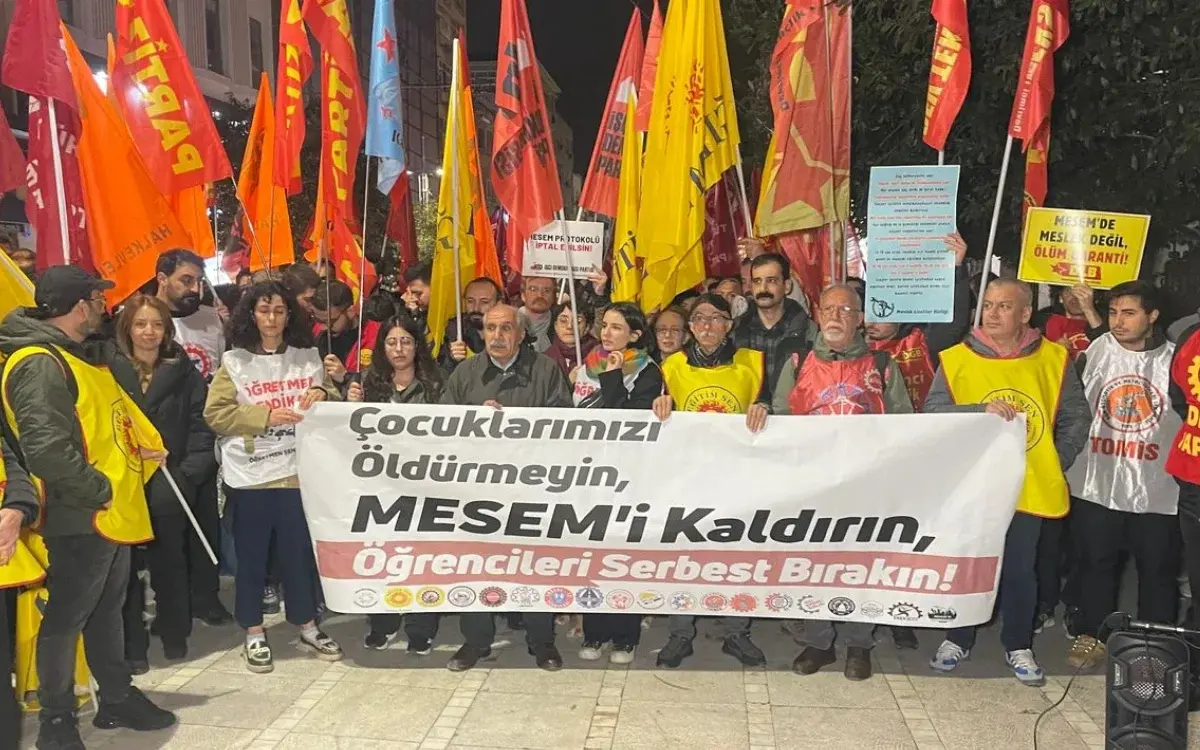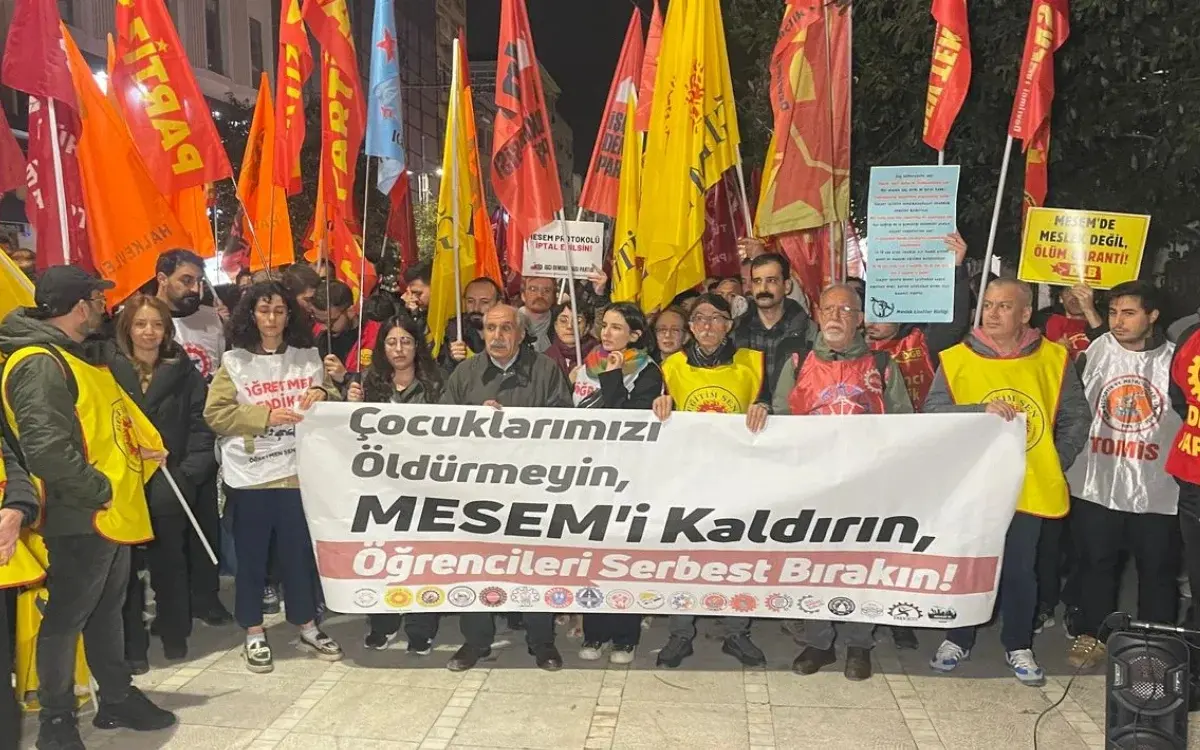



A new report by the Dialectical Research Institute reveals the conditions under which students in Vocational Education Centers (MESEM) live and work.
MESEMs are secondary education institutions where students work at businesses four days a week and attend school one day a week.
A total of 463 MESEM students and graduates participated in the online survey conducted between Mar 19 and Mar 29. The study included 61 questions aimed at measuring students’ demographic characteristics, education processes, working conditions, and psychological experiences.
One in four people in Turkey face debt-related legal notices
Why is MESEM preferred?
Students said they enrolled in MESEM primarily “to learn a profession.” While 327 students selected this option, 184 said “to earn money,” 87 said “to stay in school,” and 52 said they joined the system due to “family pressure.”
In the city-sector distribution, İstanbul stands out by a wide margin. Meanwhile, 19 percent of students reported receiving neither meals nor transportation support at their workplaces.
Turkey's vocational education system draws scrutiny amid child worker deaths
Unfulfilled promise of vocational training
The data shows that MESEM’s claim of providing vocational training does not strongly resonate with students. Some 36.1 percent said the education they received “did not contribute at all” to their professional development, while 16.2 percent said it “did not contribute.” Only 11 percent said it “definitely contributed.”
The results also indicate that workplace supervision is inadequate and ineffective. Even among those who said there is “some” or “partial” oversight, supervision is generally considered ineffective.

THREE CHILD WORKERS KILLED IN A WEEK
'Businesses employ two children in place of one adult at same cost'
No time for classes
More than half of the students, 245 people, said they work 10 to 12 hours a day. Another 69 reported working 12 hours or more. According to the report, only 27 students work what could be considered standard hours of 6 to 8 hours without any overtime.
While 67 percent of participants said they do not receive overtime pay, only 14.7 percent said they do.
Some 67.6 percent of students said they have “no time at all” for their classes. Only 4.4 percent described the time they can allocate to lessons as “sufficient” or “quite sufficient.”
Half of the participants said they “cannot rest at all,” while 40.4 percent said they “can rest very little.” Only five students said they get enough rest.

Over 800,000 children in Turkey are out of education, report finds
Occupational safety training inadequate
One of the most striking sections of the report concerns worker health and safety. Some 49.5 percent of students said they did not receive occupational health and safety training, and 66.5 percent said they were not informed about the procedures to follow in case of injury during work.
More strikingly, 51.4 percent of students said they had previously been injured at their workplace.
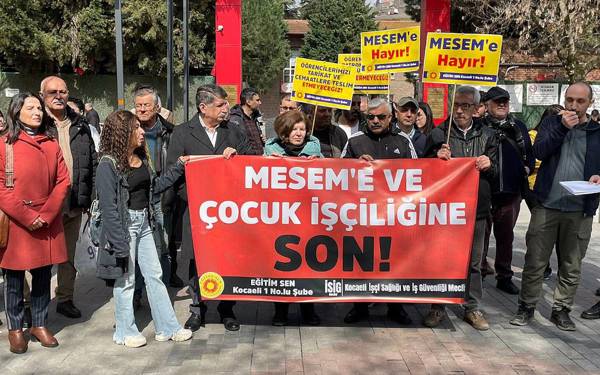
Children 'exploited, killed' under the guise of vocational training in Turkey
Violence and workplace harassment
The report shows that MESEM students face not only long and demanding working conditions, but also violence and pressure. Some 53.6 percent of participants said they were exposed to physical or psychological violence at work, while 42.3 percent said they were insulted by their supervisors, and 37.1 percent said this happens “sometimes.”
According to the report, 232 students did not tell anyone about their experiences. Among those who did, 64 shared it with their families, 61 with friends, and only 11 with teachers.
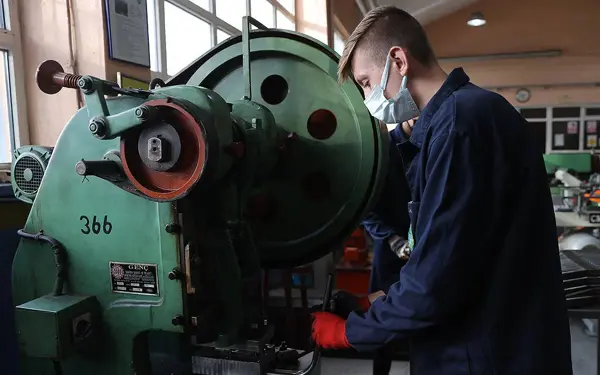
All the same answers from Minister to questions on Training Center accidents
Students’ demands
Some 90.3 percent of participants called for higher wages, 86.4 percent for stronger student rights, 67.9 percent for reduced working hours, and 63.6 percent for increased inspections. The share of those calling for improved occupational safety measures is 55.2 percent, while 53.2 percent demand better education quality.
One of the most striking parts of the report summarizes how students describe the system. In response to the question, “Can you summarize how MESEM functions in a single sentence?” the word “slavery” was used 74 times.

Vocational education center student dies after his head gets stuck in sheet bending machine
Students’ statements indicate that the system is associated less with the promise of “vocational training” and more with cheap labor, pressure, and insecurity. In the report’s conclusion, MESEM is described as going beyond the discourse of “vocational education” and confining child and youth labor to an unregulated, market-driven system.
The findings suggest that students’ most fundamental objection to the system stems from this point: the model, presented as education, has in practice turned into a precarious labor regime for many young people. (NÖ/VK)