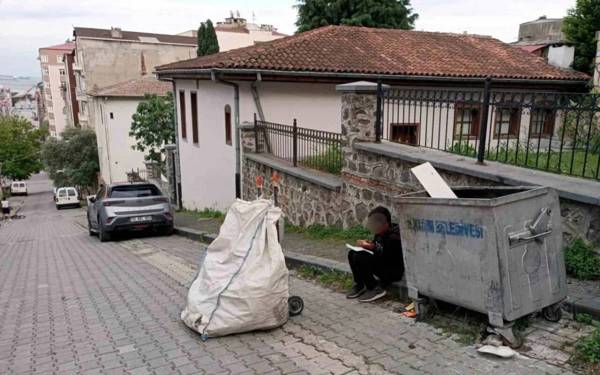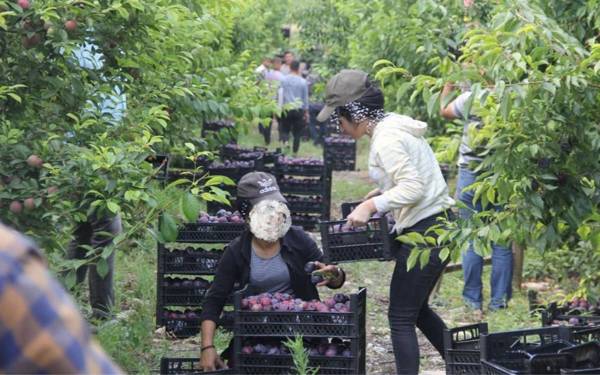








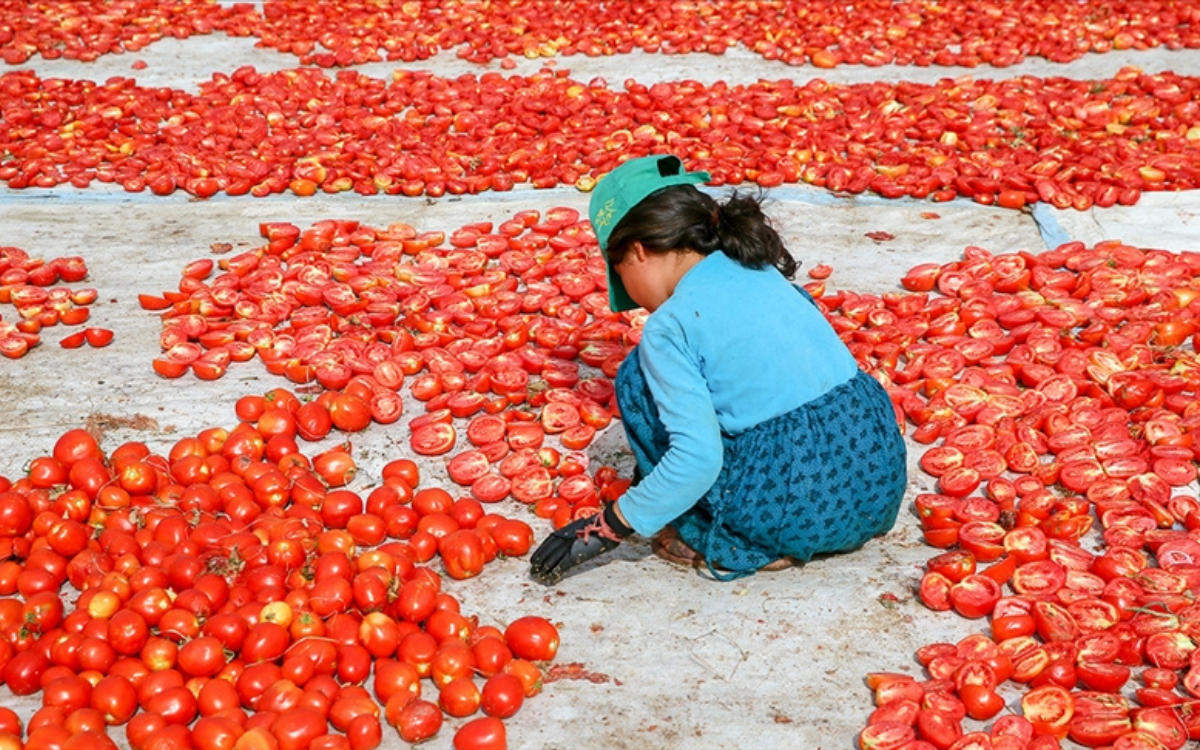



Three children lost their lives in workplace-related incidents across Turkey within the past week, all working in labor-intensive sectors.
In the Central Anatolian province of Aksaray, Ruhi Can Çıracı, 16, was killed when timber fell on him while working at a furniture workshop on Oct 17.
In Tekirdağ, northwestern Turkey, 16-year-old Mustafa Eti died on Oct 21 from injuries sustained in a fire at a brick factory. He was reportedly trying to stay warm by lighting a fire in a tin can and poured thinner on it, causing an explosion. After ten days of treatment, he succumbed to his injuries.
Metehan Hazır, who had just turned 18, died on Oct 22 at a construction site in the southern province of Maraş after being run over by a tracked excavator.

'At least 671 children killed on the job in 11 years'
The growing number of child deaths at work was primarily driven by “the rising impoverishment of children, which leads to their labor exploitation," according to Kansu Yıldırım, Ankara representative of the Health and Safety Labor Watch (İSİG), a group montoring work-related deaths across Turkey.
“The root cause of child poverty is the government’s economic growth model,” Yıldırım told bianet. “In short, childrens' murders in workplaces are directly linked to the relationship between child poverty and the regime of capital accumulation.”
According to the official data, the number of children unable to meet basic needs and at risk of being removed from their families rose to 171,895 in the first half of 2025.
The OECD estimates that at least 6.5 million of Turkey’s 21.8 million children live in conditions of extreme poverty, with one in five children undernourished. Eurostat’s 2024 income and living conditions data also shows that 2.87 million young people in Turkey are at risk of poverty.
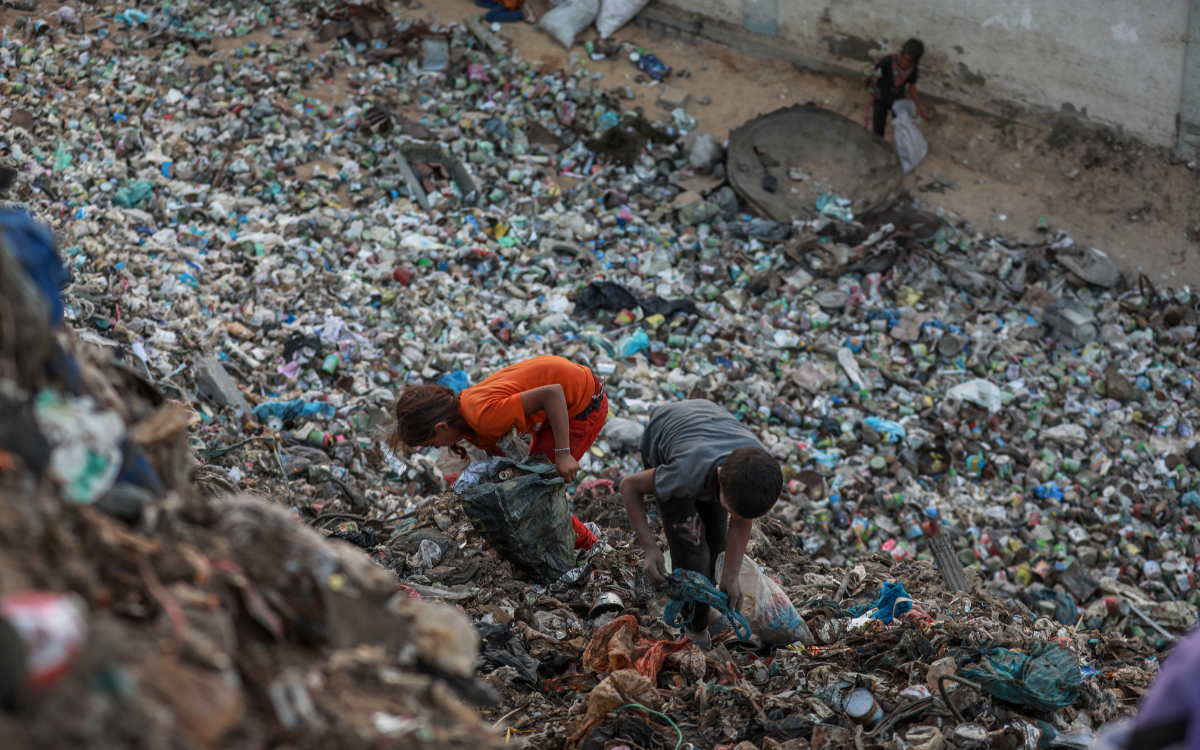
Turkey sees rise in school dropouts, union warns
Forcing children into labor to keep businesses afloat
Yıldırım emphasized that poverty was not solely the result of poor economic policy but stemmed from a systematic mechanism.
“By pushing children into poverty, disconnecting them from school, and stealing their childhoods, Turkey’s aggressive capitalist growth strategy throws them into the labor market,” he said. “Legalizing child labor in a time of rising bankruptcies and financial struggles has become a method to reduce labor costs in labor-intensive sectors and keep small businesses afloat.”
He gave an example from an organized industrial zone, where “instead of paying 30,000 liras to a single adult worker, employers hire two child workers for the same amount, making them work longer hours for less money to increase profit margins.”
According to İSİG data, more than 800 children have died in work-related incidents over the past 12 years.
“The causes of these deaths go beyond the failure to implement workplace safety measures,” Yıldırım said. “Turkey’s aggressive growth pace forces more and more children into the most insecure jobs. In the 2023–2024 period, 612,000 children were excluded from compulsory education. When we include both registered and unregistered sectors, the total number of child laborers reaches 2 million.”
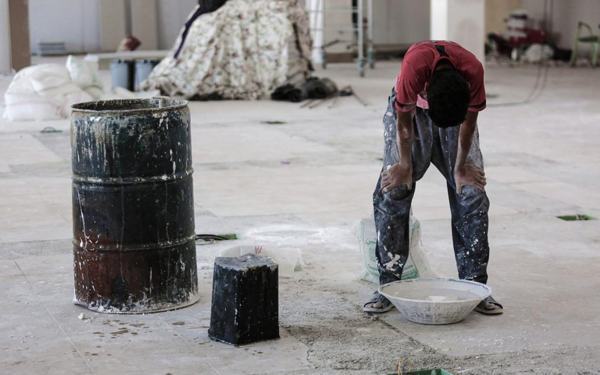
Invisible in data, embedded in workforce: Refugee child workers in Turkey
‘Child labor has become official policy’
Yıldırım argued that instead of preventing this situation, the state has made child labor an official policy.
“There are three official documents that integrate child labor into the accumulation regime, both administratively and legally: the Development Plan, the Medium-Term Programs, and the National Employment Strategy,” he said. “All of these frameworks help further embed child labor into the system.”
Yıldırım also noted that when children attempt to assert their rights in the workplace, they often face violence.
“In Antalya, young worker Vedat was locked in a warehouse and tortured for three days simply because he asked for his wages,” he said. “There’s a deep link between the vulnerability of children and the brutal exploitation of their labor.”
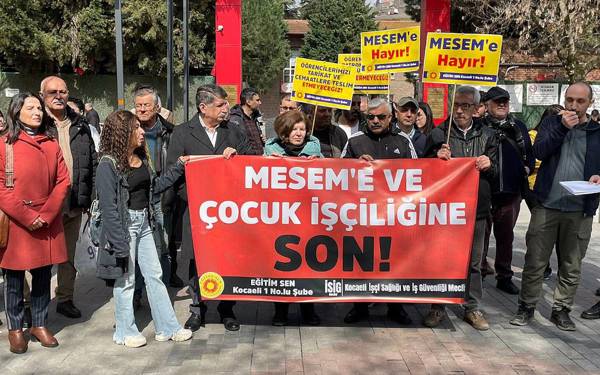
Children 'exploited, killed' under the guise of vocational training in Turkey
Turkey’s child labor legislation
Under Article 71 of Labor Law No. 4857, regulations define which jobs are prohibited for those under 18, which jobs are permissible for those aged 15–17, and the conditions for “light work” by children who are at least 14 and have completed primary education.
According to the law:
A “young worker” is someone aged 15 but not yet 18.
A “child worker” is someone who is at least 14 but not yet 15 and has completed primary school.
Child rights advocates argue that distinguishing between “child” and “young” workers based on age creates legal loopholes and fails to provide adequate protection.
(NÖ/VK)