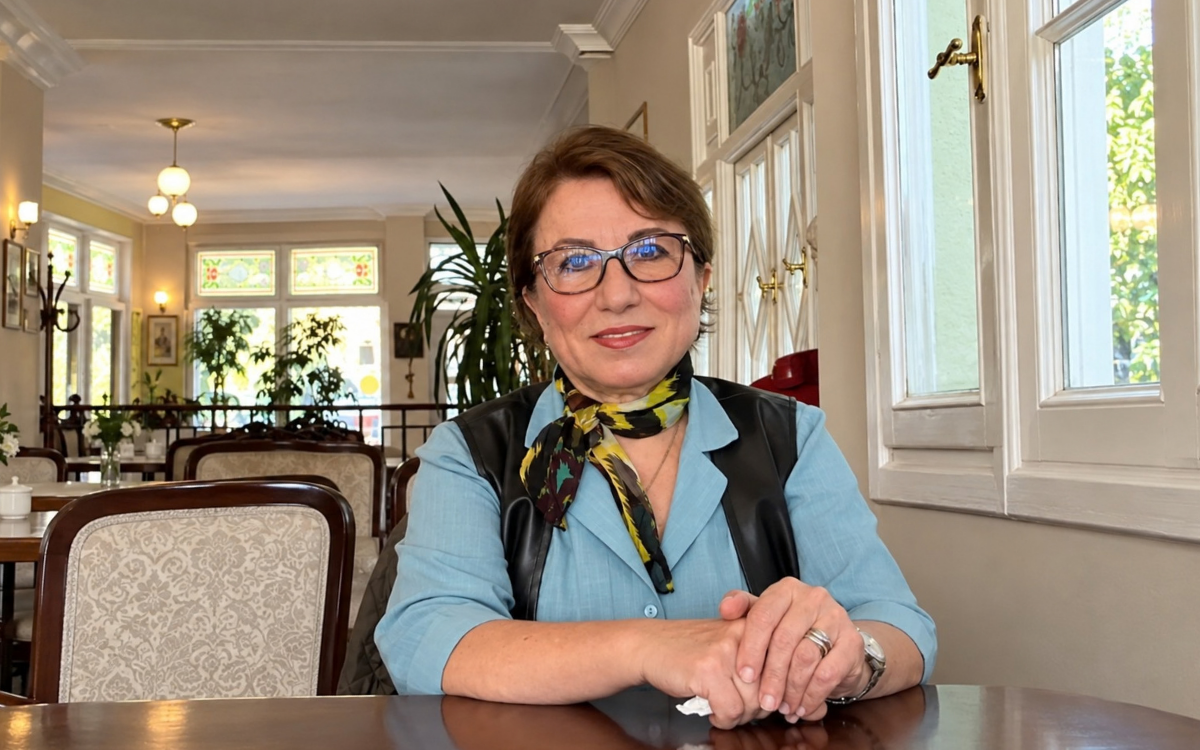












The Education Reform Initiative (ERG), which has published annual Education Monitoring Reports since 2007 to track developments in the education sector, released its 2025 edition at an event held at the Sabancı Center in İstanbul.
The report evaluates Turkey’s education policies under six main categories: “Governance in Education,” “Access to Education,” “School,” “Educational Content,” “Teachers,” and “Multiple Crises and Education.” Each area is analyzed using current data and trends.
'Every data point is a chance for policy change'
Burcu Meltem Arık, ERG’s Education Observatory Coordinator, underlined that the 2025 report reiterates on every page that education is not only a fundamental right but also a child protection issue.
“A child who cannot access education or continue schooling is also a child not reached by the protection system,” Arık said. “From earthquakes and economic downturns to forced migration, the climate crisis, the global teacher shortage, and digital transformation, education is trying to survive amid multiple crises.”
“This report is not meant to paint a hopeless picture,” she added. “On the contrary, it shows what is possible, what can change, and what must change. Every data point is a chance for policy change, and every problem is a call to seek solutions.”
Following the opening remarks, key findings from the report were presented by its contributors, including Senior Policy Analysts Özgenur Korlu and Ekin Gamze Gencer, Policy Analyst Kayıhan Kesbiç, and Researcher Gülen Naz Terzi.
Over 192,000 refugee children out of school
According to the report, approximately 804,250 school-aged children were out of formal education during the 2024–25 academic year. Of these, 611,612 were Turkish citizens, while 192,638 were foreign nationals.
When factoring in additional categories, 273,557 children under 18 enrolled in open high schools and 392,887 students in vocational training centers (MESEMs) who spend most of their time in workplaces rather than schools, the total number of children outside the formal education system rises to 1,470,694.
The report notes that the rate of children aged 14–17 not in school has remained above 8% for the past two years. In the provinces of Muş, Ağrı, and Urfa, nearly one in three children in this age group is not enrolled in school.
One in four teenagers in the workforce
Addressing the economic impact on education, the report reveals that 39.5% of children in Turkey are at risk of poverty or social exclusion as of 2024. This is significantly higher than the EU average of 24.2%. Among children aged 15–17, 24.9%, or one in four, are participating in the labor force.
This trend, coupled with the fact that nearly one-third of all children live in material deprivation, suggests that socioeconomic conditions are a key factor pushing children out of the education system.
‘Non-formal education should not be an alternative to formal education’
The report stresses that schools within the formal education system are more effective in protecting children from harmful risks such as child labor and early, forced, or child marriages, compared to non-formal education programs. Therefore, it argues that under no circumstances should non-formal education be considered an alternative for children of compulsory school age.
In the 2024–25 academic year, 392,887 students under 18 spent four to five days a week at workplaces through the MESEM program. The report highlights that inadequate workplace safety inspections expose these students to serious risks including child labor, neglect, and abuse.
The number of students under 18 enrolled in open high schools decreased by 14.2% compared to the previous year. However, the number of students transitioning from formal schools to open education rose by 30.3%.
Decline in preschool enrollment
The report also provides data on school enrollment by level. It emphasizes that preschool is still not part of compulsory education in Turkey. Total preschool enrollment has declined noticeably over the past two years, dropping from 1,954,202 students in 2023–24 to 1,741,314 in 2024–25, a decrease of 10.9%.
The provinces with the lowest preschool enrollment rates for children aged 3–5 are Urfa (36.9%), Mardin (37.2%), Diyarbakır (38.6%), Şırnak (38.8%), and Maraş (39.8%).
In secondary education, the number of provinces where girls’ net enrollment rate remains below 80% has increased. These provinces include Urfa, Muş, Şırnak, Siirt, Ağrı, Bitlis, Mardin, Hakkari, Diyarbakır, Van, and Batman. According to the report, this indicates that a significant number of girls of high school age are either still in lower secondary school due to delayed schooling or are entirely out of education.
Why the protective role of schools matters
The report emphasizes that schools not only deliver education services but also serve as key connection points to protective resources for children. For the 2024–25 academic year, issues such as child poverty, juvenile delinquency, and substance abuse among children are identified as major policy concerns related to schools.
In 2024, Turkish security units recorded 202,785 children in contact with the justice system. The report suggests that this figure should also be understood in the context of weakened resilience networks, including schools.
Highlighting the impacts of material deprivation, the report states that one in ten children in Turkey cannot eat fresh fruits or vegetables daily, and one in four lacks regular protein intake. It calls for the introduction of free and nutritious school meals as a policy response.
Structured with data and analysis on educational developments over the past year, the report begins with a foreword by Seda Akço, focusing on the role of schools in building an effective child protection system. It concludes with an afterword by Başak Abdula, summarizing recent field research on bullying in schools. (NÖ/VK)