





In this episode of our series, “The Political Construction of AI,” we speak with Larry Lohmann, a researcher at the UK-based independent research and solidarity organization The Corner House, whose work focuses on the relationship between climate justice and capital accumulation. Lohmann, who has spent years analyzing the ties between ecology and political economy within networks like the World Rainforest Movement and the Durban Group for Climate Justice, defines AI as a form of “machine colonialism” driven by massive energy consumption and water grabbing. He emphasizes that this technology is continuous with other industrial technologies dating back at least to 1800. He adds that, like other industrial technologies, it takes advantage of the 19th-century emergence of an ‘abstract energy’ that subordinates a variety of other diverse energies into a single overarching fuel for capita. Ranging from water plunder in Chile to digital labour exploitation in the Global South, Lohmann reminds us that the way out of this destructive cycle lies not in taking refuge in neoliberal nostalgia, but in a shared and militant front of resistance forged by labour and ecology movements against tech monopolies.
Capitalism often opens new frontiers of accumulation to cheapen labor, raw materials, and energy while overcoming its crises. Where do you place artificial intelligence in this historical narrative of accumulation?
Capital is famously resilient in the face of crisis. When profits fall, it looks for new machines and new scams that might cut labour costs and threaten or distract workers. It dreams up new financial swindles. It seeks out fresh frontiers where cheaper resources and different reserves of labour power might be extracted. It tries to squeeze more subsidies and bailouts from taxpayers while removing public efforts to limit its power. It casts around for new means of managing resistance. It creates new commodities to try to profit from the problems the old ones caused.
Today’s AI boys – Sam Altman, Mark Zuckerberg, Jeff Bezos, Elon Musk, Satya Nadella, Sundar Pichai, Jenson Huang, Alex Karp, Dario Amodei, Bill Gates and all the rest – are today offering most if not all of these tricks to investors and governments in hopes of increasing their own fortunes. Whether they can follow up is another question. As we know, capital’s crises are even more resilient than capital itself. In the long term, AI is way too incoherent a gambit to reverse the prevailing trend toward the exhaustion of capitalist fixes. The details are fascinating but might take too much time to go into here. One fundamental contradiction with the AI trick is that AI is what Karl Marx called “dead labour” pretending to be able to replace living human labour. As Marx taught us, that can never work because capital needs both. That’s not to say that AI doesn’t have other effects, of course.
'Same old machine colonialism'
The International Energy Agency predicts that electricity use by data centres could double by 2030. What does this massive expansion reveal about the control over energy resources and the social distribution of energy?
AI is a continuation of 19th-century industrial capitalism. Its chips and coolant systems are industrial machines just like power looms or metal punchers. Their job is to regiment, reorganize, recruit, conceal and exploit and speed up living human work to capture more value for individual firms. To do that they have to subordinate huge landscapes and their peoples to the organization of the abstract energy that the machines require, just like the older industrial machines of the 19th and 20th centuries.
This energy is “abstract” because digital and other industrial machines can’t work unless all the “little” concrete energies of the commons used for cooking or keeping warm or growing crops, and all the different biological, geological, hydrological and stellar energies that we have around us, are detached from their previous contexts and politically subordinated into becoming a single overarching fuel for capital accumulation. Nothing has changed in that respect since 150 years before the International Energy Agency was even established in 1974 and the word “energy” acquired its current sense in the mid-19th century. Wind and solar energy farms and Nvidia H100 GPUs challenge nothing about this pattern. It’s the same old machine colonialism.
The only slight difference is the scale and urgency. Today, all that the AI boys can talk about is how to get more energy for their processors. Mark Zuckerberg and Sam Altman are talking about dedicated bespoke nuclear or even thermonuclear reactors for every big data centre. Eric Schmidt is talking about hijacking US energy policy just to get more electricity for AI. Elon Musk is talking about boosting hundreds of thousands of data centres into space to take maximum advantage of the solar flux. None of these guys is even pretending to have any interest in how these new control regimes would damage the lives of the world majority.
'Data centres hog local water and electricity'
While technology monopolies boast about increases in “productivity per unit,” total energy and resource consumption continues to grow rapidly. How do you explain this paradox in terms of the insatiable logic of capital accumulation?
Efficiency per unit is something individual capitalists start to think about when electricity costs become a constraint on profit. If there’s enough cheap supply, they don’t worry about it. Still less do they think about efficiency per unit as a path to reducing the overall energy use of capital as a whole. Why should they do that? That’s not what efficiency is for. Capital is nothing if it doesn’t accumulate, and accumulation entails more abstract energy consumption overall and a faster global flattening of entropy slopes, regardless of unit costs.
The conventional 19th-century economist William Stanley Jevons already had a pretty good handle on this issue when he formulated the paradox that bears his name. In 1865, he observed that increasing efficiency in the use of coal actually increased, rather than reducing, its overall consumption because doing so reduced costs, promoted demand and consumption and accelerated accumulation.
The project to create AGI, or artificial general intelligence, is based on the premise that applying enough energy to computer processors running predictive algorithms fed with big data could replicate billions of years of biosocial evolution. This project is hopeless, insane. Trying to achieve it would progressively absorb all the available energy in the universe. Given such a scheme, what difference could it possibly make to apply a few little efficiency measures here and there? AGI sets up a contradiction that beats even the Jevons Paradox.
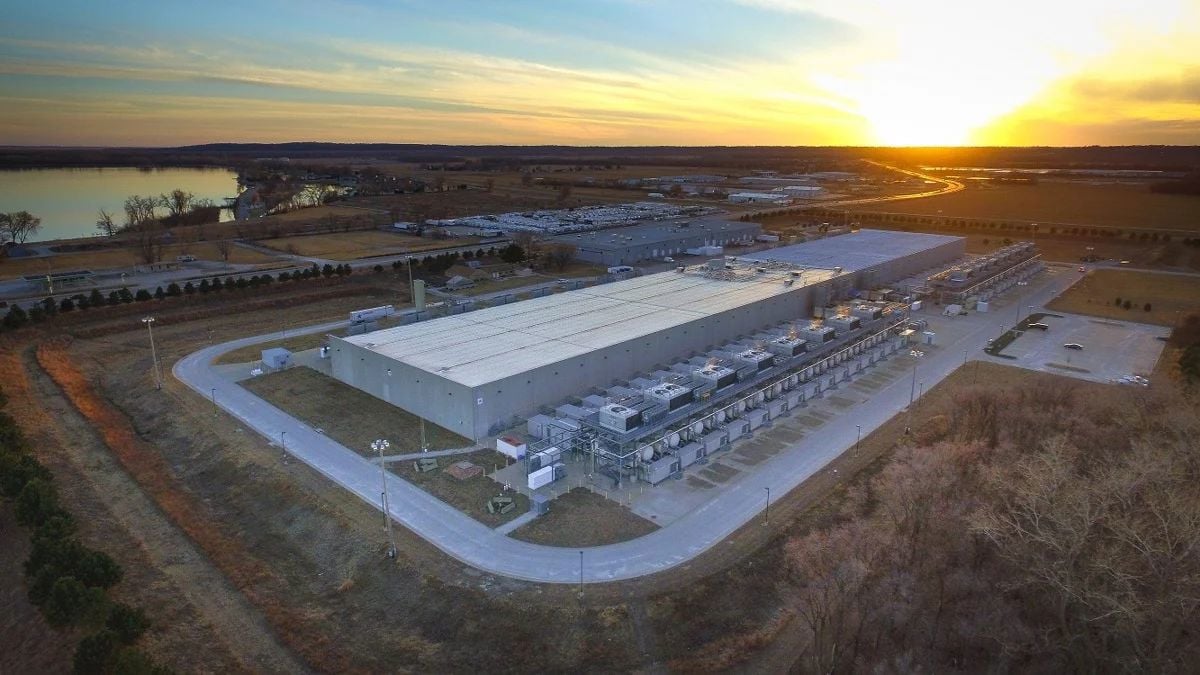
As network investments and capacity expansions for data centers and AI infrastructure accelerate, who practically bears the brunt of this massive growth in ecological and social terms?
There’s no controversy here. The answer is: the usual people. Just ask the expanding social movements against data centres in the US, Chile, Spain, Mexico, Ireland, the UK, Uruguay, The Netherlands and many other countries. Data centres hog local water and electricity, corrupt local governments, increase air and noise pollution, extend the life of fossil-fuelled power plants, and are used to strengthen surveillance, repressive and profiteering technologies that states use against their own citizens. Even Donald Trump has taken note of the resulting unrest.
In addition, data centres necessitate increased, brutal extraction of minerals like lithium, copper, cobalt, coal and nickel in locations across the world, in many cases devastating the lives of local people even more severely than the data centres do themselves. To top it off, much of the cheap or zero-cost labour that AI needs to train and maintain itself is culled disproportionately from the most disadvantaged parts of the world proletariat in countries like Kenya, India and Madagascar, many of whom become severely debilitated mentally and physically as a result.
'Theft, not subsidizing'
As water consumption for cooling and the waste heat burden grow, through what new mechanisms of expropriation and loss of rights are water allocation and usage priorities being reconfigured in favor of tech monopolies?
One of your previous guests, the tech writer Karen Hao, describes a couple of Latin American examples in fascinating detail in her book Empire of AI. Because data centres need pure water to cool their servers, they often try to tap into municipal drinking water supplies. In Cerrillos, Chile, a proposed Google data centre was expected to use more than 1,000 times the amount of potable water consumed by the entire local population – about 88,000 residents in a country hit by a multi-year drought. Unusually for Chile, this water was public, not privatized. The word “subsidy” doesn’t really apply to this kind of predation. “Theft” would be more appropriate. Naturally, Google had to use all sorts of tactics to facilitate this attempt at robbery – false information, technical reports designed to be opaque, mistranslations, intimidation, bribes in the form of offers to plant some trees for free, and so forth. It took huge amounts of time donated by many local volunteers to defeat the project and rescue their water.
Not all communities are so fortunate. In another drought-afflicted region, the US state of Nevada, Google, Meta, Oracle and Tesla, together with a Trump-backed consortium of other companies, have taken over 400 square kilometres of high desert for yet more data centres. The only water available to cool the machines is in the watershed that has been the territory of the Pyramid Lake Paiute Indigenous group for as long as 16,000 years. So far, however, the data centre developers have found it fairly easy to roll over local and environmentalist opposition, partly because it was so straightforward to acquire the enormous landholdings of a very few previous private owners and to fast-track the local government permit process.
In the chain stretching from mineral extraction to chip production, and onward to mountains of electronic waste and low-wage digital labor processes, what continuities does the persistent concentration of destruction and exploitation in the same geographies remind you of?
Some of the most severe degradation is found in former European colonies in Africa, Latin America and Asia, and in communities that have already been afflicted most severely by apocalyptic settler colonialism in North America and the sub-imperialist policies of countries such as Indonesia and South Africa.
But it’s not only the location of AI’s appropriations and exploitations that reveals colonial continuities. It’s also the manner in which they are carried out and the ingrained racist legacies from which they glean such enormous profits. Another of your previous interviewees, Dan McQuillan, speaks astutely of the way AI channels historical currents like white supremacy and eugenics, of whose role in colonialism no one needs reminding. The very concept of intelligence that AI uses can ultimately be traced back to the Cartesian quasi-managerial ideology dividing the “mind” of conquerors off from the brute “body” of the conquered that came into fashion during the early colonial era, as well as to later fascist and necropolitical traditions.
'Solution to capitalist crisis can only be more capitalism'
Until recently, tech monopolies were securing a form of climate legitimacy for themselves through promises like ‘net zero’ and ‘carbon offsetting,’ offering market-based ‘solutions.’ Today, however, we see these same figures acting far more recklessly, seemingly no longer in need of such green veneers. How do you interpret this transition of capital from that ‘camouflaged’ period to its current stage?
Just a very few years ago, Bill Gates was talking a lot about things like “green steel” and “green cement.” His claim was that the emissions of industry could somehow be “zeroed out” through offsets and other means, leaving capitalism as it was. Similarly, through the United Nations, Mark Carney was pushing for an enormous expansion of the voluntary carbon credit market, which opponents view as a complete swindle. Oil companies like Oxy and Chevron and Big Tech boys like Sundar Pichai at Google were promoting the idea of taking over millions of hectares of land and planting trees on them to compensate for their climate pollution. It was all the rage to assert that the destruction of peoples’ lives by fossil capitalism could somehow be made up for, at least for a short while, by destroying yet more peoples’ lives by taking over their land, forests and futures.
This was a classic corporate “fix” devised by the neoliberal state and its captive NGOs and technocrats, premised on the insistence that the solution to capitalist crisis can only be more capitalism. For more than a quarter century, some of the activists that I personally am closest to – in organizations and networks like the World Rainforest Movement, the Indigenous Environmental Network, Accion Ecologica and REDD-Monitor – have carried on the fight against this particular neoliberal gambit because they understand the damage it does to grassroots communities worldwide, and because they understand that it props up a globe-destroying fossil (and now AI) capitalism through scientific fraud.
But while all this has been going on, something funny has happened. While neoliberal nonsense about net zero and carbon offsetting hasn’t disappeared, we have begun to pass from the age of neoliberalism – whose heyday was from around maybe 1975-2025 – to an age of fascism and more overt gangsterism peopled by figures like Trump, Modi, Milei, Bolsonaro, Orban, Bukele, Meloni, Farage, and so forth. Keeping up with the times, the AI boys now tend to skip a lot of the old neoliberal lies about offsets and renewable energy. Instead, they’re in the front row at Trump’s second inauguration, where nobody listens to that kind of talk and the new look is fascism.
This is an epochal transformation. But in a sense it’s also a little like a royal succession out of Shakespearean theatre. There’s a lot of dramatic acrimony, bitterness and swordfights to the death among factions that nevertheless deep down share a lot of the same gangster values. In some ways, the new fascism is the old neoliberalism in stripped-down form. To understand why, it might be helpful to look at the example of science, which on the surface seems to be such a big bone of contention between neoliberals and fascists today.
Science under neoliberalism had two very different parts: white science and fraudulent science. Examples of white science include thermodynamics and climatology. Neither is fraudulent. On the contrary, both are stupendous intellectual achievements. But for historical reasons, the ways that they set and solve problems systematically avoid going against the grain of white supremacy.

'Why can’t we have white supremacy without white science?'
For example, climatology presents global heating solely as a matter of too many greenhouse gas molecules in the wrong places. It reflexively sidesteps investigations into how they got there, which would force it to look at racial capitalism’s reliance on fossil fuel extraction. That approach tempts the public, including many NGOs, into believing that state molecule pricing, molecule markets, molecule rationing and molecule management must be the solution, instead of support for social movements working to keep fossil fuels in the ground.
Similarly, thermodynamics’s privileging of abstract energy is a big help to capital in running its machines. But it’s not so helpful to commoners who need to counter the subordination of their myriad non-thermodynamic energies to the energy of industry. Inextricable from the painstakingly-evolved physics methodologies that have dominated the capitalist era, this inbuilt bias encourages the colonialist belief – again, still common among NGOs – that energy justice is pretty much nothing more than the fair distribution of an abstract energy substance.
Fraudulent science is different but equally indispensible to neoliberalism. Examples of fraudulent science include the pseudo-sciences of carbon and biodiversity offsets or of the “circular economy.” Carbon markets make no sense from the point of view of climatology. “Renewable” industrial energy and the so-called “circular economy” make no sense from the point of view of thermodynamics. Anyone with experience of environmental movements could add the examples of Environmental Impact Assessments (EIAs) or cost-benefit analyses (CBAs), which are usually (if not always) riddled with obvious scientific errors that are carefully left uncorrected. All this straightforwardly fraudulent science has to be mixed together with white science under neoliberalism because neoliberalism needs it for its fixes.
The point is that, in their sweeping attacks on universities and research institutions, guys like Trump and Orban are putting everybody on notice that in their view capital doesn’t actually need either component of neoliberal science any more. They’re nuisances not worth the cost. Why can’t we have white supremacy without white science? Why can’t we just dispense with the thousands and thousands of obedient, well-funded university professors, PhD consultants and UN technical boards whose function it was to provide a faux-scientific veneer to capital’s exploitations and appropriations? What do we need all these pretend state and international programmes to manage and market greenhouse gas molecules for, if in practice they amount to pretty much the same thing as just denying climate change outright, which, let’s face it, capital has to do anyway? Let’s get back to basics. Just as we can now skip the old pretences about the “rule of law” and the old UN bureaucratic and diplomatic procedures in favour of Trump’s Board of Peace, so too we can now forget about the fussy, over-complicated routines of science.
This isn’t just ignorance or anti-intellectualism. It’s an experiment in breaking up some of the creaking political alliances that just about salvaged capital accumulation for the past half-century while trying to assemble some that might work better for the same objectives in current circumstances. The old neoliberal bureaucrats, technocrats and marketeers are maybe just not quite fit for purpose any more in an age of precarity when few other people can share their confidence in a secure future. After many decades of failure, the neoliberal story that price mechanisms are going to address ecological crisis starts to get old, just like the story that they will address social injustice. At this stage, staging elaborate theatres of cruelty in defence of threatened property holdings in whiteness, however divisive they are, might turn out to be more important in consolidating interest networks for capital accumulation to rely on. Or at least in changing the subject. Anyway, how could you possibly run a nice neoliberal CBA on what Israel and the US do in Gaza? It might be better capitalist strategy just to follow Steve Bannon’s advice and “flood the zone with shit.” AI, of course, can help with that.
Through the quantification of nature via carbon accounting and risk scoring, what forms of ownership and control over nature have been strengthened? And why do the tech elite seem to be setting these methods aside today?
One consequence of the transition from neoliberal technocracies to what might be called fascist franchises can be seen precisely in this area of property and control over the environment.
The old neoliberal technocracies quantified and divided up the earth’s carbon-cycling capacity as property in something like the way that the enclosers of earlier centuries quantified, privatized and divided up common land and water. Naturally, the lion’s share of this newly “thingified” entity was immediately awarded to the global North and its polluting companies. The same actors that put the most greenhouse gases into the atmosphere were given the most formal property rights to the living power of the earth to clean them up. The technical economistic names for this included beautiful words like “ecosystem services” and “grandfathering.” This format for appropriation and rent was the basis of the Kyoto Protocol, the Paris Agreement and the EU Emissions Trading Scheme.
The new fascists figure that they can afford to dispense with all this. Forget the Paris Agreement and carbon markets. Net zero, carbon accounting, transitions to renewable energy, ESG and all the other fictions have run their course as effective means of delaying climate action. The earth’s carbon-cycling capacity has no economic value because there is no climate crisis. Therefore there’s no point in quantifying it and giving it as private property to the rich. The neoliberal fraudulence and obfuscation inside the project of “internalizing environmental costs” (as long as they don’t go too high) gives way to naked conquest. Why go to the trouble of compiling even the sloppiest and most mendacious EIAs or the most hypocritical gender impact statements when it’s easier just to send in the bulldozers and storm troopers?
Again, there’s a political economy to this. It couldn’t have happened without certain elites –especially some leaders of the fossil fuel, tech and alternative finance sectors – calculating that in the current state of US imperial decline, some aspects of neoliberal law, like a lot of neoliberal ecology, was just getting too expensive and fiddly. On their view, it’s going to be cheaper and easier to go along with the alternative project of cultivating a network of (white) fascist franchises each of which will get a piece of the gangster action in return for helping to carry out straightforward plunder, and damn the consequences. Naturally, that strategy creates enemies for the emerging fascist elites (enemies including a lot of the stalwarts of the old neoliberal order like Robert Rubin and Hillary Clinton). But it also is maybe capable of recruiting new friends, at least in the short term.
Why do AI companies like fascism so much?
How does keeping resource-use data under the veil of “commercial confidentiality” affect the prospects for public oversight and the struggle for accountability against Big Tech monopolies?
This is a good example of the continuity between neoliberalism and fascism. Neoliberal regulation entrenched the private appropriation of public ideas as inalienable commercial assets. That’s how Bill Gates made his fortune. It wasn’t that his software was any good, or even that it was his. But through the law, he forced everybody to pay him to use it. Trump uses a similar trick with his branding and cryptocurrency grifts. So do biopiracy companies.
Fascism takes this one step further. Information that the public needs to defend itself against capital becomes secret by law, because it is the private property of corporations whose rightful future profits depend on keeping everybody in the dark. One reason why AI companies like fascism so much is that they need even the water and energy requirements of their data centres to fall under rules of commercial confidentiality.
In this landscape where both labor and nature are dispossessed through the same extractive logic, where do you see the most strategic common ground and shared demands for ecology and labor movements to build a front against tech monopolies?
As Canadian Prime Minister Mark Carney recently had the perspicacity to point out, we’re never going to be able go home again to the old neoliberal world order – which for me includes neoliberal diplomacy, neoliberal law, neoliberal science, neoliberal ecology. That order is on its way out and deserves no nostalgia. It’s no longer worth much effort to try to pursue compromises with it. Instead, the emerging fascist future needs to be recognized for what it is and engaged head on.
For me, it’s important to keep focused on those zones of confrontation where the rubber of the old neoliberalism and the new fascism both meet the road of people’s resistance and ongoing projects of territorial and livelihood defence. The basics of colonialism have not changed. Racial, patriarchal capitalism goes on and on. My feeling is that social movements need to remain flexible enough to deal with unforeseen new developments, including AI, while also steadfastly keeping history before their eyes in dealing with them. One way of doing that is never to forget that labour struggles are always ecological struggles, and vice versa. (DS/VC)
Footnotes
[1] Diyar Saraçoğlu, “Karen Hao ile ‘Yapay Zekâ İmparatorluğu’ üzerine”, bianet, 21 Ağustos 2025.
[2] Özgür Narin ve Diyar Saraçoğlu, “Dan McQuillan: Silikon Vadisi ile faşizan siyaset biçimleri arasındaki örtüşme belirginleşiyor”, bianet, 20 Şubat 2025.