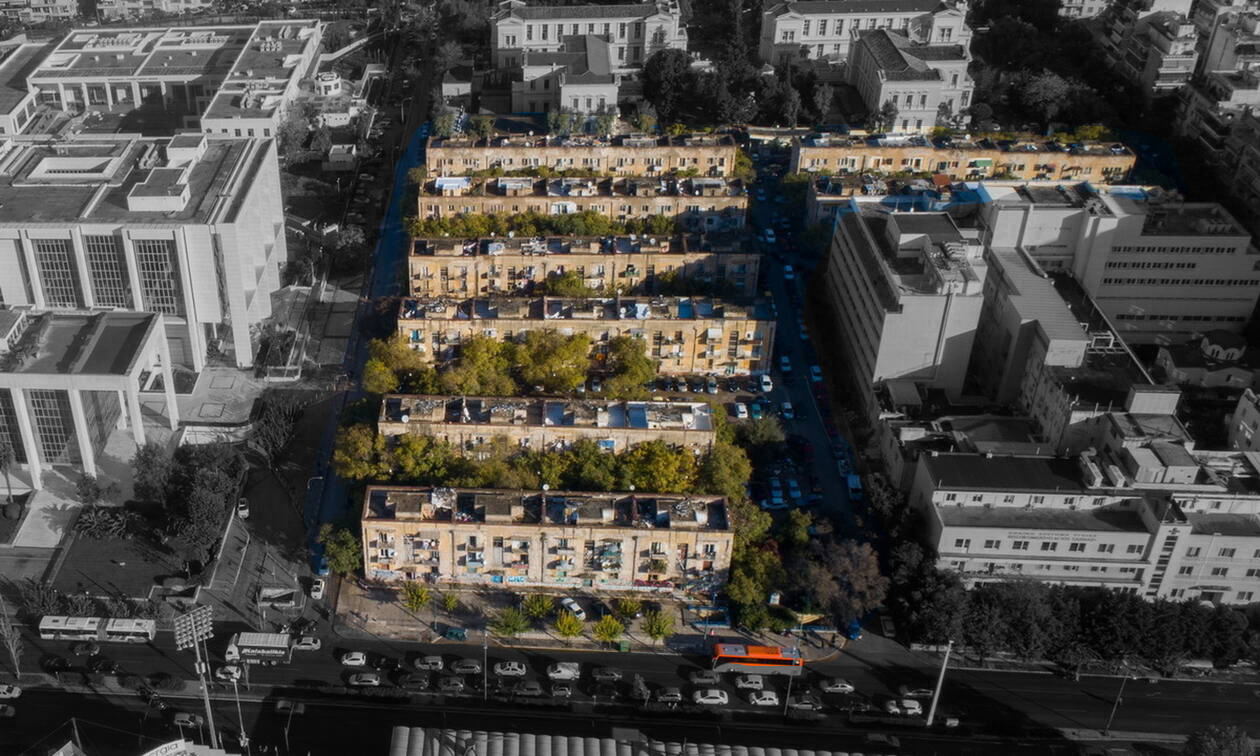








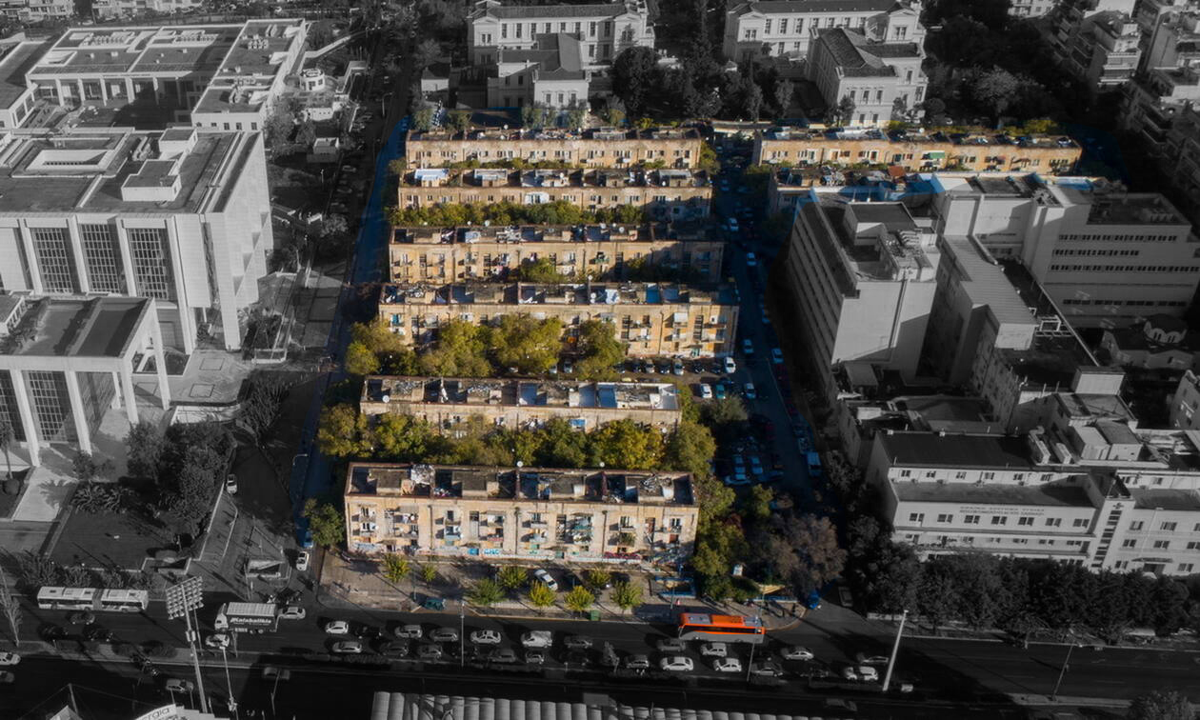



Passing through Alexandras Avenue, one of Athens’ busiest routes, a massive “barricade” that stubbornly resists the city’s gentrification and profit-driven transformation catches your eye. On one side rises the Attica General Police Directorate (GADA) building, holding the state's monopoly on violence, along with the Agios Savvas Anti-Cancer Hospital; on the other stands the Supreme Civil and Criminal Court of Greece (Areios Pagos), the legal headquarters of the city. Right in the center of the traffic, exhaust fumes, and urban hustle, nestled within this triangle of courthouse, police station, and hospital, breathes an eight-block living space that refuses to bow to the siege of capitalist urbanization. This area, which the pro-government media and capital persistently try to label a “no-go zone” to justify urban renewal, hosts the Community of Squatted Prosfygika, one of the city’s most vibrant centers of struggle that carries a century of Greece’s resistance tradition on its shoulders.
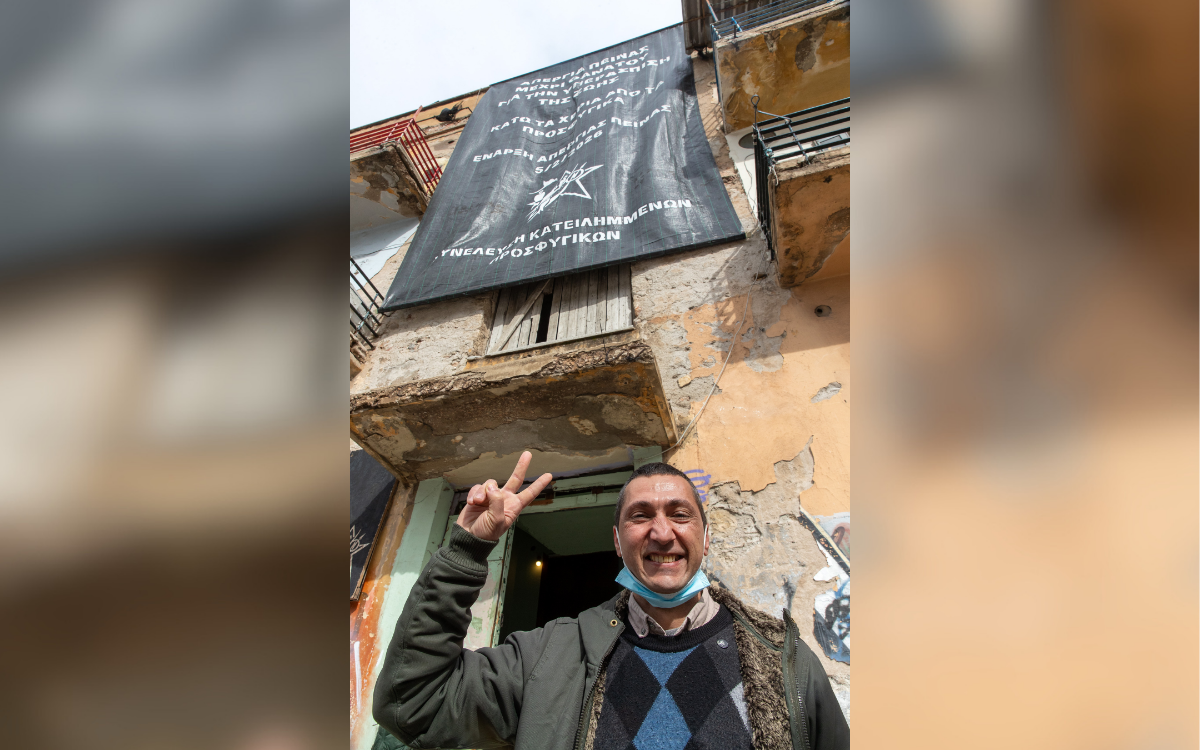
Today, this 14,500-square-meter area operates as a massive resistance space where over four hundred people from twenty-seven different nationalities live side by side, where decisions are made in assemblies, and where people produce and share independently. Against the government's eviction plan—backed by European Union funds—and its intent to hand the area over to capital, Prosfygika has been resisting for months with unprecedented willpower. To defend the right to housing and the existence of the community, community member Aristotelis Chantzis has been on a “hunger strike until death” for over seventy days. As emphasized in the statement published by the women of the Prosfygika Community Assembly, this resistance calls on everyone with a conscience and empathy to stand in solidarity against the looting plans targeting this space of historical resistance, self-organization, and sanctuary.[1]
Solidarity sprouting from crisis: the years of construction
The foundations of Prosfygika do not bear the aesthetic ostentation of bourgeois architecture or the traces of an urban beautification project, but rather the sharp lines of a people’s absolute will to survive. The roots of the story begin in the 1920s with the forced population exchange from “Asia Minor.” When hundreds of thousands of refugees were uprooted from Anatolia and the Aegean and arrived in Athens, the city was shaken by the most massive housing crisis in its history. Under conditions where people were fighting for survival by setting up makeshift houses and tents in seas of mud on the city’s outskirts, this “demographic pressure” forced the state to find an immediate solution to the crisis spilling into the streets.
Between 1933 and 1936, the state built eight blocks at this strategic point on Alexandras Avenue. Architect Kimon Laskaris and civil engineer Dimitris Kyriakou, who took over the project, applied the strict functionality of the progressive and radical Bauhaus movement directly to their designs. No aesthetic ornaments, decorative additions, or luxury materials were used in the design of the buildings. Comprising a total of two hundred and twenty-eight apartments, the purpose of these blocks was quite clear: to meet the minimum housing needs of a poor family at the lowest possible cost. However, this strict pragmatism, combined with the spacious design of the courtyards and common areas, produced unexpected sociological results. These large common areas increased interaction among refugees and the poor working class, allowing a very strong culture of communal living to flourish. Instead of being isolated in these cramped apartments, people built a new collective life by coming together in the courtyards and balconies, eventually revitalizing the neighborhood by purchasing their properties through affordable loans.
Memory engraved with bullet scars: the 1944 resistance
The main event that transformed these buildings from a simple state-built housing project into a revolutionary site of memory took place during the closing stages of the Second World War. Just months after the end of the German occupation, in December 1944, Athens turned into a battlefield during the events historically known as the “Dekemvriana” (December Events). The residents of the area, joining forces with resistance fighters who had battled fascism for years, engaged in a fierce struggle against the Greek state forces and the newly arrived British occupation troops.
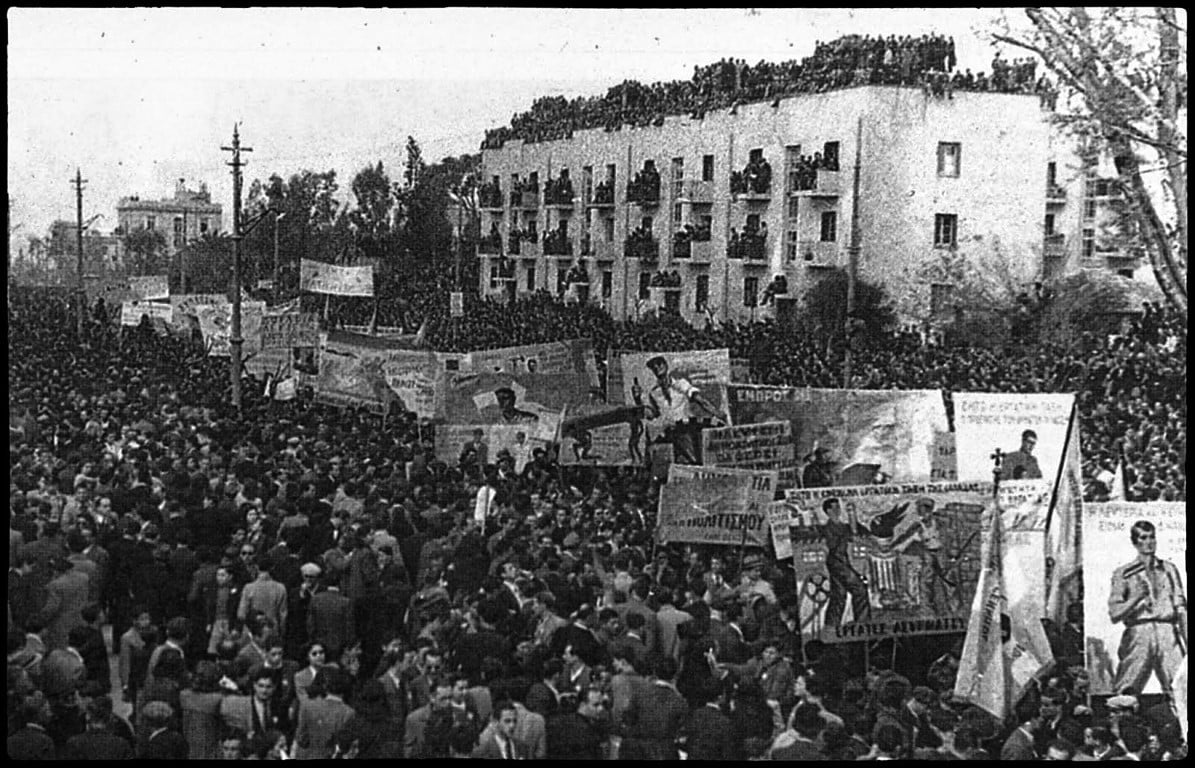
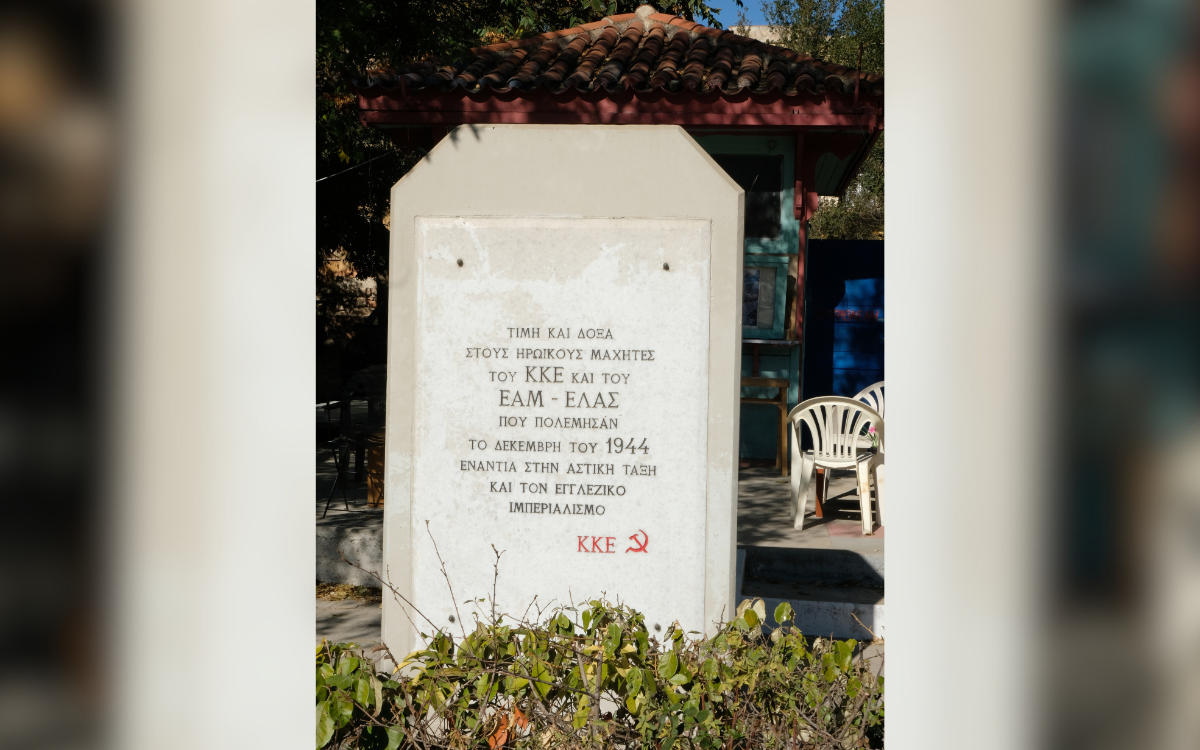
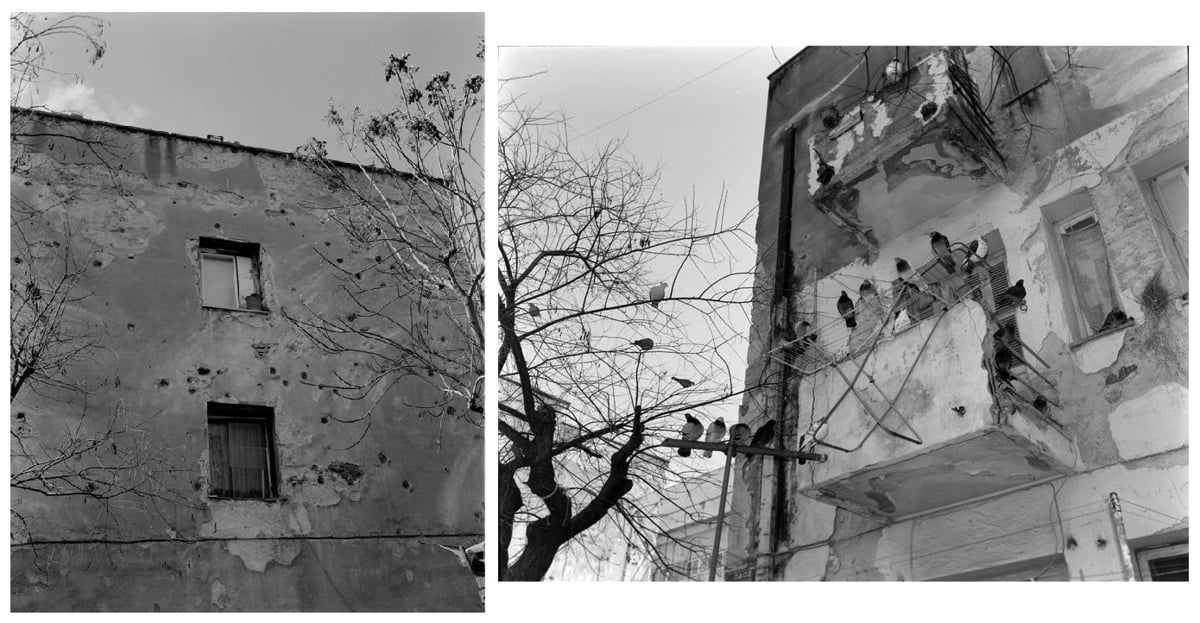
As British tanks advanced along the avenue, Prosfygika was subjected to heavy bombardment. The resistance defended the city and the revolution from the windows and roofs of these buildings. The blocks practically turned into an impenetrable fortress in the middle of the city. The massive bullet, mortar, and shrapnel holes that you can still clearly see on the exterior of the buildings today do not stand as signs of urban neglect, as the government has claimed for years, but as medals of honor of the unparalleled war fought by the true owners of the city against fascism. Today, the monument located just below the cafe area also pays tribute to this partisan resistance.
As time passed, Athens expanded rapidly, and the area where Prosfygika is located turned into one of the city’s most central and “valuable” zones. Even during the military junta period, although decisions were made to demolish the first four blocks to make way for a new courthouse, these plans could not be fully implemented. Rumors of demolition and modernization preoccupied the neighborhood for years. In the late 1990s, an official decision was made to demolish the historic neighborhood to build a shopping mall and an underground parking lot connected to the Panathinaikos stadium across the street. The state, employing the insidious methods of global urban transformation projects, offered residents very low sums of money through the Public Real Estate Company (KED) to abandon their homes. Those who refused this offer were threatened with forced expropriation, and under the influence of this climate of fear, one hundred and seventy-seven apartments became state property by 2003.
However, fifty-one local residents refused to bow to this pressure and appealed to the Council of State with the support of the Faculty of Architecture, solidarity groups, and organizations. The Council of State halted the bulldozers with two separate rulings in 2003 and 2009, declaring the area a historical monument that must be preserved due to both the significance of its Bauhaus architecture and the indelible marks of the December 1944 events. When the demolition was legally blocked, the state changed its strategy and adopted a policy of deliberate decay. Mafias settled into the vacated buildings; illegal subletting, drug production, and trafficking began. Instead of stopping this illegal racket, the police entered and exited the neighborhood every day to take their cut. The goal was blatantly obvious: to exhaust the surrounding local residents with a deep security problem, make the area unlivable, and manufacture the necessary social consent for handing the buildings over to capital through this very corruption.
Building life where the state collapses
The will of the streets and the oppressed completely disrupted the calculations made by capital behind closed doors. Since the early 2000s, autonomous groups from diverse political and cultural backgrounds began squatting in these buildings to keep them alive collectively. In the 2010s, as Greece was shaken by successive memorandums and severe austerity policies, the resulting massive housing crisis elevated this process to a much more mass scale. This grassroots organized power physically rooted out the mafia and drug gangs from the neighborhood—elements the state and police had deliberately left untouched for years. People realized that they had no choice but to unite and organize collectively in order to survive.
Today, this structure, which established its charter in 2012 under the name “The Community of Squatted Prosfygika” (SY.KA.PRO), houses a diverse collective composed of refugees fleeing war, political exiles from Turkey and Kurdistan, anarchists, communists, sexual minorities, the elderly, and children. There are no managers, landlords, or police authorities within the community; decisions are made through direct democracy in weekly general public assemblies.
What placed the community in the state’s crosshairs is the fact that, during a fifteen-year period in which the state completely dismantled social services, the commune built twenty-two distinct self-organized solidarity structures. Among these structures that provide food access to hundreds of people, the Technical Works Structure, which resolves the buildings’ electrical and plumbing issues and ensures the sustainability of the structures through renovations, holds great importance. Furthermore, thanks to socialization networks such as the Collective Cafe and Cinema, Social Center, Library, and Reading Room, Prosfygika has hosted countless social, political, and cultural events over the years.
The Women’s Structure, one of the community's backbones, operates as one of the two defining organs of the community alongside the general assembly. This unit, which began its journey as a women’s cafe in 2016 and has now transformed into a massive solidarity network, gained its own physical space by merging two apartments in the neighborhood. This structure provides an immediate safe haven for women facing patriarchal violence or those in urgent need of housing. Beyond merely being a shelter, it aims to rescue women from domestic isolation by collectivizing invisible domestic labor and childcare. At the same time, it does not sweep patriarchal and competitive behaviors that emerge within the commune under the rug, but transforms them through deep criticism and self-criticism mechanisms, rebuilding the culture of the community. Right next to this, the Health Structure and Social Pharmacy step in for those pushed entirely to the margins of the system. Established for immigrants, the unemployed, and the poor without official health insurance, this structure operates as a de facto clinic providing completely free examinations, treatments, and medication through the labor of volunteer doctors, nurses, and psychologists.
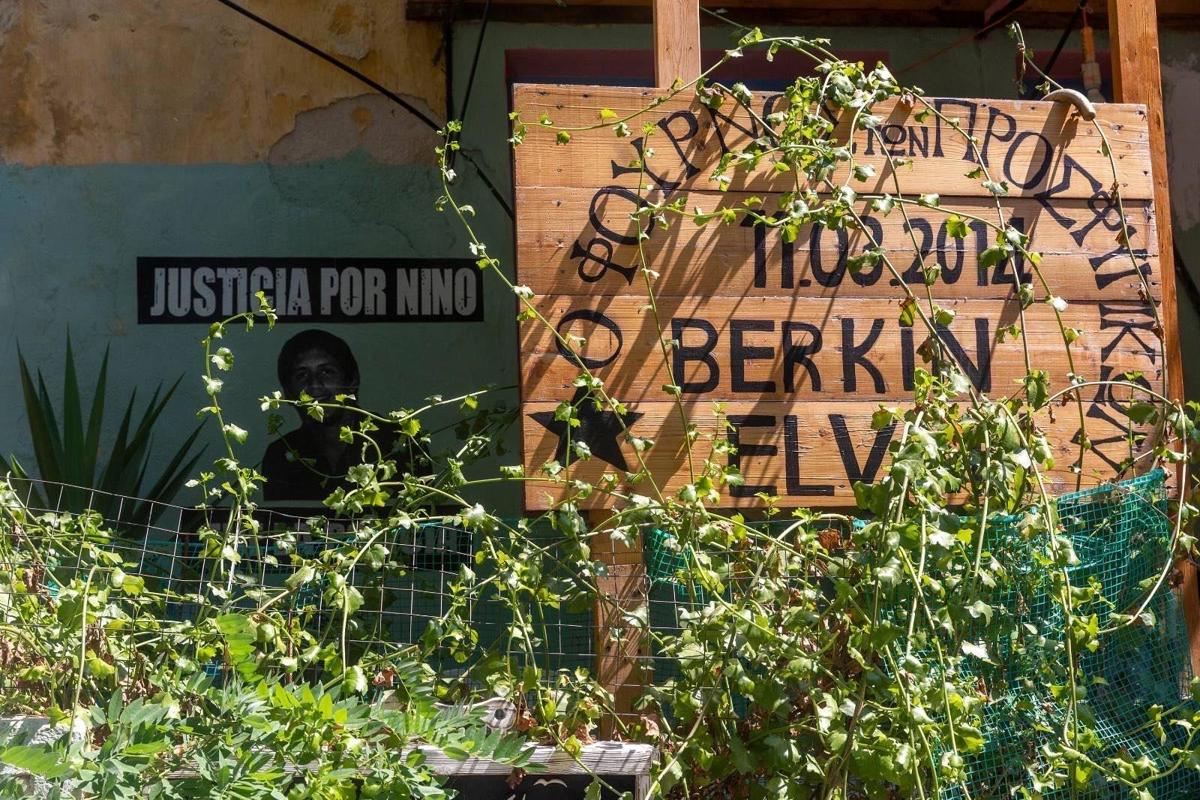
At the center of the community’s food policy is the “Collective Bakery Berkin Elvan,” which keeps alive the memory of Berkin Elvan—a 15-year-old boy who fell into a coma and died after being struck by a police tear gas canister while going out to buy bread during the 2013 Gezi Park protests in Turkey. This bakery not only produces free bread and hot meals every day for the poor and homeless of Athens; kneading dough transforms into a shared and communal act that keeps the community together and empowers people, especially during times of intensified police repression. Perhaps the clearest exposure of the collapse in the state’s healthcare system is embodied in the Housing Structure for Oncology Patients. The doors of the buildings are thrown wide open for the relatives of severely ill patients who come from the provinces to the Agios Savvas Anti-Cancer Hospital, located right in front of two of the blocks, but who sleep in their cars or the hospital courtyard because they cannot afford accommodation. By providing them with completely free, safe, and warm rooms, it demonstrates that housing is not a commercial service but a matter of human dignity.
Transformative justice and political architecture
One of the most important features that distinguishes Prosfygika from other squats is its approach to resolving issues through a concept of transformative justice, rather than an exclusionary one. When problematic behaviors imposed by the system—such as individualism, competition, authoritarian attitudes, or sexist approaches—are identified, the solution is not sought through exclusion or punishment. Instead, mechanisms of criticism and self-criticism are activated. According to the commune’s philosophy, the emergence of a problematic behavior means that the community as a whole provided the ground for it; therefore, both the responsibility and the solution are treated not as personal issues, but entirely as collective obligations.
Politically and administratively, the community is organized around three main pillars: The Community, The Platform of Confederalist Union, and the Committee. The Community functions as the social base, organizing life in the neighborhood and the twenty-two solidarity structures. The Platform of Confederalist Union serves as the political bridge the commune establishes with other revolutionary groups in Greece and abroad. The Committee, composed of architects, lawyers, journalists, and historians, operates as an outward-facing diplomatic tool managing campaigns. Moreover, internationalism is not merely a rhetoric for this commune; it is the very way of life itself. Today, by organically maintaining their ties with struggles across the globe—from Palestine to the Zapatistas in Mexico—they apply internationalist solidarity in practice.
Στηρίζουμε https://t.co/EcOmM21lg3@Prosfygika @Platforma_CU#antireport pic.twitter.com/Ef0jj1pgvN
— Παρασιτεί Μετέωρος (@parameteoros) March 15, 2026
The ‘social housing’ mask and the 15 million euro eviction plan
It is certainly no coincidence that a living space which functions so well, produces, and finds direct practical solutions to social crises has become the main target of the government. In a system where Athens is trapped in a frenzy of touristification, where houses are sold to international capital, and where rents exceed the minimum wage manifold, Prosfygika directly challenges the “I eat my neighbor” culture and individualism created by neoliberalism. What the state and capital cannot tolerate is precisely the fact that this possibility of solidarity is viable.
In mid-2025, the government and the Attica Regional Authority signed an agreement behind closed doors, deciding to evict the first four blocks of Prosfygika under the guise of redevelopment. It was announced to the public that the buildings would be restored using 15 million euros allocated from the European Union’s regional development funds to create social housing and a guesthouse for patients’ relatives. The community instantly exposed the massive hypocrisy behind this narrative. As clearly stated in the text published by the Prosfygika Women’s Assembly, those who ignore demands for gender equality, those who allow the homeless to freeze to death in the streets, and those who condemn farmers and workers to poverty and precarity do not deserve trust. The dirty plans behind this so-called project—presented by those who forced half a million young people to leave the country in the last decade, those who left asylum seekers to die in the waters of luxury islands, and those who only consider the interests of capital in every disaster and accident—are colliding with the anger of the streets.
Under the pretext of building social housing, the state plans to forcibly throw the poor, immigrants, and children—who already reside there and are the most severe victims of the housing crisis—out onto the streets using riot police. In their place, they intend to install people of their own choosing by funneling millions of euros to crony companies through construction tenders and restoration projects. The promise of a guesthouse for patients’ relatives remains a complete manipulation, because while the state left those people to sleep on the streets for years, the ones who opened their doors to them unconditionally were none other than the commune members keeping these buildings alive.
‘Hunger strike until death’
As the threat of eviction materialized, the community assembly issued a clear and definitive challenge to the state, declaring, “We will not give up a single inch of ground to the regime and its companies.” The heaviest price of this determination is borne by Aristotelis Chantzis. Beginning his hunger strike on February 5, 2026, Chantzis is using his body as a shield against this profit-driven project. In his published statement, he marks history with the purpose of his action: “As the Community of Squatted Prosfygika, we have decided to defend our social proposal, the people, the structures, and the historical memory of Prosfygika to the end. It is our clear choice and our responsibility to give even our lives for the continuation of life. Because we know that if Prosfygika are evacuated, a large portion of us will find ourselves on the street. The elderly and the sick will die on the streets, and children will lose their homes and schools, with incalculable consequences for their physical and mental health and the course of their lives.” Chantzis, emphasizing that Prosfygika actively participates in social and class struggles, is holding onto life as he passes the 70th day of his action as of April 15, physically relying only on water, tea, and essential vitamins that slightly slow down the complete collapse of his nervous system.
While the risk of a heart attack and irreversible organ damage is at a critical threshold, the community has three indisputable demands presented to the state:
Immediate cancellation of the contract by the Region of Attica.
All residents of Prosfygika to remain in their homes, in the place and area where they live and have established social, cultural, and organical ties.
Concrete guarantees to be given for the restoration of Prosfygika by the non-profit civil law company “Κατοικοι και Filoi Prosfygikon L. Alexandras Non Profit Civil Law Company” with its own self-financing! - No public funds for the “redevelopment” of Prosfygika!
This radical resistance rising from Chantzis’s body is creating a massive wave in Athens. Thousands of people locking down the center of the city are staging massive marches with the slogan “Hands Off Prosfygika!”. Despite the intense siege and interventions by security forces, anarchists, housing rights unions, and local residents are not backing down. This urban solidarity is rapidly finding an echo across Europe as well. News spreading across the continent through various platforms and the community’s own information networks is turning the issue into one of the symbols of the global housing rights crisis.
The resistance is not limited to the buildings on Alexandras Avenue; through the community’s social media announcements, it is spreading across Athens in waves. For example, the community called for a ‘March of Endurance and Determination in the Popular Neighborhoods of Gyzi, Ambelokipi, and Polygono in Solidarity with Prosfygika’ scheduled for Saturday, April 18 at 12:00 from Prosfygika on Alexandras Avenue, inviting the streets to roar with the slogan: ‘Victory to the Hunger Strike of Aristotelis Chantzis!’
ΠΟΡΕΙΑ ΑΝΤΟΧΗΣ & ΑΠΟΦΑΣΙΣΤΙΚΟΤΗΤΑΣ
— Community of Squatted Prosfygika (@Prosfygika) April 11, 2026
ΣΤΙΣ ΛΑΪΚΕΣ ΓΕΙΤΟΝΙΕΣ ΓΚΥΖΗ, ΑΜΠΕΛΟΚΗΠΩΝ, ΠΟΛΥΓΩΝΟΥ
ΣΕ ΑΛΛΗΛΕΓΓΥΗ ΜΕ ΤΑ ΠΡΟΣΦΥΓΙΚΑ
ΣΑΒΒΑΤΟ 18/4, 12:00, ΠΡΟΣΦΥΓΙΚΑ, Λ. ΑΛΕΞΑΝΔΡΑΣ
ΝΙΚΗ ΣΤΗΝ ΑΠΕΡΓΙΑ ΠΕΙΝΑΣ ΤΟΥ ΑΡΙΣΤΟΤΕΛΗ ΧΑΝΤΖΗ#antireport #prosfygikahungerstrikehttps://t.co/2eN2zTYJhx pic.twitter.com/ZUHW48Puj5
Who produces the city, who defends it?
Today, the war being fought in those bullet-scarred blocks on Alexandras Avenue means defending the fact that housing is not a financial commodity or an investment tool, but an inalienable right, defended by the de facto power of the streets. The government’s plan is not merely to restore a few old buildings but relies on an operation to scrape away and erase the city’s revolutionary and anti-fascist struggle from its space. The attempt to turn the buildings into hollowed-out projects not only fails to remedy the deep housing crisis in Athens but also deepens the violence of urban transformation that drives the urban poor to the peripheries.
While Aristotelis Chantzis struggles with the severe physical effects of his hunger strike, the presence of children in the neighborhood, the bread produced every day in the Berkin Elvan bakery, the uninterrupted free clinic, and the resolute stance of the women’s assembly reveal who the true owners of the city are through the daily reality of life. This structure, sustaining countless forms of solidarity, continues to resist in defense of life. If law enforcement and the bulldozers of construction companies dare to enter that area for an eviction, what they will face will not just be lifeless concrete walls, but an organized people’s will defending the right to life and urban commons to the death. (DS/VC/VK)
Footnotes
[1] Women from the Prosfygika Squat Community Assembly, “Atina Prosfygika (Mülteci) konutları direnişi”, Çatlak Zemin, February 14, 2026 https://catlakzemin.com/atina-prosfygika-multeci-konutlari-direnisi/
[2] a.g.y.
[3] “Declaration of Hunger Strike until Death”, https://saveprosfygika.gr/index.php/en/materials/