Constitutional Court finds rights violation in Van’s recurring protest bans


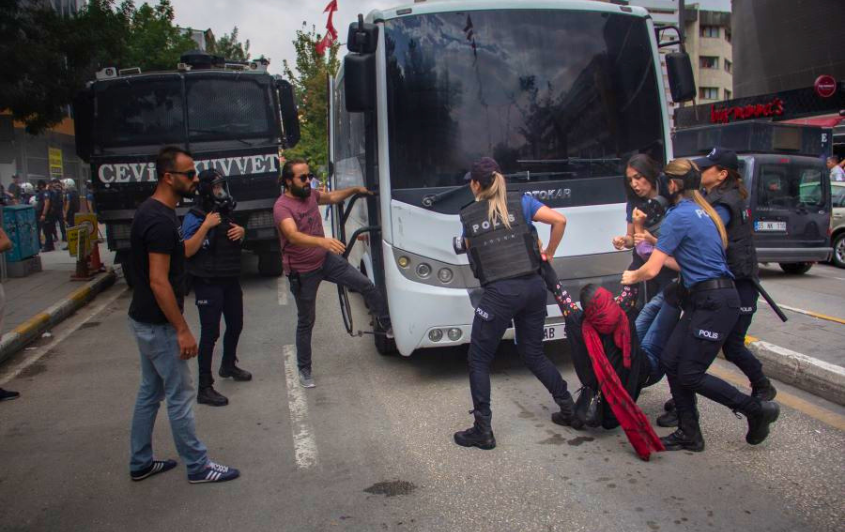



Turkey’s Constitutional Court has ruled that repeated bans imposed on public meetings and events in the eastern province of Van in 2019 violated the constitutional right to hold meetings and demonstrations.
The court’s General Assembly issued the ruling in an individual application filed by Mahmut Kaçan, finding a violation of the right protected under Article 34 of the Constitution.
The court said a blanket ban on meetings and demonstrations requires a concrete danger to public order or a genuine threat. Authorities must also show that the danger cannot be addressed through less restrictive measures.
According to the ruling, authorities must demonstrate that the disadvantages created by a ban are justified by the aim of protecting public order and provide reasoning detailed enough to allow judicial review.
Fifteen-day bans for months
The Van Governor’s Office issued 18 separate bans in 2019, beginning on Apr 3 and ending with a decision dated Nov 24. The measures prohibited all events in the province except certain sports activities.
Authorities initially cited a hunger strike launched by Leyla Güven against the isolation of PKK leader Abdullah Öcalan. The hunger strikes ended in May 2019.
The Governor’s Office continued the restrictions, however, arguing that subsequent events could pose risks to public order and security, be subject to provocation and lead to violence.
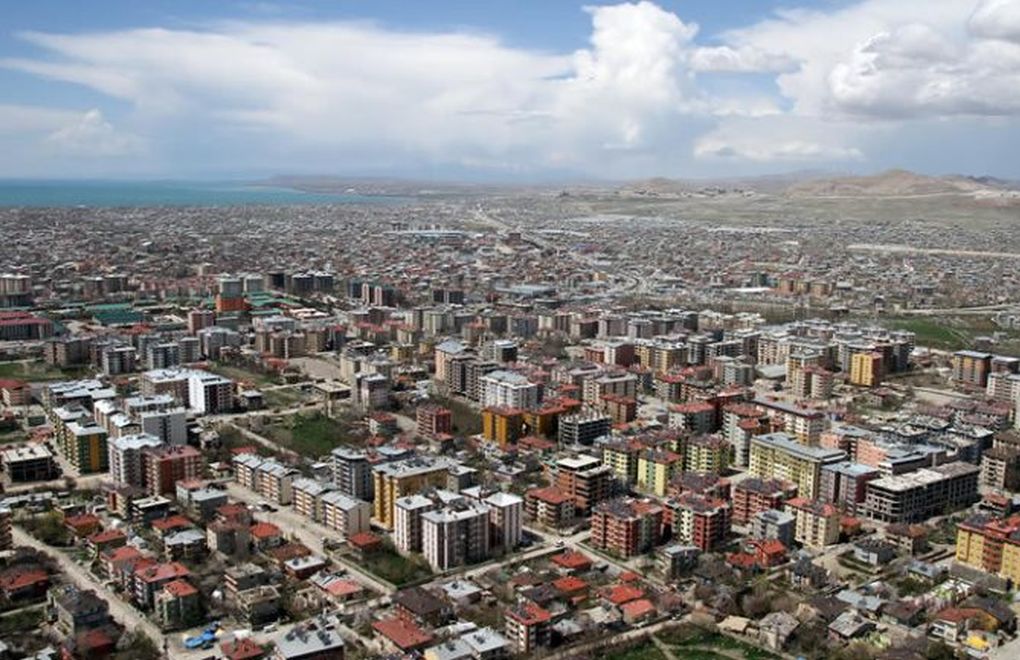
Events and Demonstrations Banned in Van for Another 15 Days
It repeatedly banned demonstrations and events, citing the need to ensure "national security."
The prolonged restrictions in Van had begun on Nov 21, 2016, and continued without interruption until Jun 27, 2022. They remained in effect for 2,045 days, or about five years and seven months.
Rather than being imposed through a single five-year decision, the restrictions were maintained largely through successive 15-day bans. The Constitutional Court application concerned only the measures imposed in 2019.
Kaçan filed a lawsuit seeking the annulment of the ban, arguing that it was based on abstract and hypothetical grounds. He said the state was responsible for taking necessary precautions where security risks existed and that systematic bans made exercising fundamental rights practically impossible.
The Van 2nd Administrative Court rejected the case, finding that the measure pursued legitimate aims, including protecting public order and security and preventing crime, and was proportionate. The Erzurum Regional Administrative Court later rejected Kaçan’s appeal in a final ruling.

5-year demonstration ban in Van extended again
‘Possible security risks are not enough’
The Constitutional Court found the Governor’s Office’s reasoning insufficient under constitutional standards.
It said the mere fact that a meeting or demonstration was announced through media outlets or social media accounts sympathetic to an organization was not sufficient grounds for a ban.
The court also found that an event being embraced by an organization, supported by certain groups or potentially turning into a celebratory gathering did not by itself establish a foreseeable threat of violence or a clear and imminent danger.
The Governor’s Office had also failed to explain how the events could lead to violence, provocation or terrorism offenses and which concrete circumstances supported those concerns, the court said.
"Although the competent authorities have an obligation to take measures to protect public order, security and the rights of others during meetings or demonstrations, a ban on all meetings and demonstrations based solely on possible security risks cannot be regarded as constitutionally sufficient.
"Undoubtedly, the administration’s obligation to provide reasons does not mean that its decision must include every detail concerning public order and security. However, in such a case, it must be demonstrated with relevant and sufficient reasoning that the administration’s positive obligation to ensure the exercise of the right no longer applies and that the interference meets a pressing social need.
"Otherwise, the right may be restricted on the basis of abstract considerations concerning public order and security, which may lead to unforeseeable limitations on the right."
The court concluded that the administration had failed to substantiate its security concerns in a "concrete, specific and sufficient manner."
‘A ban should be the last resort’
The Constitutional Court also stressed that the state is responsible not only for preserving public order but also for ensuring that peaceful meetings and demonstrations can take place safely.
Authorities must first identify concrete dangers and threats and attempt to address them through less restrictive measures, the court said.
A direct ban on the right to hold meetings and demonstrations should be considered only as a "last resort."
The court found that the Van Governor’s Office had resorted to a general ban without first assessing less restrictive and protective measures.
‘The longer a ban lasts, the greater the obligation to justify it’
The Constitutional Court also addressed the successive nature of the bans.
It said public authorities imposing continuing restrictions must provide increasingly detailed justification for each new measure.
Even if the reasoning for an initial ban could be considered sufficient, the severity of the interference with fundamental rights increases as the restriction continues, according to the court.
Authorities therefore cannot simply state that a threat persists but must more clearly demonstrate the existence of a "real and imminent threat."
The court also noted that lower courts had failed to examine Kaçan’s argument that the continuous bans in Van had made exercising the right to hold meetings and demonstrations practically impossible.
It said consecutive bans based on standardized reasoning could violate the right if they rendered its exercise meaningless or impossible.
Administrative court review 'inadequate'
The Constitutional Court also found the review conducted by the Van 2nd Administrative Court inadequate.
Although the lower court concluded that the ban complied with the requirements of a democratic society and was proportionate, it failed to sufficiently explain how it had reached that conclusion, the ruling said.
The administrative court did not examine why the cited risks amounted to a concrete danger or genuine threat, or why those risks could not be addressed through less restrictive measures.
The Constitutional Court also stressed that lengthy explanations in a ban decision do not, by themselves, amount to "relevant and sufficient reasoning."
It concluded that no clear and imminent danger to public order and security had been supported by concrete evidence and that the necessity of the interference in a democratic society had not been demonstrated.
Six judges dissent
The Constitutional Court’s General Assembly found a violation of the right to hold meetings and demonstrations by a majority vote.
Judges Recai Akyel, İrfan Fidan, Muhterem İnce, Yılmaz Akçil, Ömer Çınar and Metin Kıratlı dissented.
In their dissenting opinion, the judges argued that Kaçan had challenged only the ban covering May 29 to Jun 12, 2019, and had not exhausted legal remedies against the other restrictions.
They also said the Governor’s Office had provided sufficient justification concerning demonstrations linked to the organization and the risk of possible violence.
The Constitutional Court ordered that its ruling be sent to the Van 2nd Administrative Court for a retrial aimed at eliminating the consequences of the violation.
It also ordered the payment of 50,000 liras in non-pecuniary damages to Kaçan, along with a total of 40,487 liras in legal costs. (HA/VK)


bianet's Freedom of Expression Reporter since June 2018. After interning at bianet in 2013, he took part in several bianet projects. His news reports and articles have been published on various platforms such as Expression Interrupted, susma24.com, Jıneps, Inside Turkey, and tol.org. He has contributed numerous interviews and articles on freedom of expression. His writings have been translated into several languages, including English, French, Italian, and Circassian. His photographs from the March 8, 2018 Feminist Night March were exhibited by the İstanbul Metropolitan Municipality. He is the recipient of the 27th Metin Göktepe Journalism Award and holds a degree in journalism from Erciyes University.

Court drops case against journalist Tuğçe Yılmaz over interview with Armenian youths
Journalist Erdal Süsem receives life sentence in retrial despite top court ruling
Driver released after sentence over fatal crash involving motorcycle courier in İstanbul
Court censors news about doctor's detention after refusing to examine prosecutor without appointment
Court orders comedian Deniz Göktaş’s release after sentences for ‘insulting’ Erdoğan and religion