



One of the emblematic figures of the LGBTI+ movement, Marsha P. Johnson, once said in an interview, “Because if everyone, without exception, does not have a right, then no one has it.”
Johnson went down in history as a Black trans woman, drag queen, and LGBTI+ rights activist born in 1945. Johnson, who fought in New York in the 1960s and 1970s to increase the visibility of the LGBTI+ community and defend the rights of “the marginalized,” was on the front lines during the Stonewall Uprising and, together with Sylvia Rivera, founded the Street Transvestite Action Revolutionaries (STAR), providing shelter and social support to homeless trans people and sex workers.
Johnson’s words remind us of the importance of defending rights that are being narrowed day by day, and reopen debate over whose rights can be defended, to what extent, and with what priority.
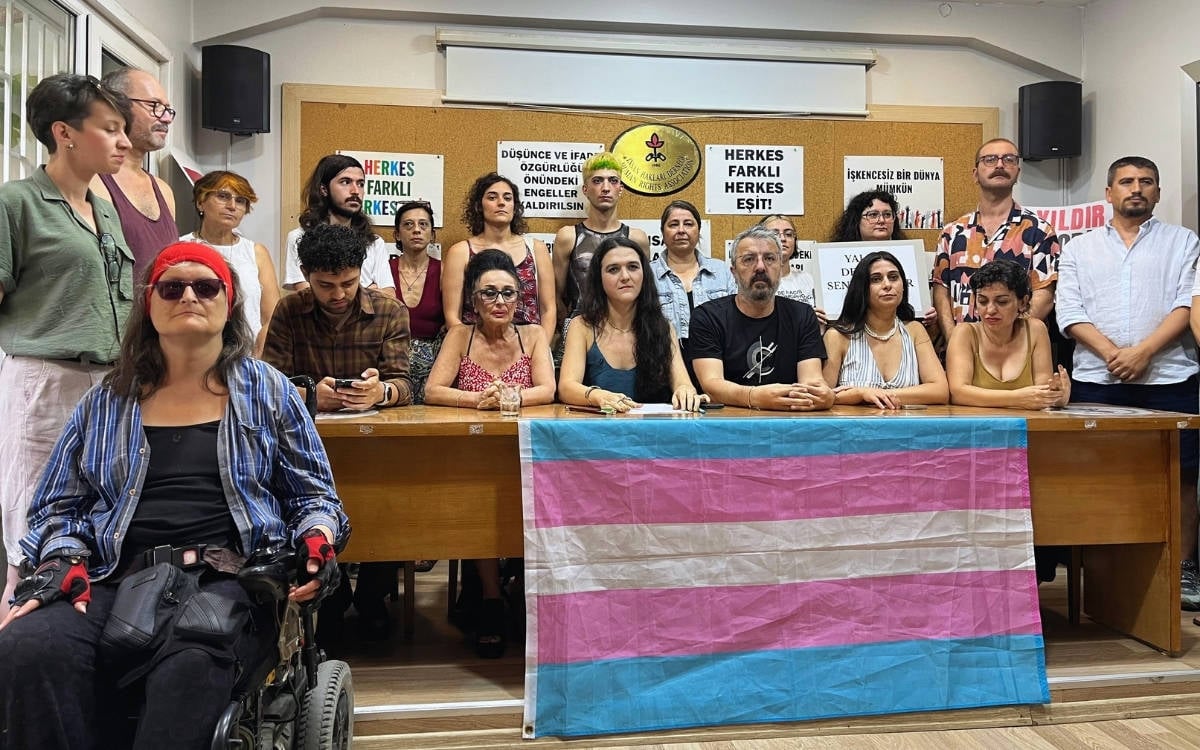
In March, LGBTI+s in Turkey were subjected to discrimination in two different areas in particular, and efforts were made to erase their visibility.
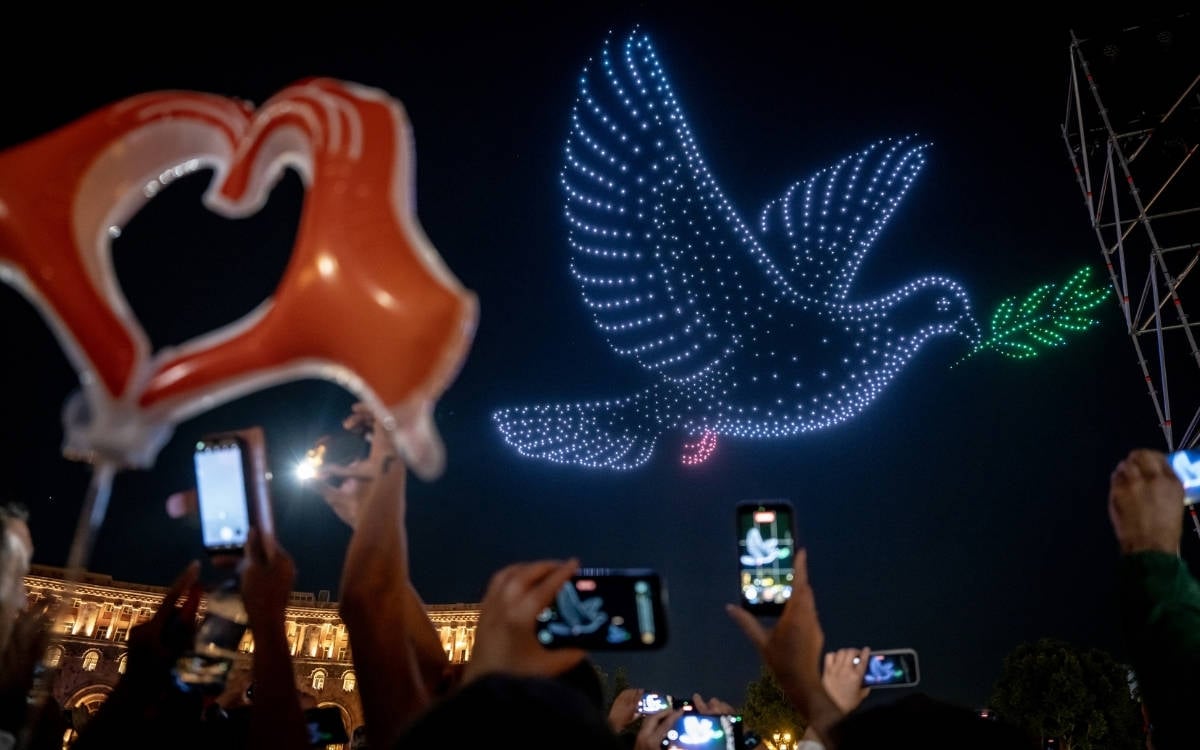
The first of these took place during the İstanbul Newroz held in Yenikapı on Mar 22 under the slogan “Newroz of Freedom and Democracy / Newroza Azadî û Yekîtiya Demokratîk.” LGBTI+s who entered the Newroz grounds together with feminists faced at least five attempted attacks by different groups. Although security at the site was largely provided by officials from the Peoples’ Equality and Democracy (DEM) Party, the density of the crowd and its at times heterogeneous political composition made the area relatively unsafe for LGBTI+s. Before entering the Newroz grounds, feminists and LGBTI+s were accompanied by DEM Party officials and DEM Party İstanbul MP Özgül Saki, and the protective line that was formed remained in place throughout the day.
About 10 days after Newroz, DEM Party Co-Chair Tülay Hatimoğulları, while expressing gratitude during her party’s parliamentary group meeting to those who attended Newroz, also mentioned LGBTI+s and called on them as well on the occasion of May 1 Labor Day. It was extremely important that the attempted attacks were acknowledged, that LGBTI+s were explicitly named, and that this visibility was ensured through Hatimoğulları.
'Where are you my love?'
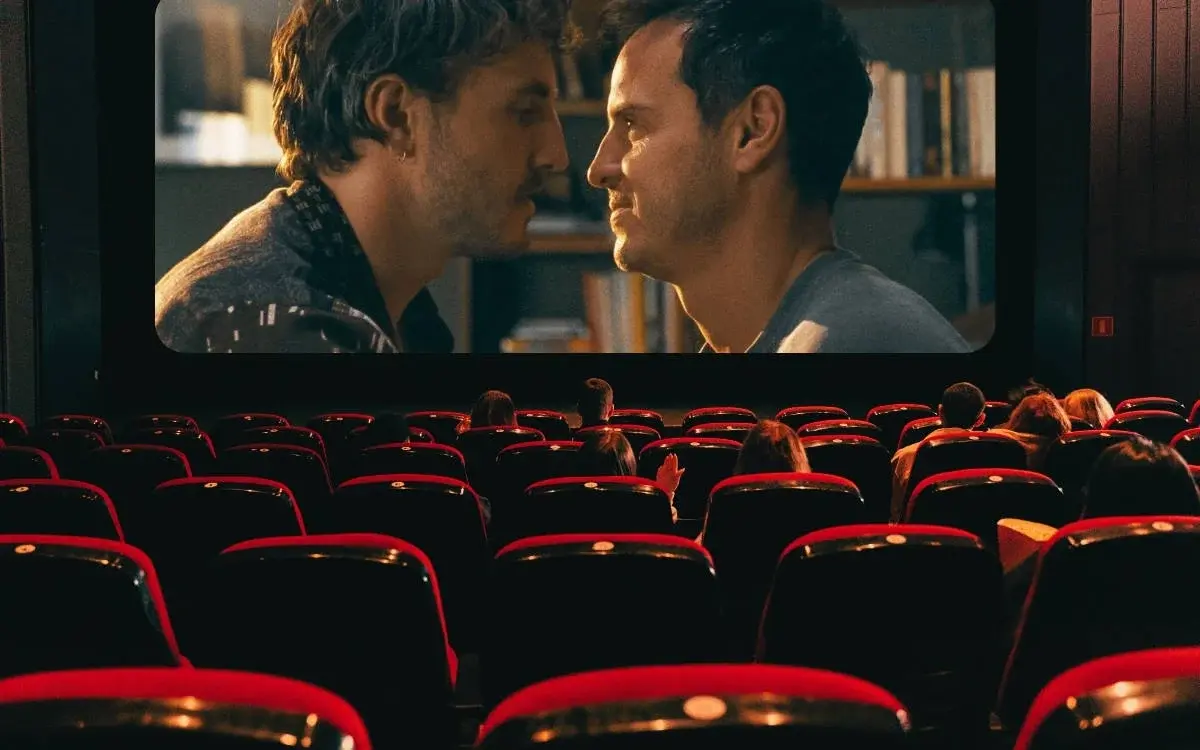
The second case of “erasure” in March took place at the Mar 23 press conference for the 45th İstanbul Film Festival, organized by the İstanbul Foundation for Culture and Arts (İKSV), at The Marmara Taksim. In addition to the festival’s three competitive sections, the Golden Tulip Competition, New Perspectives, and the Short Film Competition, six thematic selections that will meet audiences between Apr 9 and 19 were announced. However, the “Where Are You My Love?” section devoted to queer films was once again not included in the program this year, following the censorship debates in 2025.
In a statement posted on Instagram last year, the festival said: “The fact that the ‘Where Are You My Love?’ section, which holds special meaning for many of our viewers, could not be seen at the festival this year was regarded as a lack of representation and a step backward. We sincerely care about this feeling and the reactions we received, and we plan to include this section in the program again next year.” However, this promise was not kept, and the repeated “lack of representation” and “step backward” this year were regarded by the LGBTI+ community and culture and arts workers as censorship. The 24th İstanbul LGBTI+ Pride Week Committee responded to the festival’s stance with a boycott call.
Furkan Yurt, curator of Pembe Hayat KuirFest, Turkey’s only queer film festival, described the removal of the section as an example of institutional censorship and self-censorship. According to Yurt, this stance is not limited only to the removal of a film selection from the program, it is also part of a cultural climate in which censorship is internalized and reproduced by institutions.
The İstanbul LGBTI+ Pride Week Committee’s statement on the matter emphasized the following: “‘Where Are You My Love?’ is absent once again. This is not a coincidence, it is outright censorship. This section of the İstanbul Film Festival, which has opened space for queer cinema for years, has once again been removed from the program. The promise made last year that it would be brought back into the program was also not fulfilled. This situation is not only a matter of a film selection, it is a manifestation of the systematic exclusion of LGBTI+s from cultural production and of the reflection of the political agenda on our lives. Queer art cannot be silenced, and we will not bow to censorship. We call on the festival management to put an end to its policies of censorship and self-censorship.’”
The road to 'Bakur'
As Yurt also noted, İKSV’s choice can be read primarily as an institutional strategy aimed at eliminating political risks, but the fact that this strategy began with one of the most vulnerable communities in the country, and one of those under the most intense attack, shows that the issue cannot be explained solely through “risk management” and instead points to a practice of selective invisibilization. Although the institution appears to rely on technical or organizational grounds, it is essentially displaying a reflex of retreat that avoids public criticism.
This practice shows that censorship now functions not only as an external intervention, but also as a mechanism that has seeped into institutional reasoning, been internalized, and thus reproduces itself. What is taking place here, therefore, is not so much an explicit ban as a more subtle practice of drawing boundaries that determines which narratives can enter circulation. After all, what determines the regime of visibility is often precisely these kinds of states of “absence.”
It is also possible to say that the İstanbul Film Festival’s practice reflects a historical continuity. Indeed, the removal of the documentary “A Guerrilla Documentary: Bakur” from the program in 2014 had clearly revealed how the visibility of Kurdish identity and its political and social representation was being limited in the cultural sphere. Today, with the “Where Are You My Love?” section being left out of the program, the intersectionality of censorship practices shaped around Kurdish and LGBTI+ representation is becoming more visible. Both examples reveal how the cultural production of different social groups is pushed into the background for the sake of institutional comfort and political sensitivities, or in other words, which lives and stories are seen as “less deserving” of a place in the public sphere. The idea of equality that Johnson pointed to becomes important at exactly this point, because Johnson invites us to think of the notion of rights not as a privilege that is distributed, but rather through equal access.
The picture seen through the İstanbul Film Festival, in this framework, should be read not merely as a technical choice regarding a film selection, but as part of a broader struggle over the spaces of cultural production and visibility for LGBTI+s, Kurds, and, more generally, all subjects who are “being pushed to the margins.” Every festival decision inevitably points to a moment of choice between social norms and institutional comfort. Every censored production, every selection removed from the program, is not only an absence, but also carries the trace of a social story that has been suppressed, postponed, or rendered invisible. The intersection of Kurdish and LGBTI+ representation in a pejorative sense, meanwhile, marks critical moments showing how freedom of expression in Turkey is being eroded not only at the legal level, but also at the cultural and institutional levels.
And perhaps the real question emerges precisely here: while narratives seen as “risky” today are being left out in this way, who can guarantee that other stories will not meet the same fate tomorrow? Is it possible to say that films about women, workers, or any form of resistance that the government does not deem acceptable will not also be excluded from the program on similar grounds? (TY/VK)