







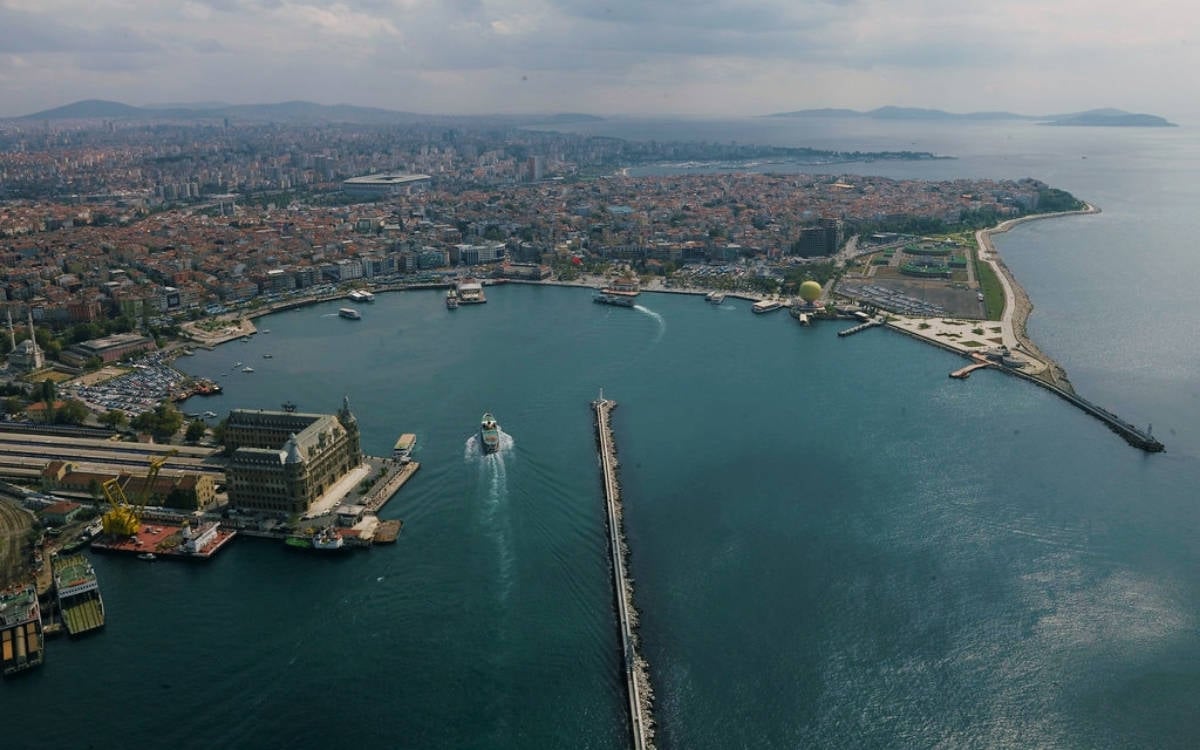



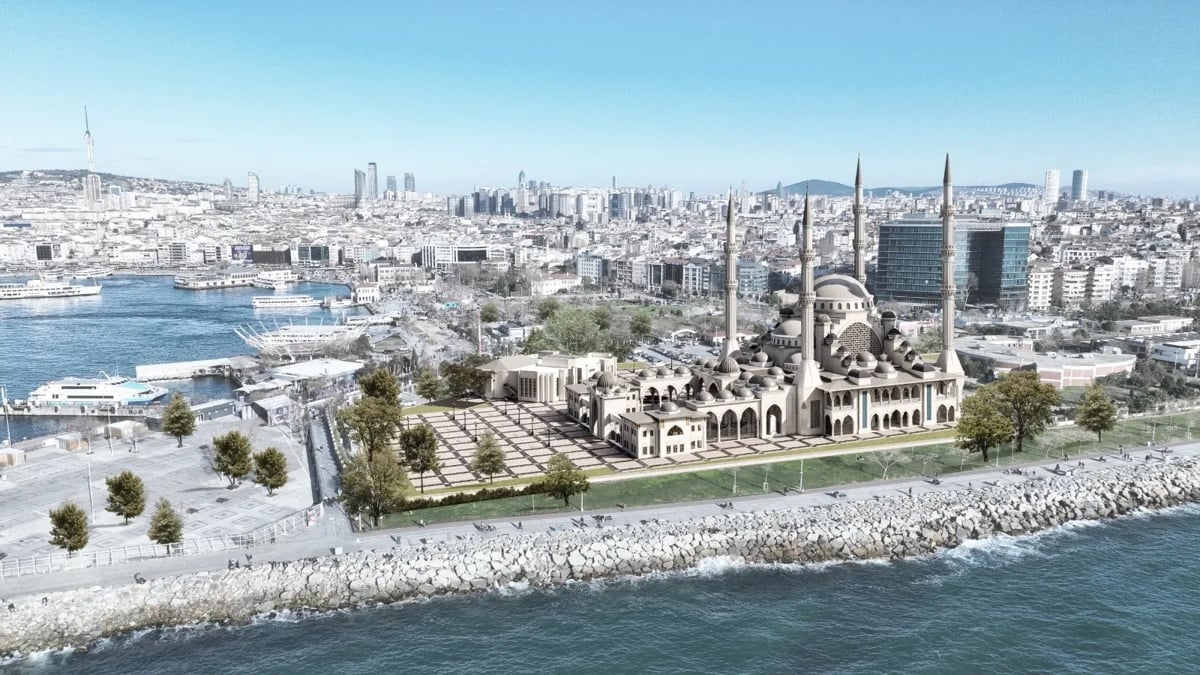
The Kadıköy Rıhtım Grand Mosque (Ulu Cami) and an underground parking project planned for Kadıköy's shoreline, one of the most vibrant public spaces on İstanbul's Asian side, is back on the agenda after years of legal proceedings.
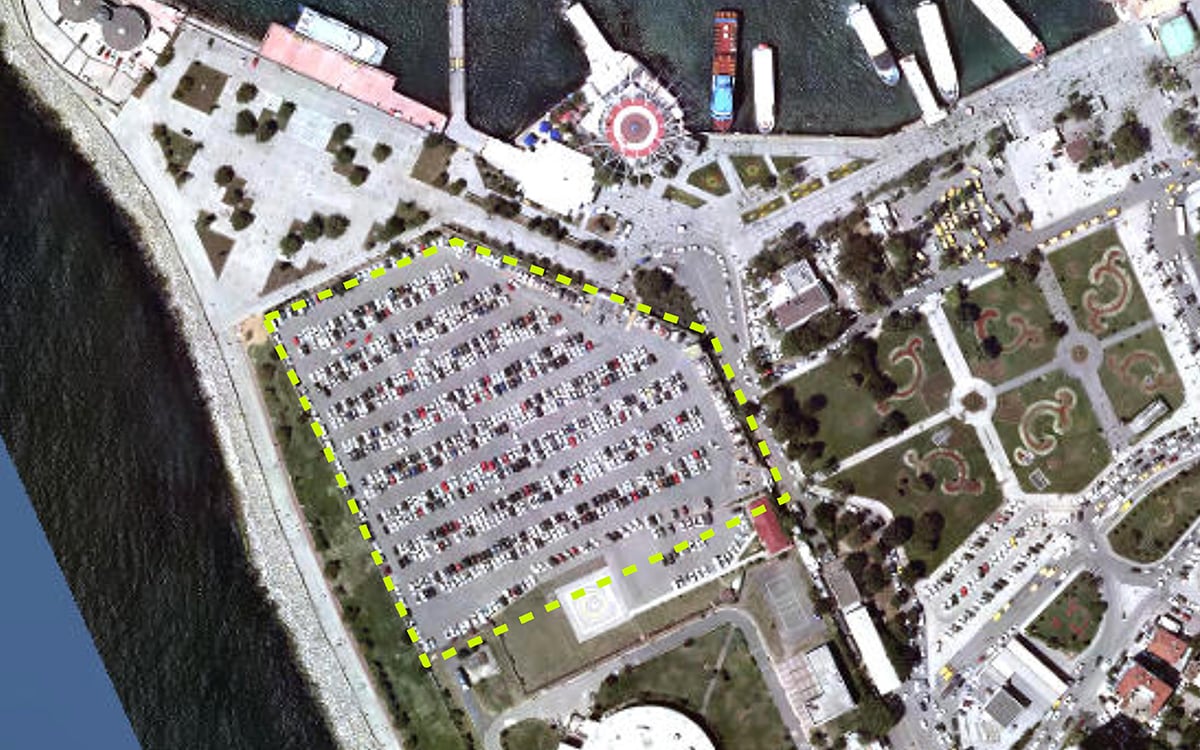
First proposed in 2015 following an application by the Presidency of Religious Affairs, the project is designed as a complex with the mosque and surrounding facilities on the landfill area on the waterfront.
The project follows a trend seen over the last decade where monumental mosques have been built at landmark locations across İstanbul such as Taksim Square, Çamlıca Hill and Levent. Kadıköy is now being added to these sites.
According to the project details announced in 2019, the construction in Kadıköy will cover a total area of 33,559 square meters, with a footprint of 11,232 square meters for the mosque, fountain, and service units.
The groundbreaking ceremony is scheduled for May, with construction expected to be completed within three years.
As part of the project, a three-story underground parking lot is planned to replace or sit beneath the current facility. The existing parking lot was closed on Mar 17 following an evacuation notice sent by the Kadıköy District Governor’s Office to İSPARK, a subsidiary of the İstanbul Metropolitan Municipality.
Criticism of the project is not limited to legal objections.
Urban advocates opposing the project argue that numerous places of worship already exist in the area. They emphasize that Kadıköy has an increasing need for green spaces and disaster assembly points instead.
The earthquake risk of building a massive structure on landfill ground, along with its impact on coastal use and wind corridors, remains a central concern. Critics also state that the underground parking lot will attract more vehicles to the area and worsen existing traffic congestion.
History of the project
Üzeyir Uludağ from Kadıköy Urban Solidarity (Kent Dayanışması) explained the history of the project, noting that the structure planned for the Kadıköy pier is more than just an architectural plan; it is part of a broader debate over the use of the city’s public spaces.
“This is a landfill area. In the years 1997-98, the municipalities of the period carried out landfilling here for the purpose of building a treatment facility. Initially, both primary treatment and biological treatment were planned; however, for various reasons, only a primary treatment facility was established. The vacant area next to it was left to be used for advanced biological treatment in the future.
"In 2015, the project came back on the agenda. The primary treatment facility remains, while the vacant area is used as a parking lot by İSPARK. That same year, a decision was made to build a mosque here at the request of the Religious Foundation and the initiative of the Environment and Urbanization Ministry. However, this decision was canceled as a result of objections from Kadıköy Municipality and the Chamber of Architects.
“In 2017, during the [mayor] Kadir Topbaş era, a tender process was initiated to build a biological treatment facility on the site, but this tender was also later canceled. Coming to the present day, they want to build a mosque on the site again through the Religious Foundation and the ministry. The cancellation decision of the project has been appealed, and the file has not yet been finalized.”
Earthquake assembly concerns
Uludağ explained other reasons why locals oppose the project.
“Because there are already many mosques in Kadıköy and especially on the pier line, and most of the time these mosques are not full. Is an investment of this scale being made for limited days like Fridays and holidays? Furthermore, the issue is not just a mosque; we are talking about a structure for 20,000 people and a complex that also includes commercial areas.
"Another important issue is the need of the city. Kadıköy needs more green space and public spaces where people can breathe. Large structures block wind corridors and, as in the case of Fikirtepe, heavy construction seriously affects air flow. The earthquake issue is also critical. Considering the population of Kadıköy, our existing disaster assembly areas are quite insufficient. Although areas like Yoğurtçu Park are pointed out for assembly areas, the fact that these are also on landfill ground creates a risk.
“On the other hand, the parking lot issue has also come back on the agenda with the project. According to scientists we met with before the Feb 6 earthquakes regarding vehicle traffic and the parking problem in Kadıköy, every new parking lot built in the city center attracts more vehicles to the region and grows the existing problem. For this reason, the real solution is the development of alternative transportation systems. We carry out various studies, make press statements, and organize meetings against all these problems.
"However, we could never receive sufficient support from Kadıköy Municipality during this process. We specifically had a need for a large hall for a public information panel planned to discuss the mosque project and the problems of Kadıköy in general, and our application to the municipality in this context was directly rejected.”
'We will not allow the occupation of our public spaces'
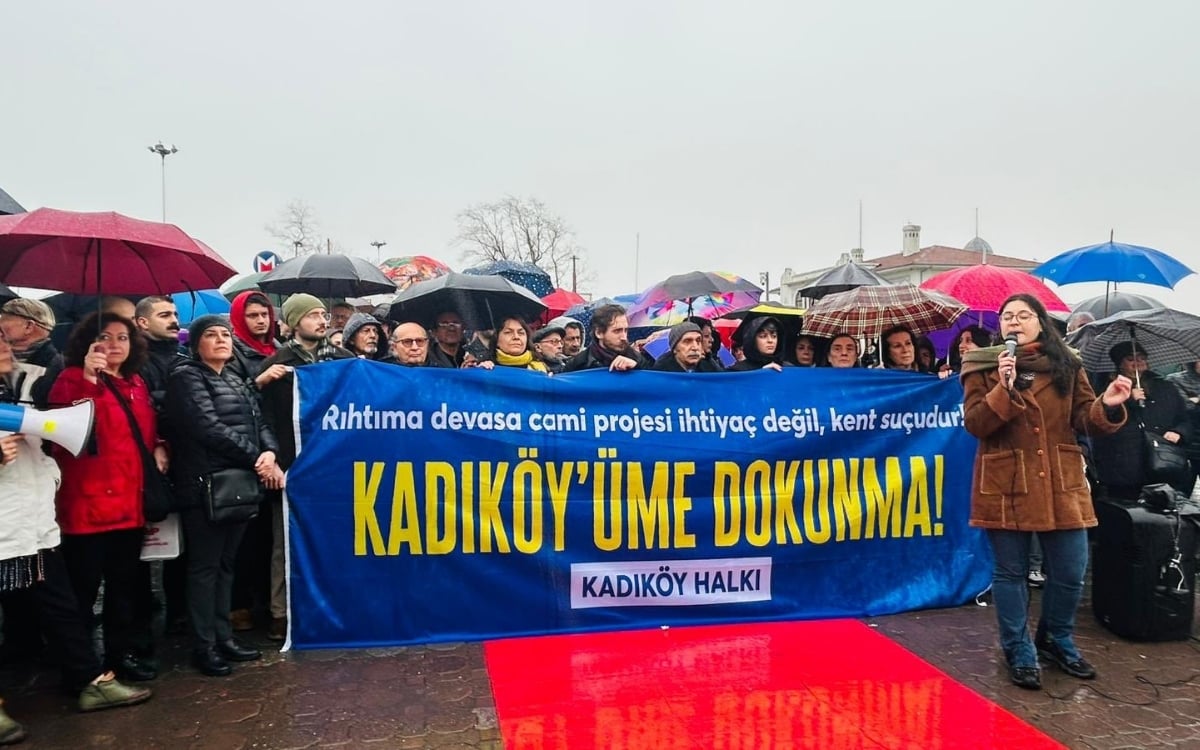
Kadıköy Urban Solidarity released a statement on Apr 10 after the signing of the protocol:
“The insistence on massive construction at Kadıköy pier knows no bounds. The Kadıköy District Governor, the Kadıköy District Mufti, and the President of the Kadıköy Rıhtım Mosque Construction and Sustenance Association came together and announced that an official protocol regarding the Pier Mosque Project has been signed.
"It is also noteworthy that the managers of the association, which was just established in February, have AKP connections. As residents of Kadıköy, we will not allow our public spaces to be occupied for political purposes.
“This construction, which is completely contrary to the Coastal Law and urban planning principles, is currently at the judicial stage. Following the decision of the appeals court, the file has been moved to the Council of State, and the legal process has not yet been completed.
"Starting construction works and protocol processes by creating a fait accompli without waiting for the judicial decision is an open violation of both laws and ethical values. We repeat our demand for a return from this mistake and for the production of projects aimed at the real needs of Kadıköy.”
Mosques near the project area
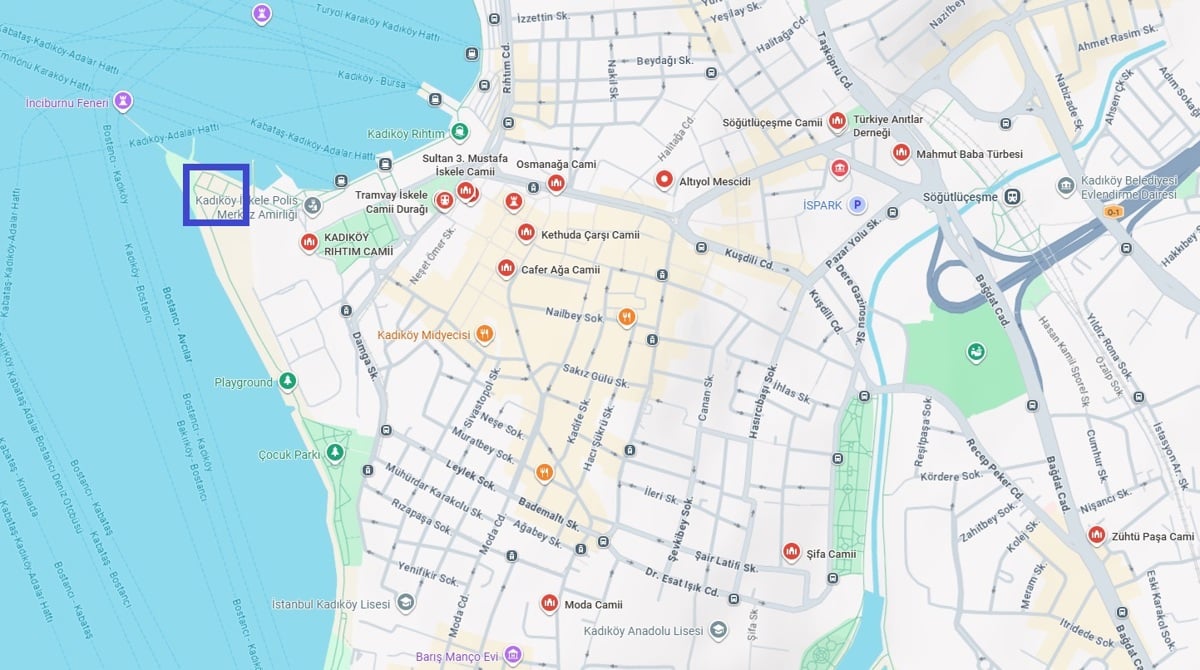
On the other hand, within walking distance of the area where the project is intended to be built, considering only the Kadıköy central line, there are at least nine mosques: Osmanağa Mosque, Söğütlüçeşme Mosque, Üçüncü Mustafa İskele Mosque, Tıbbiye Mosque (Haydarpaşa Protocol Mosque), Rasimpaşa Mosque, Kethüda Mosque, Caferağa Mosque, Moda Mosque, and Şifa Mosque.
While this table points to a serious density in terms of access to places of worship in the region in question, it also moves the discussion to the point of whether a new, massive-scale construction is a ‘need’ or not.
(TY/VK)