



"I have walked that long road to freedom. I have tried not to falter; I have made missteps along the way. But I have discovered the secret that after climbing a great hill, one only finds that there are many more hills to climb. I have taken a moment here to rest, to steal a view of the glorious vista that surrounds me, to look back on the distance I have come. But I can rest only for a moment, for with freedom come responsibilities, and I dare not linger, for my long walk is not yet ended."
Nelson Mandela’s autobiography, titled The Long Walk to Freedom, ends this way. When we learned the contents of the Framework Law last week, Mandela’s words came to my mind. Mandela’s words were not spoken after the process was officially completed in South Africa. The narrative in the book ends on the day Mandela was released from prison after 27 years.
This paragraph serves as a sort of summary of the life and struggle of Mandela—or Madiba, as his people call him. Ultimately, Madiba conducted negotiations regarding the decades-long conflict, knowing full well that the path to peace would not be completed overnight, and brought an end to the conflict in his country.
Peacebuilding in South Africa, however, continues even today.
Öcalan is also aware that the path to lasting peace is a long one. Indeed, the statement issued by the İmralı Delegation on Aug 3, following its meeting with Öcalan, begins with the words, “A journey of a thousand kilometers begins with a single step.” Öcalan’s assessment reveals that he views the law as a starting point and the first step on a long journey.
Criticisms and opinions about the law
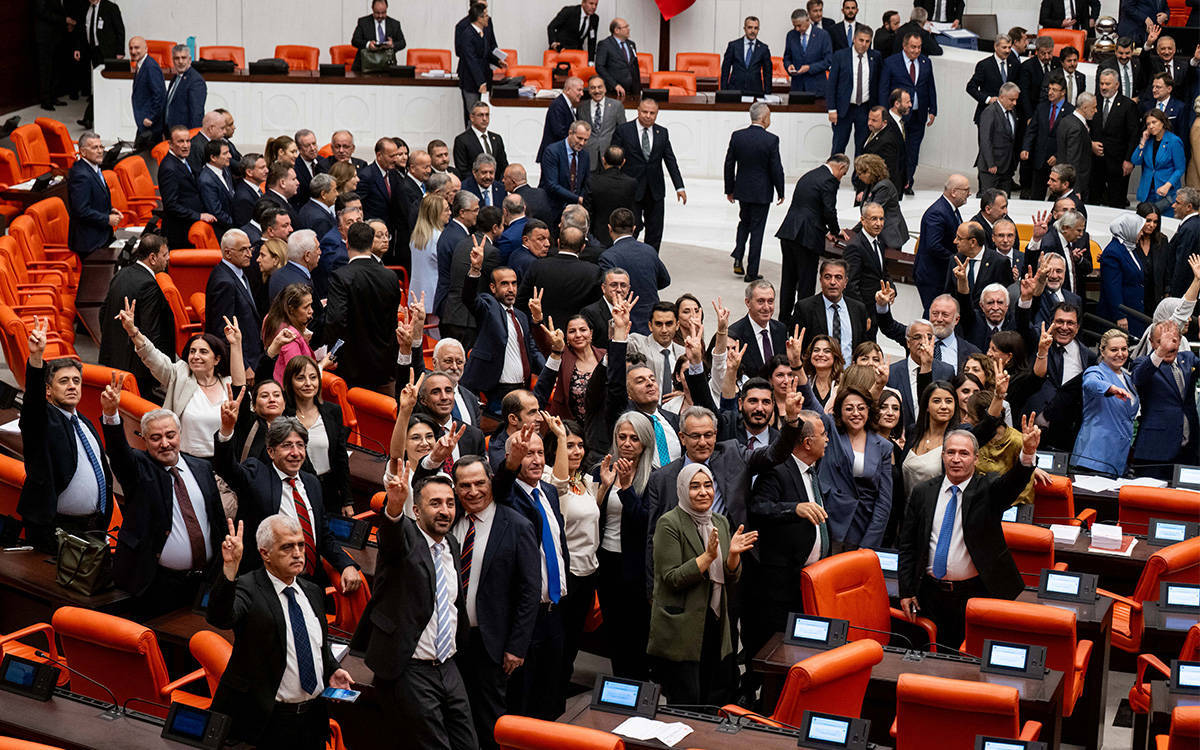
Many criticisms can be—and are being—leveled at the text that was adopted by the Grand National Assembly of Turkey (TBMM) and became law. It is clear that the process will be lengthy and will require numerous legal regulations.
In this regard, the law adopted by Parliament is a stop along the road to peace.
When the draft was announced, we, as the Human Rights Association (İHD), shared our views on seven articles with the public. We stated that measures to prevent the process from dragging on, as well as distinctions made based on the date and type of the crime, would help shorten the path to peace. We emphasized that the law should also include public sector employees who were dismissed—particularly the Academics for Peace, who were expelled from universities for demanding peace.
Unfortunately, the criticisms of those openly opposed to the process do not offer many concrete proposals for a solution. My general observation regarding such criticisms is that they carry the risk of leading to the continuation of human rights violations. Ultimately, despite all its shortcomings, the continuation of the process is preferable to a conflict-ridden environment. As Cicero said: “The worst peace is better than the most just war.”
Such criticisms are not limited to those opposed to the process.
For example, a statement issued under the signature of the Movement Leadership (The PKK leadership uses this name after the group declared its dissolution, TN) reads: “This law contains serious errors and shortcomings. The recommendations made by the parliamentary committee regarding democratization and the resolution of the Kurdish issue have not been incorporated into this report.” The statement, which points out that the law contains shortcomings regarding the resolution of the Kurdish issue, emphasizes that “the law is a starting point.”
Some of the criticisms directed at the law, however, pertain to the process as a whole and are made from a broader perspective. These criticisms also include assessments of the ruling power's general policies that lead to human rights violations.
A critical perspective
We must act with the understanding that the law alone will not bring about peace. At this point, it is advisable to maintain a critical perspective regarding both the Framework Law and the process itself.
A critical perspective is an attitude that can ensure progress in the areas of democracy, the rule of law, rights, and freedoms proceeds in parallel with the laws enacted during the peace process.
Expectations from the law: Implementation
Laws are important, but their effective and proper implementation is even more important. As has often been pointed out, for example, there is no need for a legal amendment to secure the release of individuals such as Selahattin Demirtaş, Figen Yüksekdağ, Osman Kavala, Can Atalay, and others. Similarly, the release of sick prisoners faces administrative, not legal, obstacles.
We need to examine how the law is interpreted and how it impacts daily life. The monitoring committees overseeing the implementation of the Framework Law must be open to the participation of human rights organizations and experts working in the field of peace. In addition to those engaged in peace work, bar associations, professional organizations, labor unions, and women’s, youth, LGBTI+, and environmental organizations—which have a voice and policy stance in this area—must also be able to contribute meaningfully to the process.
For this reason, in our statement, the İHD emphasized that ensuring the monitoring commission is open to political and civil society participation will enhance trust in the process.
A similar view is expressed in a letter written by the Peace Foundation addressed to Parliament Speaker Numan Kurtulmuş. The relevant section of the Peace Foundation’s letter reads as follows: “We recommend that, during the establishment and operation of the Monitoring Commission, the knowledge, experience, and recommendations of civil society organizations working in the fields of conflict resolution and peacebuilding be utilized, and that the meaningful and effective participation of these organizations in the process be ensured.”
As emphasized in the statements by the İHD and the Peace Foundation, the meaningful and effective participation of civil society organizations will make a substantial contribution to the process.
Expectations for the process: Peace and democratization
Security-based policies pursued for decades regarding the Kurdish issue—which is, at its core, a matter of human rights and democracy—have caused profound damage. It is neither possible nor realistic to resolve such a deep-rooted issue, which directly affects millions of people and concerns society as a whole, with a single law.
Political will is the key factor in resolving the Kurdish issue, which encompasses many layers—political, economic, cultural, legal, and others. Given the significance of the issue, it is essential to closely monitor the policies and steps that political will will pursue.
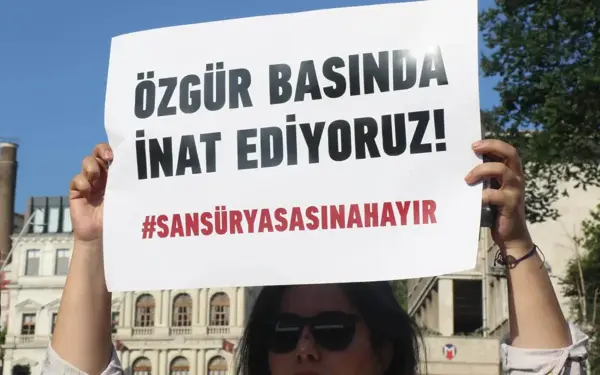
In this regard, it is critically important to keep long-standing issues in areas such as democracy, the rule of law, freedom of the press, freedom of thought and expression, gender equality, and workers’ rights on the agenda when critiquing the text of the law.
To achieve peace
The road to peace is long.
Achieving peace requires the political will and maneuverability to overcome the deadlocks and obstacles encountered along the way. After all, achieving peace requires a long-term struggle and a sustained program.
Human rights and freedoms serve as our guide on the long road to peace.
Let us continue walking the long road to peace.