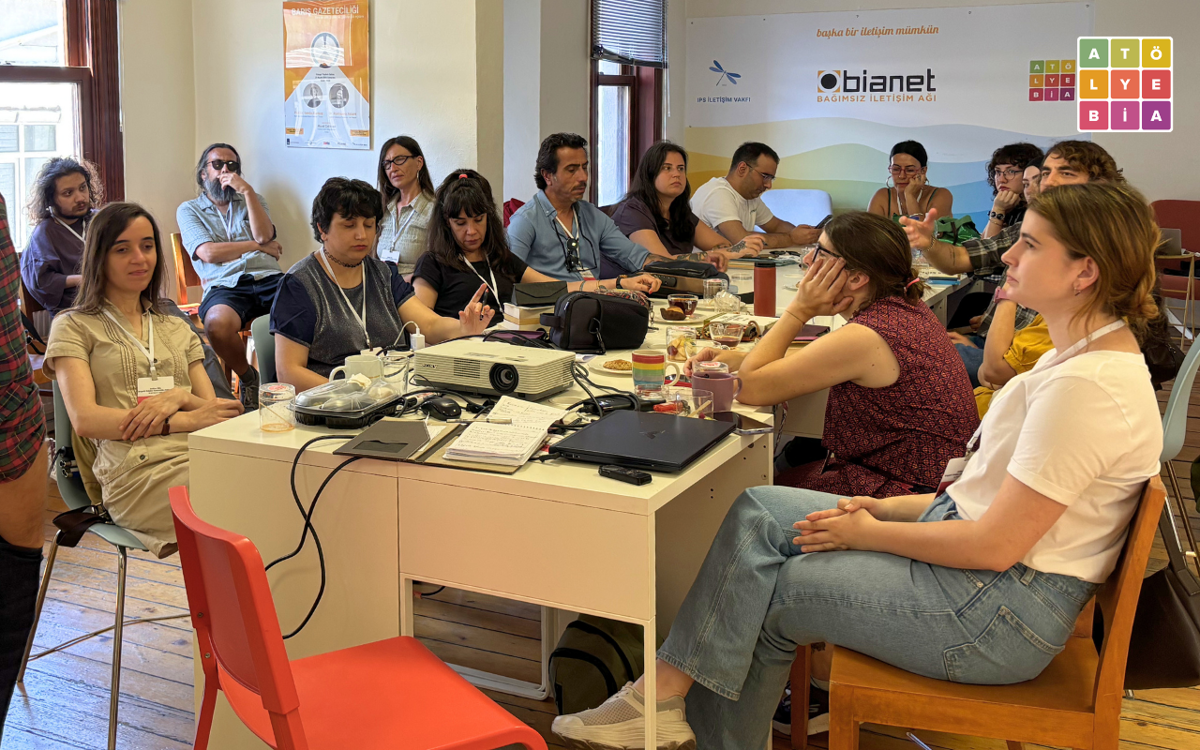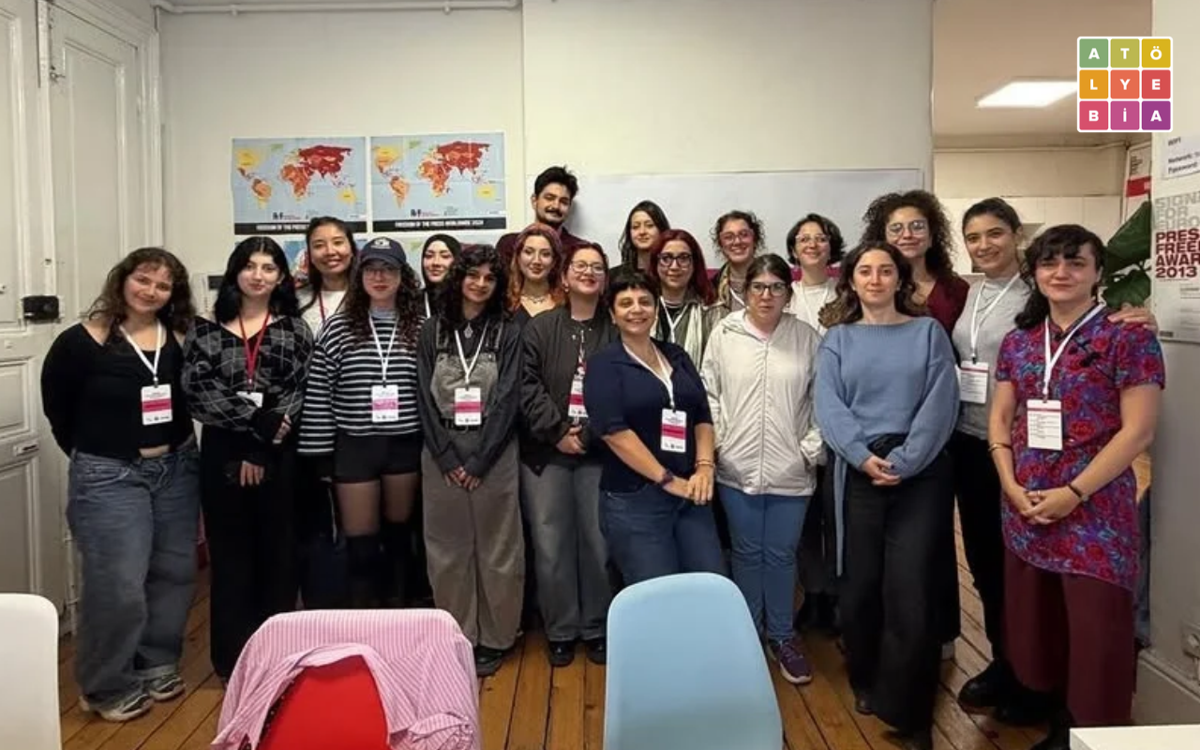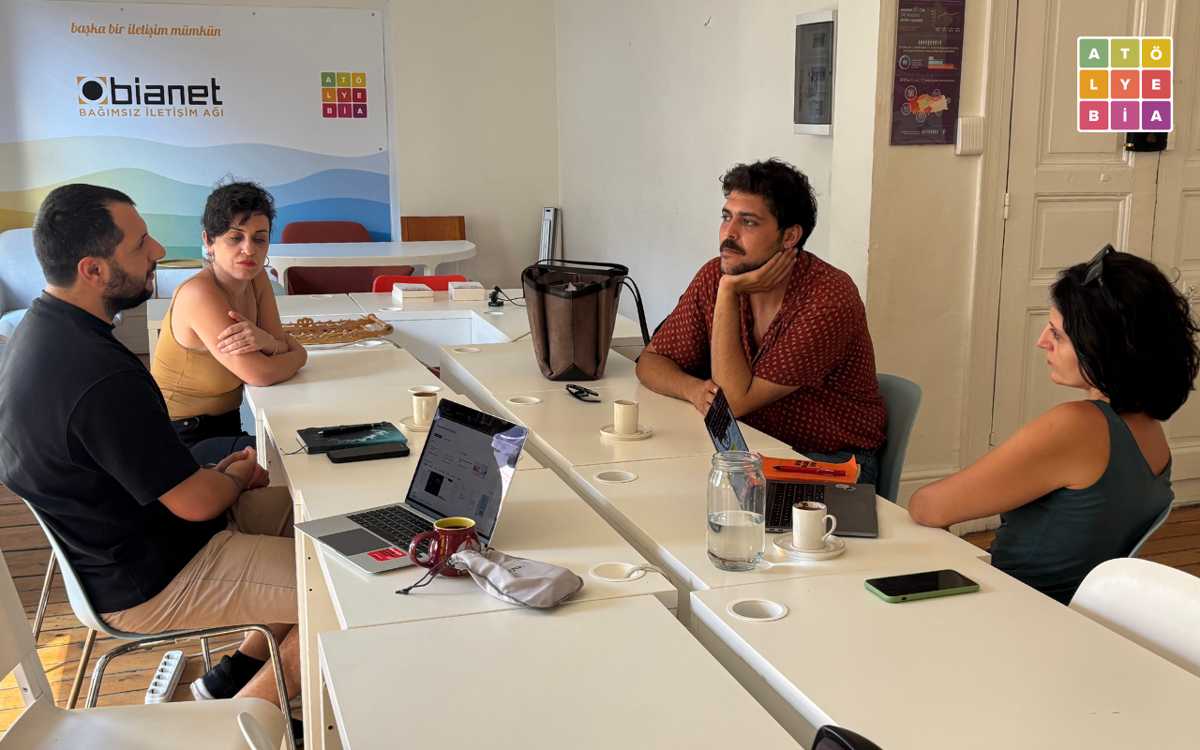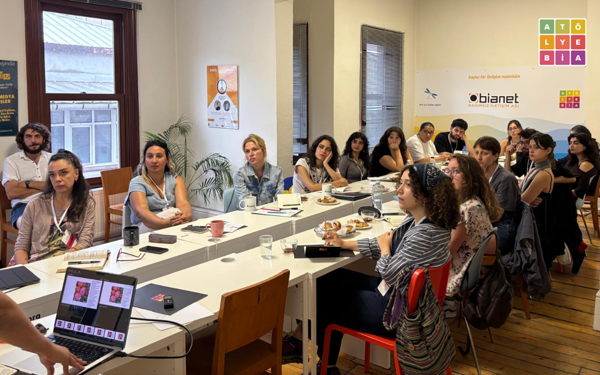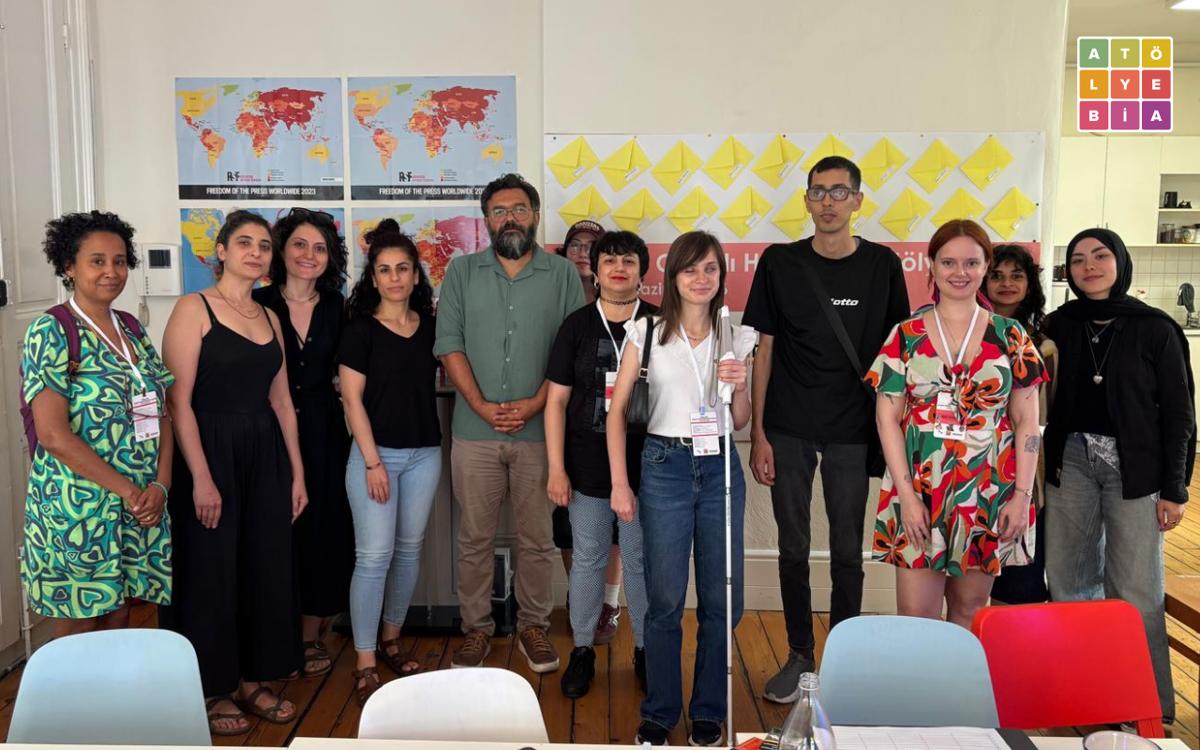

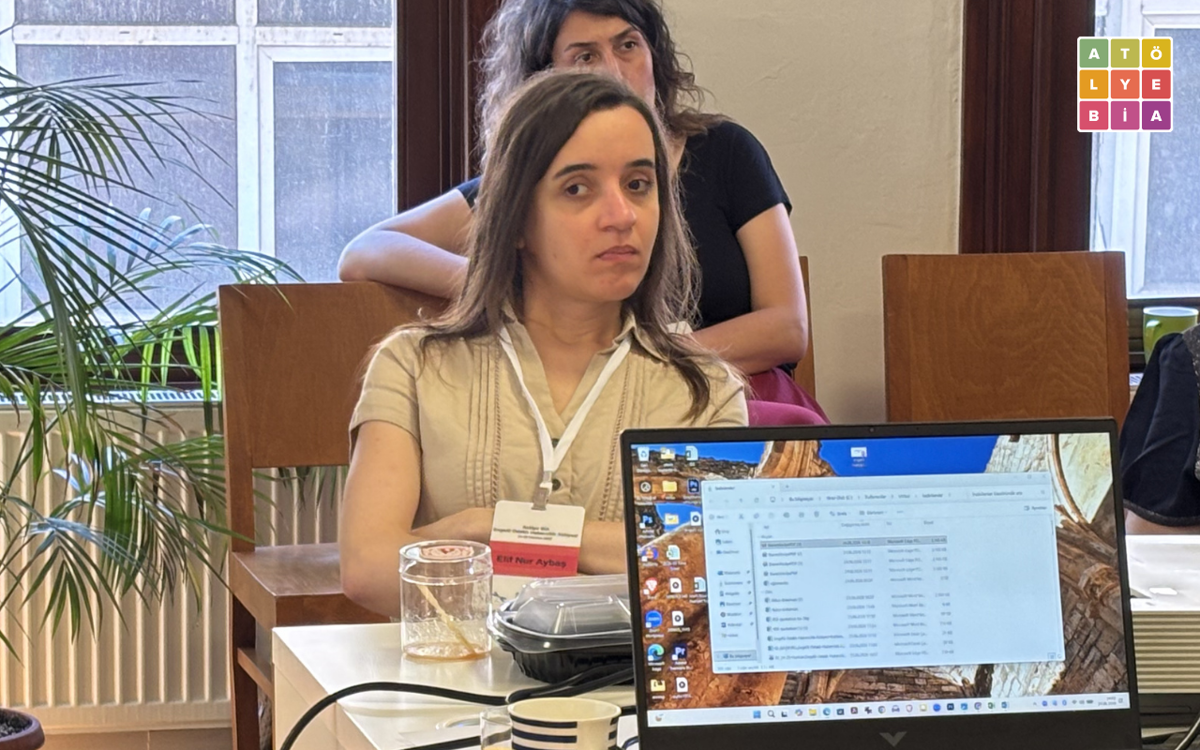



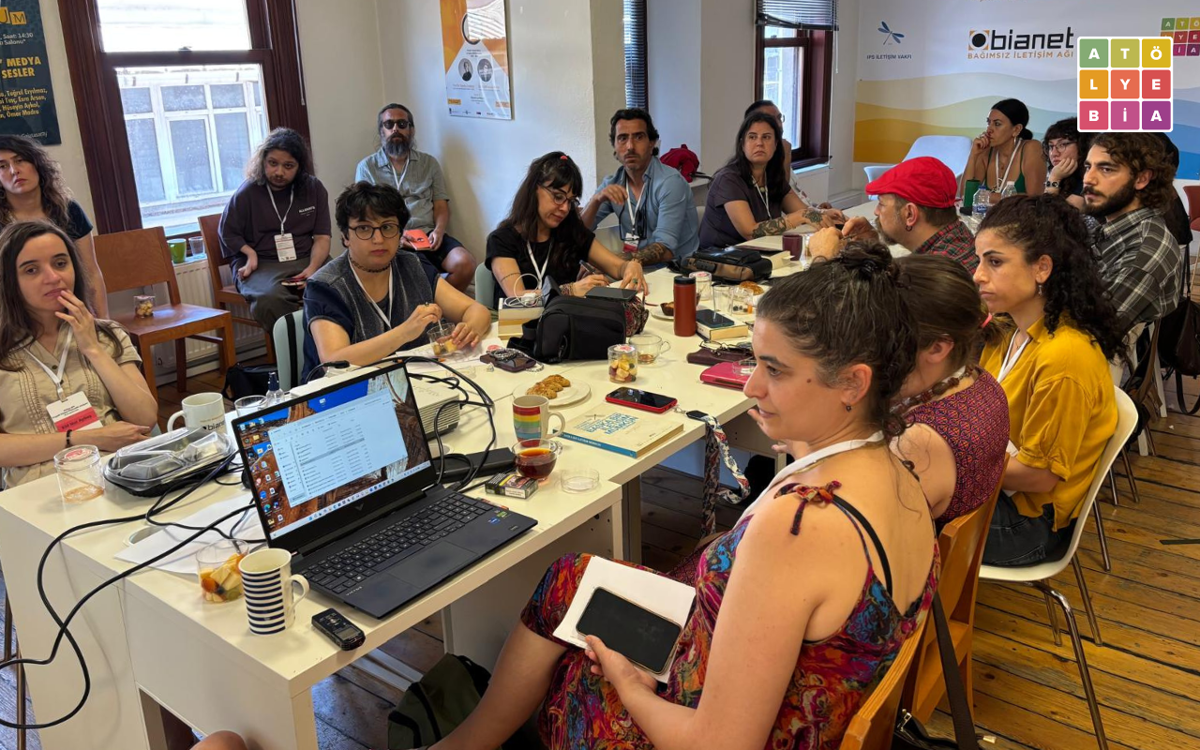
The two-day Disability-Oriented Journalism Workshop organized by Atölye BİA began today. Elif Nur Aybaş spoke in the second session of the day titled "Introduction to Disability Rights," while Meral Sözen spoke in the third session titled "Language, Representation, and Problematic Stereotypes in the Media."
Aybaş said that disability has not been an unchanging experience throughout history. Stating that disability acquires meaning in different ways across various periods, social structures, and geographies, Aybaş explained the history of disability through institutions, the concept of the norm, and struggles for rights.
"Disability has indeed been experienced differently in every geographical condition, every social formation, and every historical period," Aybaş said. She explained how disability has been defined from prehistoric times to the present and how these definitions have changed during her presentation.
About Elif Nur Aybaş
She completed her bachelor's degree at Boğaziçi University in the Department of Political Science and International Relations and her master's degree in the Department of Sociology at the same university. She wrote her master's thesis on prosthetics, titled "A Critical Analysis of Assistive Technologies: Extension or Commodity?" She has been involved in disability rights activism both within various associations and individually since her undergraduate years.
Institutions and the struggle for a voice
Aybaş said in her presentation that it is necessary to look at institutions to understand the history of disability. She noted that structures such as boarding schools, rehabilitation centers, mental hospitals, and workhouses did not only provide care and education services.
These institutions produced knowledge about disabled people, made decisions regarding their lives, and often spoke on their behalf, she explained. She said that the experiences of disabled people were conveyed through doctors, educators, and institution managers for many years.
However, according to Aybaş, institutions were not solely exclusionary structures. These same institutions also paved the way for disabled people to come together, develop shared experiences, and establish organizations that would form the basis of the struggle for rights in later years:
On one hand, you isolate a certain disability group, but on the other hand, you bring them together. Institutions also became one of the important tools for organizing and gaining an identity.
Construction of normalcy and ableism
Aybaş also addressed the historical development of the concept of the norm in the presentation. She said that the understanding of standardization and efficiency that emerged in the modern era defined bodies accepted as "normal," and this process also shaped the understanding of disability.
Stating that people began to be classified according to certain criteria with industrialization and the rise of modern states, Aybaş explained that the concept of the norm became one of the important regulators of social life during this period. "The history of disability is also the history of normalcy," Aybaş said.
Expressing that ableism emerged as a result of this normative understanding, Aybaş said that the criticisms developed by the disability movement also questioned the idea of the "normal body."
'What makes a person disabled is the environment'
Aybaş also touched upon the social model approach that developed in the 20th century. According to this approach, she said that the source of disability is not the individual's body, but social and environmental arrangements. She reminded that disability was treated as a medical problem for many years. The social model objected to this understanding, looking for the problem not in the individual, but in the inaccessible environment and social structures.
She said that the social model was born from an objection developed by disabled people by centering their own experiences:
What makes a disabled person disabled is the environment, the social formation, the environmental arrangement. Inaccessible public spaces, working life, the education system, and social prejudices are among the primary mechanisms that produce disability. It is exactly at this point that the social model emerges as one of the main pillars for disabled people to speak as subjects of their own lives and for rights-based struggles.
'Glorifying people with disabilities is just as problematic as pitying them'
Meral Sözen, who spoke in the third session of the day titled "Language, Representation, and Problematic Stereotypes in the Media," evaluated how disabled people are represented in the media through sample news stories.
Sözen structured her presentation around the themes of pity, over-glorification, and rendering invisible, which stand out in the representation of disabled people in the media. Saying that these forms of representation mask the rights violations faced by disabled people, Sözen stated that the real issue in journalism is not finding the right word, but rather understanding disability as a domain of rights.
Expressing that the language constructed about disabled people shapes social perception, Sözen emphasized that news stories should be prepared from a perspective that makes rights violations visible.
About Meral Sözen
She is a philosophy teacher who conducts organized and individual activism in the anti-ableism field. She conducts text analysis and provides consultancy on this issue to spread an egalitarian and inclusive language. She is a member of the bianet Editorial Advisory Board. She graduated from the İstanbul University Department of Philosophy in 2006 and the Department of Turkish Language and Literature in 2019. She was born in İstanbul in 1983.
'We turn news of rights violations into stories of pity'
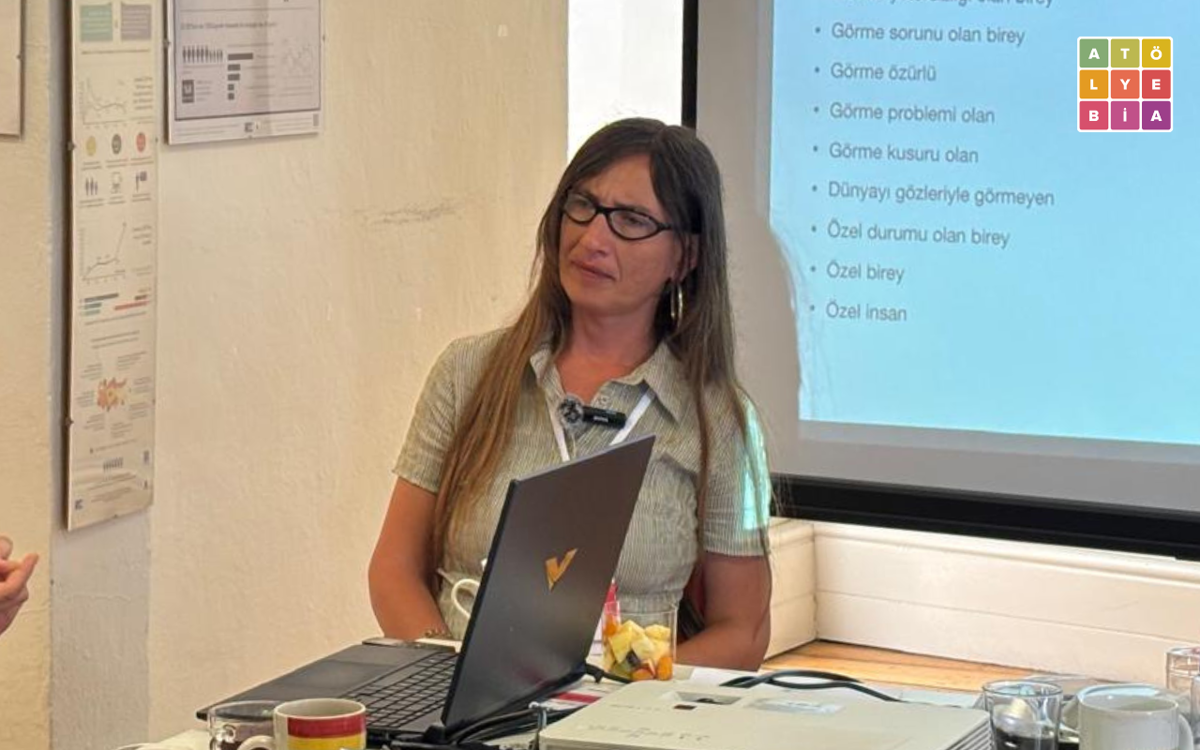
Sözen gave the example of a protest by a visually impaired teacher, who could not access accessible course materials, being reported under the headline "heartbreaking images." Stating that the teacher's demand was not a special privilege but one of their most fundamental rights, Sözen said that the rights violation at the center of the story was pushed into the background by the choice of headline:
"When it comes to disabled people in the media, a reflex of pity often kicks in. This approach diverts the reader's attention away from the problem itself. Journalists should not tell the reader what to feel. We turn news of rights violations into stories of pity."
Stating that such presentations render rights violations invisible, Sözen said that the problem experienced by a teacher who cannot access accessible educational materials should be treated as a public matter of rights rather than an individual story of victimization.
Over-glorification
Sözen stated that another frequently encountered problem in the media is over-glorification. She expressed that the daily lives and achievements of disabled people are often presented as extraordinary events, which is a common form of representation in the media.
Expressing that this approach heroizes disabled people instead of viewing them as ordinary individuals, Sözen stated that rights-based journalism should make structural problems visible rather than producing personal perseverance stories.
Pointing to the reporting of a disabled student's or engineer's success solely because they are disabled as an example, Sözen said that such news stories focus on narratives of personal perseverance while masking structural inequalities.
'Hesitating to say blind is also a form of rendering invisible'
Sözen reported that expressions such as "special individual," "individual with visual differences," or "individual affected by visual impairment" render disability invisible, even though they are often used with good intentions. Stating that such expressions attempt to describe disability through indirect means rather than naming it directly, Sözen said that viewing disabled people as fragile or in need of protection feeds these language choices.
Criticizing the perception of the word "blind" as rude, Sözen expressed that blindness is not a condition to be ashamed of or hidden. According to Sözen, the problem is not the use of specific words, but rather that disability is viewed as a deficiency or defect.
Sözen stated that expressions like "our brothers and sisters" also establish a hierarchy instead of equality:
Disabled people need to be seen as subjects with rights, not as objects of aid or mercy. Journalism in the field of disability also needs to operate from a perspective of equal citizenship and rights rather than a protective language.
Sözen emphasized that journalism in the field of disability cannot be reduced to language debates, and that the real issue is developing an approach to journalism that views disabled people as subjects with rights. (EG/VK)