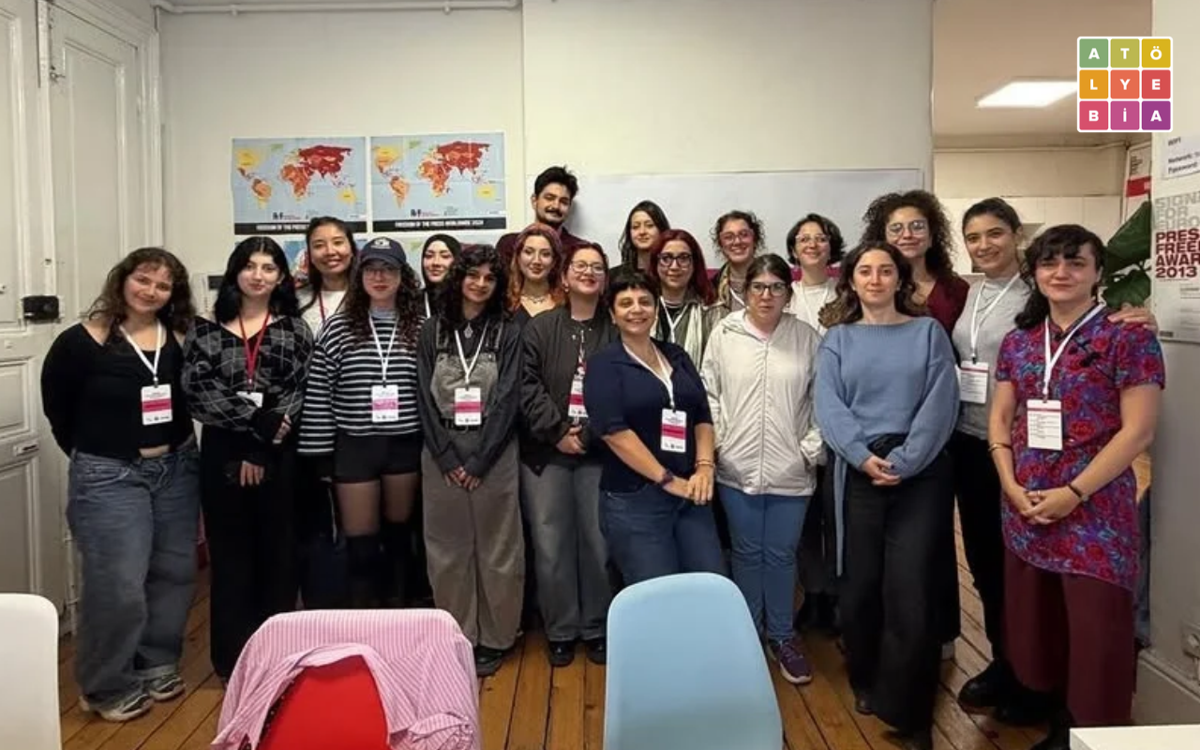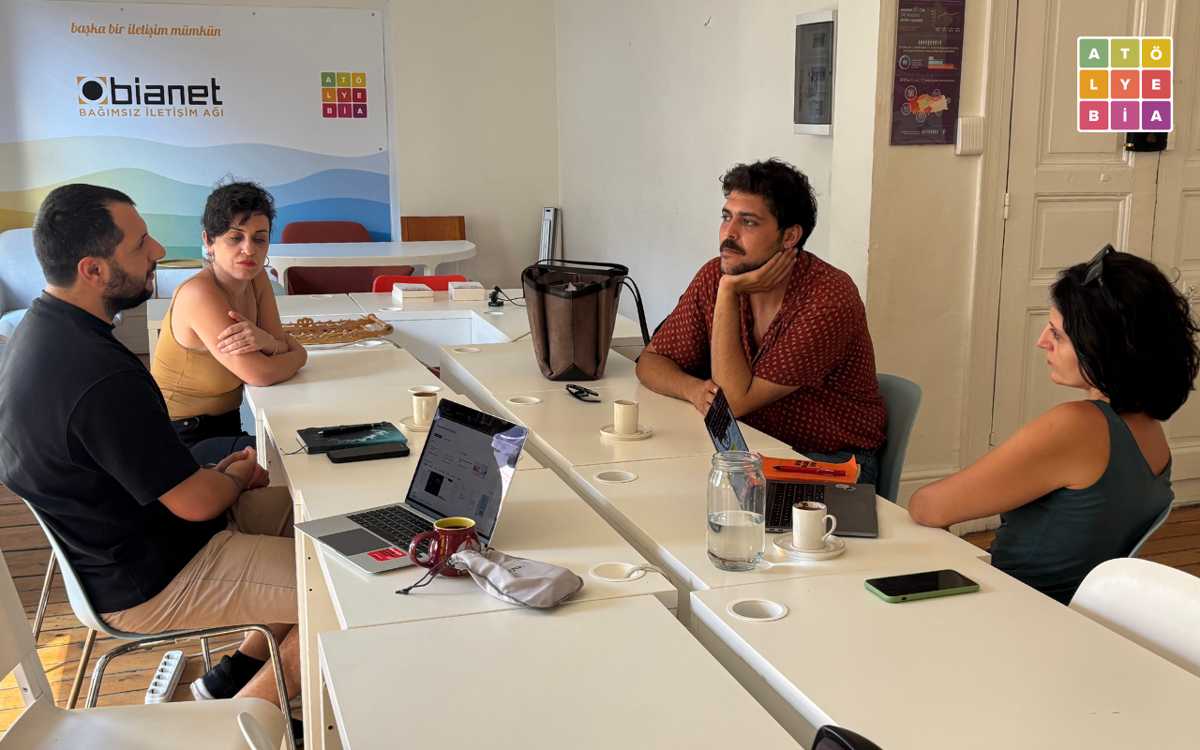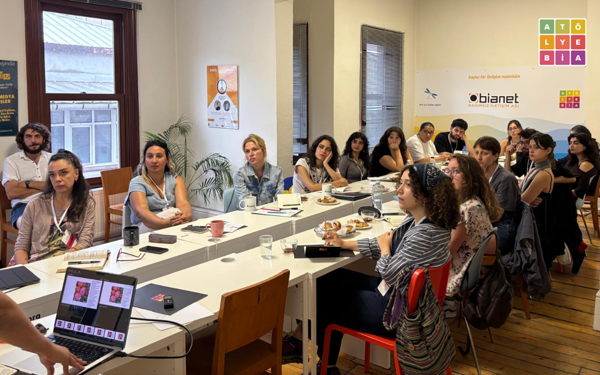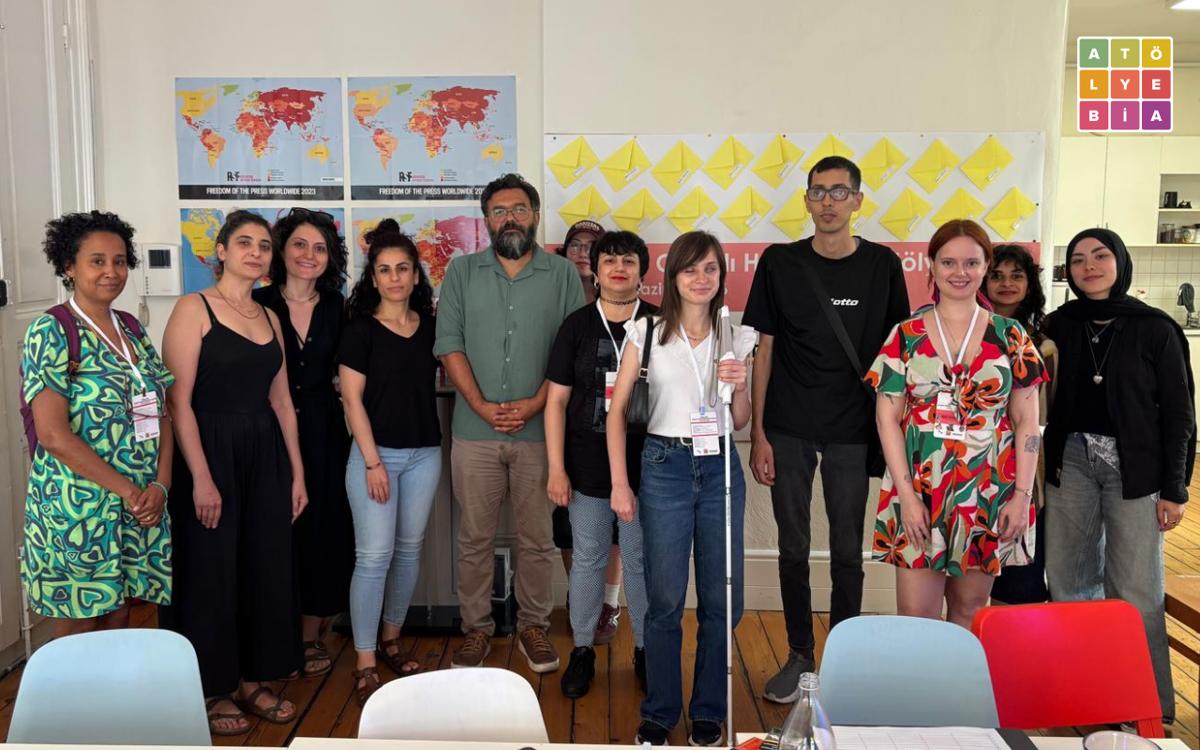







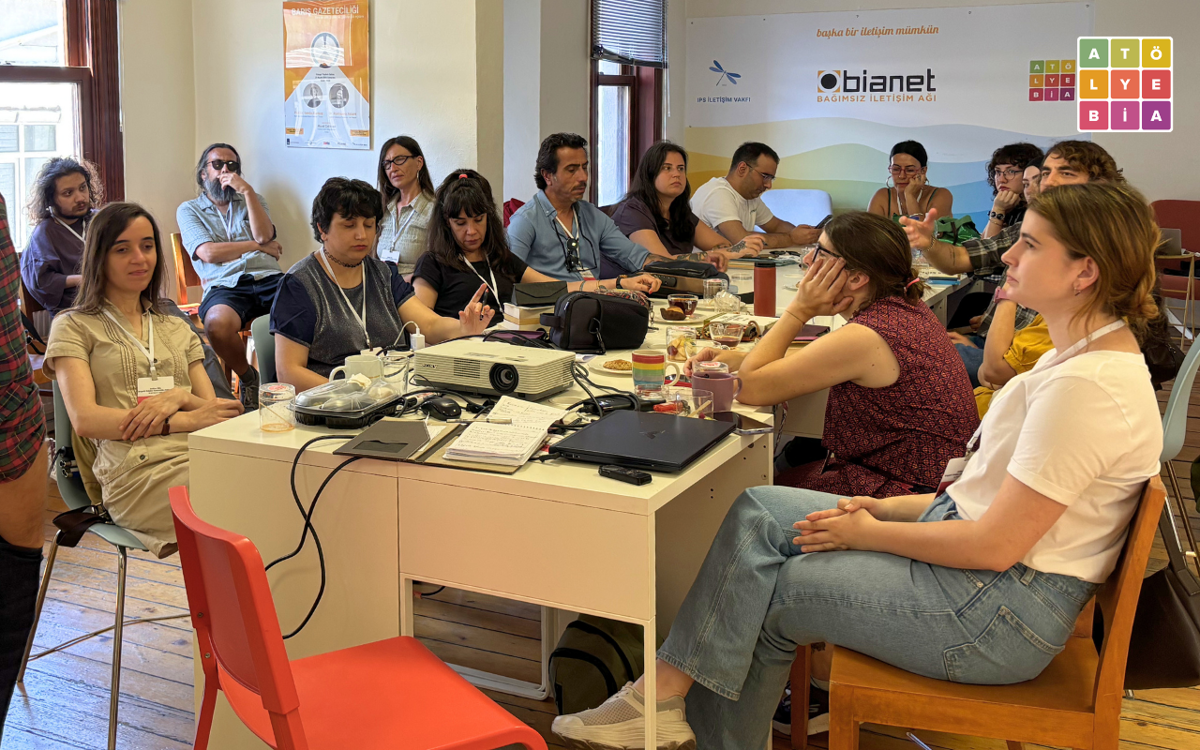



The Disability-Focused Journalism Workshop, organized at the Atölye BİA office in Beyoğlu and scheduled to last two days, began today with an opening and framework speech by Atölye BİA Coordinator Ceyda Sungur.
During the introduction session, participants spoke about the rights violations they had encountered over the past 24 hours. They shared a variety of experiences ranging from sexism and accessibility issues to violations of freedom of expression and barriers to the right to education.
The program for the first day of the workshop:
- Opening and framework
- Rights-based journalism approach (Sinem Aydınlı)
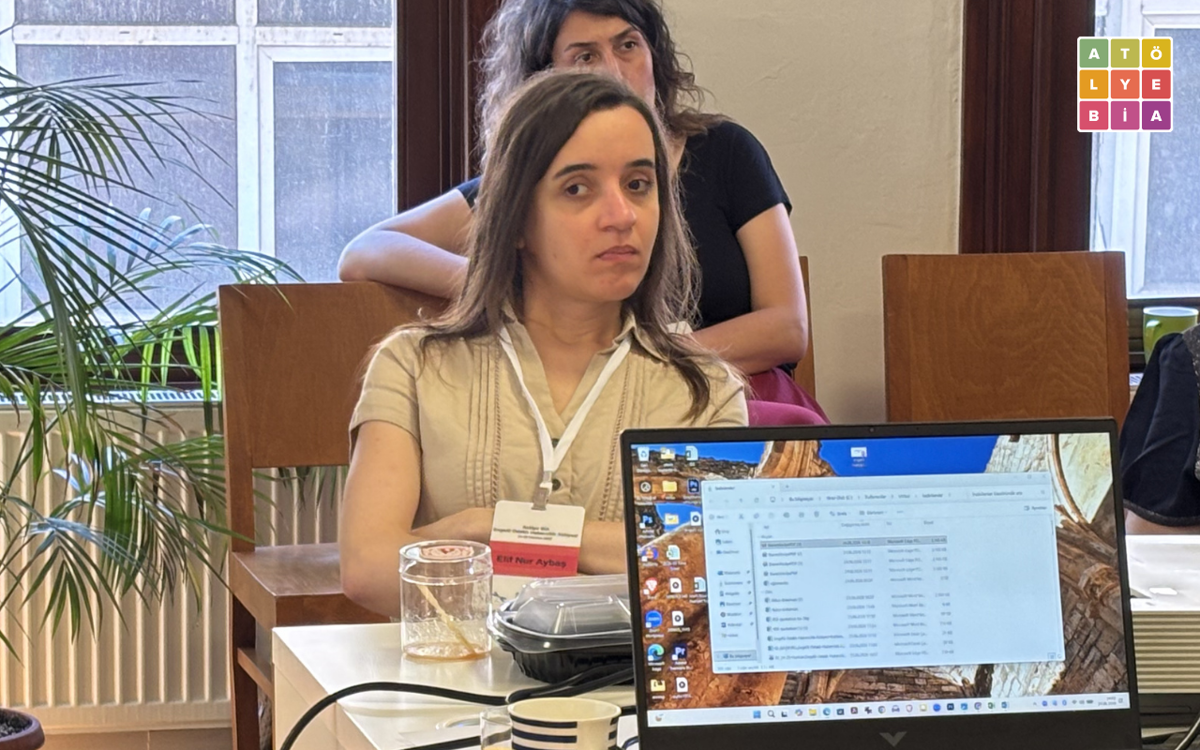
- Introduction to disability rights (Elif Nur Aybaş)
- Language, representation, and problematic stereotypes in the media (Meral Sözen)
- Disability as a news element and a media worker (Umut Koşan)
'We must question the language we construct'
IPS Communication Foundation Research Coordinator Sinem Aydınlı began her presentation in the "Rights-based journalism approach" session by sharing an experience from three years ago while teaching a university class. Explaining how she realized that a human figure she drew on the whiteboard was a "standard" person with two arms and two legs, Aydınlı said this helped her recognize her own ableist perspective.
"The moment I drew a human as a figure with two hands and two feet, I defined the norm," Aydınlı stated, noting that discrimination is often reproduced invisibly within daily life.
Emphasizing that rights-based journalism requires professionals to confront their own biases and constantly question the language they use, Aydınlı said, "We have to think about our own thinking and question the language we construct."
Aydınlı also addressed the importance of language use, stating that the main issue in journalism is ensuring equal participation rather than simply generating sensitivity or awareness:
Violence begins in language. If it begins in language, it can also be transformed through language. For this reason, we need to not only make violations visible but also follow up on them and track what has or has not changed.
She serves as the Research Coordinator at the IPS Communication Foundation. She completed her PhD at Loughborough University London, with a dissertation examining the discursive construction of "political others" in the Turkish press. Working on IPS projects since 2018, Aydınlı conducts research on media discourse, freedom of expression, hate speech, discrimination, and the cultural politics of emotions. She maintains her connection to academia on a part-time basis.
'What disables a person is the environment'
Elif Nur Aybaş provided a brief introduction to the history of disability during the "Introduction to disability rights" session. Stating that disability has been experienced in different ways across every era and society, Aybaş focused on three themes to understand this experience: the contextuality of disability, institutions, and the concept of the norm. Aybaş noted that the experience of disability has changed throughout history, explaining that contemporary concepts and policies have been shaped by historical processes.
Touching upon the role of institutions in the lives of disabled people, Aybaş said that structures such as boarding schools, rehabilitation centers, and psychiatric hospitals isolate disabled individuals from society on one hand, while bringing them together around shared experiences on the other:
When you place a group inside an institution, you isolate them. At the same time, you establish a new structure that will hold authority over that group's life.
Addressing the development of the disability rights movement, Aybaş stated that the social model views disability not as an individual deficit, but as the result of social and environmental barriers. "What disables a person is the environment; it is social arrangements, the physical environment, and cultural perceptions," Aybaş said, emphasizing that the struggle for disability rights is built around the demand for equal participation and reclaiming agency.
About Elif Nur Aybaş
She completed her bachelor's degree at Boğaziçi Üniversitesi Department of Political Science and International Relations, and her master's degree at the Department of Sociology. Her master's thesis, titled "A Critical Analysis of Assistive Technologies: Extension or Commodity?", focused on prosthetics. Since her undergraduate years, she has been involved in disability rights activism both within various associations and individually.
'We need journalism that addresses disabled people directly'
Meral Sözen examined how disabled people are represented in the media using examples from news stories during the "Language, representation, and problematic stereotypes in the media" session. Sözen stated that disabled people are frequently represented through tropes of pity, exceptionalism, and invisibilization.
Providing an example of the language of pity, Sözen criticized how a protest by a visually impaired teacher over the lack of accessible educational materials was reported under a headline describing the event as "heart-wrenching scenes." She noted that the daily lives and achievements of disabled individuals are also frequently presented as if they are extraordinary anomalies.
Sözen pointed out that some news stories completely invisibilize the experiences of disabled individuals, giving the example of a student who completed university with the support of his mother due to an inaccessible education system, where the narrative was built entirely around the "sacrificing mother":
Disability needs to be treated as an area of human rights. There is no need to hesitate to use terms like blind, visually impaired, deaf, or autistic. We do not need journalism about disabled people; we need a journalistic approach that addresses disabled people directly.
About Meral Sözen
She was born in İstanbul in 1983. She graduated from İstanbul Üniversitesi Department of Philosophy in 2006, and the Department of Turkish Language and Literature in 2019. Conducting both organized and independent activism in the anti-ableist field, Sözen performs textual analysis and provides consultancy to promote egalitarian and inclusive language. She is also a member of the bianet Editorial Advisory Board.
Structural problems remain invisible
Journalist Umut Koşan spoke about how disability is represented in news stories and shared the experiences of disabled journalists in the media sector during the "Disability as a news element and a media worker" session.
Koşan stated that disability is often defined through a binary of "can" and "cannot," arguing that this approach is produced by social norms, the economic order, and existing policies rather than individual characteristics.
He shared examples from his own career as a journalist, detailing the discrimination and biases he has encountered in the profession, and emphasized that disability is not a monolithic experience.
He noted that the media frequently frames disability through individual success or deficiency narratives:
This approach makes the structural problems faced by disabled people invisible. Rights-based journalism, however, needs to direct its focus toward the conditions that produce inequality, rather than what individuals "can" or "cannot" do.
About Umut Koşan
He began his career in journalism as a reporter in 1997. Having directed numerous documentaries throughout his professional life, Koşan was presented with achievement awards for his article series titled "The Story of Migrants" and "The Story of Those Without Photographs." Selected as a "Changemaker" by the Sabancı Foundation in 2013, Koşan is a member of the Contemporary Journalists Association. He also served as the World Cerebral Palsy Day representative for Turkey for two terms on the World Cerebral Palsy Committee.
(EG/VK)