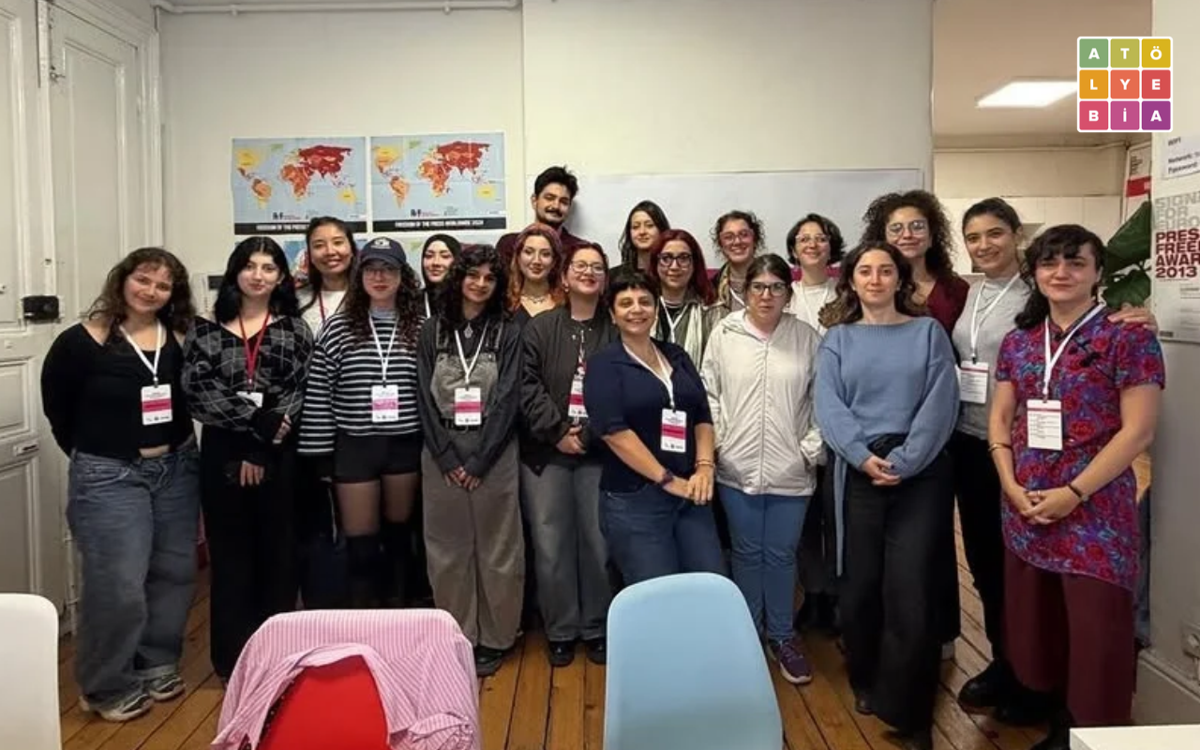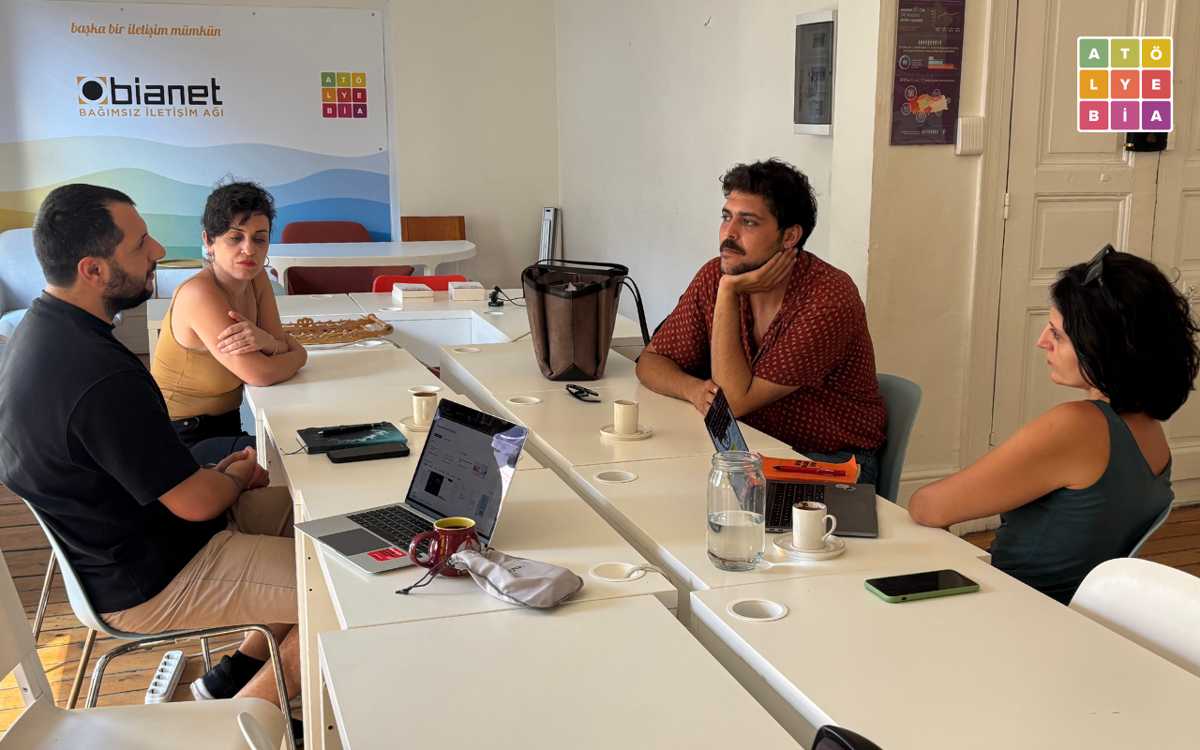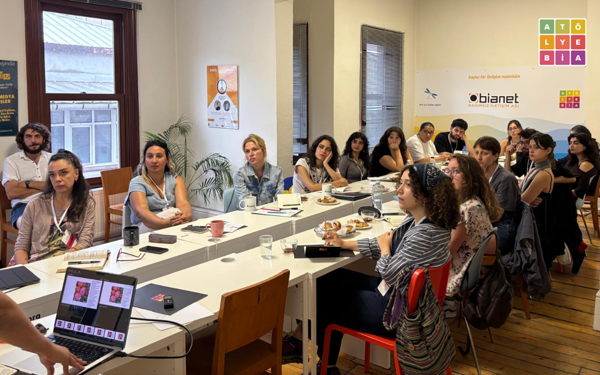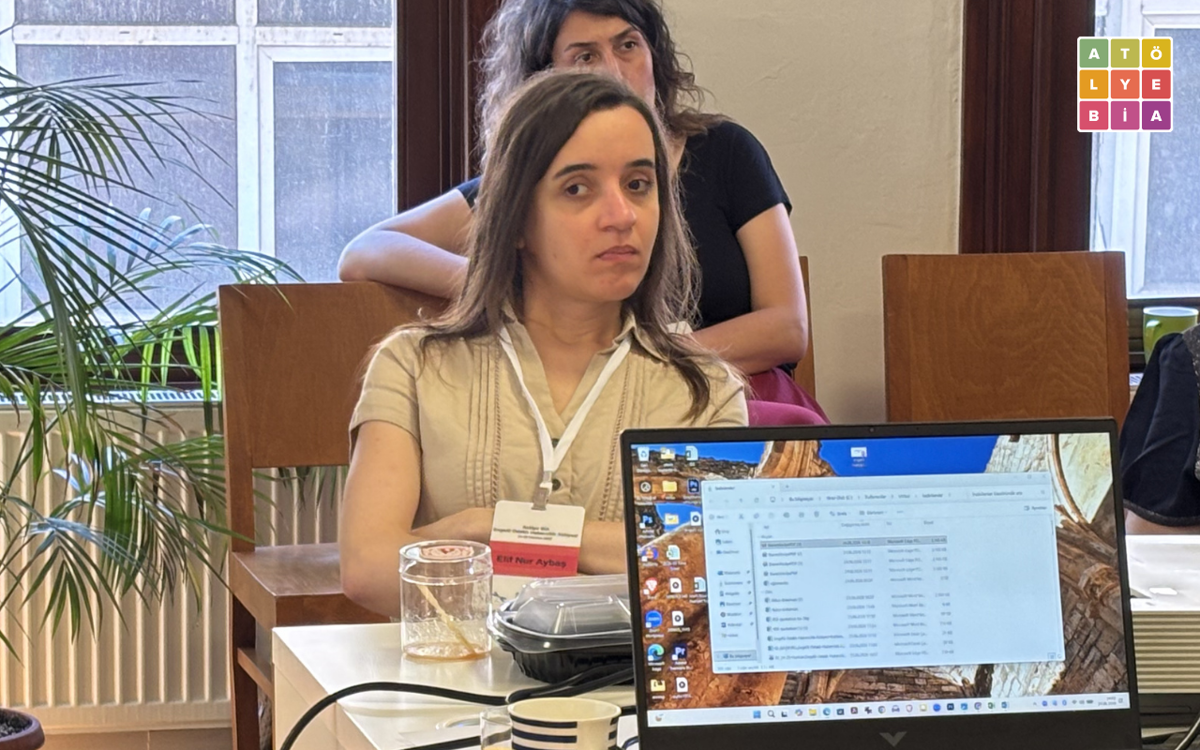

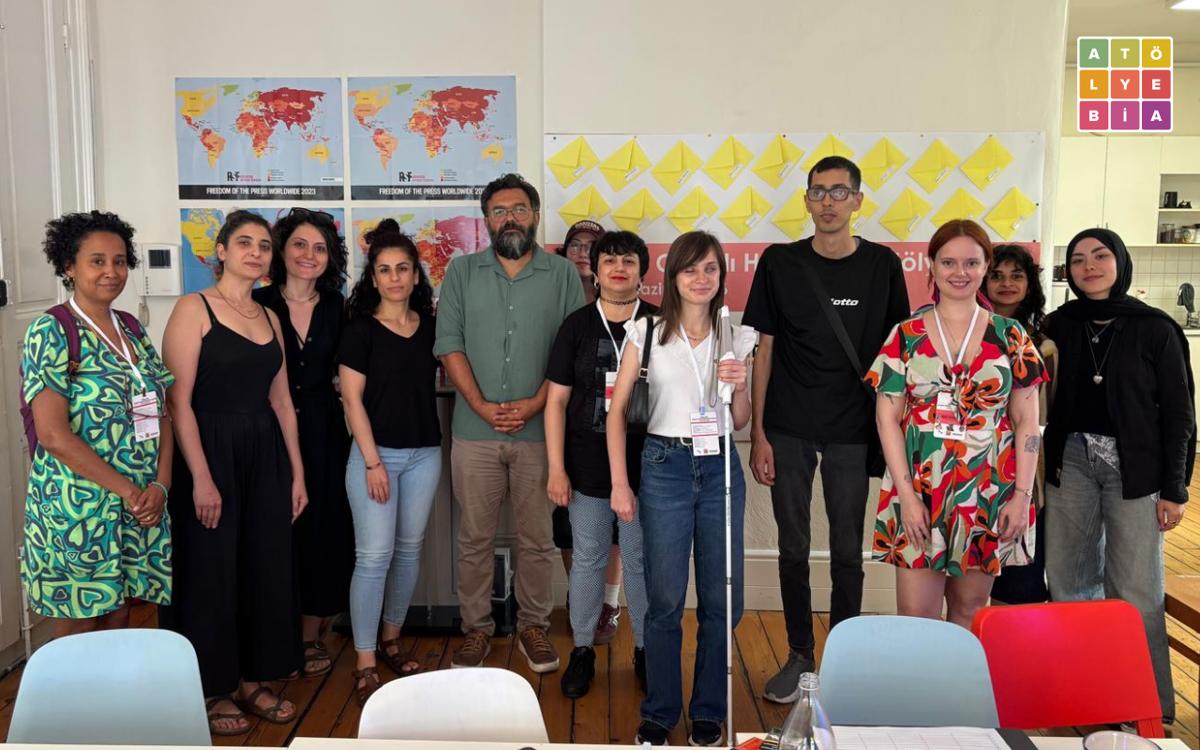



The two-day Disability-Focused Journalism Workshop held at Atölye BİA ended today with practical sessions where participants discussed rights-based journalism principles through sample news stories.
In the sessions led by Mihriban Boyacı, participants conducted group work to identify rights violations in news about disability and re-evaluated discriminatory news examples from a rights-based perspective.
Participants also addressed the technical dimension of accessible journalism, discussing practices such as visual description, subtitling, sign language support, and accessible web design.
The program for the second day of the workshop:
- Rights violation hunt
- Transforming biased news
- Accessible journalism module
- Interview simulation
- Developing news ideas
About Mihriban Boyacı
Student in the New Media and Communication Department at İstanbul Bilgi University. She serves as the chair of the Engelsiz Bilgi Student Club, which aims to create an accessible campus environment. She works in the field of disability rights within the Association of Visually Impaired People in Education and the Community Volunteers Foundation. She conducts research and prepares reports on the representation of disabled people, LGBTI+s, and the elderly in the media. She was born in Ankara in 2003.
'We write news without killing the ableist in our heads'
Boyacı examined disability news published in different media outlets together with the participants in the Rights Violation Hunt session. In the group work, participants identified rights violations in the news and discussed problematic forms of representation such as heroizing and pitying.
Stating that disabled people are mostly represented in the media either as a "hero who overcomes their disability" or as individuals defined solely through their disability, Boyacı noted that both approaches are incompatible with rights-based journalism. She emphasized that journalists must question their own prejudices when producing news:
We write news without killing the ableist in our heads. I did not succeed despite my disability. I succeeded by overcoming the inaccessibility of the system. The focus of journalism should not be on a disabled person 'overcoming their disability,' but rather on the lack of accessibility and rights violations that make that success difficult.
'It is necessary to see the problem in the barriers created by society'
Boyacı examined examples of rights-based journalism with the participants in the Transform Biased News session and discussed the elements that distinguish these stories from others. Assessments were made on the voice of the subject, expert opinions, making systemic problems visible, and how rights violations are handled in the news.
Boyacı stated that the direct voice of the subject is a fundamental principle in rights-based journalism, saying, "I cannot speak about an event that I have not experienced or listened to myself. In every news story where we do not give a voice to the subject, we are actually ignoring the principle of accountability."
At the end of the session, participants discussed that news should not be content with merely conveying individual aggrievance but should make the structural problems that lead to this victimization visible. Boyacı said, "What we basically want to do is expose the flaw. It is necessary to see the problem not in the disabled person, but in the barriers created by society."
'Access to information is one of the most fundamental human rights'
In the Accessible Journalism Module session, Boyacı explained the importance of not only writing news in a rights-based language but also making it technically accessible to everyone.
Participants evaluated accessibility practices such as visual description, keyboard navigation, color contrast, subtitling, and sign language support through examples.
Touching upon the importance of adding descriptions to photographs used in news, Boyacı said, "You have to add descriptions to the visuals you use in the news. As a visually impaired news reader, when I cannot access the visual, what the news tells me remains incomplete."
In the session, participants practiced visual description by describing a photograph taken during the workshop together. Emphasizing that accessibility is not a choice but a fundamental right, Boyacı said, "None of these are a sacrifice. All of them are fundamental human rights. If we want our news to reach everyone, we have to do these."
Rights-based interview practice
In the Interview Simulation session, participants were divided into two groups and prepared interview questions in the fields of the right to education and the right to transportation. The groups practiced rights-based interviewing by directing their questions to Mihriban Boyacı and Ozan Kocakaya.
Answering the questions prepared on the right to transportation, Kocakaya conveyed the accessibility problems faced by visually impaired people in public transportation while drawing attention to the importance of voice announcement systems working regularly and making sidewalks accessible. Participants evaluated together whether the questions they prepared established a rights-based language.
In the second simulation conducted on the right to education, Boyacı answered questions about accessibility practices in universities, access to educational materials, and physical barriers encountered on campuses.
Participants wrote rights-based headlines
The final session of the workshop was held under the title Developing News Ideas. Accompanied by Mihriban Boyacı, participants wrote news articles using rights-based journalism principles.
One of the groups reported on the case of an autistic person who passed away in a care center, while the other group covered the achievement of a visually impaired athlete who placed in an international marathon.
Participants evaluated the headlines and subheadings they prepared together, discussing whether the language used contained discriminatory, heroizing, or pitying expressions. (EG)