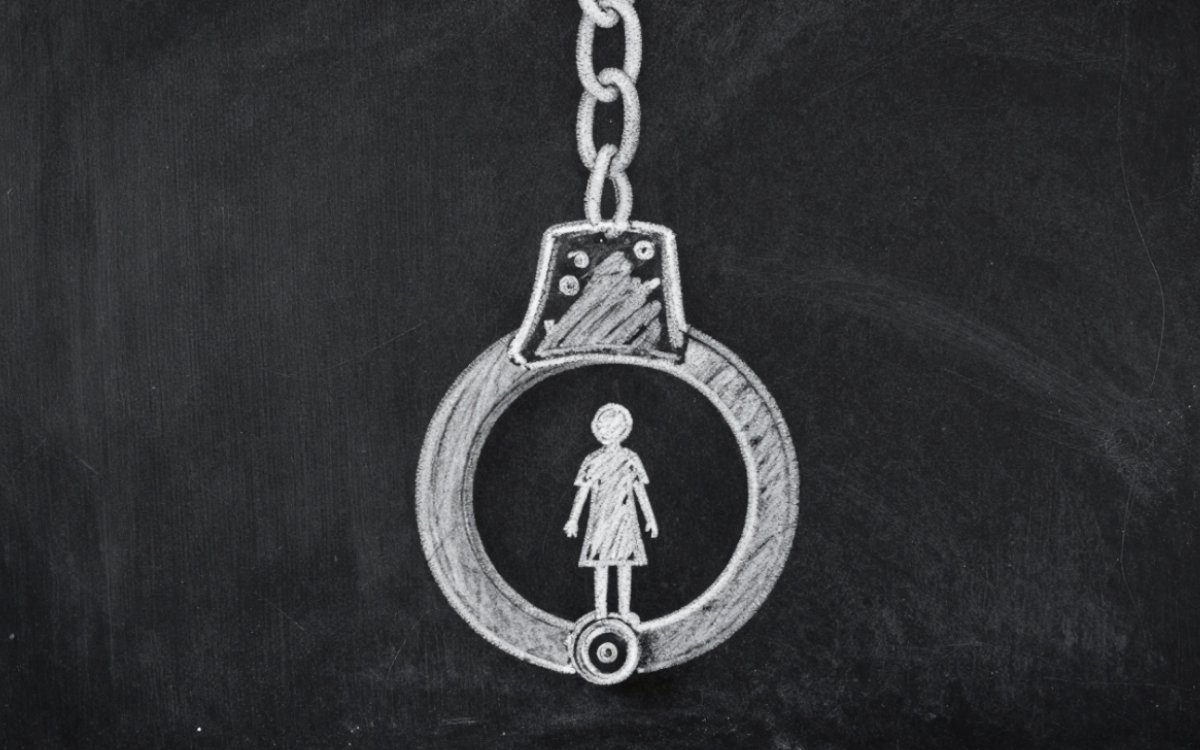
New draft law introduces harsher penalties for juvenile delinquency including life sentence





-
The proposed bill seeks to increase upper limits of prison sentences for minors and allows judges to lift age-based sentence reductions for offenses including intentional murder
-
The legislative move comes amid heightened public concern surrounding new-generation criminal organizations that frequently recruit and exploit children under 18
-
Legal expert Seda Akço criticizes the focus on harsher punishments, arguing that tougher sentences distract from the core failures of the rehabilitation systems while failing to address the root social causes driving youth to crime
A new legislative proposal submitted to parliament seeks to increase sentences for juvenile delinquency through amendments to the child protection law and several other statutes.
Leyla Şahin Usta, the deputy chair of the ruling Justice and Development Party's (AKP) parliamentary group, announced the content of the bill today during a press conference at the parliament.
The proposal comes amid ongoing public debates regarding what are described as "new-generation criminal organizations" that frequently utilize individuals under 18, particularly in metropolises like İstanbul. These organizations, which have become much more visible in recent years, also use social media to spread propaganda and recruit new members.
What is in the bill?
The proposal introduces the possibility of removing age-based sentence reductions for children aged 15 to 18 for certain crimes, potentially allowing for life or aggravated life imprisonment.
- Prison term limits
According to the proposal, Article 31 of the Turkish Penal Code will be amended to increase the lower and upper limits of prison sentences that can be handed down to children in the 12-15 and 15-18 age groups.
- Penalties for murder
In cases of intentional murder and aggravated injury causing death, the age reduction applied to children aged 15 to 18 can be lifted by a judge's decision. The judge will evaluate criteria such as the manner in which the crime was committed, the purpose and motive, the gravity of the child's intent, and whether they have previously received a prison sentence for an intentional crime. If the age reduction is not applied, children could face life or aggravated life imprisonment.
- Repeat offender rules
The proposal also changes the age limit for recidivism provisions, which apply when a person has a finalized sentence for a previous crime.
Under current rules, if a child under the age of 18 commits a crime, their previous offenses are not treated under repeat offender rules in the same way they would be for an adult. The proposal reduces this limit to the age of 15.
The justification for this regulation was stated as preventing children from being used by criminal organizations and providing a deterrent effect.

Official figures show increase in criminal incidents involving children in 2022
'Aggravating sentences makes real issues invisible'
Lawyer Seda Akço told bianet that solutions aimed at aggravating sentences for children prevent discussions on crime prevention policies and the problems of the execution system. "The demand of society is seemingly met by aggravating the sentence. Thus, the real issue is not discussed," she said.
Regarding the public debate on the issue, Akço pointed out that there is a perception of impunity regarding crimes committed by children among the public, while others argue that the problem is not impunity and that increasing the sentences in the law will not be a solution.
She emphasized that what happens in the execution system after a child is sentenced must also be questioned:
"What kind of interventions exist in the execution system for children that will truly ensure behavioral change and eliminate the reasons driving them to crime? Can the execution system succeed here? Does it have appropriate psychosocial programs, or a suitable and adequate number of personnel? We need to talk about these.
"The purpose of the penal execution system should not only be to deprive the child of liberty, but to create the conditions that will prevent them from being associated with crime again."
CILDREN PUSHED INTO CRIME SPEAK OUT
'Everyone looks at us from the outside, they should see from the inside too'
Conditions driving children into crime
Stating that the factors leading children to engage in criminal behavior are largely known, Akço pointed to problems such as the inadequacy of public services, parental attitudes, school absenteeism, and the inability to access mental health services.
She noted that the difficulties adolescents face in accessing mental health services, the situation of children left outside of education, and the support offered to families should be discussed:
"There is a young population that is neither in education nor at school. Some of them are of childhood age. What should we do to ensure their continuation in education? There are negative parental attitudes. What services must society offer to ensure that parents can provide adequate care? We need to look for the answers to these questions.
"One of the important reasons why aggravating sentences is adopted as a solution is that preventive policies cannot be implemented with a single legislative amendment and require much more comprehensive work.
"Dealing with root causes is not something that can be solved with a single law amendment. Making a legal regulation that increases sentences seems to be an easier way to fulfill public demand."
‘There is no state inside prison, I saw people setting each other on fire’
'Advocacy methods must be reviewed'
Akço said that child rights organizations and segments of society opposing the bill must also review their advocacy methods.
Instead of merely pointing to wrong practices, Akço argued that rights advocates must share concrete solution proposals with society, and develop a language and method that will raise public awareness and convince decision-makers:
"There is a problem here. It is also necessary to say how this problem will be solved. Saying 'people are unjustified in this demand, this cannot be solved this way' is not a sufficient defense. It is necessary to answer the question, 'so what will we do?'
"Civil society organizations, academics, and everyone fought hard to explain the wrongness of the trend toward increasing sentences, but it was not enough. We need to handle this as a case and draw a lesson to improve ourselves."
Convincing the public is not only the responsibility of decision makers but also of rights advocates, according to Akço:
"Advocacy is done to convince. If we cannot convince, we cannot say, 'we told them, they did not understand.' Finding the way to convince is also our job. We need to feel responsible for where our advocacy leads.
"If advocacy is not effective enough, the methods used must be re-evaluated."
.jpg)
Number of child prisoners reaches 2,157
'Distancing from a permanent solution'
Akço further said she does not think those who prepared the proposal acted with the intent to harm children, and that the regulation is the result of a search for a solution to a social problem:
"Everyone is trying to find a solution to a social wound from their own perspective. We think the solution found is wrong. Then what we need to do is to find the way to explain this correctly."
Stating that the applicability of aggravated life and similar sentences and leaving this to discretion carries serious risks for children, Akço argued:
"This regulation attempts to find a solution to the problem through a method that contains risks. It is risky both in terms of the children who will be subjected to it and because it distances us from the solution. However, it is necessary to see that this is the result of a search for a solution, and to create some time and opportunity for joint work to think together.
"The problem before us is a matter that can neither be solved with this proposal nor by finding this proposal wrong and getting angry at it. Knowing that a better solution definitely exists, it is necessary to create space to do sufficient work to reach it." (NÖ/VK)


bianet reporter (September 2025). Began her journalism career in 2013 while studying at Marmara University Faculty of Communication. Produced news stories for various platforms on human rights, women's achievements, children's rights, LGBTI+ rights, and refugees. In addition to reporting, she hosted television programs and news bulletins, and moderated live broadcasts. As part of her radio journey, she created and hosted a children's program called “Elma Şekeri” (Candy Apple). Beyond journalism, she is interested in gastronomy and children's literature. Deeply loves her family, her plants, her cats Şapşik and Memo, and her dog Bitter.

Study: Youth believe in peace process but do not feel included

'I was already hungry': Private school teachers continue hunger strike in Ankara
Summer is 'job-hunting season' rather than vacation for private school teachers

Kurdish child injured during police raid on wrong house in Bingöl

Voices of peace from children: Երկինքէն երկիր