



In this article, the interviewee’s name has been changed to protect personal privacy and adhere to child-centered journalism principles.
The term “children pushed into crime,” often discussed in connection with the recent 10th and 11th Judicial Reform Packages, has been debated on television and in newspapers, without giving children a chance to speak for themselves. Some have demanded that children in conflict with the law be sent to closed prisons and face harsher sentences, while others have criticized these proposals as failing to protect the best interests of the child.
We spoke with Murat about what it means for a child to be associated with crime, to enter the justice system, and to survive in a closed prison.
Murat was born as the fourth of eight children into a family in one of İstanbul’s impoverished neighborhoods—a family, as he puts it, that “makes a living through theft.” In his words, “this is a neighborhood where crime happens, where people are driven to crime.” Until primary school, he lived with neighbors entrusted by his family, as his parents were frequently in and out of prison.
To survive…
From birth, Murat was raised by another family and led a life far removed from traditional routines. After being released from prison, he was placed in a state institution. But before reaching that point, let’s go back to the beginning. When he was 11, he reconnected with his older siblings. He recalls how they took him in:
“My sisters were involved in crime, and I found myself caught up in it with them. That’s how they made a living, and to survive, I had to steal with them. I didn’t even understand what we were doing. If we had had another source of income, maybe our family wouldn’t have been so deeply entangled in crime.”
‘What we did wasn’t normal’
Murat was detained multiple times, first at the age of 13. Each time, legal proceedings followed, but at that age, he was neither aware of the charges nor able to follow the court process. Arrest warrants began to pile up, and with the accumulation of cases, he entered the juvenile justice system as a “perpetrator.”
“When I was detained, a lawyer from the bar association would come. I was held at the police station, but no one explained whether we had any rights. Whoever was on duty at the time would take my statement. In court, the judges would ask if I accepted the charges. I didn’t even know what they meant, but I said yes to everything just to be released. One of the sentences I received when I was 13 was upheld, and I was arrested.”
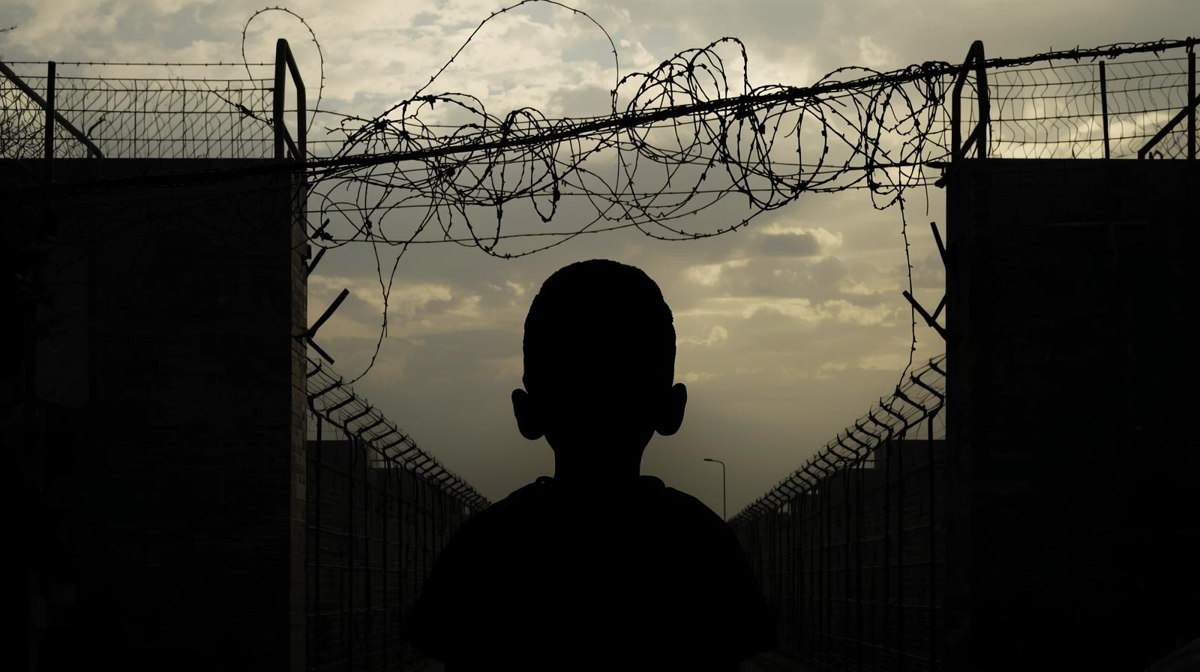
‘There is no state inside prison, I saw people setting each other on fire’
“I was a child who loved to play and be outdoors, none of that existed inside. I entered prison right in the middle of my childhood. For a child to commit such acts, whether it was me or others, wasn’t normal. The state could have identified and investigated that. Being sent to prison doesn’t stop a child from committing crimes. Everyone sees us from the outside but they should look from the inside, too. If no one reaches out to you, if no one shows you the right path, most who go to prison continue committing crimes once they’re released.”
‘We would hear of sexual abuse in other wards’
Initially, Murat was sent to a closed prison, placed in a unit known as the “children and youth ward.” This is how a 13-year-old describes the prison environment:
“No matter the offense, prison is no place for a child. You couldn’t even eat whenever you wanted. If there was a fight, if someone beat someone else or bullied them, you couldn’t report it to the guards because they’d label you a ‘snitch’ and start excluding you. The strong dominated the weak, and there were no preventive mechanisms.”
.jpg)
Number of child prisoners reaches 2,157
“You’re thrown into a world you don’t understand. You’re a child, you can’t grasp what a prison is, and you’re afraid. My mental health deteriorated even more inside. Sometimes I was beaten badly, sometimes I beat others. Prison produces violence, it doesn’t rehabilitate. Kids become even more aggressive there. I didn’t witness it myself, but we would hear about sexual abuse in other wards.”
“If you still tried to file a complaint, guards wouldn’t care unless there was a serious injury. There were children struggling with addiction, but there was no treatment. When staff found substances, they just acted harshly.”
From closed prison to education center
After completing his time in the closed prison, Murat was transferred to an education center, where he enrolled in open education and resumed his studies. He says this transition brought some psychological relief:
“There were unlimited phone calls, computer courses, sports activities. Compared to closed prisons, it was at least a more livable place for children. But even there, many things were lacking. There was a psychologist, but you had to request a meeting and write a petition. No one sat you down to explain that such services even existed.”
Because someone reached out to me…
Eventually, Murat was released, placed in a care facility, and completed high school. He is now applying to become a civil servant while preparing for university entrance exams to study philosophy.
While telling his story for this article, what he emphasized most was this: “My life is taking a different direction because someone reached out to me, because someone touched my life.” (NÖ/VK)