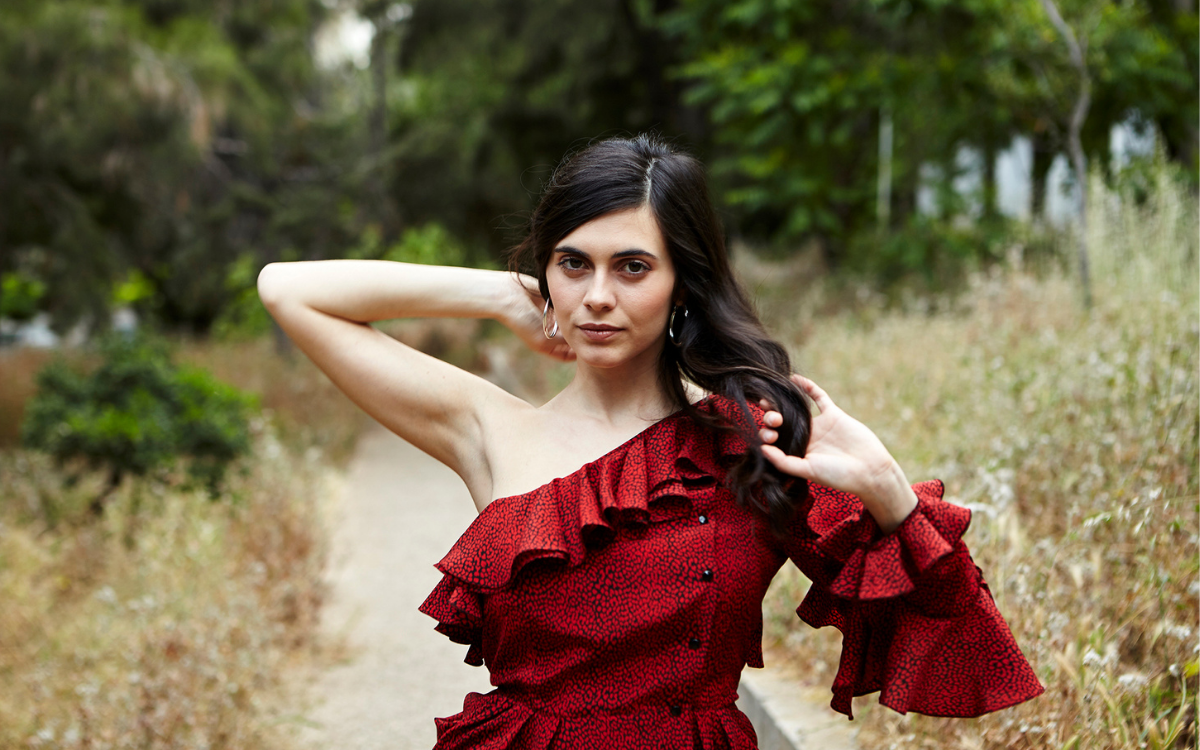

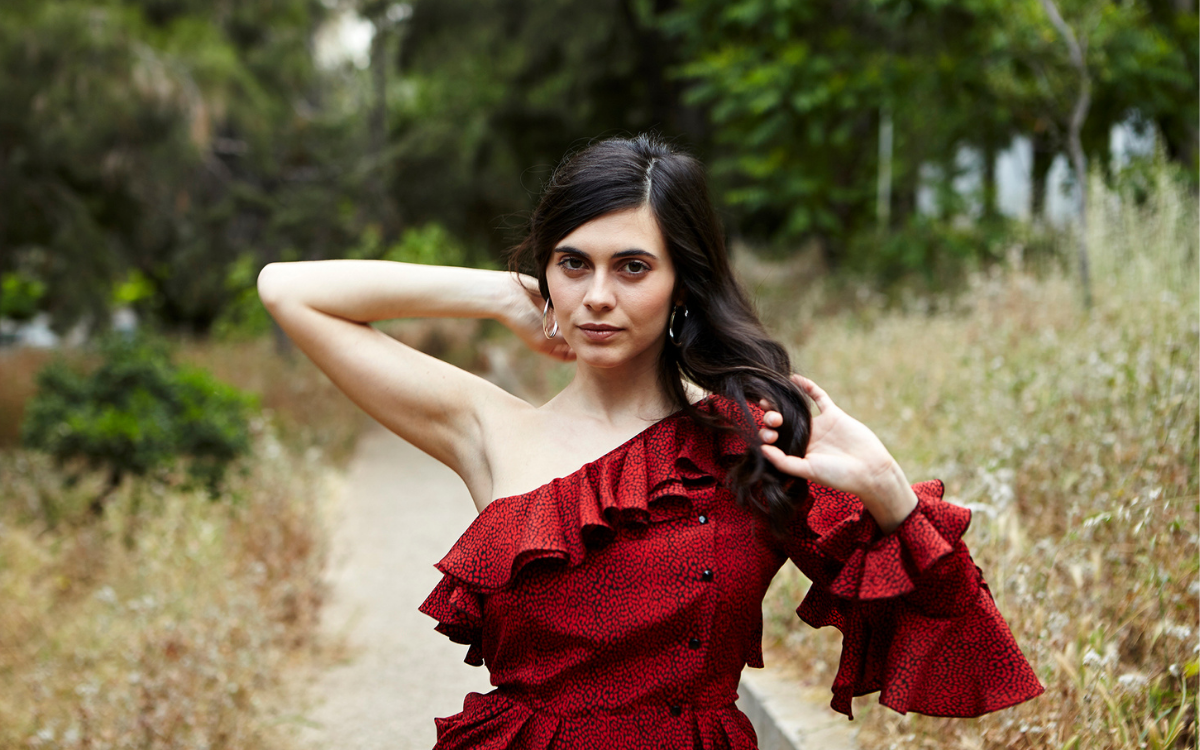



In this episode of our “Greece Music Geography” series, our guest is musician Nefeli Fasouli, who blends her jazz-trained vocals with laiko, rebetiko, and entehno traditions.
With her 2025 EP Wyrd, Fasouli embraces the sounds of the Levant, drawing inspiration from a wide range of genres—from Anatolian psychedelia to Brazilian tropicália. Viewing music as much more than a stage performance, she actively joins protests on the streets of Athens, standing in solidarity with Palestine and speaking out against genocide and racism.
In our interview, we explore her storytelling that breaks free from algorithmic formulas, what rebetiko means today, and the housing crisis in Athens. We also discuss how she uses her songs to stand up against patriarchal violence and the struggles of remaining an independent musician in the age of digital platforms.
Jazz training, laiko, rebetiko, entehno, Mediterranean and Levant influences... Instead of settling into a single identity, your music feels like a journey moving through different sounds. What does this polyphony and cross-genre transition mean to you?
It means that I’m alive - I’m still observing life and human beings, getting inspired from their story and sound. I agree that genres help the algorithm categorise and define music in general, but telling stories as a singer is such a different art. It’s another craftsmanship. And this is what I do. I don’t expect from the audience to come to listen to something specific- my concerts are an indulging experience and I hope that people will laugh, cry, dance and go home light as a feather. This polyphony means that I’m never going to get bored doing music, that I have the ability to see the beauty in everything. Making art with respect and elegance is going to be the always the first and ultimate goal.

You mentioned that you first heard the Arabic song “Ma Baquad Balaki” from the Wyrd EP from Palestinian artist Rola Azar, and that bringing it to the stage was a conscious choice. At a time when Arabic is so often marginalized in the Western world, what does it mean to you to bring this language to the stage in Athens?
Indeed, I heard this song from Rola Azar in a “Songs from Palestine” playlist - and for a long time I didn’t even realise it was originally from Lebanon. (Ignorance thanks to the algorithm-always). I was mesmerised by her voice, her rhythm and I wanted to listen to it all day. Then the realisation that I’m listening to a voice that maybe is not even safe in Gaza because of the genocide, haunted me. I wanted to add it to my repertoire until all the Palestinians are safe and sound to sing it in their land. Athens has a very big Arabic community - and we leave apart from each other. Different neighbourhoods, different restaurants, different schools. Yet, as kid growing up in Athens, I can only admit that I recognise Athens is an immigrant city. We like to ignore this a lot. I’m using my art to bridge that gap, because what makes this city so beautiful is its mixture of cultures and essences. I prefer this memory than remembering this place as a tourist attraction full of hotels and pools.
The rebetiko and laiko traditions you draw upon carry the memory of migration, poverty, exile, and those left behind. Considering the crises that Athens, and Europe in general, are going through today, what do these old songs mean for today's stage and audience?
Rebetiko and Laiko have always been in the spotlight in Greece - I believe somehow it’s like a museum gem, people prioritize it and treat it with a lot of respect. I would be happier if a lot more new music was created based on this tradition instead of re-performing the old stuff. I believe these songs are strong enough to united us once more against any circumstance because they’re honest and genuine. They have human qualities. But if we’re also honest to ourselves we are going to make music that’s also going to last and inspire the next generations. And this is my ultimate goal.
In my previous interview with Spiros Grammenos, we talked about “Kamia Moni” (No Woman Is Alone), which you performed together. This time, I want to focus on the song through your own voice. As a female artist, what does it feel like to voice this rebellion on stage against femicides and patriarchal violence?
This song feels like my imaginary weapon. It gave me the strength to stand in every rural area that we go for tour and admit my biggest trauma on stage. I call the crowd to shout it with me and they really do. You can feel the urge of the people to make the patriarchal violence and oppression to stop, to change the way we exist and I’m very proud to be observing it. We still have a long way to go, but art is indeed shaping consciousness, and if I’m currently inspiring any femininity in Greece stand for its rights and future - I will be consistent.
We know Athens has been hit by a severe housing crisis and gentrification in recent years. Looking back from your album O Kosmos Sou (Your World) to the present day, how does this harsh transformation of Athens’ streets reflect on your music and the human stories you tell?
Well, to be honest I really didn’t realise the music turn until you asked - I mean that I never had to describe it with words so far. Indeed Kosmos sou was an “urban” manifest - it praised the city, the life of it, the loneliness of it before and during Covid. But I we all moved away from that feeling lately. You can help it when your favorite bar is now one more fine dining experience, your old rented apartment is now part of an Airbnb complex run by international companies, digital nomads are making four or five times the amount of money you make. And then we recorded “Kipos” by Antonis Apergis. The album that praised land, trees, soil, dignity, love, marriage, values. And the sound of was more folklore and primitive. Back to where all humanity is supposed to start. If we want to survive this transformation- this the recipe. Be truthful to each other and any form of life. And art is again reminding us that.
Today, music mostly circulates through digital platforms, algorithms, and the pressure for visibility. As an independent musician, how does this dynamic affect your musical decisions, your release routine, or the direct bond you build with your listeners?
I still move by instinct and by what I have the need to address at this time. And I’m working very hard to not be distracted by the fact that I have to post all the time new videos and new content. For me everything has to be meaningful, and that is why I have a strong bond with my listeners. I do it the old way and it feels like I’m addressing friends and not a mass. I’m currently mostly worried about the distribution situationship. Platforms formed a new way of releasing music that force us lose a large amount of music rights we deserve - sometimes stricter than when the CD business existed. And force more and more intermediaries in order for you to have access to them. For me being an independent artist is a situationship that doesn’t exist anymore. And this is what scares me the most. Internet is not that free space it used to be- as I we say in Greece the “pie” has already been shared with multinational corporation and you need them to exist - again.
We often see you standing up with your voice and presence at Palestine solidarity protests and concerts in the streets of Athens. How do you view an artist's responsibility to support the Palestinian struggle directly in the streets with their own presence? Do you think the music scene is speaking up strongly enough?
Responsibility for me is a hard word - art is a form of expression and it’s based on instinct. You’re free to be as you want to be. My art is human-centric, it has justice and humanity as a priority, I’m here to sing pain, happiness, peace and love. Thus, I can’t move forward without speaking up about Palestine and the Genocide that is taking place - not even far from where we live. But who I am to judge anyone for not doing it? It’s all about which side are you on now - it’s us and them- I don’t judge but I differ - I separate myself from moderation. I wish people were less afraid.
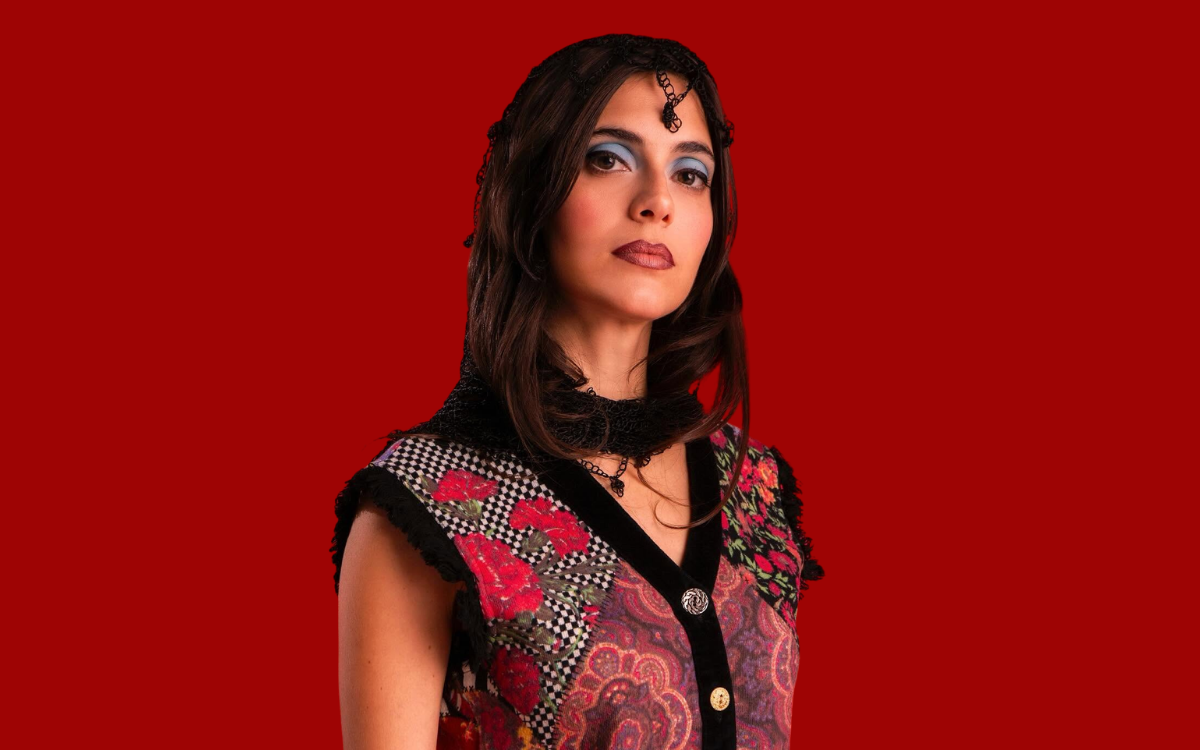
Your new song “Πυρ Γυνή και Θάλασσα” (Fire, Woman, and Sea) subverts the ancient, patriarchal line attributed to Menander, which places women alongside nature’s most destructive elements—fire and sea—and labels them the “third great evil.” In the song, you turn this phrase into a chorus of strength, anger, and liberation. How did the idea come about to translate this phrase into a vibrant musical language for female rage, one that can become a shared voice on stage?
I really didn’t get this phrase in the first place - it sounded like a joke to me and I wanted to re-establish it to common sense as a fierce statement. What’s wrong with the sea and fire? Most probably you underestimate them, that’s it. The basic idea came from a movie soundtrack I had to compose - the final scene shows the protagonist kicking away her toxic boyfriend and throwing his clothes from the balcony. It was fierce but also a bit comic, and that’s why I wanted to make a song that has humour and also a lot of truth in it. I really didn’t expect to see how many people found themselves inside this song. It’s my summer hit and I love it.
Finally, I wonder how your rich musical universe, which holds so many different cultures and protests, feeds itself. What is playing in Nefeli Fasouli’s headphones these days? Who are the voices that excite you and nurture your music?
Haha, you’re right my headphones really ask themselves what’s wrong with this girl? The past two years I’m obsessed with the 70s, Anatolian Psychedelia, Groovy Folklore stuff, Brazilian Tropicalia, and Jazz. I love Altın Gün, Kit Sebastian, Gaye Su Akyol, Arthur Verocai and I’m definitely open to recommendations.
(DS/VC/VK)