













The Turkish Statistical Institute (TurkStat) has released the “Children in Statistics 2025” bulletin, presenting data on children’s living conditions in the country.
Accordingly, the number of children in the country was 21.3 million as of 2025, accounting for 24.8% of the total population. Boys made up 51.3% of children and girls account for 48.7%.
The figures show a clear decline since 1970, when children accounted for 48.5% of the population. This fell to 41.8% in 1990, 30.9% in 2007 and 24.8% in 2025.
Over roughly half a century, the share of children in the total population has almost halved. Moreover, this decline is not limited to the past. Projections suggest that the rate is expected to fall to 22.1% in 2030, 19.6% in 2040 and 16.9% in 2060.
Poverty: Regional gaps are deepening
As children’s share of the population declines, whether policies addressing the needs of this group are being strengthened at the same pace remains open to debate.
According to the bulletin, 36.8% of children are at risk of poverty or social exclusion.

Poverty grips Turkey’s children amid policy inaction
The TurkStat data show that this rate is calculated by combining three indicators: 34.4% of children are at risk of relative poverty, 6.5% face severe material and social deprivation, and 23% live in households with low work intensity.
Taken together, these indicators show that more than one-third of children in Turkey are exposed to at least one basic form of deprivation.
Education: high enrollment, early dropout
According to the data, the net enrollment rate at age 5 is 84.3%. At the primary school level, this rate rises above 95%. A similar picture is seen in lower secondary education.
However, the picture changes at the upper secondary level. Enrollment at the high school level falls below 90%. This decline shows that dropping out of education, particularly for economic reasons, remains a significant problem.

Turkey sees rise in school dropouts, union warns
Meanwhile, inequalities in access to preschool education also persist. These rates are known to be lower in rural areas and low-income households. Although the data do not provide details on this gap, the overall trend shows that inequality continues.
Boys are more present in the labor force
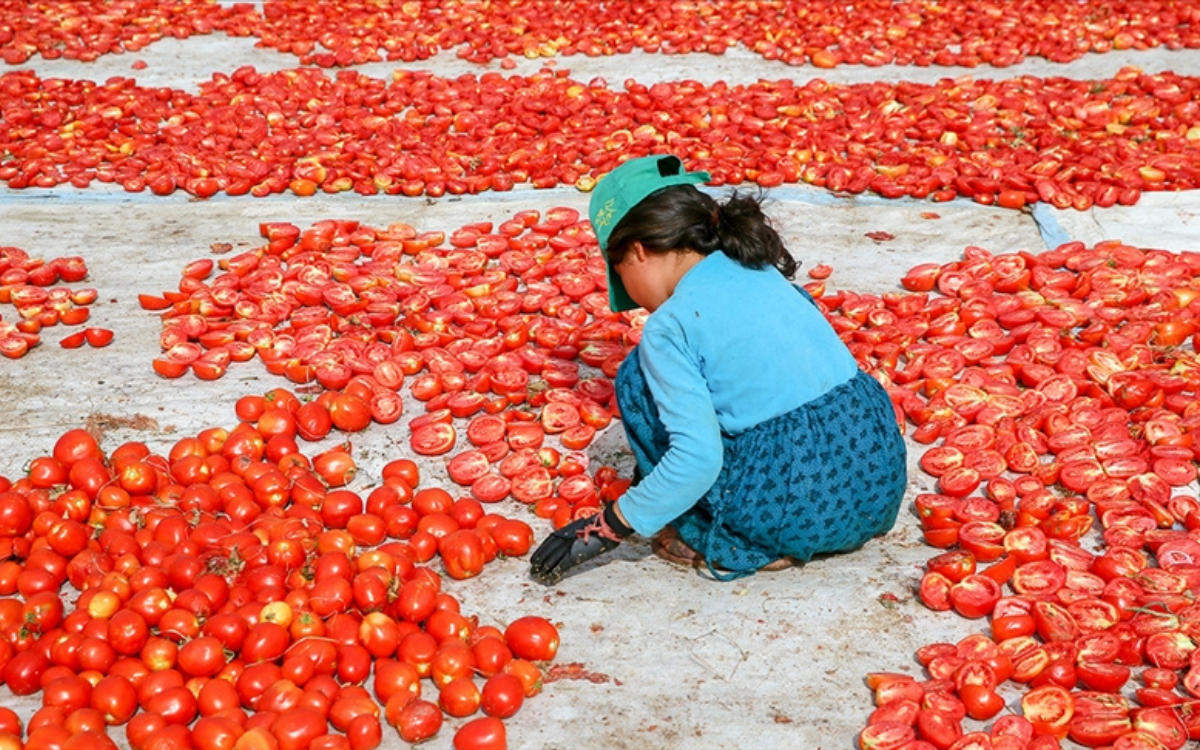
The labor force participation rate among 15- to 17-year-olds is 25.5%. This rate rises to 36.5% among boys, while it remains at 13.9% among girls.
This gap shows that boys are pushed into working life more often at an early age. In the same age group, the employment rate is similarly higher among boys.
THREE CHILD WORKERS KILLED IN A WEEK
'Businesses employ two children in place of one adult at same cost'
While child labor would be expected to decline as children remain in education longer, the data show that this has not happened, particularly for boys. This indicates that child labor remains a structural problem.
Health and living conditions
According to the data, the infant mortality rate is on a downward trend. However, despite this decline, regional disparities persist.
A significant share of children also face problems accessing basic needs such as healthy nutrition, adequate heating and suitable living space.
Early marriages continue
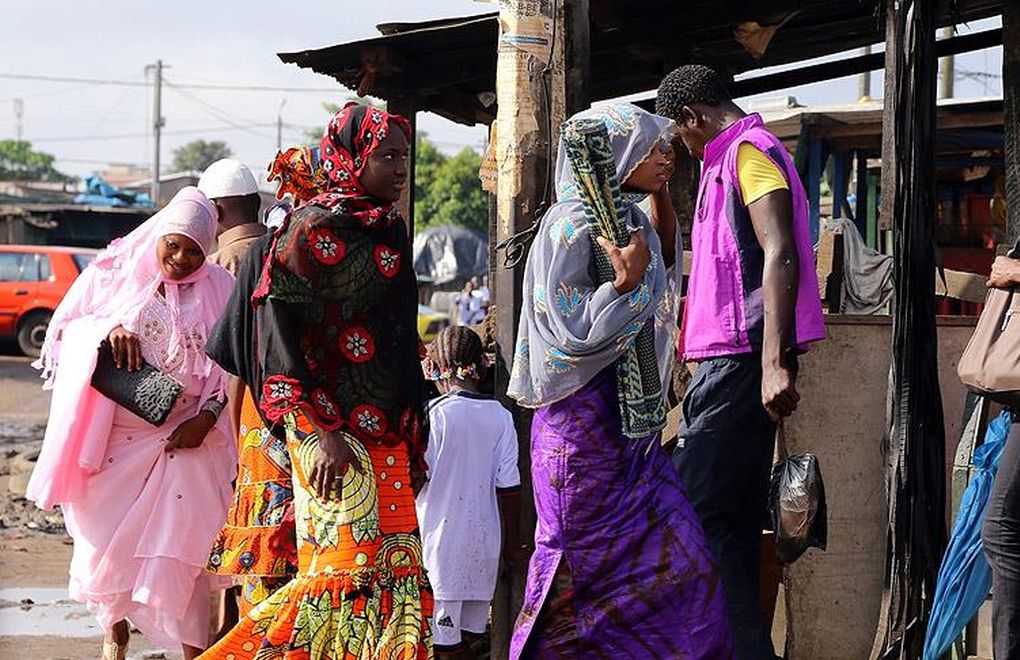
According to marriage statistics, the share of official marriages involving girls aged 16-17 among all official marriages was 7.3% in 2002, falling to 1.5% in 2025. By contrast, the share of official marriages involving boys in the same age group among all official marriages was 0.5% in 2002 and fell to 0.1% in 2025.
The persistence of early marriages points to a picture directly linked to dropping out of education and poverty.
UNFPA REPORT
‘One in five women currently 20-49 years old married under 18 in Turkey’
Custody largely granted to mothers
After divorce, custody of children is largely granted to mothers. According to TurkStat data, about 75% of custody arrangements are granted to mothers and 25% to fathers.
This shows that child care still remains largely the responsibility of women. Meanwhile, as the number of children benefiting from foster family services increases, the number of children in institutional care also remains notable.
Internet access rising, but risks not discussed
Most children use the internet. Among children aged 6-15, the internet usage rate has risen above 80%.
However, the data do not discuss how this increase relates to children’s safety, digital addiction or online risks. While the numbers are rising, the nature of this usage remains unclear.

Turkey probes social media platforms over child users' data
(NÖ/VK)

