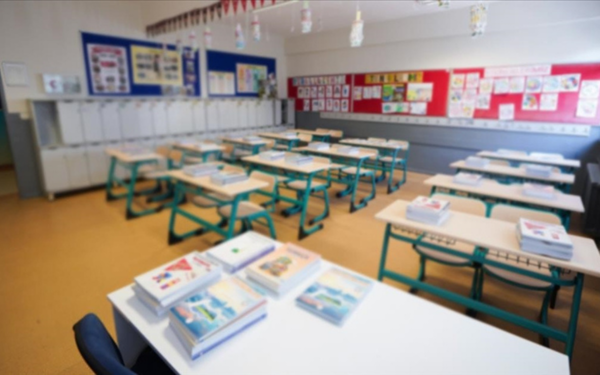





"The number of classrooms may increase; the main issue is the quality of education coming out of those classrooms."
The sentence that National Education Minister Yusuf Tekin used in a speech in Van, "By this indicator, we are above OECD averages," quickly moved to the center of the education agenda. The language of politics often spreads faster than numbers; a single sentence reaches millions, becomes a headline, and creates debate. However, especially in areas that directly concern the future of society like education, the meaning evoked by sentences must exactly match the data they are based on.
At this point, the statement by the minister deserves a careful reading.
This is because the expression in question creates a broad perception at first glance that Turkey has surpassed the OECD average in educational success. Yet, when looking at the context of the speech, it is clearly seen that this relates not to academic success, but to physical indicators in the educational infrastructure. In particular, the decrease in the number of students per classroom stands out as the main basis for this discourse.
Up to here, the matter is clear: The data may be correct in terms of infrastructure.
However, when "OECD average" is mentioned, the first thing that comes to mind in the public is not the number of classes; it is where the student stands in mathematics, reading, and science.
Turkey’s strong area: Physical infrastructure
Credit must be given where it is due. In the last 20 years, a serious capacity increase has occurred in the educational infrastructure. The rise in the number of classrooms, new school investments, smart board applications, internet access, and digital education materials have carried Turkey to a much stronger point compared to the past.
Today, access to technology, the use of digital content, and physical classroom opportunities in many schools have progressed to an extent that does not accept comparison with past periods.
From this perspective, it is not surprising to catch or even exceed the OECD level in indicators such as the number of students per classroom in some areas.
But education is not only buildings.
Nevertheless, reading education policies only through buildings, internet lines, and smart boards leaves the big picture incomplete.
The real decisive question is this:
What is the quality of the student raised in those classrooms?
International success measurements show us that Turkey has made significant progress in recent years. Especially in the PISA 2022 results, a more positive picture emerged compared to previous periods. However, the same data also show that it is necessary to remain cautious before saying that Turkey has permanently surpassed the OECD average in mathematics, reading, and science fields.
In other words, school buildings may have exceeded the OECD level; but it does not yet seem possible to form the same sentence with the same ease for the academic output of the student.
When evaluated within context, the expression of the minister carries a technical accuracy regarding physical infrastructure. However, when the context is not clearly emphasized, this discourse can evoke a more positive picture in society regarding academic success than what exists.
Precisely for this reason, in order to inform the public healthily, it is no longer a preference but a necessity to clearly state which indicator the statements are talking about.
Because in a strategic area like education, the need of society is not slogans, but measurable and comparable truth.
There are two different photographs of Turkey.
The first is a story of extremely strong investment in terms of classrooms, technology, and physical capacity.
The second is a more realistic picture showing that there is still a distance to be covered in the student’s critical thinking, reading skills, mathematical proficiency, and scientific productivity.
Real success in education is measured not by the size of the school building, but by the competitive power of the student coming out of that building with the world.
Today, what needs to be discussed is exactly this:
Surpassing the OECD in concrete is one thing, surpassing it in the mind is another. (AÖ/NÖ/VK)