



For over 20 thousand students at Bilgi University, the anxieties of young adulthood coupled with the uncertainty of life in an increasingly authoritarian country overnight.
With one signature President Recep Tayyip Erdoğan shut down one of the foundational private universities of the country by presidential decree. University employees would miss final paychecks; students would be automatically transferred to Mimar Sinan University, which lacked many of their majors; and it was unclear whether graduating seniors would indeed graduate at all. In a country already marked by mass employment and political turmoil this was yet another incursion on daily life.
That was until a student movement won back their university in three days, cementing a rare, historic victory for the Turkish opposition movement — one won in the streets, rather than parliament, the polls or the courts, which many young people feel has continuously failed them.
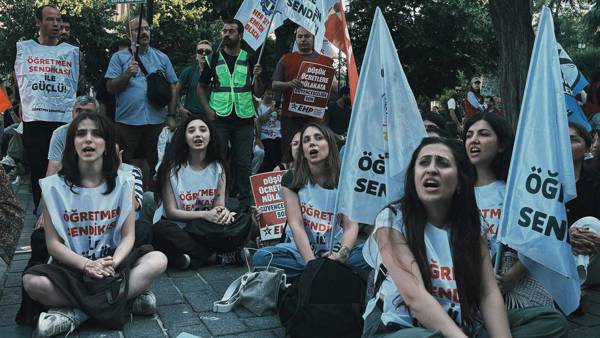
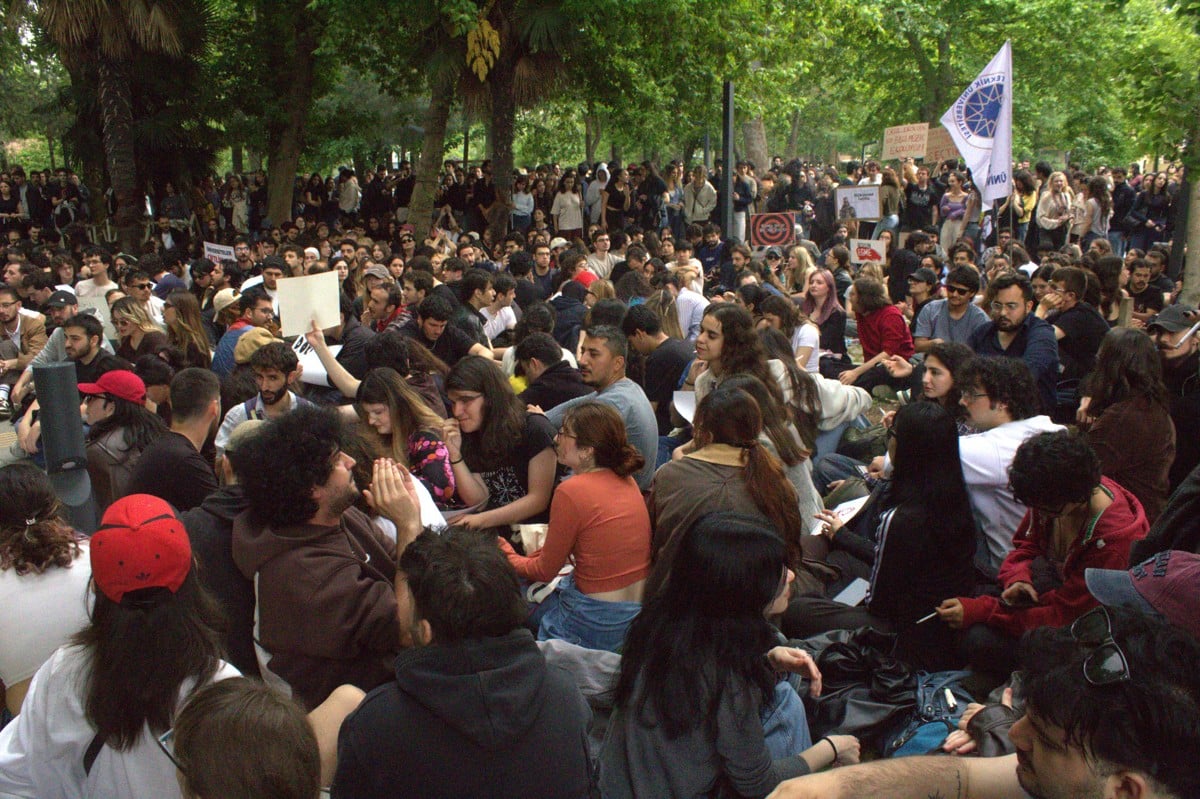
The morning after the announcement about 2,000 students and supporters gathered in and outside the gates of the university. Those outside of campus were eventually allowed entry as numbers escalated and pressure mounted. After a march to the central green space organizers made speeches and read press statements. Students played live music, danced halay and called for an occupation until their university was re-opened.
Once the environment calmed and the crowd dispersed, students lamented about their futures. Many asked questions and speculated about unemployment, housing, salaries and classes with few answers surrounding the haphazard decree. Moments of gallows humor were followed by laughs, silences, more questions accompanied by more speculation, and political discussions — often marred with sharp criticism of the ruling Justice and Development Party (AKP).
Friends of mine discussed the campus as a home and an ecosystem, one they took pride in taking care of.
“Who will feed the cats?” one friend asked me.
One masters student and university employee, Hatice Anlağan, said that this was the second time this has happened to her. She was a student at İstanbul Şehir University, which the state closed in a similar fashion in 2020. Both closures were near holiday times, likely to quell resistance as students returned to their hometowns.
“I was warning people about the situation that we might experience in the future,” she said, “I was trying to make them aware of what we are going to face if we don’t stand strong, if we don’t stand against this decision … in a real way. If we can’t, it’s done — it’s over.”
Anlağan offered thoughts about her experience during open forums organized in empty classrooms in the evening.
Some students stayed overnight to occupy the campus, but by the third day security cleared them out. It was this third day that was the most eventful, marked by police brutality and teargas, but also demonstrated the resolve of the protestors and perhaps secured their victory.
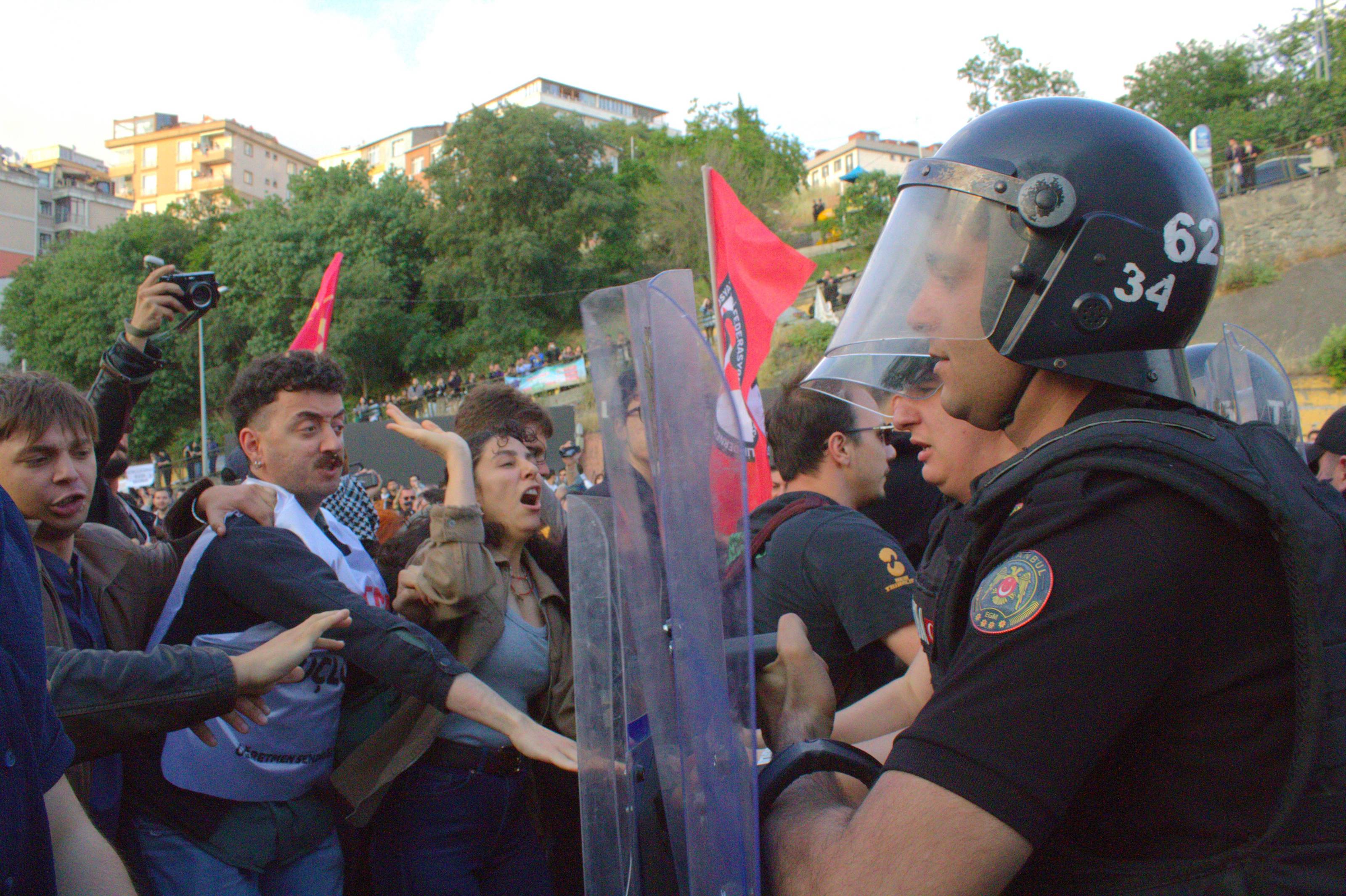
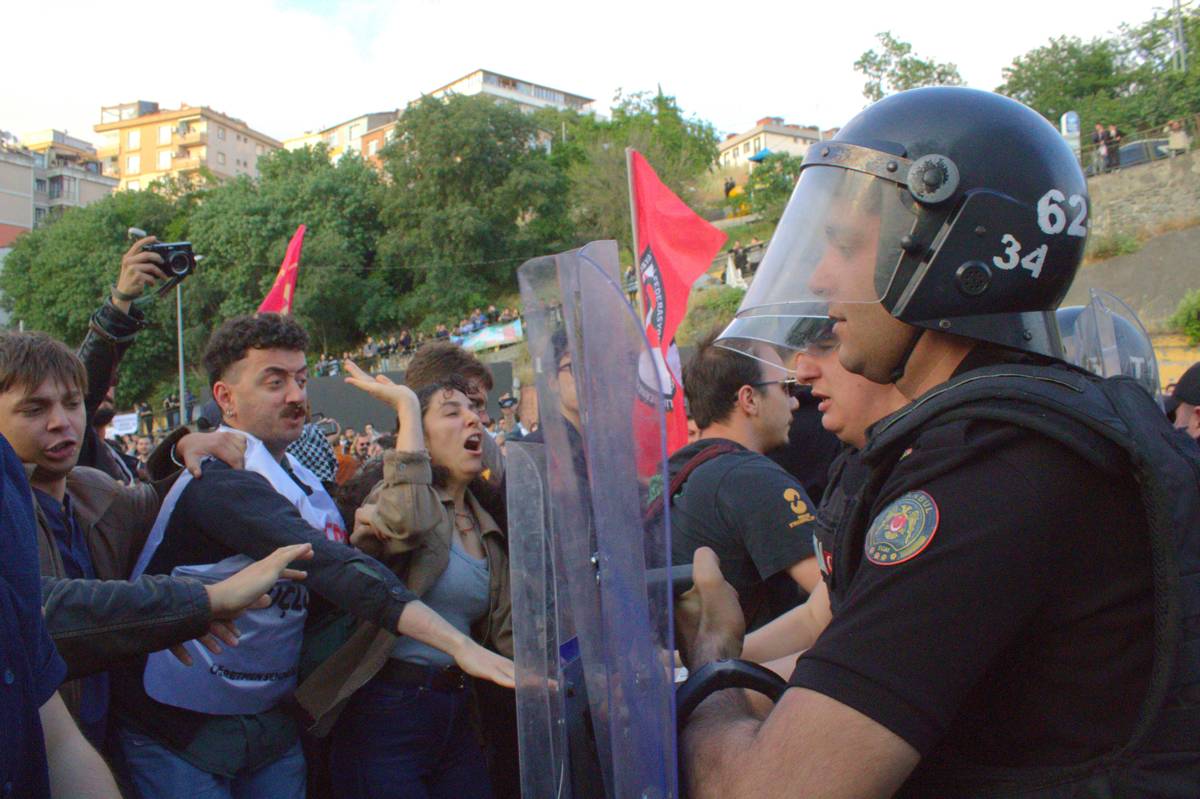
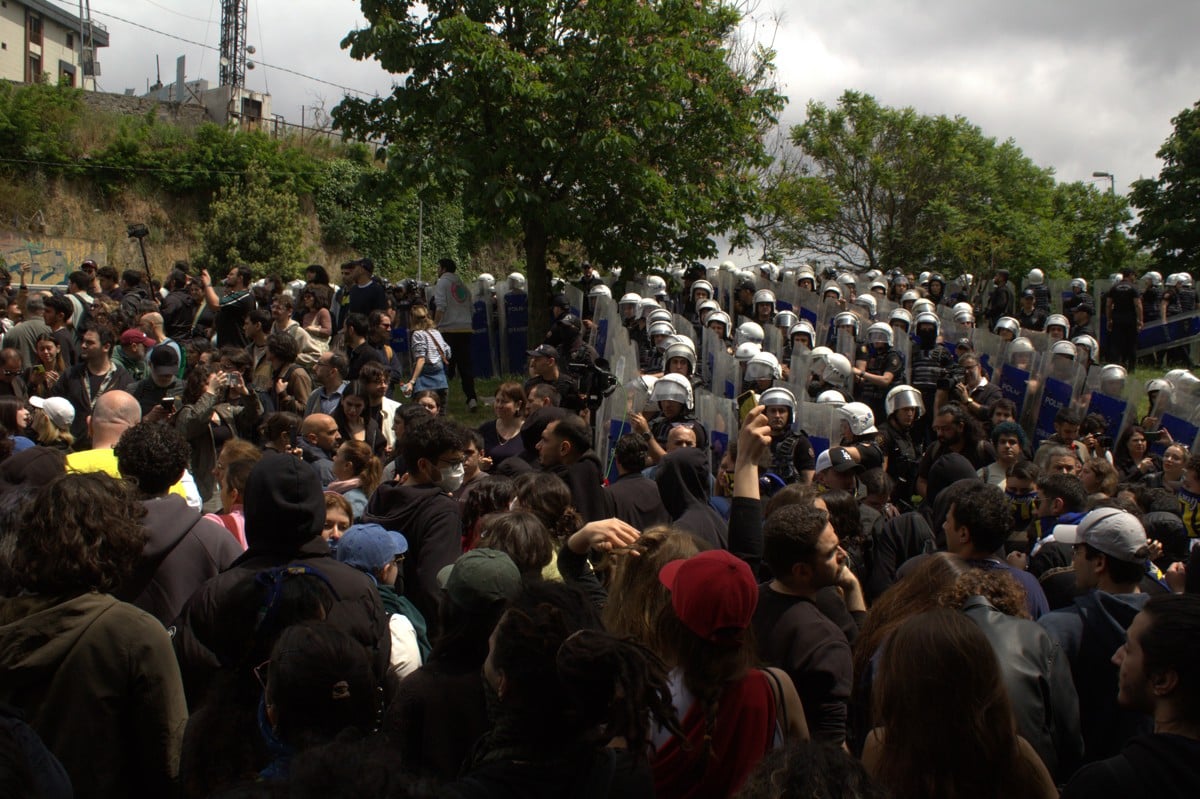
Students linked arms and stood across waves of police armed in riot gear. And behind the many rows of officers stood an TOMA, a tank equipped with a water cannon often used to disperse protestors, one of multiple on site. The students hoped to occupy their university, but it was the police who resembled an occupying military force — they behaved like one too.
Police were the first to break the tension, charging forward in unison. Students were knocked over and some started to flee when a few organizers called on students to stand their ground. Many immediately reversed to hold their lines. Protestors tried to hoist each other up while police kept knocking them down.
One officer almost seemed to pose for my pictures amidst rounds of battering students with his shield.
About 15 minutes later police launched tear gas into the crowd. One photographer, much more equipped than myself, had a gas mask ready. I did not, and neither did most of the students, who only had each other, a few surgical masks they never got the opportunity to put on and water bottles filled with crushed Talcid to wash out the chemicals.
Students’ eyes burned shut and welled with tears. Some screamed in pain and others tried to tough it out. Friends flushed their eyes with talcid-water and fanned their reddened faces.
One student accompanied by her peers wrapped her arm in a sling with a kefiyeh while sitting on the pavement towards the back. She said the police broke her arm during this first clash, one of a few to come. Atleast 20 students were arrested during these attacks.
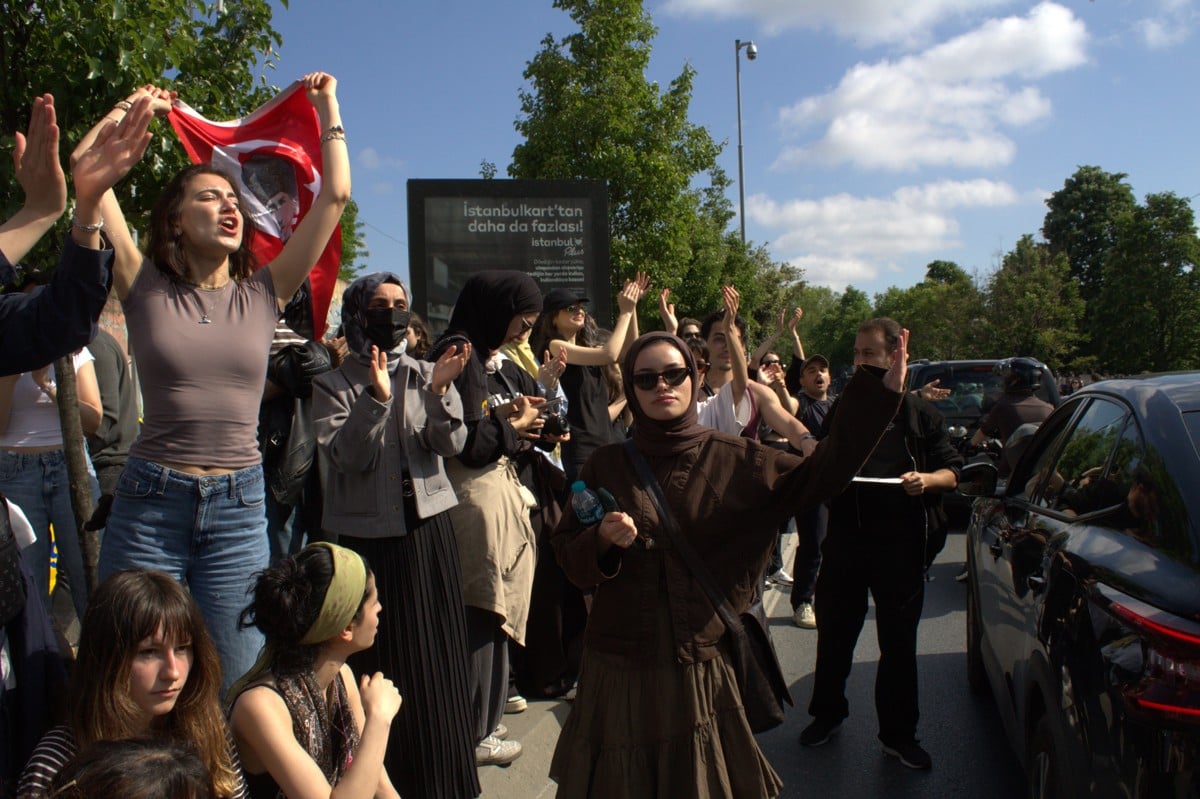
The fierce student resistance was not only about their right to an education, but a referendum on dignity and the right to decide their future. The slogans indicated this and also demonstrated a wide representation of political groups and interests coming together to achieve this.
Some of the most common signs read "Boyun eğme” or “don’t kneel” and also “Ne kayyımın ne AKP'nin, kampüsler bizimdir," or “Neither the trustee nor the AKP, the campuses are ours.”
Revolutionary socialists shouted “Mahir, Hüseyin, Ulaş; Kurtuluşa kadar savaş!" (Mahir, Hüseyin, Ulaş, war until liberation) in reference to fallen communist revolutionaries.
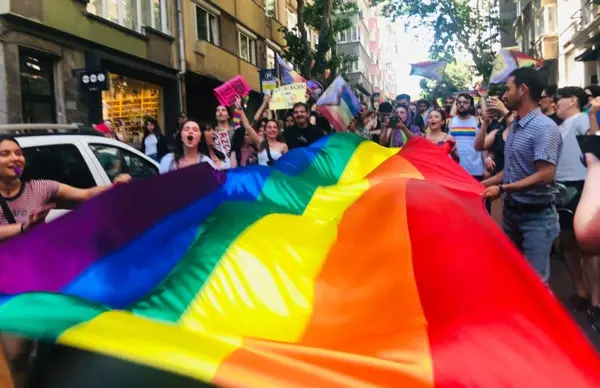
LGBTI+ groups chanted “neredesin aşkım, buradayım aşkım” (Where are you my love, I’m here my love). I noticed one guy student zealously chanting it in unison while his friends around him chuckled. It seemed like a sweet, funny moment to me — someone perhaps going out of their comfort zone in this moment led by LGBTI+ organizers in a shared fight.
All of the students joined together to shout various slogans against the decree and the AKP, and of course, sing the Turkish version of Bella Ciao. During quiet moments students sat on the floor and shared cigarettes, cookies, candies, poğaça and small cups of lentil soup.
Riot shields demarcated a physical border between this microcosm of a more egalitarian society and the realities of the present, manifested in the hyper-millitarized police and armed tanks that have become a fixture in the lives of many Turkish youth.
Emir Aydoğan, a representative from the private sector teachers’ union, said that Bilgi University had significant problems around unlawful wages, workers’ rights and high tuition fees prior to the closure. However, they are still fighting for the rights of students and workers.
“We emphasize that we do not defend Bilgi University as it is … but there were still some egalitarian and libertarian leaning practices, cultural practices and education between students and academics and workers … We defend the university, the part of the university that we create,” he said.
“We are in a better position after this resistance in terms of fixing the problems of the university before the decree … It was a great victory for the whole of the public of the universities of Turkey as well,” he added.
He also said that students are the most effective, populous and dynamic element of social struggles, both in Turkey and abroad. The past three days seemed to validate this.
As night fell and protestors remained unable to infiltrate the campus, organizers had to weigh out risks and make a decision.They announced plans to disband and meet at the same location tomorrow. Just like that the third day was over.
I rushed to a nearby cafe to download photos and post them before midnight as it was already around 9pm. By the time I shared them, the students had won. The state announced a full reversal of the decision. It was the first time I had ever seen something like this.
Students were electrified, relieved and yet still harbor complicated feelings about the whole ordeal. And atleast one student remains in custody from an evening house raid following the decree, according to activist groups.
“I still have fire in my chest for how they did this, like suddenly, in one night and in one signature, one man did this — And after three days it’s over, like a joke,” Anlağan said to me.
One student organizer in a speech during the celebration held at the university the following day said something similar:
“Even though we are all people from very different backgrounds and with very different views, we won by uniting and resisting. Because we all share a common concern. Our concern is not just the closure of our university. Our concern is that our rights can be taken away overnight, with a single signature, by a single person."
Until this is no longer the case, we will never be able to guarantee young people in Turkey the future they deserve. (İK/VK)