












Discussions regarding a framework law, one of the most critical elements of the Kurdish peace process, maintained their prominence in political circles over the past week through consecutive statements from the ruling bloc and the pro-Kurdish Peoples' Equality and Democracy (DEM) Party.
According to reports in the pro-government media the ruling bloc is working on a regulation conditioned upon the verification of the disarmament and dissolution of the Kurdistan Workers' Party (PKK). Meanwhile, the DEM Party demands comprehensive legislation that will serve as the foundation for subsequent legal changes.
The DEM Party has warned that backstage political rumors could harm the peace process, specifically regarding the categorization of individuals, the limited scope of the law, and the exclusion of certain leadership figures like Abdullah Öcalan. However, party officials emphasized that these reports should not be credited, as they have not yet seen an official draft.
The peace process began after Devlet Bahçeli, Erdoğan's key ally and the leader of the Nationalist Movement Party (MHP), suggested in Oct 2024 that imprisoned leader Abdullah Öcalan could be released by utilizing the right to hope in exchange for the Kurdistan Workers' Party (PKK) dissolving itself.
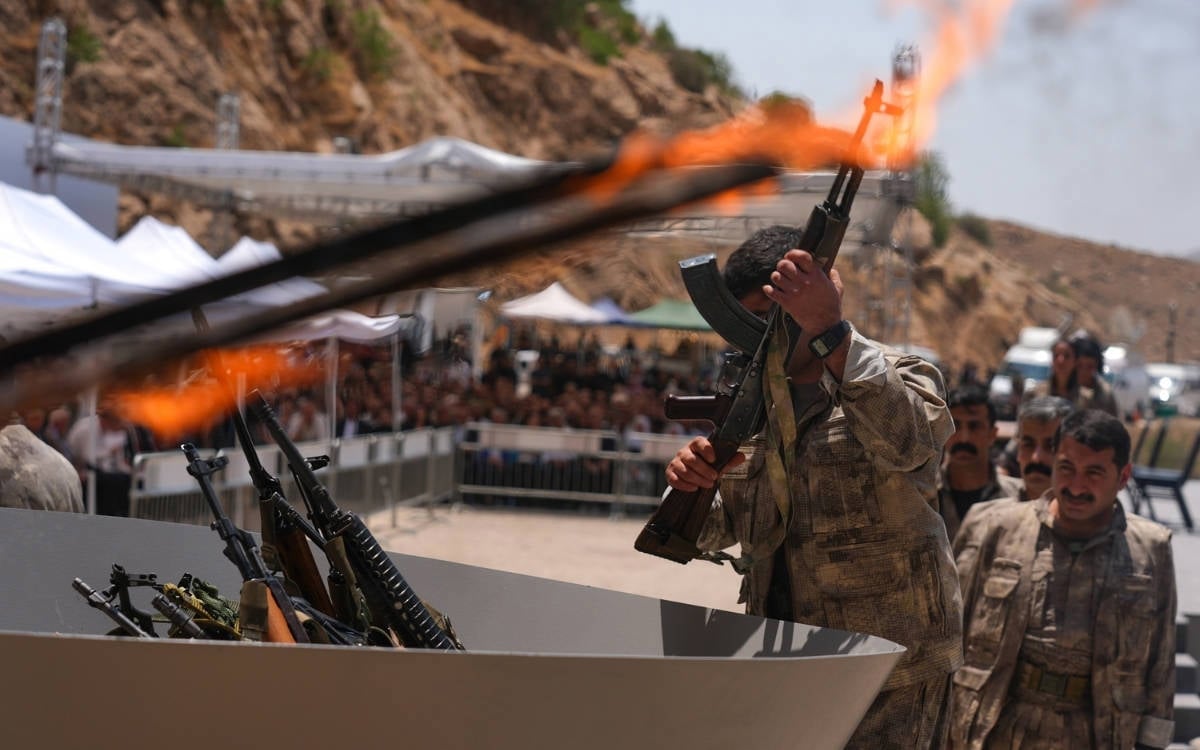
The PKK declared its dissolution at a congress in May last year and later held a symbolic disarmament ceremony. Subsequently, a commission was established in parliament in the second half of the year to determine the legal process regarding the peace process. The commission completed its work in December.
While no other concrete developments have taken place in the process so far, the pro-Kurdish Peoples’ Equality and Democracy (DEM) Party has been regularly calling on the ruling bloc to create the legal framework.
What does pro-government media say?
Türkiye newspaper reported on Jun 28 that the government wants the law to be passed before parliament goes on recess. However, its implementation will depend on the condition that the PKK lay down its arms.
According to the report that quoted high-level sources from the ruling Justice and Development Party (AKP), the National Intelligence Organization (MİT) and the Turkish Armed Forces (TSK) will prepare a verification report regarding the situation on the ground and present it to the National Security Council (MGK), and the MGK will then issue a confirmation decision stating that the PKK has been dissolved and weapons have been laid down.
"The logic of the law is this: 'Dissolve the organization, lay down weapons, and let us verify this,' then benefit from the law," the sources were quoted as saying. "There will be no implementation before the verification mechanism says 'ok' first. In our view, the satisfactory rate for matters such as laying down weapons and evacuating caves must be at least 80 percent."
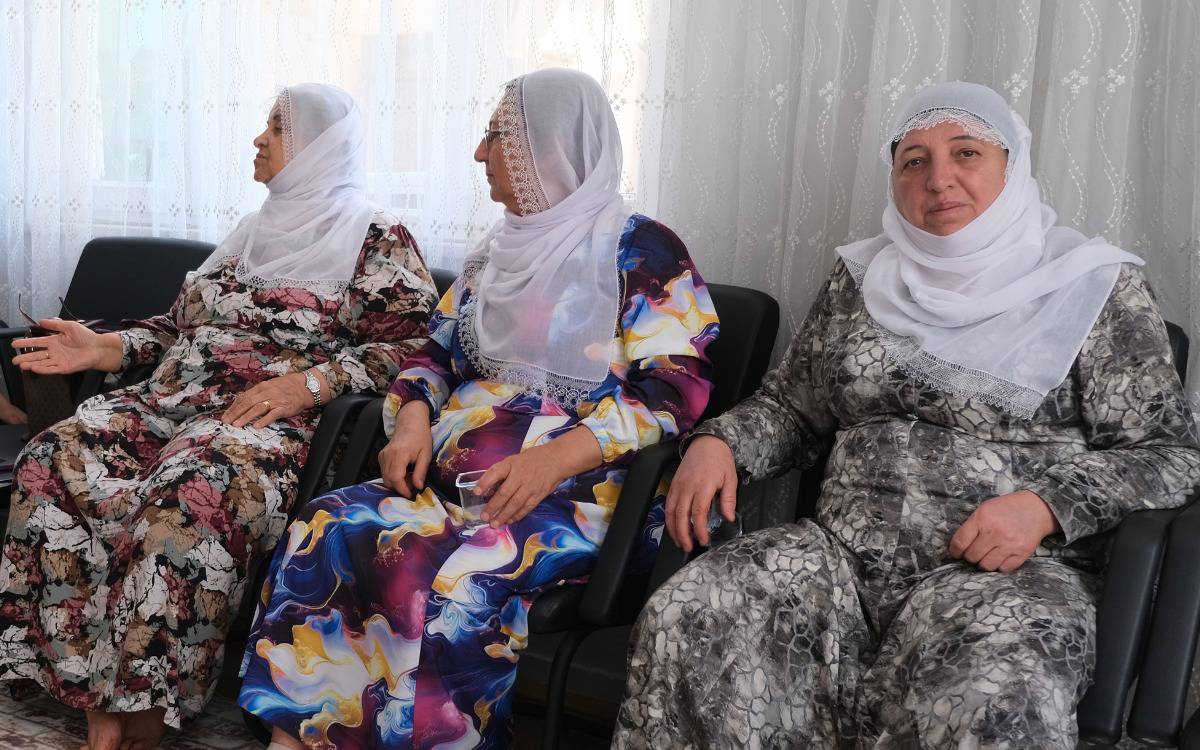
'All mothers’ tears are the same color': Peace Mothers reflect on PKK weapon-burning ceremony
A temporary law
Answering questions from journalists after a Jun 30 meeting with his Norwegian counterpart Masud Gharahkhani, Parliament Speaker Numan Kurtulmuş touched upon the issue:
"The law to be enacted is a standalone and temporary law. In other words, it is a temporary law that will cover members of the dissolved organization. It will be enacted only once. Those who come within a specified period will benefit from this. The door will be closed for those who do not come. We hope to establish such a mechanism.
"I hope that the legal preparations will be completed in a very short time and brought first to the commissions and then to the General Assembly. It is essential to conclude a beneficial task that has begun in the most beneficial way and in the shortest time possible. From now on, it is imperative for Turkey to take this step by planning well, without stalling, delaying, or neglecting even the slightest detail."
According to a Jul 1 report by BBC Türkçe, President Recep Tayyip Erdoğan also instructed his party members during weekend to ensure that the law is passed before parliament goes on recess.
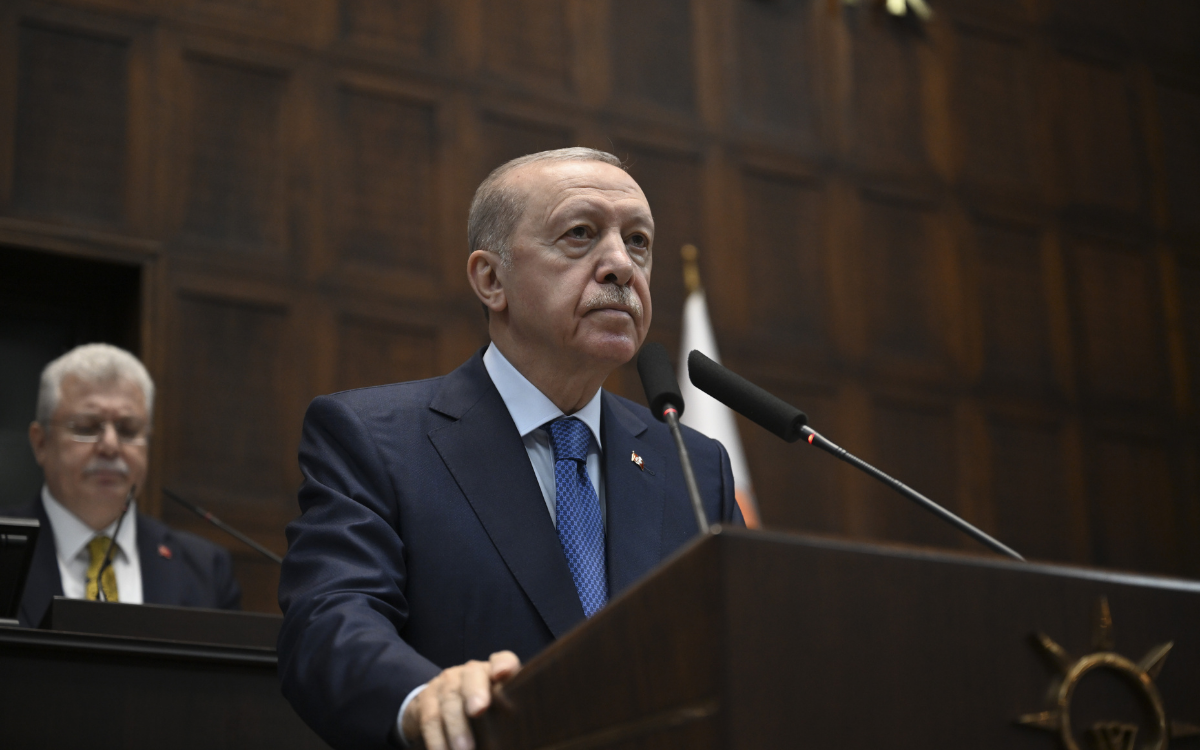
Erdoğan says Kurdish peace framework will soon arrive in parliament
'It cannot be left until autumn'
Speaking on the same day at his party's parliamentary group meeting, DEM Party Co-Chair Tuncer Bakırhan stated that the framework law should not be kept narrow, should not be vague, and must inspire confidence among the public.
He noted that the issue is not merely a technical regulation consisting of a few articles, but the binding of the will of the peoples of Turkey to live together into law:
"One of the biggest opportunities in Turkey's political history stands before us. The Peace and Democratic Society Process is almost about to enter its second year. Certain steps were taken during this process, credit must be given.
"Weapons were destroyed, a commission was established in parliament. The commission visited İmralı and kept its report. We do not look down on these or ignore them. On the contrary, we want to firmly build this democratic society and peace process upon these steps.
"It is not an easy task to move a 100-year-old issue from the ground of violence to the ground of law. This law must be written with courage and in a manner suitable for the magnitude of this important task. Beneficial deeds should be rushed. For this reason, the framework law cannot be postponed. It cannot be left until autumn. The framework law must now come to parliament without delay, without fear, and with a clear content that inspires confidence."

Study: Youth believe in peace process but do not feel included
DEM concerns about fait accompli
In a statement to Yeni Özgür Politika on Jun 29 regarding the law in question, DEM Party Deputy Co-Chair Tayip Temel said, "We hope the government will not produce a unilateral text and say 'take this and sign it.'"
Temel added that they do not yet have information about the content of the law:
"This law must not be brought about as a fait accompli without being negotiated and without considering the sensitivities of the parties. We hope that the government will not produce a unilateral text and say 'take this and sign it' during this process.
"If this happens, the spirit of negotiation will be damaged. Why? Because this issue has been an open wound of this country for 100 years. A regulation that will close such a wound can only become permanent with a text produced by the parties through common sense and shared will.
"Mr. Öcalan used the term 'root law' for the 'framework law.' This needs to be understood correctly. The 'root law' here does not mean a final law that will resolve all the root causes, namely the structural causes, of the Kurdish issue all at once. The 'framework law' does not have such a function for now anyway.
"This law will rather be the key to the main regulations directed toward a historical threshold, a transition from the ground of armed conflict to the political and legal ground. In other words, the 'root law' is not a law that solves all of the root causes. It is the founding threshold that will pave the way for those causes to be resolved within democratic politics."
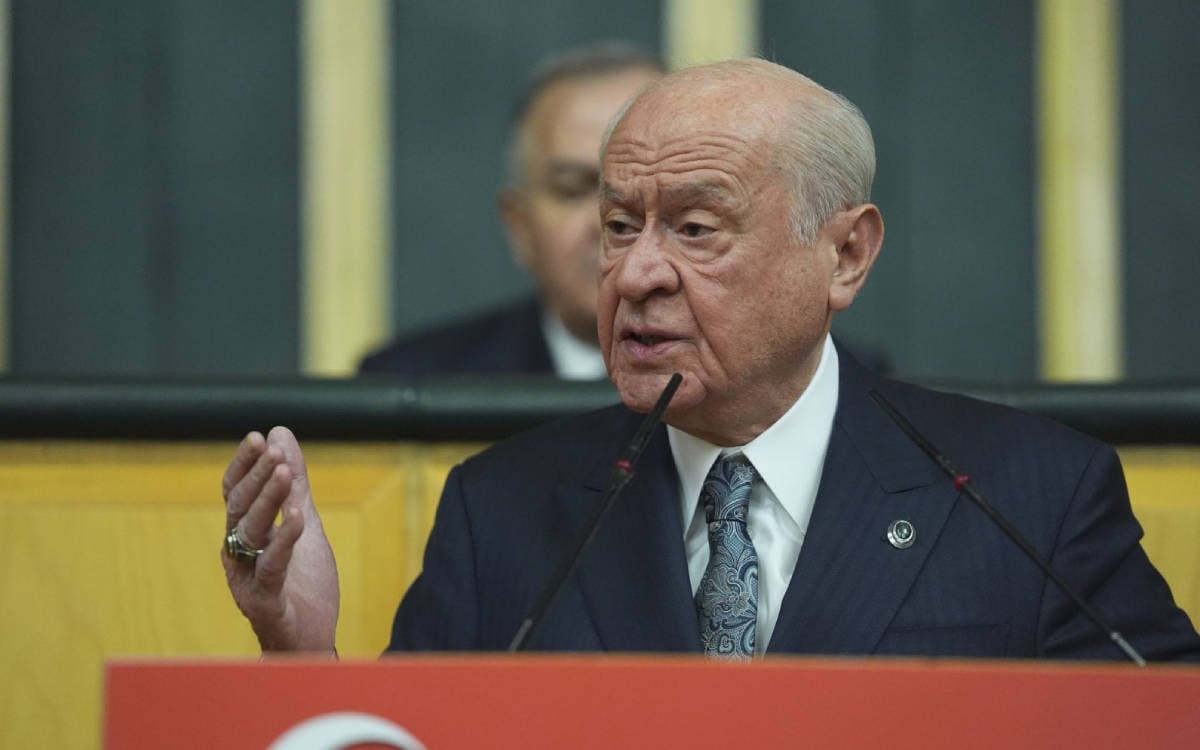
Bahçeli proposes formal status for Öcalan to guide PKK dissolution
Kurdish side's demands
In this regard, the DEM Party argues that the AKP must take into account the 7-to-8-item proposal text conveyed by Öcalan through the İmralı Delegation.
According to the DEM Party, the framework law should bear the characteristic of a "root law" that will form the basis for subsequent amendments to be made to the Turkish Penal Code (TCK), the Anti-Terror Law (TMK), and execution legislation.
İmralı Delegation member Pervin Buldan also said on May 28 that the scope of the framework law was discussed during their meeting with Öcalan four days ago:
"The meeting we held was predominantly about the upcoming law. He made a lengthy assessment regarding how the framework of the law should be. He specifically expressed that this law needs to be a root law, and that once this law is passed, the wheels of democracy can turn rapidly.
"However, he also said that for this law to be enacted, it is important to reach a consensus on the law that will be conveyed to him as a draft during this process.
"This framework law, which will consist of approximately 7 or 8 articles, will be enacted on a one-time basis. Members of the organization will be able to benefit from this law within a specific timeframe and come to Turkey or go to any other place they desire."
On Jun 25, Pervin Buldan said they had additional plans in case the law doesn't meet their expectations:
"Even if Öcalan does not accept the presented law, there is certainly a plan B and C. But this will not be a renewed armed struggle.
"It has already been stated that the armed struggle has ended and that it did not provide a solution. We might lose time, but it will still be a plan oriented toward democratic politics."
A waypoint on the path to peace: What does the commission report say?
Scoops are 'baseless'
According to a Jul 1 report by the pro-Kurdish Mezopotamya Agency (MA), the DEM Party İmralı Delegation, which carries out talks with Öcalan, held three more meetings with the AKP after the aforementioned meeting.
Speaking to the agency, DEM Party sources underlined that the scoops in the pro-government media regarding the law are "groundless."
Conveying that the government is carrying out a comprehensive preparation for the law within the scope of the meetings, that the work continues, and that the draft will be shared with the DEM Party and other political parties shortly, the sources noted that discussions regarding the regulation are also ongoing.
PKK’s ‘farewell to arms’: What is ending, and what is beginning?
'I hope our concerns do not materialize'
During a press conference in parliament today regarding current developments, DEM Party Parliamentary Group Deputy Chair Sezai Temelli was asked whether they expect the law to pass the parliament before recess:
"We are continuing the meetings. A consensus seems to have been reached on bringing this law before the end of July, before parliament closes. We also held discussions on this matter yesterday in our Central Executive Board.
"Tomorrow, our Party Spokesperson Ayşegül Doğan will make a statement to the public and the press. She will deliver a detailed explanation to you. She will share this information with you as a result of today's meetings.
"Not everything that comes to parliament passes through parliament; however, passing this law through parliament is a necessity. The approach of other parties on this matter is positive as far as I have observed so far, except for the İYİ Party.
"Therefore, this is an issue that actually concerns the future of all of us, concerning the peace of Turkey. It carries immense importance in terms of constituting a first step, creating a root for Turkey to truly achieve democracy and the rule of law.
"Thus, it is necessary to approach this with responsibility. I hope our concerns do not materialize. On the contrary, hope will prevail and this law will pass through parliament."
(TY/VC/VK)

