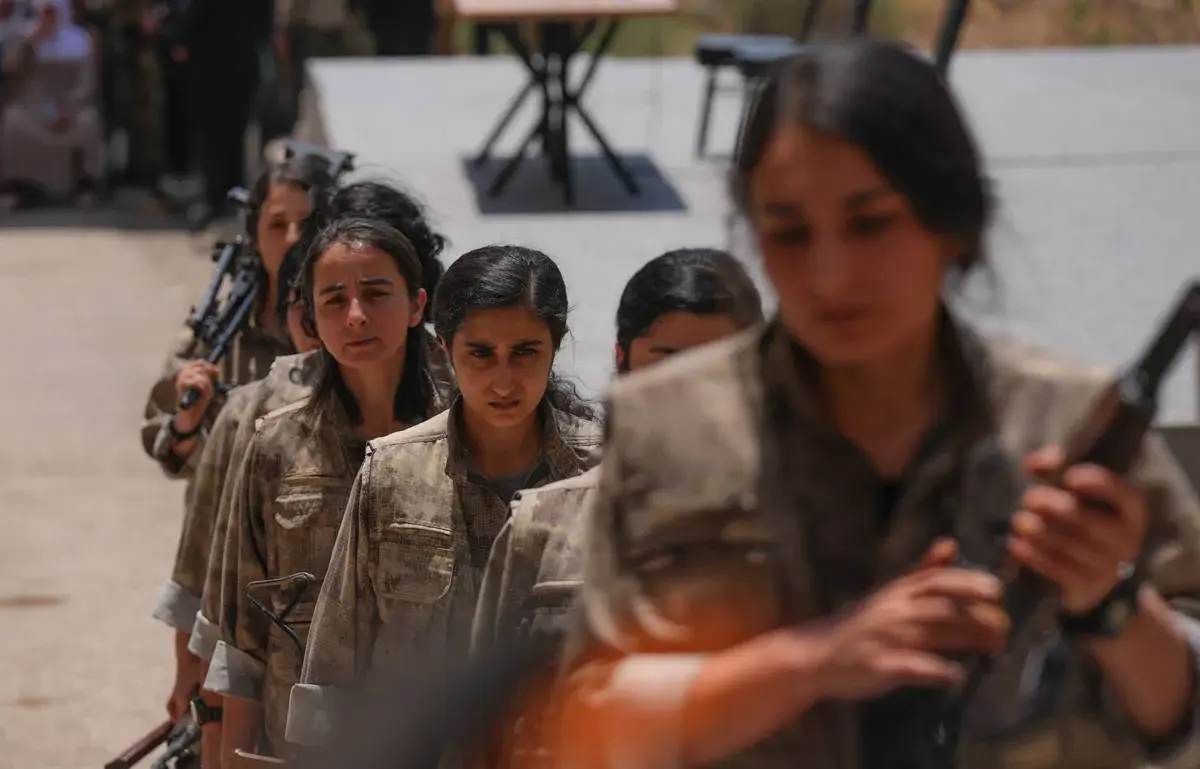




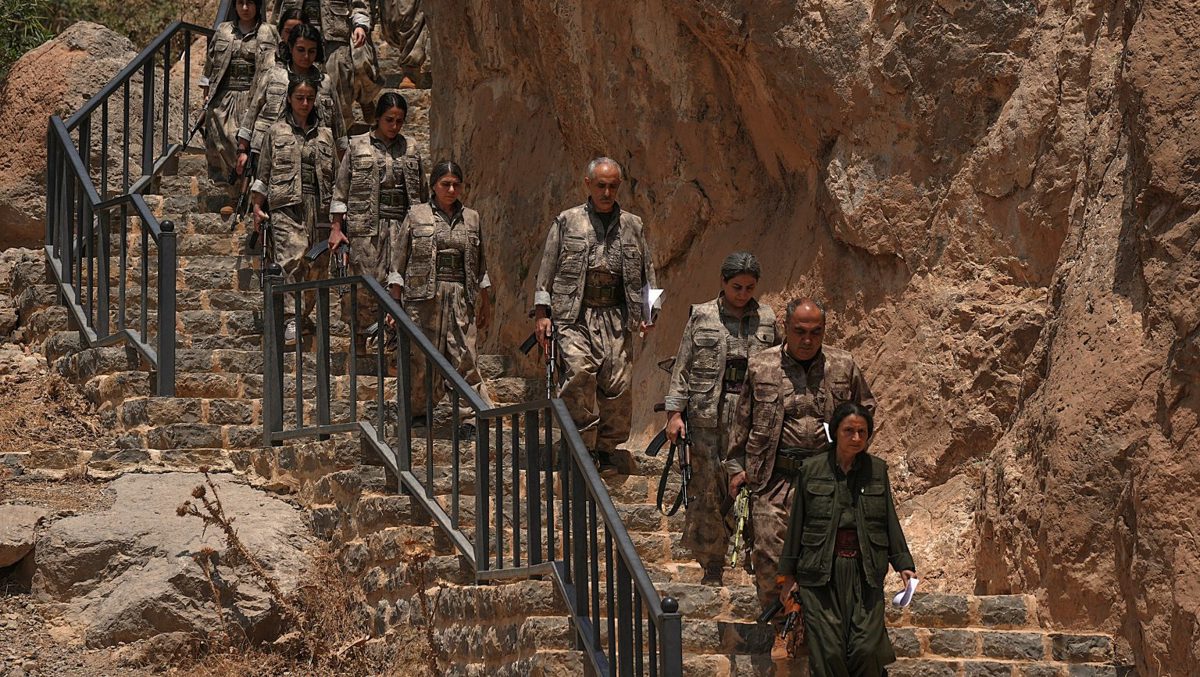
Let’s start from the end, not the beginning… After more than an hour and a half of uncertainty in Jasana, the ceremony finally began. As a 30-member group, most carrying Kalashnikovs, descended the steps, casual conversations and laughter gave way to complete silence, at least for a moment, not a single sound could be heard.
The silence was first broken by the quiet mourning of the Peace Mothers. Applause and chants from other attendees followed. If any rule was broken at the event, it was perhaps this one. At a moment when words truly failed, one politician who managed to speak in a single sentence was described as “dignified.” It was a serious, disciplined event, one that felt “heavy” to all of us.
The 'heavy' burden of reconciliation
At first, I thought the weight I felt came from being in an unfamiliar and difficult geography. But even now, recalling those moments from across the border, I still feel it. Perhaps we witnessed the most concrete and tangible steps ever taken toward peace; top-down and bottom-up. Despite its weight, making peace, is possible, as we "witnessed."
Emphasis on women
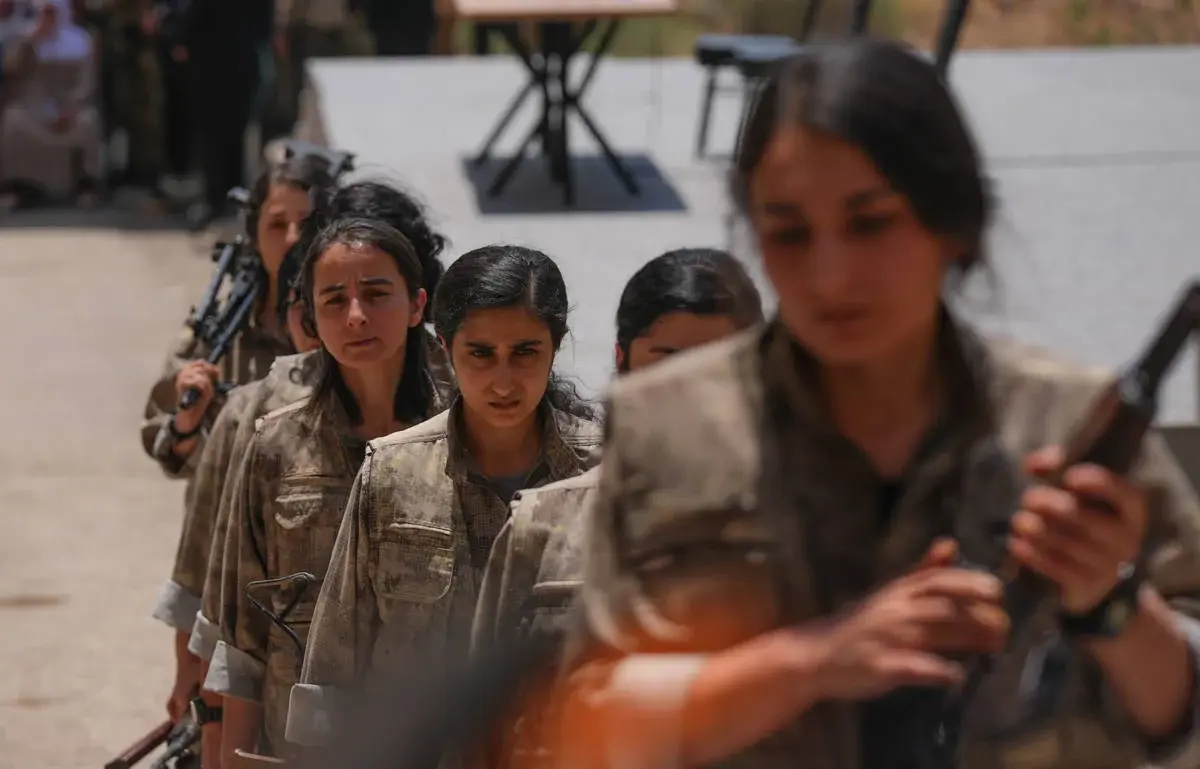
As expected, the group of 30 PKK members, 15 women and 15 men, was led by Besê Hozat, co-chair of the KCK Executive Council. She was followed by senior figures including PKK Central Committee member Nedim Seven, and commanders Tekoşin Ozan and Tekin Muş. The women in the command unit, led by Hozat, walked in front, followed by the men.
Another notable detail was that both of the heavy weapons visible—a sniper rifle and an M249 light machine gun—were carried by women. The central role of women in the new era of peace and democratic struggle was underscored not only in the text but symbolically through their prominence in the ceremony.
A statement for the press
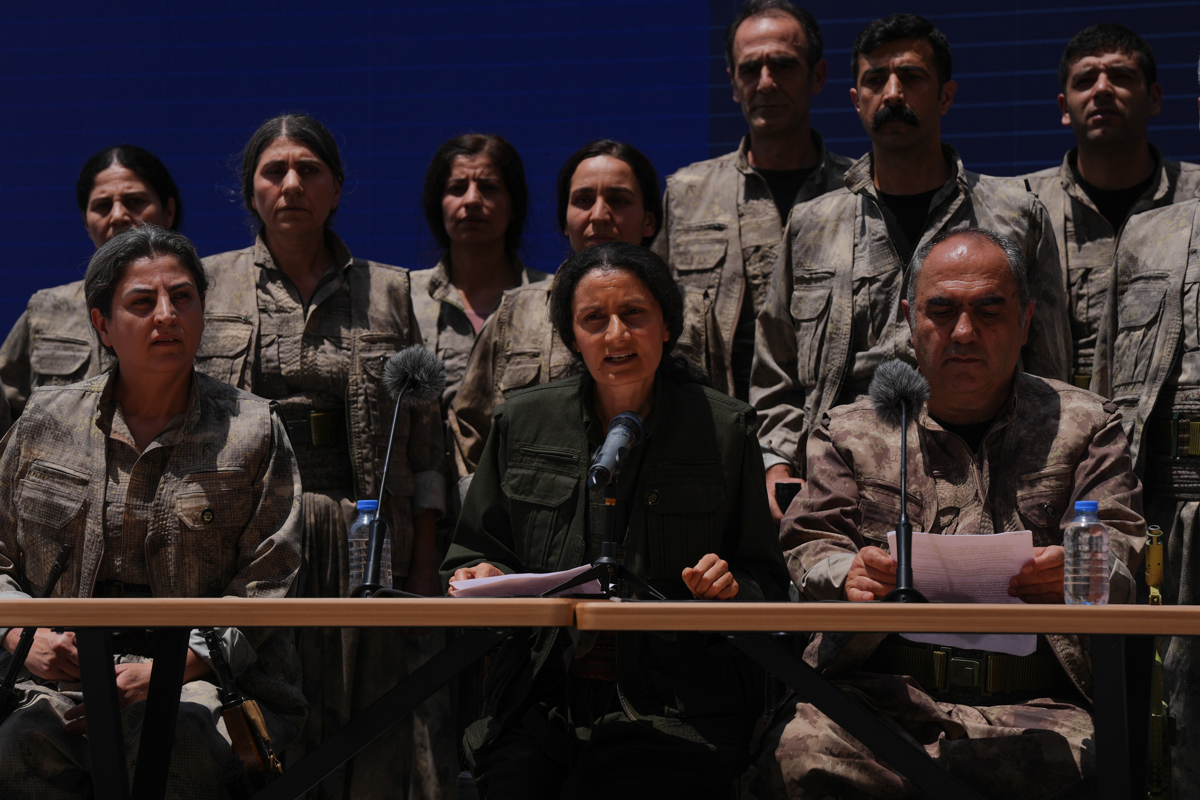
The text read aloud during the event was notably shorter and more direct than the KCK’s traditional communiqués. When Besê Hozat opened the statement with the standard activist phrase “To our people and the public,” it was already clear this would be a different kind of message. There was a proper stage set up for the speakers, screens for the audience, and a sound system designed to prevent any disruption. It was a real press conference.
The new paradigm gets a name
Once preparations were complete, a still image from Abdullah Öcalan’s recent video message appeared on the screen behind the speakers. From that moment on, we understood the ceremony began. Early in her remarks, Hozat introduced the name of the new initiative: “We are here as the Peace and Democratic Society Group.” The audience was visibly emotional, especially many veteran Kurdish politicians whose faces reflected the weight of years spent speaking out under pressure.
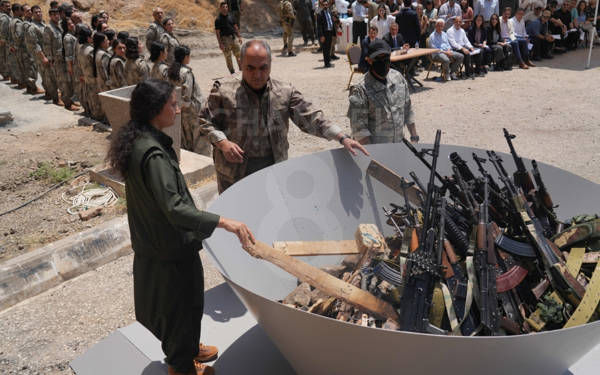
As the statement ended, Hozat appeared to deviate briefly from the planned script. She paused, and many journalists later shared the impression that she had intentionally chosen not to elaborate further. She eventually wrapped up, saying, “There is a need for serious legal reform.” She then started the ceremony, saying, “In your presence, we destroy our weapons for the success of this historic initiative.”
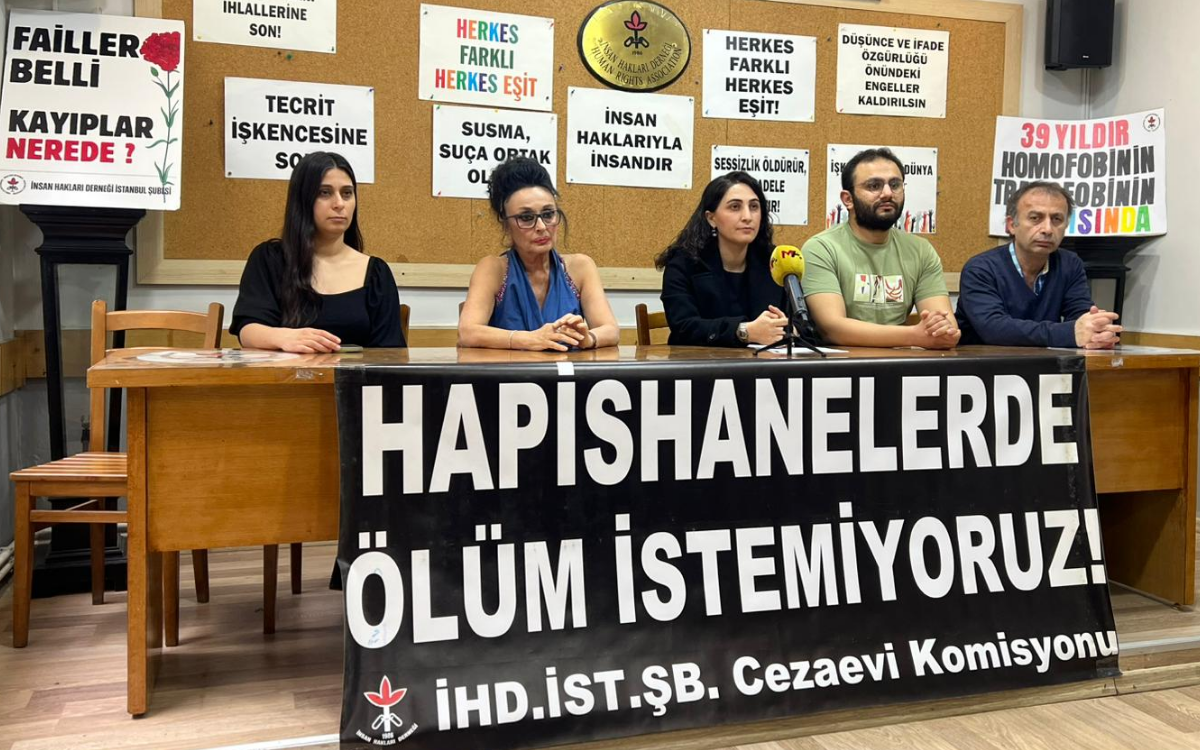
Weapons and ammunition belts were placed into a large white funnel-shaped container. The group handed over a full inventory of the arms to the Human Rights Association (İHD), the Human Rights Foundation of Turkey (TİHV), and the Association of Lawyers for Freedom (ÖHD), under the supervision of the Iraqi government and the Kurdistan Regional Government.
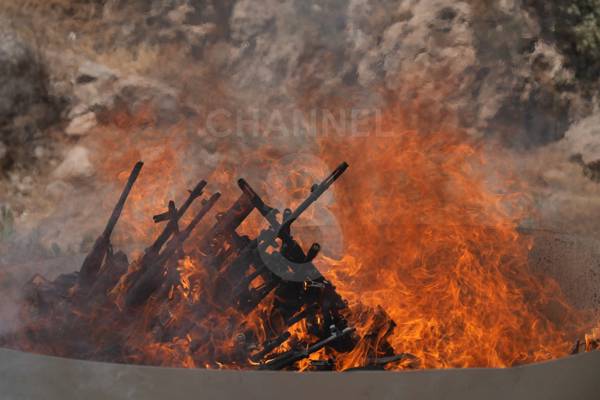
Then, Besê Hozat lit a torch and set the weapons ablaze.
Even if the statement hadn’t been read aloud, the ceremony alone conveyed the organization’s shift in direction. Every detail had been meticulously planned. It appeared to have been rehearsed to avoid even the smallest disruption. The group, which had descended the stairs in military formation with discipline and solemnity as the PKK, exited in a relaxed, civilian march under a new name: the Peace and Democratic Society Group.
They didn’t bury the weapons but burned them
In a departure from global disarmament precedents, the PKK chose to destroy its weapons not by burying them but by burning them in Jasana, a place that may now hold symbolic meaning for all peoples of Turkey. The act, done voluntarily and publicly, was a deliberate statement: by beginning with what is usually the final step, the group signaled to the world its firm commitment to peace and democratic politics. The decision to burn the weapons, rather than bury them, deserves its own dedicated analysis.
Jasana Cave becomes a symbol of peace
As previously reported, exact coordinates of the ceremony site were shared only at the last moment due to security concerns, though there had been speculation beforehand. Most of us learned about the story behind Jasana Cave, also known as the "Printing House Cave," only after we regained access to our phones and the internet.
For many of us, covering this event in Sulaymaniyah was a first in multiple ways. It was the first time we followed a major story without knowing exactly when, where, how, or by whom it would take place, and without full equipment. The venue was meticulously organized, with every detail designed to prevent mishaps, especially in light of international media attention. And everything proceeded without disruption.
A carefully arranged ceremonial site
Three separate zones were set up at the base of two steep mountain slopes: a tented area for the press and guests, a stage with a large image of Abdullah Öcalan from his most recent video statement, and a large structure where the weapons were incinerated. Next to this structure, even a trash bin had been wrapped tightly to avoid disrupting the atmosphere, an indication of the attention to detail. Photos taken days earlier confirm that the platform had recently been constructed. However, portable toilets at the site had reportedly been there beforehand.
Heavy security measures in place
The host Patriotic Union of Kurdistan (PUK) deployed security and intelligence units along the route and at the venue. Despite phones being collected, signal jammers were installed across the area to prevent information leaks. Women were not searched at the entrance. Once inside, we observed a notable presence of Turkish National Intelligence Organization (MİT) personnel. There were also international intelligence observers in attendance.
Four key figures coordinated the event
Before the ceremony began, four officials representing different parties coordinated the setup with a high degree of professionalism and mutual understanding. Protocol issues were resolved quickly, and materials like firewood, fuel, and the torch were prepared in advance.
The four representatives were: a female press officer from the KCK, an MİT official, a security representative from the PUK, and a member of parliament from the Peoples’ Equality and Democracy (DEM) Party who served as a liaison with the visiting delegation, including PKK members. (Names are intentionally withheld.)
These four individuals were in constant communication, moving between the cave and the ceremony site to manage every possible issue.
Roughly 150 people arrived at the remote site without delays or complications, navigating rugged terrain with care and caution due to the risk of border violations. Every participant witnessed the historic moment. The role played by DEM Party lawmakers and officials from other parties in ensuring the success of the event deserves to be recognized. (AB/VK)