



The World Meteorological Organization (WMO) announced in a report released in May that average global temperatures between 2026 and 2030 are expected to rise 1.3 to 1.9 degrees Celsius higher than pre-industrial averages.
The report noted an 86% chance that at least one of the next five years will become the hottest on record. Currently, 2024 holds that title.
Rising temperatures do not affect all urban residents equally. Extreme heat heavily impacts people over the age of 65, children, workers, low-income communities, and stray animals.
In low-income neighborhoods, women face additional challenges. They often perform domestic labor in conditions lacking basic cooling amenities like air conditioning or fans.
These unequal living conditions leave lower-income residents more vulnerable to the urban heat island effect. Consequently, residents in the same city experience heat waves differently.
In the Esenler district of İstanbul, 21-year-old university student Deniz said she must walk 10 minutes to reach the nearest green space. Every summer feels hotter than the last to her.
The World Health Organization (WHO) recommends that urban residents have access to green spaces within 300 meters of their homes, or a five-minute walk.
Deniz said she cannot leave her house on hot days and despite having air conditioning, and she remains uncomfortable indoors.
"On days I don't go to school, I usually sit at home, I can't go out because of the heat," Deniz said. "I don't think the park near the house helps with the temperature. When I am at home, unless I am in the room with the AC, it gets really hot."
In Kadıköy, 35-year-old sex worker Hülya said accessing green areas is relatively easy for her. However, she noted that the district is rapidly becoming a concrete jungle.
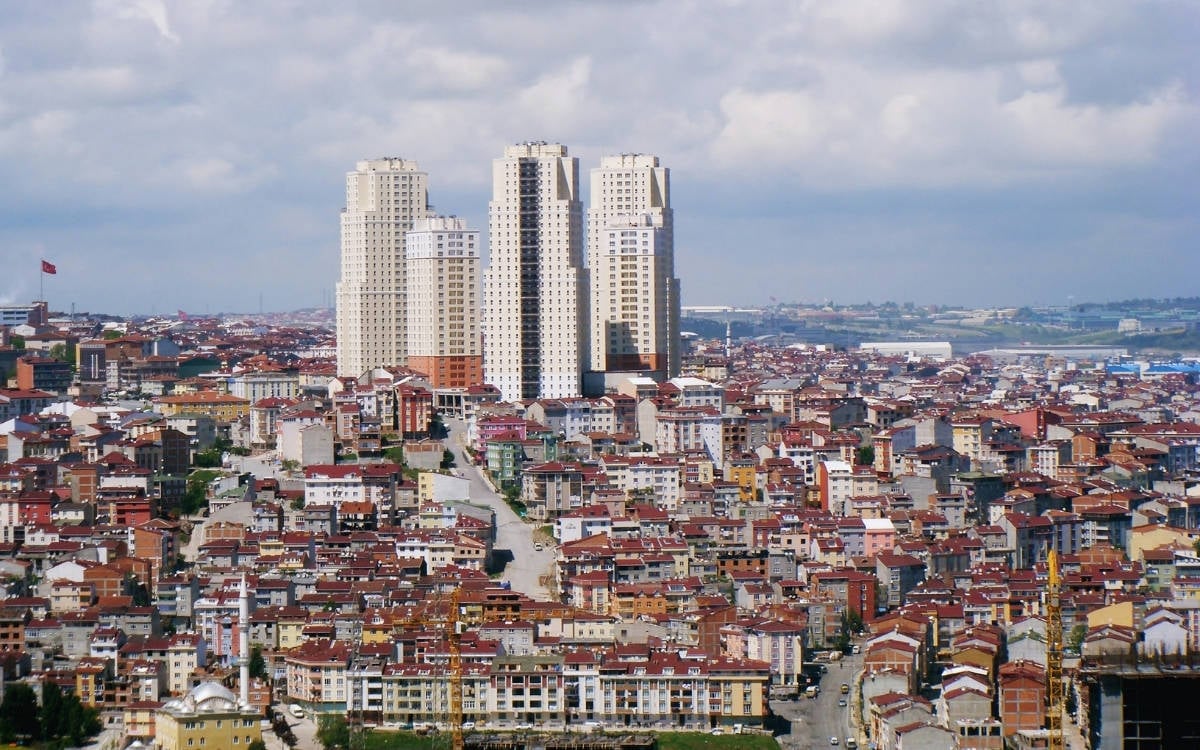
"Especially due to endless construction, urban transformation projects, and the mosque project planned for the Rıhtım, the center of Kadıköy has turned into a giant construction site," Hülya said.
Hülya added that the main square is currently covered in dust and has low tree density.
"Although we haven't experienced the scorching heat of summer yet, you can feel the heat rising from the asphalt and hitting your face," Hülya said. "I worry when I think of the elderly, children, and stray animals. Of course, there are also districts that do not have access to green space even limitedly like us."
Data from the Turkish Statistical Institute (TurkStat) from 2023 shows that socioeconomic levels in İstanbul closely align with the distribution of green spaces.
Classes of green and grey
While the forested Beykoz district on the city's outskirts has between 37 and 189 square meters of green space per capita, the lower-income district of Esenler has only 0.6 to 3.48 square meters.
Other disadvantaged areas with low green space include Zeytinburnu, Gaziosmanpaşa, and Bağcılar. Residents in these districts often lack cooling infrastructure and investments.
Turkish law mandates 15 square meters of green space per person. The İstanbul Green Space Management System Strategy Document aims to reach this target across the city by 2050.
The lack of vegetation worsens the urban heat island effect, a microclimate phenomenon where cities become warmer than surrounding rural areas.
Asphalt, concrete, and buildings absorb solar radiation and slowly release heat, even at night. Reduced airflow from dense buildings, vehicle traffic, and waste heat from air conditioners further elevate urban temperatures.