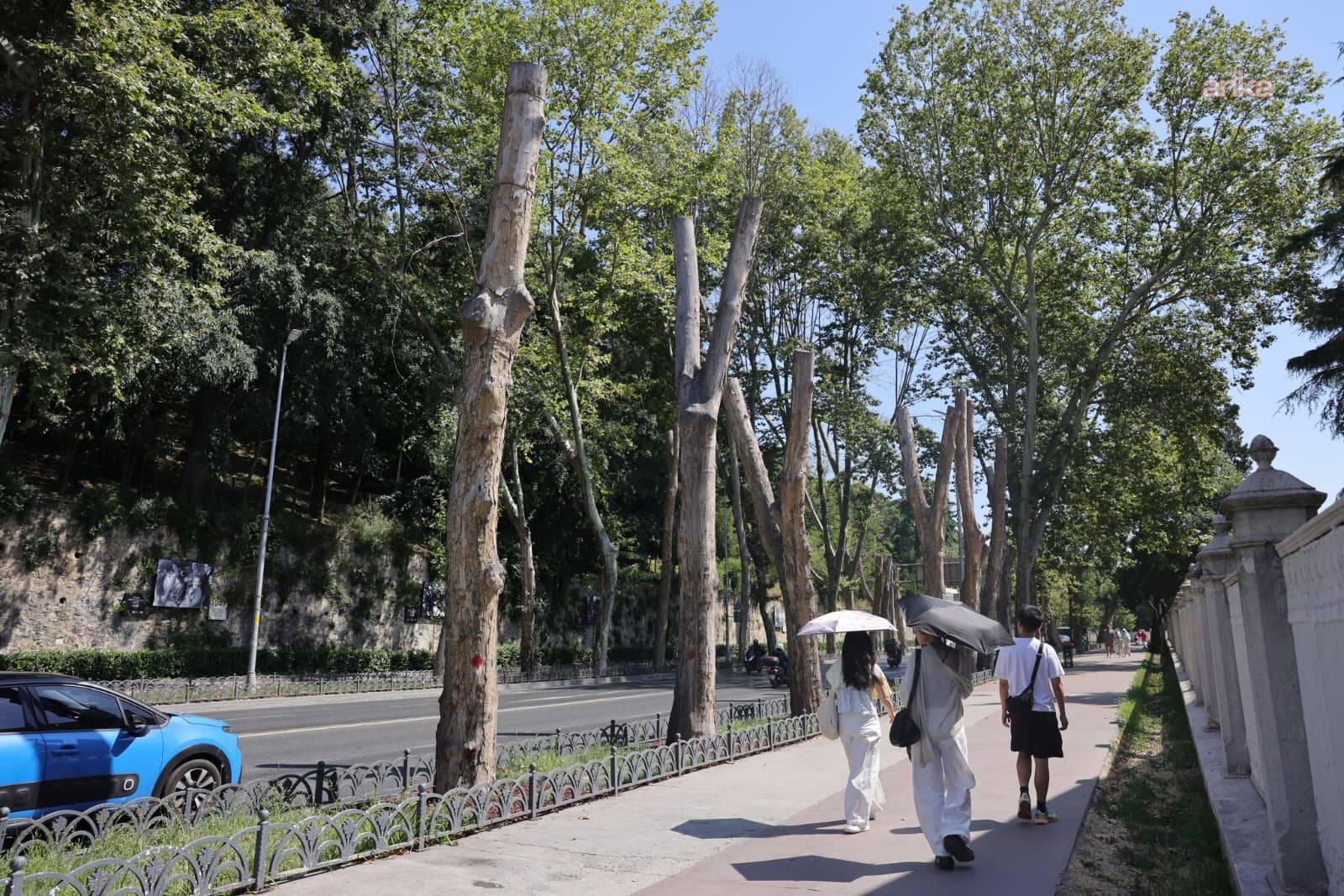

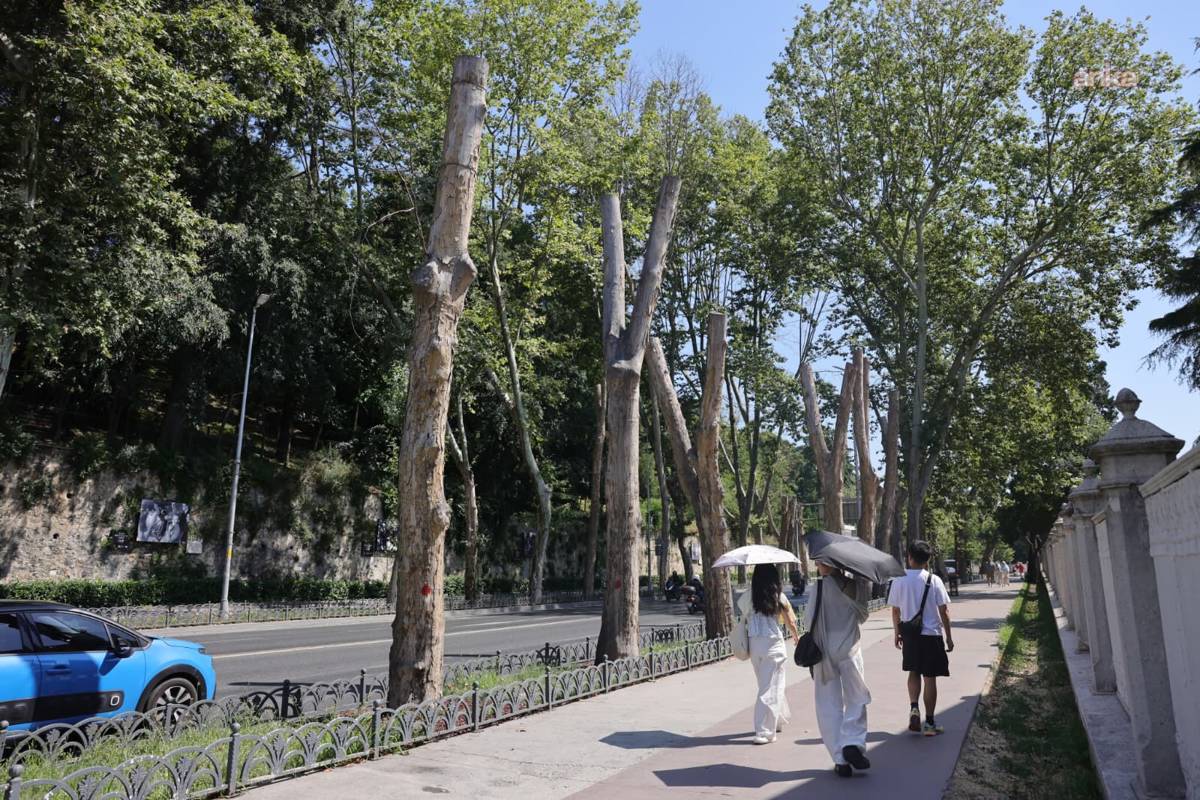



The plane trees, known as çınar in Turkish, that line Çırağan Avenue between Ortaköy and Beşiktaş along the Bosphorus are nearly twice as old as the Republic of Turkey and have been a fixture in the lives of local residents for generations.
The nearly 200-year old trees have witnessed the development of the avenue from a lush shoreline into the urbanized, historic area it is today. They’ve seen İstanbul’s elite move in and out of iconic yalılar (waterfront mansions), the founding of Kabataş High School and Bahçesehir University, and the avenue’s transformation into one of the first asphalt streets in İstanbul. They’ve witnessed the initial construction, closing and conversion, of the stone and marble Çırağan Palace into the Çırağan Palace Kempinski Hotel of today.
Now their death, caused by an irreversible disease, has upset many İstanbul residents who will miss the shaded route they once knew, one formerly shared by Ottoman royalty.
The plane trees have fallen victim to plane canker, a fatal fungal disease.
İstanbul University-Cerrahpaşa soil science and ecology professor Doğanay Tolunay said the loss of trees “has not only impacted İstanbul residents, but also nature lovers throughout the country.”
“The historical plane trees are as monumental as the palaces in İstanbul, and their deaths sadden everyone” he added.
Municipality is replacing dead trees


The İstanbul Metropolitan Municipality said in a Jul 22 statement that it is cutting dead and dried out trees in a continuation of its efforts against the Plane Tree Canker, which began with its initial detection in 2009 and first intervention in 2012.
The statement clarified that no intervention was made on living trees. Pruning operations to reduce the canopy load were carried out in June and July 2025 in order to stop the spread of the disease and ensure safety for passing vehicles and pedestrians.
The statement also stressed that the disease is a global problem with no known cure. It was first identified in the United States in the 1920s and since then spread to many coastal European cities, including İstanbul.
The municipality intends to complete the renewal and transformation works on standing and dead trees affected by spreading Sycamore Canker by the end of 2026.
Causes of the spread of the disease
According to Tolunay, the drying up of the plane trees was first and foremost caused by the Ceratocystis platani fungus, rather than any specific action done by the municipality. Heavy pruning or improper care did not directly cause the plane trees to dry out.
However, practices such as lack of awareness of the fungus, failure to observe quarantine measures, transportation of pruning waste, and failure to disinfect pruning tools may have led to the spread of fungal spores and their infection of healthy trees.
A 2024 statement from the Foundation for the Protection and Promotion of the Environment and Cultural Heritage (ÇEKÜL) about the disease also said that lack of maintenance in itself does not cause disease. Once the disease enters a tree, it spreads to the environment through unconscious interventions, primarily pruning, as well as through birds and certain insects. Measures should be taken to prevent its spread, but an infected tree cannot be revived.
“Once the disease is detected, whether or not maintenance was performed is irrelevant, as the diseased tree already carries the fungus in its roots and soil,” the report said.
Energy and climate expert Önder Algedik believes that the municipality could have taken a more proactive role to prevent such tragedies.
“First of all, these trees are part of the city ecosystem, so they are part of municipal services and municipalities should care for them,” said Algedik. “If they care, if they allocate proper expertise and if they form proper policies, we wouldn't have such a problem.”
The blame game
The issue has been brought again into the public light due to municipal cutting operations and viral social media posts by Hilmi Türkmen, an executive member of the ruling Justice and Development Party's (AKP) and the former mayor of İstanbul's Üsküdar district, who blamed the opposition-controlled municipality for the loss of trees.
“Where are those who tore the country apart over moving three trees in Gezi Park?” he wrote, referring to the countrywide anti-government protests in 2013, which were ignited after the government's attempt to dislodge the trees in İstanbul's Gezi Park to build a shopping center there.
Both Algedik and Tolunay stressed the bipartisan nature of the issue and how its politicization is both inaccurate and harmful.
Algedik argues that both parties have presided over the poor management of the city’s urban greenery.
“They are blaming each other … because when AKP comes they are going to do the same thing, and when CHP comes they are going to do the same thing — the problem is opposition, the other side, not the problem,” Algedik said.
“Politicizing the issue overlooks the rapidly spreading invasive species and diseases, especially in today's world, fueled by globalization,” Tolunay said. “Increasing the capacity of municipalities, regardless of whether they are from the ruling party or opposition, to manage diseases, pests, and the care of urban trees is also a very urgent matter."
Tolunay believes that quarantine measures on imports in Turkey are not being strictly enforced and this needs to change to prevent future plant disease outbreaks.
How to recover?
Replacing the trees remains a challenging task. Tolunay warned that even if the plane trees are cut down, as the municipality is doing, fungal spores may still be present in the soil, making it highly likely the newly planted plane trees will also contract the disease.
Tolunay said there are two options: The first is to use plane tree varieties being cultivated abroad that are more resistant to the cankers, but even this still has a high possibility of them contracting the disease. The second is to replace the trees with other common İstanbul species such as magnolia, redbud and linden. However, regardless of the method it will take 5-10 years for re-planted trees to grow and become fully developed even if tall saplings are used. (İK/VK)