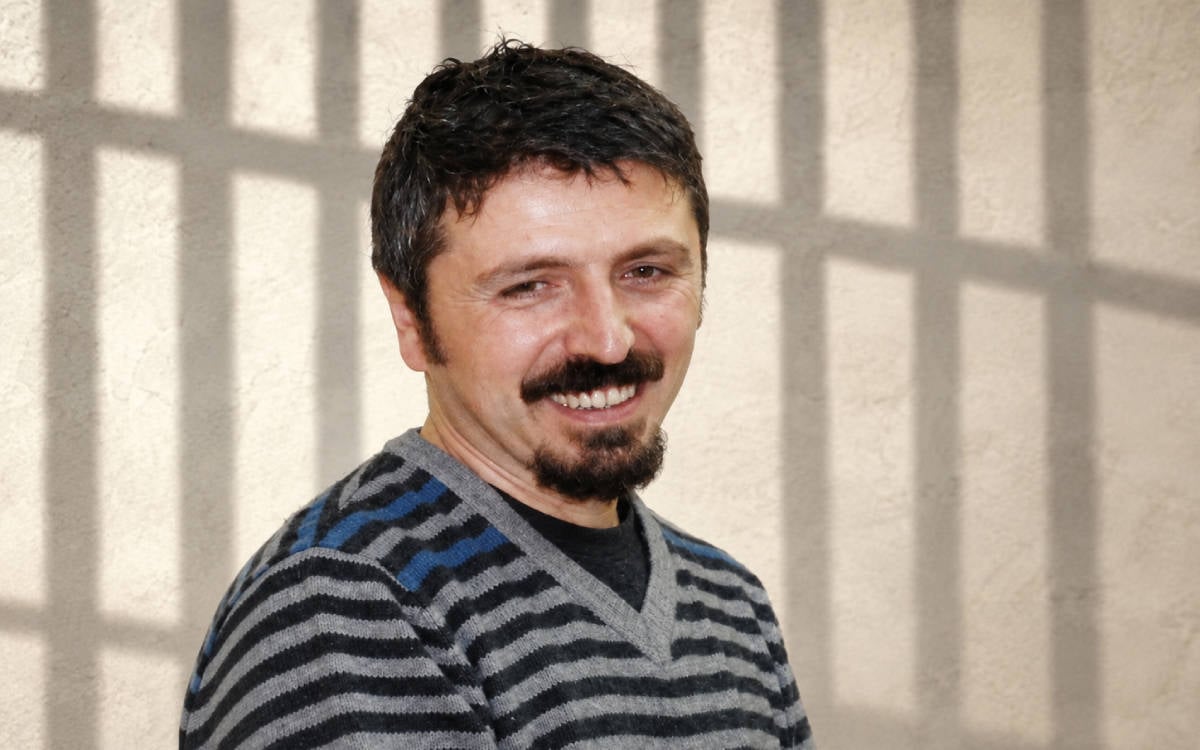











An İstanbul court has ordered Dr. Bülent Şık, a food engineer and columnist, alongside bianet and Gerçek Gündem news outlet, to pay damages following a lawsuit filed by a herbal products company.
The İstanbul Anadolu 2nd Intellectual and Industrial Property Rights Penal Court ruled today that Şık’s articles and social media posts, which warned of health risks associated with certain bee and herbal products, constituted "unfair competition" against SBS Bilimsel Bio Çözümler Sanayi ve Ticaret A.Ş., the company that owns the BEE'O trademark.
bianet was among the defendants because of publishing Şık's articles and Gerçek Gündem of covering the dispute between Şık and the company.
The court ordered the defendants to pay 50,000 liras in material damages and a symbolic 1 lira in moral damages.
The court also ruled that commercial interest would be applied to the fine starting from May 2022 and ordered the removal of the articles and posts in question.
The dispute
The dispute dates back to Sep 2021, when Şık's article titled "Honey and pollen may pose health risks for children" was published on bianet.
In the article addressing the widespread use of herbal products during the Covid-19 pandemic, Şık argued that marketing products like pollen, herbal teas, and oregano water as "natural" or "traditional" does not automatically guarantee safety, due to the possible presence of toxic pyrrolizidine alkaloids in products.
Although the article did not name any firm, BEE’O sent a formal letter to bianet requesting the removal of the piece, which was not complied with.
The legal dispute expanded in May 2022 after Şık alleged on social media that the food product review website Gıda Dedektifi was running undisclosed advertisements for BEE’O. The website had previously been fined for such advertisement activities.
Gıda Dedektifi and BEE'O responded Şık's allegations, accusing him of creating a negative perception for the brand. BEE'O released analysis results of certain products, which showed no pyrrolizidine alkaloids were detected in the tested items.
In response, Şık wrote an article on bianet titled "Answer to Gıda Dedektifi and BEE'O firm." He argued that the promotional texts on the site were misleading and that the analysis reports published by BEE’O in response to his claims did not mean that production processes were transparent.
After this article was published, the company sued Şık, bianet, and the Gerçek Gündem news outlet, which had reported on the dispute.
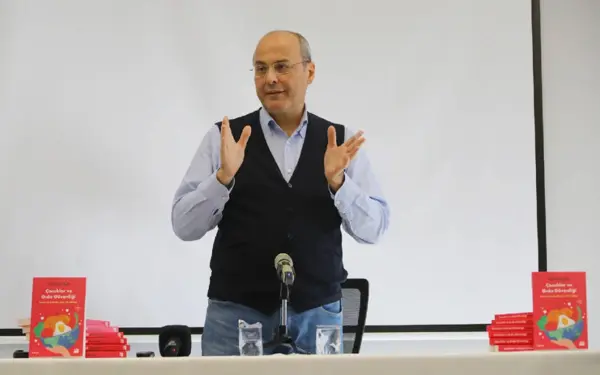
Researcher Bülent Şık acquitted in trial for revealing ministry's cancer data
The hearing
During the hearing, Büşra Özdemir, the company's lawyer, demanded Şık be sentenced, arguing that his intention was to defame the company.
Şık’s lawyer, Abbas Yalçın, argued for the dismissal of the case. "My client wrote these articles with the aim of protecting public health and child health," Yalçın said.
Lawyer Bilge Batur, representing Gerçek Gündem, stated that reporting on matters of public health is in the public interest and did not constitute a violation.
The court, without issuing a break, sentenced the defendants, partially accepting the complaining party's requests.
The justified decision will be released in the coming days. The defending side will appeal the decision.
'Punishment of public health'
Speaking to journalists after the hearing, Şık criticized the ruling., describing it as "punishment of public health."
Şık noted that during his time on the Turkish Medical Association (TTB) pandemic committee, he observed a rise in herbal products being marketed with claims that they "fight the virus" or "strengthen immunity."
Şık said in his articles on bianet, he had specifically warned about toxic compounds called pyrrolizidine alkaloids found in pollen and honey, which can have toxic effects on the liver. He emphasized that risks are higher for children, pregnant women, the elderly, and those with chronic illnesses.
"We are not saying companies should not produce products," Şık stated. "If a product has the potential to cause health harm, especially for sensitive groups, it is the most natural right of consumers to know this."
Şık also highlighted a lack of regulation in Turkey regarding the marketing of bee products to children. He noted that while European authorities conduct national screenings for toxic compounds in such products, Turkey lacks sufficient oversight.
"Products that should not be sold to small children are recommended on websites. There is no regulation or control over this," he said.
Demonstration in support of Şık outside courthouse
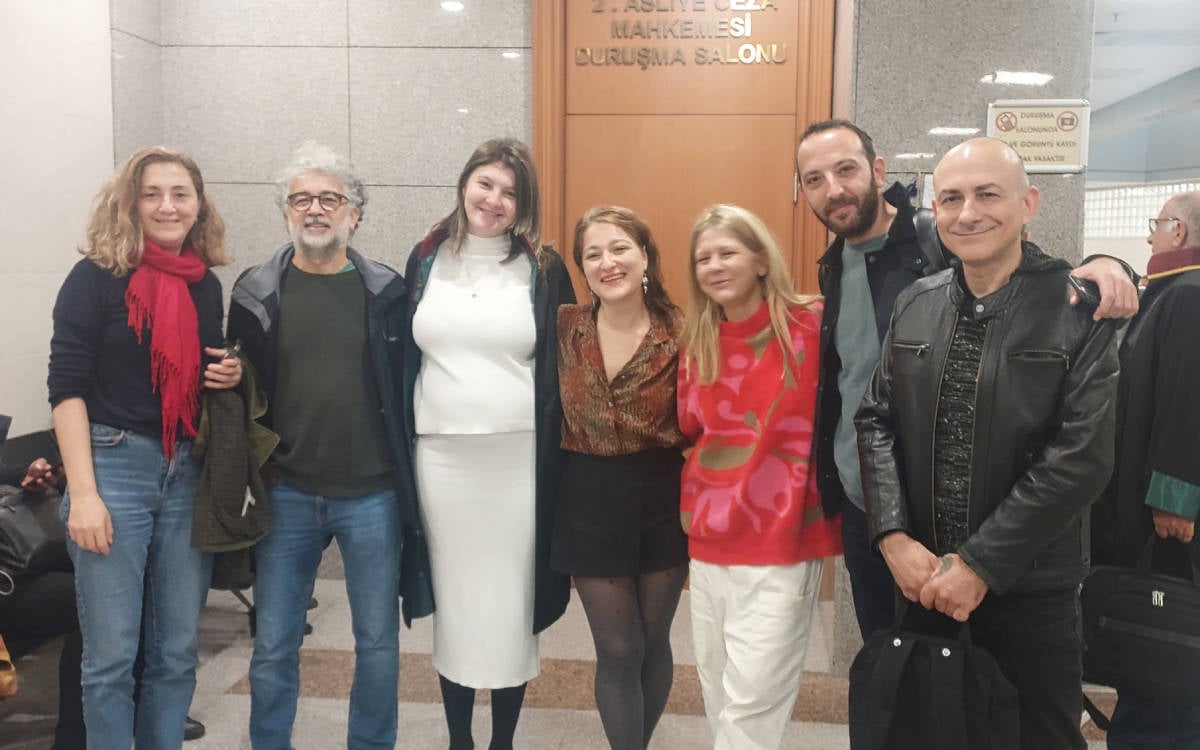
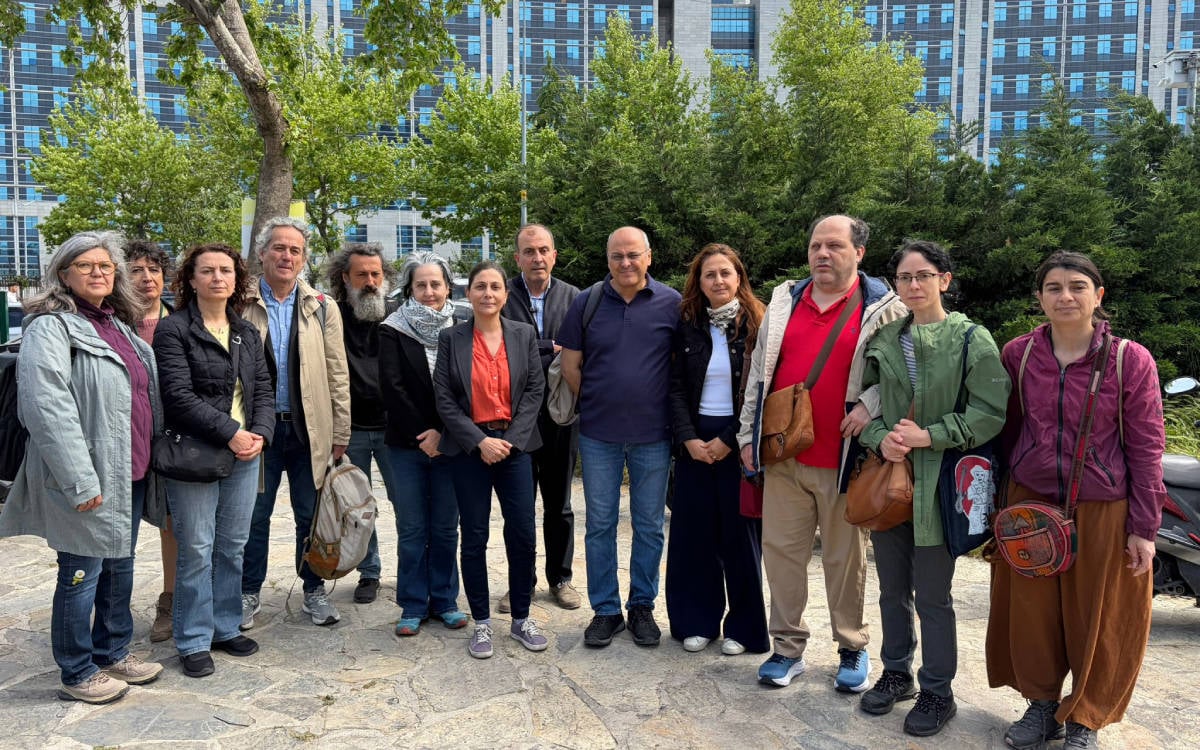
Before the hearing, academics, journalists, and representatives of professional organizations gathered in front of the courthouse to support Bülent Şık.
Making a statement on behalf of the group, academic Aslı Odman said that Şık’s articles did not aim for commercial competition, but rather intended to inform the public in line with scientific research and the precautionary principle:
"Shortly, we will enter the decision hearing at the Intellectual and Industrial Property Rights Civil Court to defend Dr. Bülent Şık, who exercises freedom of expression for science in the interest of public health. The fact that the company filing the lawsuit is based in a scientific institution, İTÜ Arı Teknokent, makes the existence of this case, which has a restrictive effect on academic and freedom of expression, utterly tragicomic.
"Therefore, today, against the 'trademark rights' claimed to be damaged in this court, we will defend the public's right to be informed about risks and the freedom of scientific activities conducted in this line.
"Indeed, the most critical point in the case from a public science/public health perspective is this: By converting scientific-public criticism into economic damage, the plaintiff is placing public debate in the field of food safety under the risk of a deterrent compensation. This situation may create a chilling effect on scientists and journalists.
"Bülent Şık’s articles are public warnings based on scientific literature, the precautionary principle, the obligation to protect child health, and the consumer's right to full information, without the aim of commercial competition or brand defamation. Punishing these articles or suppressing them with the threat of high compensation damages not only Bülent Şık’s freedom of expression but also the society’s right to information regarding food safety.
"As a matter of fact, after Bülent Şık’s articles pointing out risks, warning the public, and inviting public authorities to do their duty, the Company removed phrases on various sales platforms regarding feeding pollen to infants under the age of two, which did not comply with the Regulation on Supplementary Foods and the 2024 restrictions on the sale of bee products to children under two. They also began conducting pollen analyses that did not exist on their website before and started sharing their reports. This alone is enough to show that Bülent Şık’s warnings were effective and appropriate.
"Today, it is not just a scientist being sued; it is the public’s right to receive information about products that carry health risks.
"We did not find our health, our right to information, or our academic and expressive freedoms in the market, and we will not surrender them to the market. As professional, scientific, consumer organizations, and ecology movements, we will follow this silencing case to the end, spread information step by step, and continue to defend scientific activity for the public benefit."
(HA/VK)