





Exhibition marks 65th anniversary of Turkey-Germany labor agreement




The exhibition Love, Deutsche Marks, and Death opened at Depo in İstanbul on May 8. Organized by the Berlin-based Maxim Gorki Theater in collaboration with Anadolu Kültür and the Goethe-Institut Istanbul, the selection will remain open to visitors until Jun 27.
The exhibition focuses on the 65th anniversary of labor migration from Turkey to Germany, which began in 1961. Centering on the experiences of migrants referred to as Almancılar in Turkish, which literally translates to "Germaners," the collection was brought to İstanbul as a thematic compilation from the seventh edition of the Berliner Herbstsalon (2025).
Curated by Shermin Langhoff, the exhibition features a wide range of artists, including Gülsün Karamustafa, Emine Sevgi Özdamar, and Harun Farocki.
Artists: Nevin Aladağ, Züli Aladağ, Cana Bilir-Meier, Zühal Bilir-Meier, Nihan Devecioğlu, Ahu Dural, Semra Ertan, Harun Farocki ve Antje Ehmann, Gülsün Karamustafa, Daniel Knorr, Melek Konukman-Tulgan, Hakan Savaş Mican, Ersan Mondtag, İrfan Önürmen, Emine Sevgi Özdamar, Ülkü Süngün, Filiz Taşkın, Serpil Yeter, Želimir Žilnik
Program: Özlem Sarıyıldız, Isa Andreu, Hannelore Schäfer, Detlef Zuther, Andrea Schmidt, Uwe Gawron
65th anniversary
Asena Günal, chair of the board of Anadolu Kültür, expressed her satisfaction with bringing the selection to Turkey.
"I saw this exhibition at the Maxim Gorki Theater in Berlin and was very impressed. I am very happy that a thematic section from that selection is now at Depo," Günal said at the opening.
She noted that Depo previously hosted an exhibition for the 60th anniversary of migration and is now hosting Love, Deutsche Marks, and Death for the 65th anniversary.
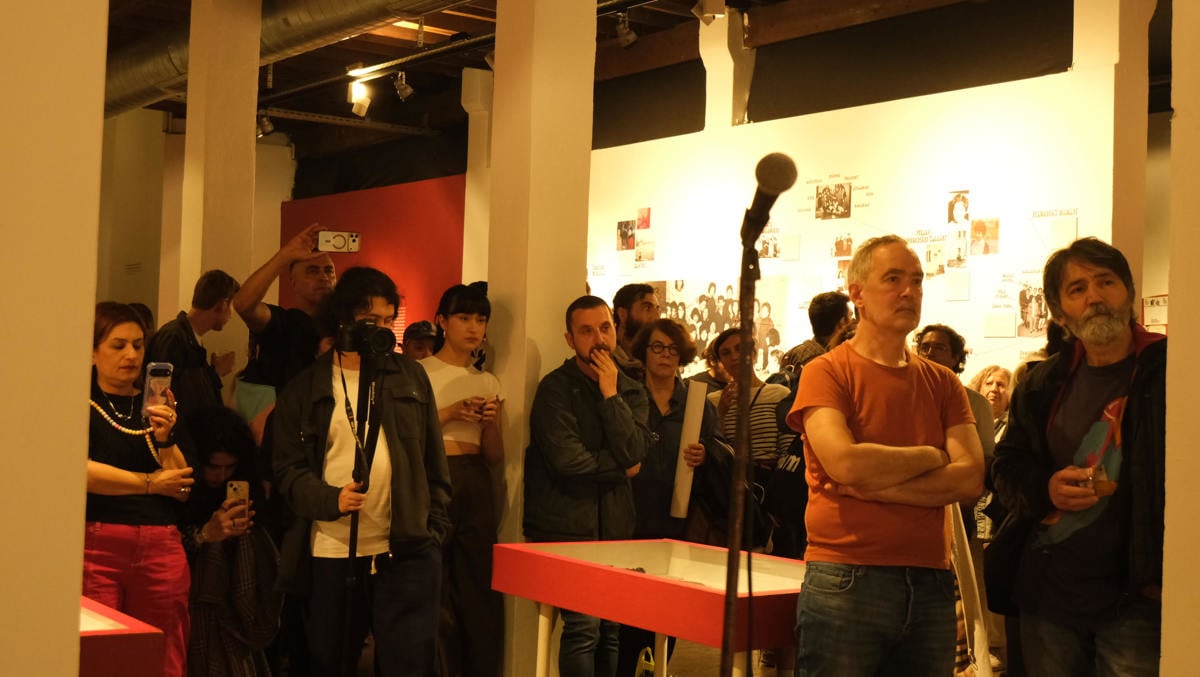
Curatorial team member Erden Kosova stated that the project is based on a long-term research process. Kosova said the exhibition highlights not only economic migration but also the desire of women to escape patriarchy, conservatism, and social pressure.
"We made this exhibition to make visible the long stories and labor of young women who decided to go to Germany in their youth to shape their own lives through their own labor," Kosova said.
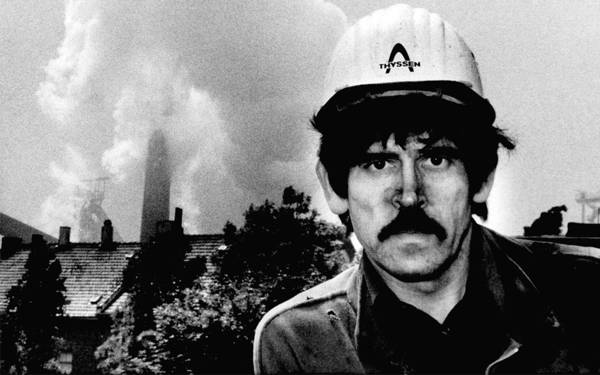
Undercover as a Turkish guest worker
He added that many moved not just for economic reasons, but because "they were tired of tradition and conservatism, wanted to move away from their environment, or wanted to live their freedom and sexuality."
The exhibition title is derived from a 1982 song of the same name by Ideal, a prominent band of the Neue Deutsche Welle. The lyrics were written by poet and author Aras Ören, whose 1982 poem addressed the disappointments and rising xenophobia migrants faced in daily life.
Gülsün Karamustafa’s May Day poster
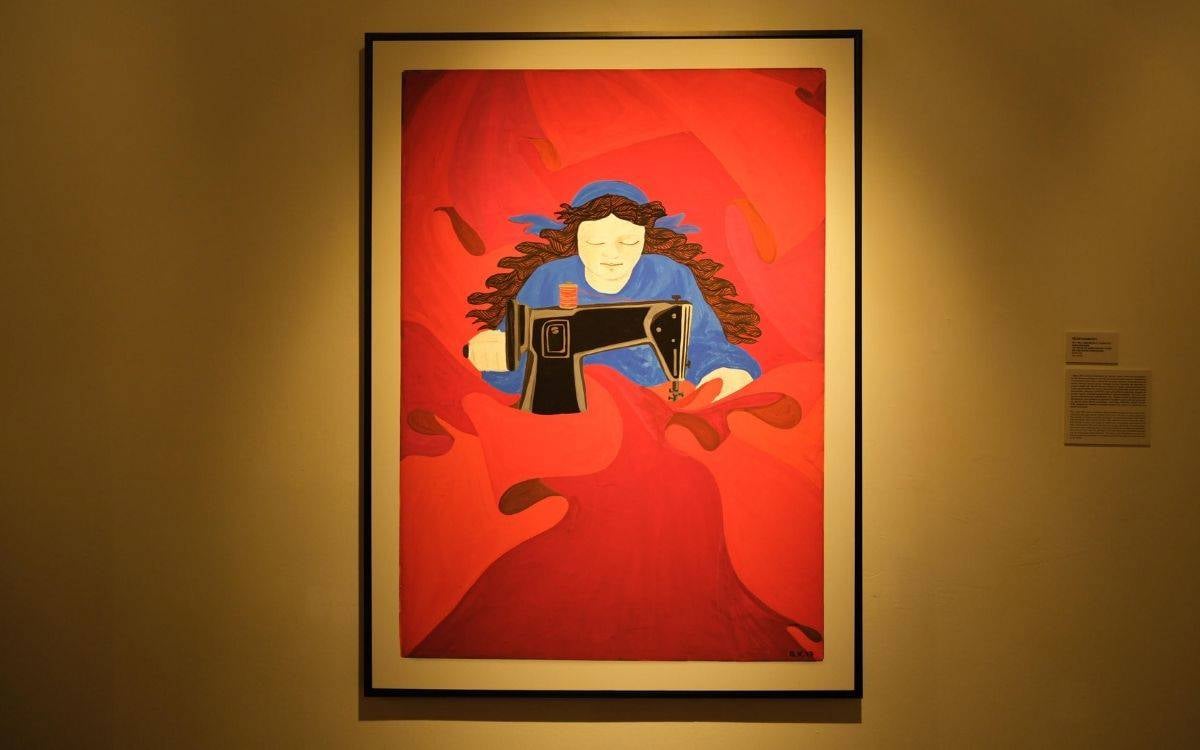
The exhibition also features Gülsün Karamustafa’s 1977 poster titled 1977 May 1 (Woman Constantly Sewing Red Flags with a Sewing Machine). The work references the Labor Day march in İstanbul on May 1, 1977, where an attack killed 34 people. Karamustafa’s poster, originally designed for the march but not used, focuses on the often-invisible role of women in social struggles, challenging the masculine proletarian imagery dominant at the time.
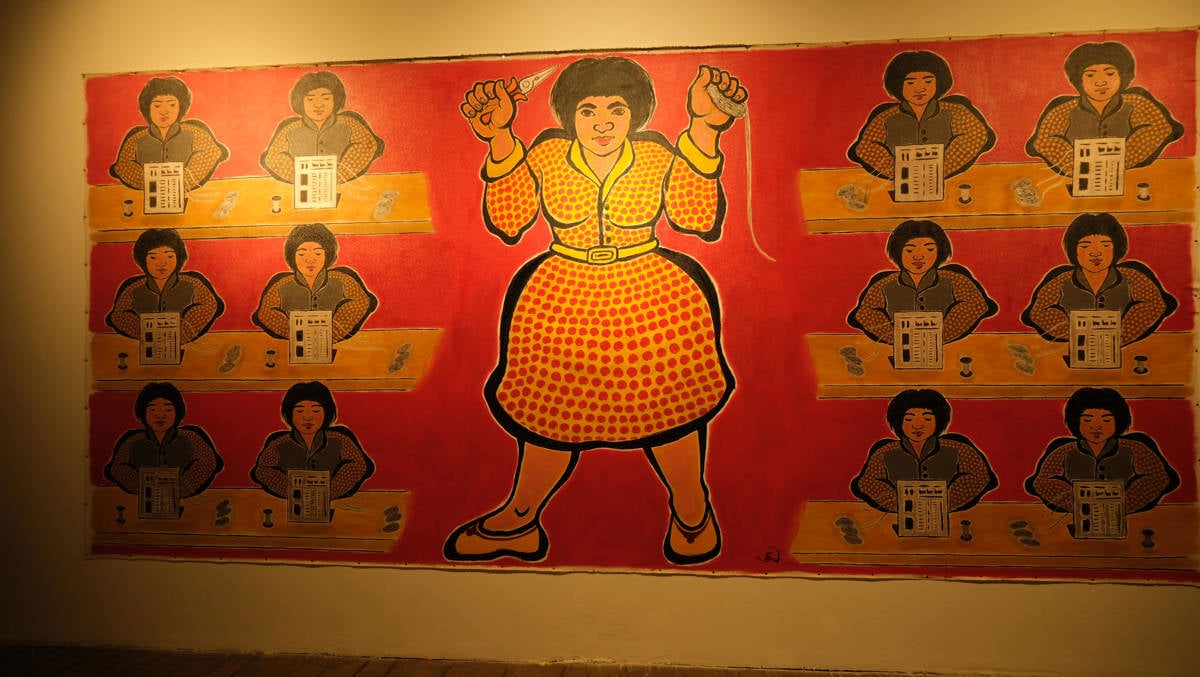
Another featured work, Serpil Yeter’s Our Work is Our Strength, focuses on the labor of migrant women. The central figure represents the first generation of female workers who moved to Germany. The exhibition notes highlight that women with high manual skills were among the first workers invited to Berlin, and the work explores their experiences of building independent lives in a foreign country.
The exhibition program includes film screenings, artist talks, and curatorial tours throughout May. On May 10, artist Cana Bilir-Meier participated in a talk moderated by Kosova. Guided tours in Turkish and English will be held on May 10, 12, 14, and 15. (ZA/EMK/VK)

bianet Nisan 2026 stajyeri. Mimar Sinan Güzel Sanatlar Üniversitesi Sosyoloji Bölümü öğrencisi. Asosyoloji Dergi editörü.