



The exhibition titled “Breaking Through a Dam” opened to visitors at Salt Beyoğlu on Apr 22. The exhibition examines the relationships between land, memory and archive across a broad geography stretching from the Eastern Mediterranean to the Gulf region.
It also takes its name from human rights lawyer Noura Erakat’s words, “We are breaking through the dam; keep fighting.”
Organized by Salt, the exhibition opens up for discussion an idea of “yerdeşlik” (being with the place) that goes beyond colonial practices through the works produced by the artists.
The exhibition’s programmer, Gülce Özkara, said the starting point of the exhibition was based on the conceptual inquiries she developed during her doctoral work. Özkara said that while thinking about the relationship between land and archive, the question “Can we approach land as a memory or an archive?” was decisive.
Özkara said the concept of “land” expanded during the process, noting that she initially set out from the concept of “landscape,” but that the fact that it could not be translated directly into Turkish and Arabic opened up new areas of thought. Özkara said the concept of “being with the place,” developed as a result of these discussions, formed the exhibition’s basic framework, and stated that the concept expresses a state of “existing together with place”:
“Yerdeşlik refers to becoming one with the ground, existing together with it and the relationship established with it. We translated it into English as ‘being with the place.’ This state of unity established with place, with land, sometimes with landscape, sometimes with scenery, formed the exhibition’s main intellectual framework. I would particularly like to emphasize this: Rather than determining certain concepts in advance and following them, this exhibition developed through the works I encountered and the dialogues I established with the artists. I centered what the artists were saying and what we could learn from them in this process.”
The work that gives the exhibition its name: “What Seeps Through the Crack and Return”
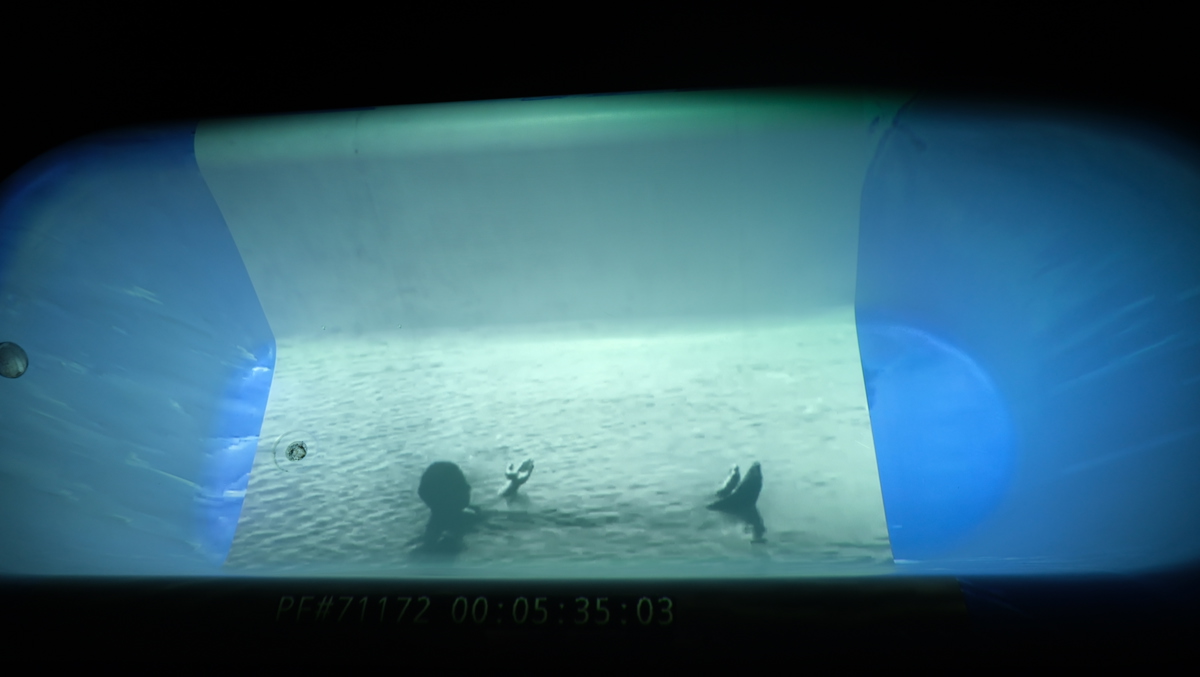
The work that gives the exhibition its name is artist Dima Srouji’s video work titled “What Seeps Through the Crack and Return.” The work addresses loss, mourning and intergenerational trauma embedded in Palestinians’ collective memory, together with an imagination of healing and liberation.
In the work, archival footage of the Nakba flows backward and is superimposed with the image of water seeping from a cracked dam. This visual construction highlights water’s revitalizing power against the destructive impact of infrastructures. The work also refers to Noura Erakat’s words, “We are breaking through the dam; keep fighting.” The work holds an important place in the exhibition’s conceptual framework:
“The exhibition treats infrastructures not only as a tool, but also as a space of resistance and struggle. We had talked about thinking of the ground as a shared place, as a state of togetherness. We set out with the question of whether it is possible to transform these infrastructures into another way of thinking, into another way of establishing a relationship with land.”
What seeps from the archive: Memory and transformation along the Euphrates and Keban line
The “What Seeps from the Archive” section of the exhibition makes visible different imaginaries shaped around the Euphrates River and the Keban Dam.
These archival materials are accompanied by works by artist Aslıhan Demirtaş that address the geographical and social effects of dams. Demirtaş’s interview with Süleyman Demirel, known as the “king of dams,” reveals the developmentalist discourse of the period and its understanding of intervention in nature.
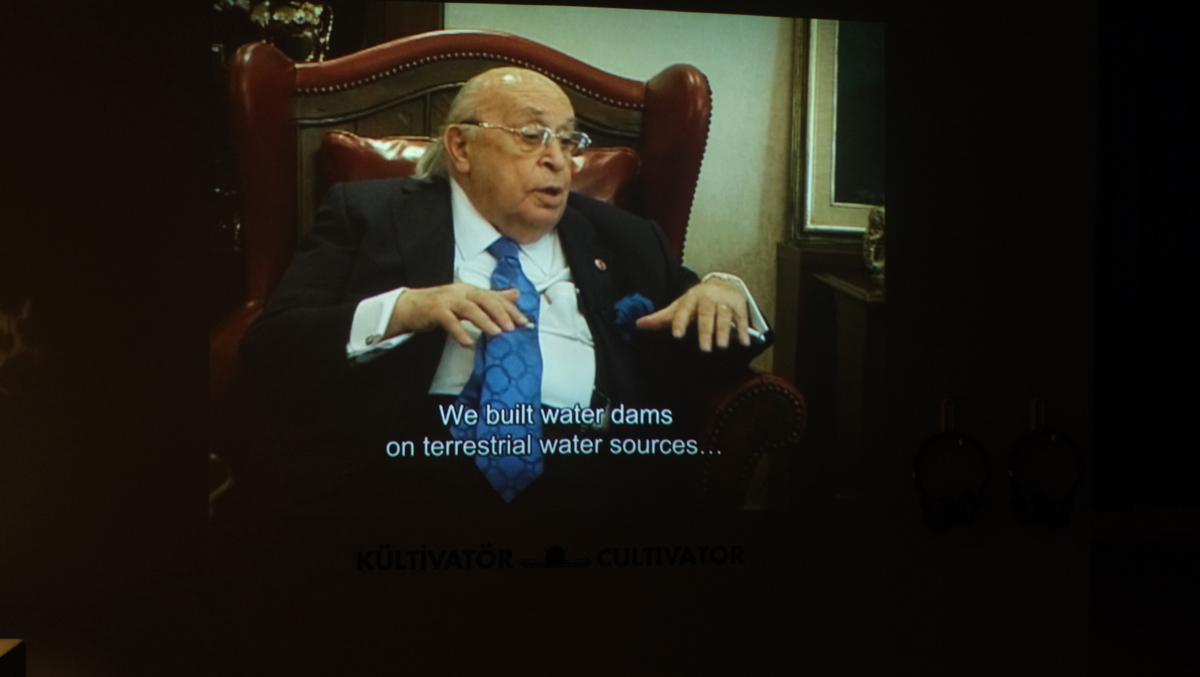
Demirtaş’s works, based on her long-term research, examine dam policies in Turkey from a historical perspective. The work titled “Payidar,” included in the exhibition, addresses the possibility of nature reopening space for itself in geographies interrupted by dam projects.
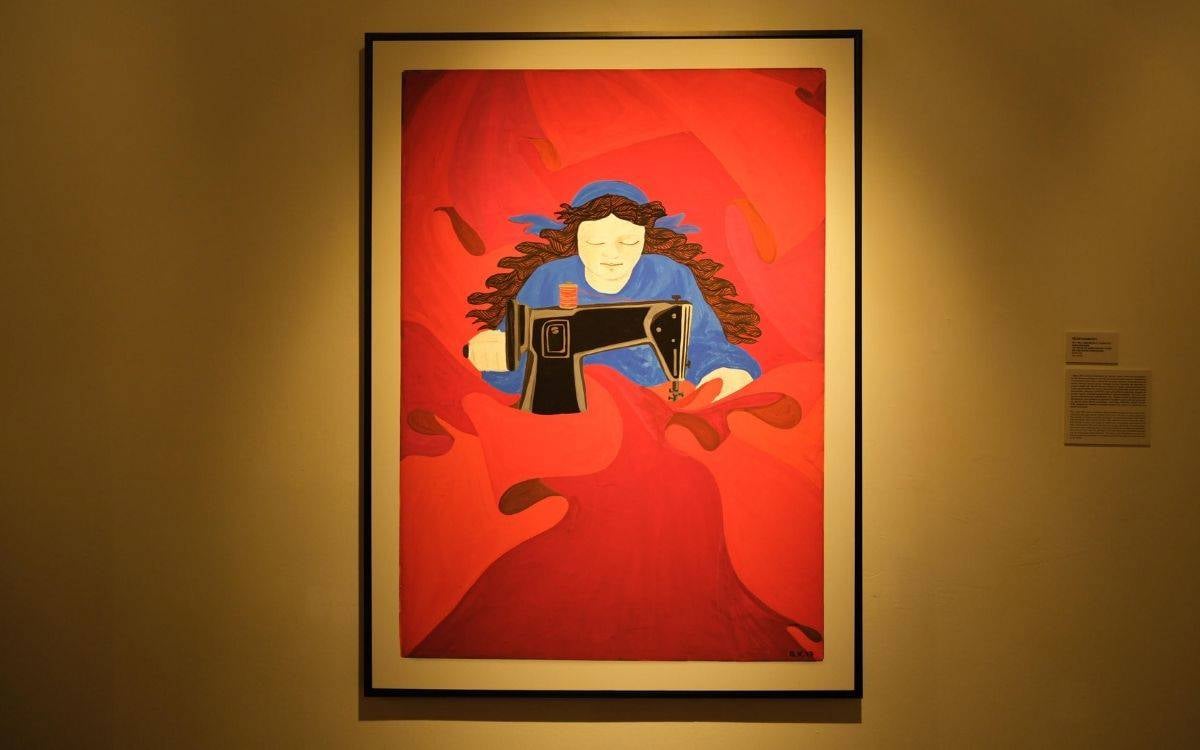
The section also includes Gülce Özkara’s personal memory. The landscape painting included in the narrative carries into the exhibition a sense of belonging established with the Euphrates basin, creating a connection:
“Because I thought a great deal about the idea of ‘seepage’ in this exhibition, a personal layer also became part of the archive. A landscape painting made by my grandmother also seeps into this space. The reason I am interested in the Euphrates River and the Keban Dam is that my grandmother’s village is located in that basin. Having witnessed the transformation of this geography and this landscape painting that was always in my grandmother’s house became an important reference for me. On one side, there is an imagination of domination and transformation established through infrastructures, and on the other, there is my grandmother’s approach, which associates the Euphrates River with belonging, roots and homeland.”
The migrant experience and the reconstruction of belonging
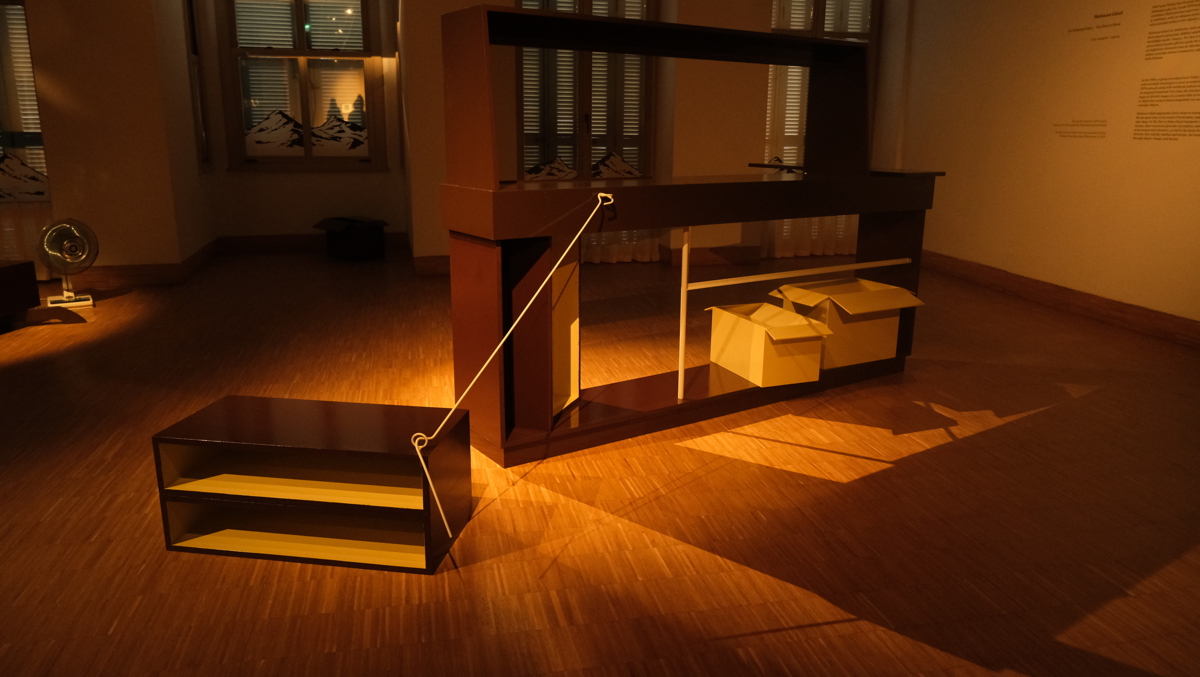
Another notable work in the exhibition is Metincan Güzel’s Too Close to Home. The work focuses on the experiences of workers from Turkey who migrated to the Netherlands beginning in the 1960s. Labor migration, initially conceived as a temporary work process, became permanent with the deepening economic crises of the 1970s and political transformations in Turkey. In this process, the shops established by migrants began to be shaped by images of a “homeland” that no longer existed or perhaps had never existed.
The artist says the work questions the ways migrant spaces are produced and how they reconstruct a sense of belonging. Using visual arrangements inspired by coffeehouses in Rotterdam, the work makes visible the relationship between far and near, familiar and foreign.
The exhibition brings together works by 15 artists
The “Breaking Through a Dam” exhibition brings together works by 15 artists from different disciplines. The exhibition features works by Haig Aivazian, Monira Al Qadiri, Al-Wah’at Collective, Mehmet Ali Boran, Can Candan, Aslıhan Demirtaş, Alia Farid, Metincan Güzel, Emre Hüner, Evrim Kaya, Yelta Köm, Fredj Moussa, Dima Srouji, Aslı Uludağ and Merve Ünsal.
The exhibition’s design and production were carried out by Emirhan Altuner. Ezgi Yurteri edited the exhibition, while the English translations were done by Çağla Özbek. Fulya Aras served as design and production assistant.
The exhibition was realized with the support of the Kingdom of the Netherlands and Feltouch, and with contributions from Asya International Movers, Bankerhan Hotel, Eureko Sigorta and Jotun.
The exhibition can be visited free of charge at Salt Beyoğlu until Aug 23. (ZO/HA/VK)