







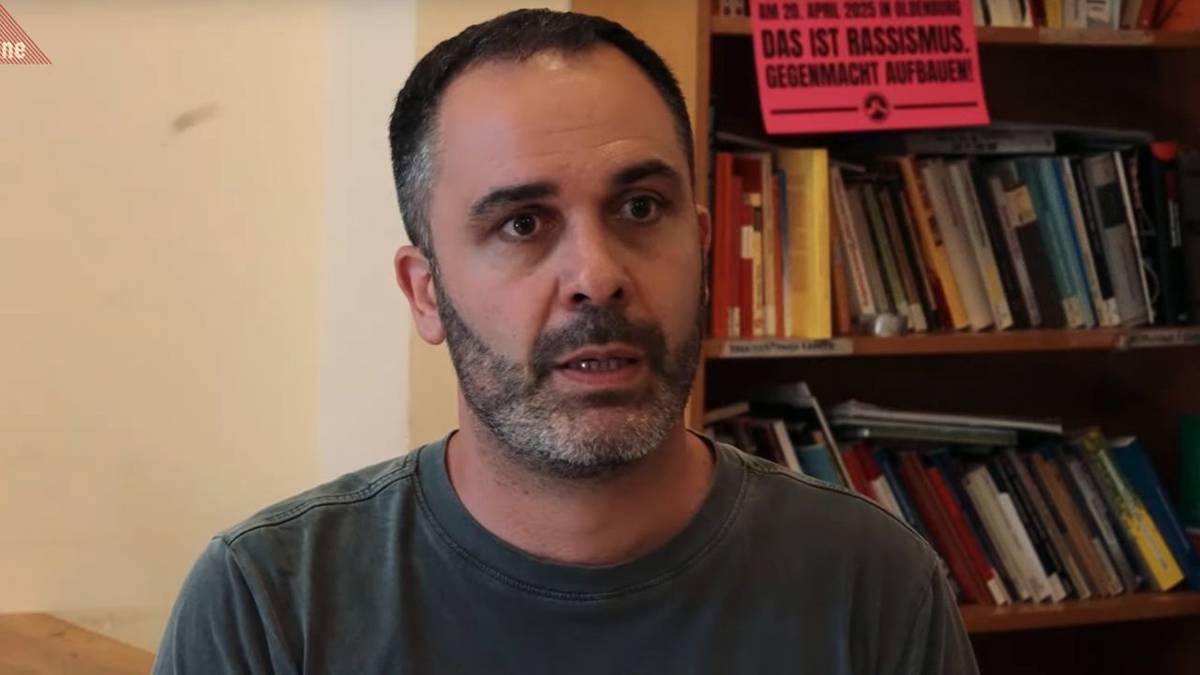



Those who offer Hüseyin Doğru money, food or even a bottle of water could find themselves in prison for up to 10 years under German law, including his wife, whose accounts were frozen by the Central Office for Sanctions Enforcement (ZfS) last Friday.
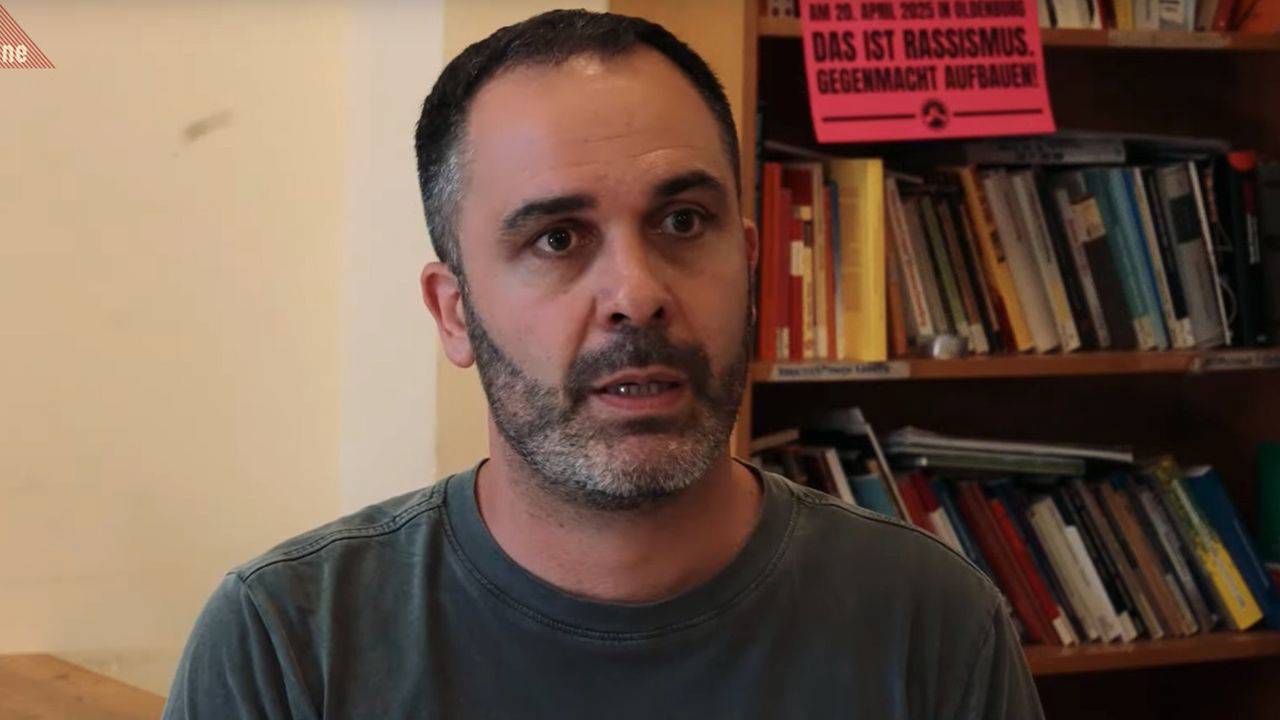
The German journalist and founder of red.media has been under European Union (EU) sanctions since May 2025 over what he says is his reporting about the genocide in Palestine and Germany’s role. Doğru must now find a way to keep himself, his wife, two newborn infants and a seven-year-old child alive with just about 60 euros to his name.
Coverage of protests cited as evidence for 'Russia ties'
The EU Council claims Doğru is a Russian disinformation actor, but, according to Doğru, this claim is not based on any clearly demonstrated financial, legal or personal ties, but rather exclusively his reporting itself. Doğru posted a thread of documents on X, outlining evidence against him, confirming that the EU classifies pro-Palestine reporting and social media posts critical of European governments as examples of Russian propaganda.
This is also confirmed by the official EU law website, which directly references coverage of “anti-Israel riots” under Doğru’s case.
One letter from the EU Council stated “RED has used its media platforms ... to systematically spread false information on politically controversial subjects with the intent of creating ethnic, political and religious discord among its predominately German target audience, including by disseminating the narratives of radical Islamic terrorist groups such as Hamas.”
The letter, one of multiple documents which all just quote the official sanctions packet, argue that by publishing information critical of the EU, it must be true that Doğru “thus supports actions by the Government of the Russian Federation.”
Doğru stressed that sanctions are an extrajudicial process, meaning the EU is not under any pressure to present proof that he is, indeed, a Russian disinformation agent.
“There’s no court, no hearing, no nothing — 27 EU foreign ministers come together behind closed doors, they just decide sanctions,” he said.
Despite being born and raised in Germany without any dual-citizenship, the sanctions list Doğru as a Turkish citizen. He believes this is beyond a simple instance of racism, but also a calculated attempt at further denying him his rights.
Prior to being sanctioned, EU citizens are legally entitled to a hearing, a defense and court. By listing him as a Turkish citizen and having the EU sanction him instead of Germany, the German government can avoid legal pushback in German courts, he explained.
The EU Council did not respond immediately for comment.
Life on pause
The sanctions have brought Doğru’s life to a standstill. He is not allowed to work or earn money and his, and now his wife’s, bank accounts have been frozen. Offering the family any sort of assistance, whether that be food, clothing, money or otherwise, is strictly prohibited under EU law.
Doğru lives in Berlin, one of the most expensive cities in Europe, with his wife and three children. Despite this, Doğru is only allowed to survive and raise his family under a 506 euro monthly stipend granted by the German Federal Bank. The average rent for a one-bed room apartment in Berlin is 1,050 euros.
Previously his wife could at least provide for the children under her own income, but she is now “de-facto sanctioned" after the Central Office for Sanctions Enforcement (ZfS) determined her marriage to Doğru indicates he is in control of her finances. They pointed to a joint car insurance payment as proof.
“That’s why they attack my children now, they tried to break me through me, they tried to break me through my wife, now they’re trying to break me by attacking my children, by on purpose putting their life and well being in danger” he said.
Doğru is worried that this situation could escalate into the state taking his children away. Germany has strict child protections allowing the state to take custody when parents are unable to provide for children, but in Doğru’s case, it’s the state that’s actively preventing him from financially supporting his kids. He believes this will be Germany’s next step.
“People are shocked with that, [but] why are you shocked, you’re talking about a country [Germany] that supports another country that on purpose kills babies there in Gaza, why would they be afraid to do the same here in a different way,” he said.
Doğru also lives under a constant fight with a bureaucracy that has no intention of helping him survive. Sanctions are, after all, intended to make his life difficult, if not impossible. Doğru spent weeks playing bureaucratic tag between German courts and the EU after his bank blocked his account access, leaving him without his stipend during that period. When he went to court to pay his telecommunications bill, the court ruled that the bank was under no obligation to unfreeze his account because personal and legal hardships are part of the sanctions process.
“The law can right now be used against me but I don’t have access to the law to defend myself, because they can justify everything with the sanction. I can’t fight it because sanctions are extrajudicial, it’s not possible,” he said.
“Germany says that it has nothing to do with me, go to Europe … The European courts council says … we decided the sanctions, but the negative impact of that is not our problem, that’s your government — you’re like in a loop no one is responsible for nothing.”
An unprecedented case
Doğru’s case is unique because he is perhaps the first EU citizen residing in the EU under sanctions as they are typically designed to target those outside Europe, he said. This adds another challenging dynamic to navigate.
“It represents a precedent case because with me they’re testing how they can turn the sanctions inwards,” he said.
Doğru described Europe as having a “war mentality” due to the wars in both Palestine and Ukraine. He believes this explains Germany’s desire to crush dissent. He has received messages from other journalists who feel terrible about his situation but are scared to discuss it publicly. This fear has led to significant self-censorship.
“If countries wage a war outside they need to wage a war inwards as well to make sure that there is no opposition, and with me they’re trying to create the first precedent case to scare other journalists and it works,” he said.
“There’s also a racist element — I’m not a Marcos Müller, I’m a Hüseyin Doğru,” he added.
Little support in the media
The case has almost exclusively been covered by smaller, left wing outlets. One reason is just how pro-Israel German media is, but the “Russian actor” label placed on him by the sanctions creates significant hardships, he explained.
Doğru said many news outlets didn’t want to touch the case of someone who has been accused of being a Russian disinformation agent. He also said that any time the case received media attention, the government pushed back harder by publicly slandering him.
“They [news media] don’t even look further, because they don’t have to look further … The German Foreign Ministry spokesperson said ‘he’s not a journalist, he’s a Russian disinformation actor’ — we're in a country where the foreign minister decides who is a journalist or not and that scares [people],” he said.
Doğru’s own union led much of the media charge against him. Doğru was one of several pro-Palestine members who the German Journalists Union (DJU) stripped of their press cards and kicked out. They also allegedly pushed the government to take action against Doğru.
“I have a lot of good people that I know, they don’t call me anymore. They’re scared. And that’s also there to isolate you by scaring other people,” Doğru said.
Doğru reiterated that neither he nor red.media have any ties, financial or otherwise, to the Russian government or media apparatus. Red.media was entirely funded by his own savings and donations. He also noted that red.media was critical of Russia’s war in Ukraine.
“Our relationship with the Russian government is the same like with the German government, non-existent,” Doğru said.
Doğru did previously work for Redfish, which was financed by Russian broadcaster Ruptly. However, Doğru has long since cut ties with the organization and said his company red.media has no affiliation with RedFish.
Reactions in Turkey
Doğru’s case has received little attention in Turkey. He was sent solidarity videos from individual members of the newspaper Bir Gün, the Republican People’s Party (CHP), and the Peoples' Equality and Democracy Party (DEM). Additionally, a few lawyers and journalists have reached out.
Outside of this, he believes most people in Turkey are simply unaware his case exists.
When asked what they can do he said, “Make sure these things do not happen in their countries because media and journalists are there to protect their democracy … the intervention by state government or bodies in media, in journalism, should not be allowed anywhere because if journalism dies then the truth dies … so the best thing everyone can do for me in Turkey is to protect the journalists and media outlets based in Turkey.” (İK/VK)