





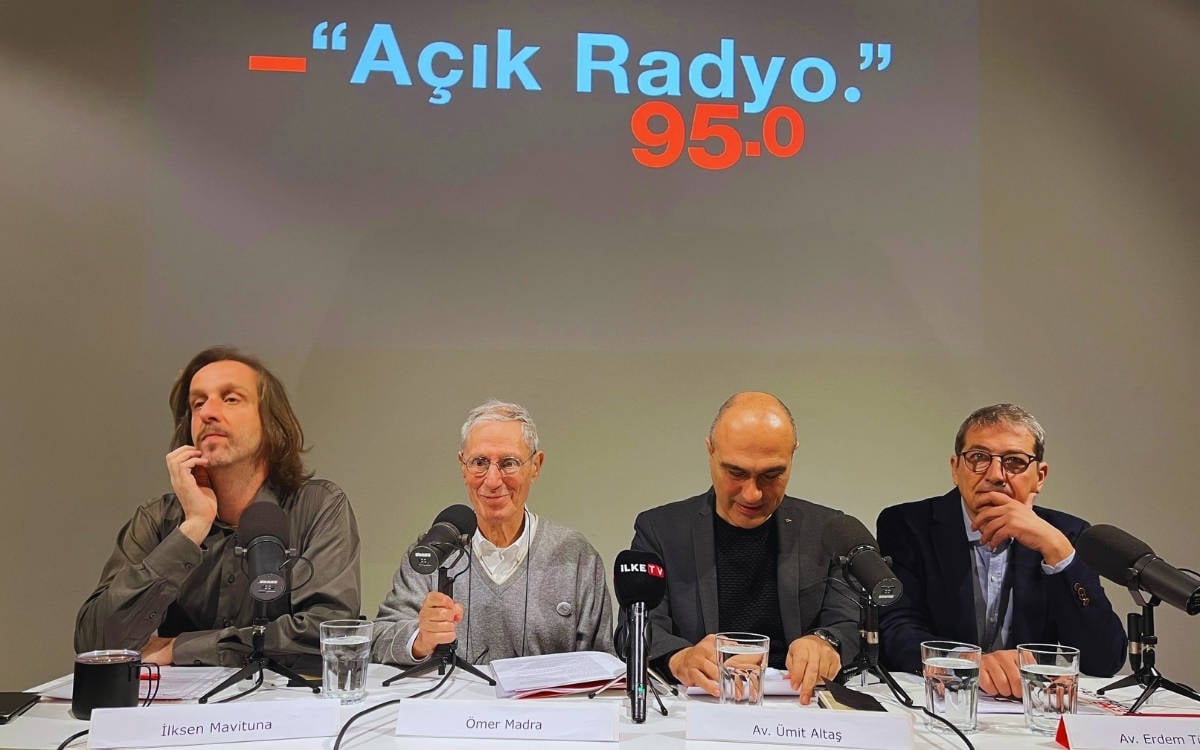



The legal process over Açık Radyo's license revocation has reached the Council of State, the top administrative court, the outlet announced during a press conference yesterday in Beyoğlu, İstanbul.
The outlet's legal team shared updates on the judicial process, which has been going on for nearly two years now. The process is not merely an administrative action against a single radio station but represents a critical threshold in terms of freedom of expression, press freedom, and the rule of law, they said.
Açık Radyo, founded in 1995 in İstanbul, had its license revoked after a guest commemorated the Armenian Genocide on air on Apr 24, 2024. The guest had mentioned the issue in the context of an official message of condolence issued by the Presidency, using the expressions “events referred to as genocide” and “Armenian genocide commemoration.”
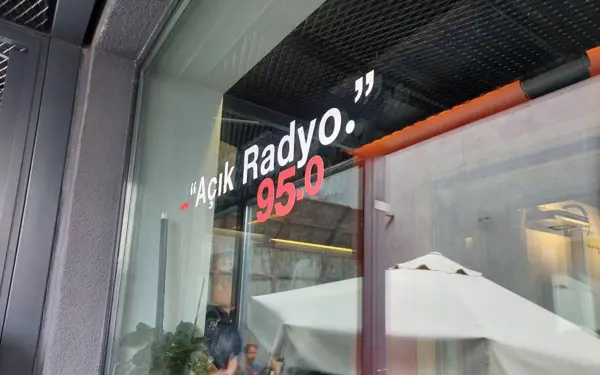
‘Voices of the universe’ silenced: 30 years of Açık Radyo
Based on these remarks, the Radio and Television Supreme Council (RTÜK) imposed the maximum administrative fine on the station and ordered the suspension of the program for five broadcasts.
The official decision, served electronically by RTÜK, included an attachment specifying the dates of the broadcast suspension; however, this attachment could not be accessed due to technical issues.
Although the situation was reported to RTÜK, no response was received. Subsequently, on July 3, 2024, RTÜK revoked Açık Radyo’s broadcasting license on the grounds that the suspension measure had not been implemented.
Despite having paid the administrative fine and fulfilled its obligations, Açık Radyo’s license was revoked without a request for defense and without taking the technical issues into account.
In Nov 2024, the outlet returned to broadcasting as a digital radio station named Apaçık Radyo.
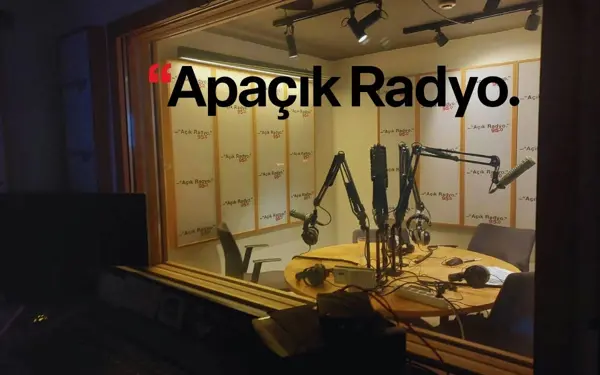
Açık Radyo returns online after license revocation
Legal process
In the lawsuits filed by Açık Radyo, it was argued, based on legal doctrine and expert opinions, that:
- The expressions in question fall within the scope of freedom of expression under both national and international case law,
- A broadcaster cannot be held liable in this manner for statements made by third parties during a live broadcast without considering the overall context and intent of the program,
- The sanctions imposed were disproportionate and excessive.
Nevertheless, the cases were dismissed at both the first-instance and appellate levels. As of 2026, both cases have been appealed and are currently under review by the Council of State.
‘This is not only about one institution’
During the press conference, it was underlined that this process does not concern Açık Radyo alone, but rather points to a structural issue affecting all independent media organizations in Turkey.
The statement highlighted that imposing severe sanctions for expressions that have been recognized as protected under freedom of expression by national and international jurisprudence has a chilling and restrictive effect on the media.
Açık Radyo’s more than 30 years of independent broadcasting has served a public function, particularly in times of crisis and disaster, said the statement. In a metropolis like Istanbul, which faces a high earthquake risk, the revocation of an FM broadcasting license affects not only a media outlet but also directly impacts the public’s right to access information.
“Although Açık Radyo’s terrestrial broadcasts have ceased, we continue our work with an even broader team on digital platforms under the umbrella of Apaçık Radyo, maintaining the same principles of independent broadcasting.” (VK)