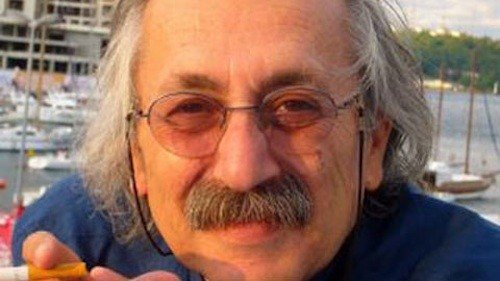




He wandered through many prisons and served a long time behind bars.
He loved Gebze Prison the most. The prison became famous through his name…
Those in the ward had made a separate workspace for him. They thought he should work as he wished without anyone disturbing him.
If I am not mistaken, one of the subjects on his index cards during this imprisonment or when it ended was being an informant. The law had been enacted and it was mentioned alongside repentance. He wrote a book about it.
It had a two year validity period and was previously called the repentance law…
Now it is effective repentance…
Effective repentance, as it is known by the public; being an informant…
In fact, repentance and being an informant complement each other…
What Yalçın Küçük wrote in the book "The Confessions of Informants" published by Haziran Publishing in Apr 1987 appears as today’s judicial problem…
Yalçın Küçük said, "I have to analyze the dynamics of the phenomenon of being an informant."
According to him, who are the "informants"?
"The informant cannot get enough of confessing…
Fear is a human condition; I have no doubt.
However, humanity progresses in both a historical and individual sense as long as it is purified of fear.
People do not admit that they are afraid.
The fact that people do not admit they are afraid is as much a human condition as fear itself…"
"The informant vomits themselves."
After this title, he included a line from a poem…
"This man
Sold his friend;
Sold the bloody, severed head of his friend
On a golden tray….
Fear,
Wanders at the feet of this man,
Like his shadow…"
In the introduction to the section "Nightingale Artists in the '51 Arrests," he wrote the following:
"The informant is a new identity.
The informant is a new scenario in the same body.
The informant is the person who vomits their personality that has been accused and placed under the threat of punishment.
In this state, they are very different from breaks, dissolutions, and even turncoats.
A person needs to be shallow to be able to vomit themselves; there is a necessity for the vomited personality not to be settled. (…)
Man is a beautiful creature.
What comes hardest to a person is betrayal of themselves.
A person can endure torture; it must be very difficult for a person to endure their own betrayal of themselves."
"The informant is afraid…
What will happen to the informant? What will become of the informant?
The confession gets the informant out of prison.
Confession grants the informant an identity that can never become a personality."
These are Yalçın Küçük’s definitions of informants…
What has time shown?
The expectation of the state: "denunciation" and "being an informant"… In return, the reward for the informant is being able to leave prison… Who knows if what remains of such a life outside is anything but shame?
He had his pen and paper, but most importantly, he had his cards that he never left behind. He would write on them and take notes. The "writings" he did not write on his cards would neither become books nor articles… He would not reread what he wrote or make corrections. Just as he wrote them on his cards, his articles and books would be published exactly as they were written.
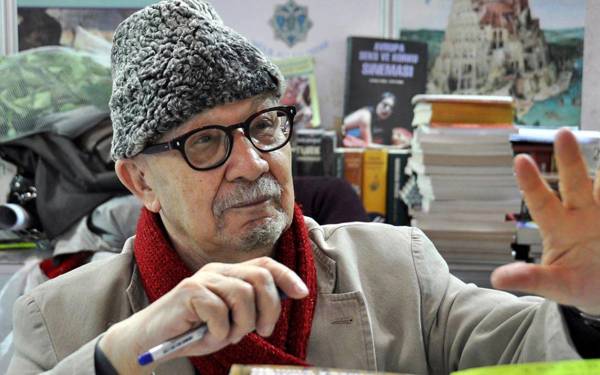
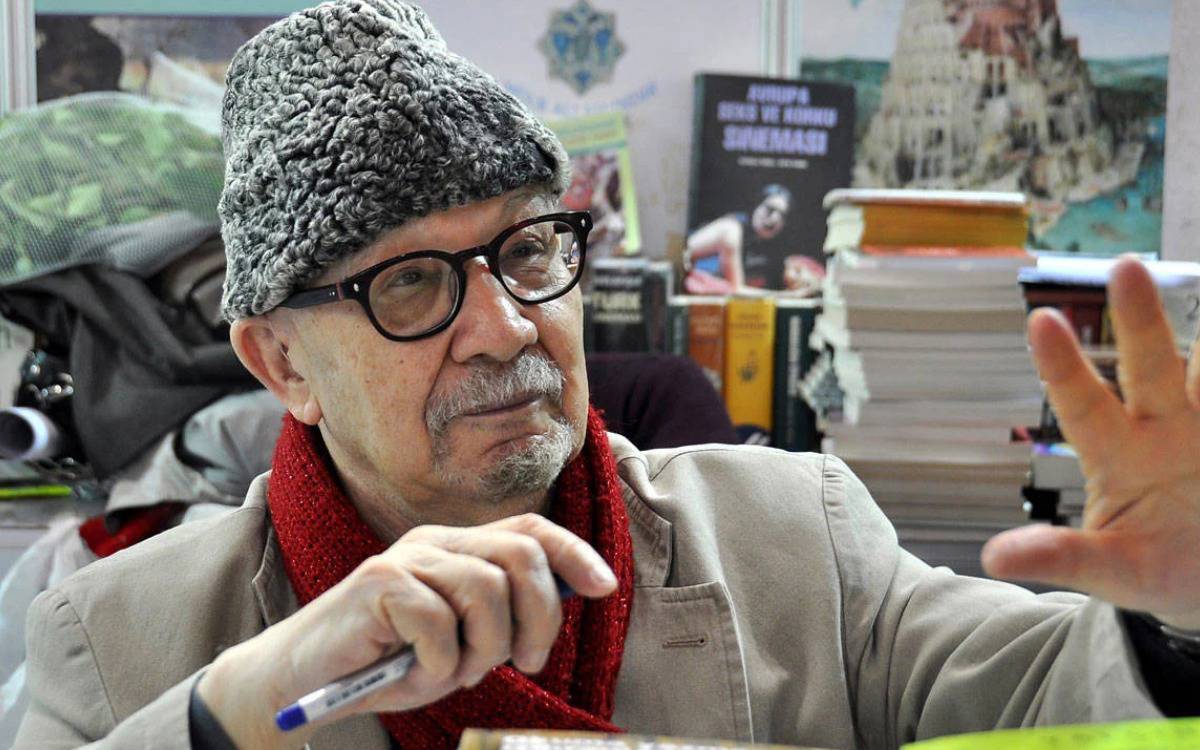
He lived like the articles he wrote. He loved his red silk scarves very much. He would wear them around his neck and walk around regardless of summer or winter. Neither he nor anyone else found it odd, and he also had a kalpak on his head… One of those red scarves stayed with me, I took it from him and did not give it back. Red scarves, articles, books, life, and death.
From Yalçın Küçük’s defense dated Sep 6, 1985, in the "Petition of Intellectuals" case…
"The real death is the removal of man from the prescriptions that make man human, the loss of his hope, and the loss of his beliefs…
The real death is the breaking of human dignity and the wounding of national dignity."
İlhan Berk comes to my mind…
"Death as if it Were a Daily Task"
The road keeps turning. Finally we stopped there.
We saw through the open door,
She sat spinning wool
The spindle in her hand.
A huge ball of yarn had rolled and stayed by the door.
We poked our heads over the threshold
And said 'How are you?'
As if she were moving a chair
She said 'We are just dying away.'
Without lifting her head,
Death as if it were a daily task.
A wind was beating the sea in front of her
That she looked at by lifting her head every now and then. (Fİ/EMK/VK)