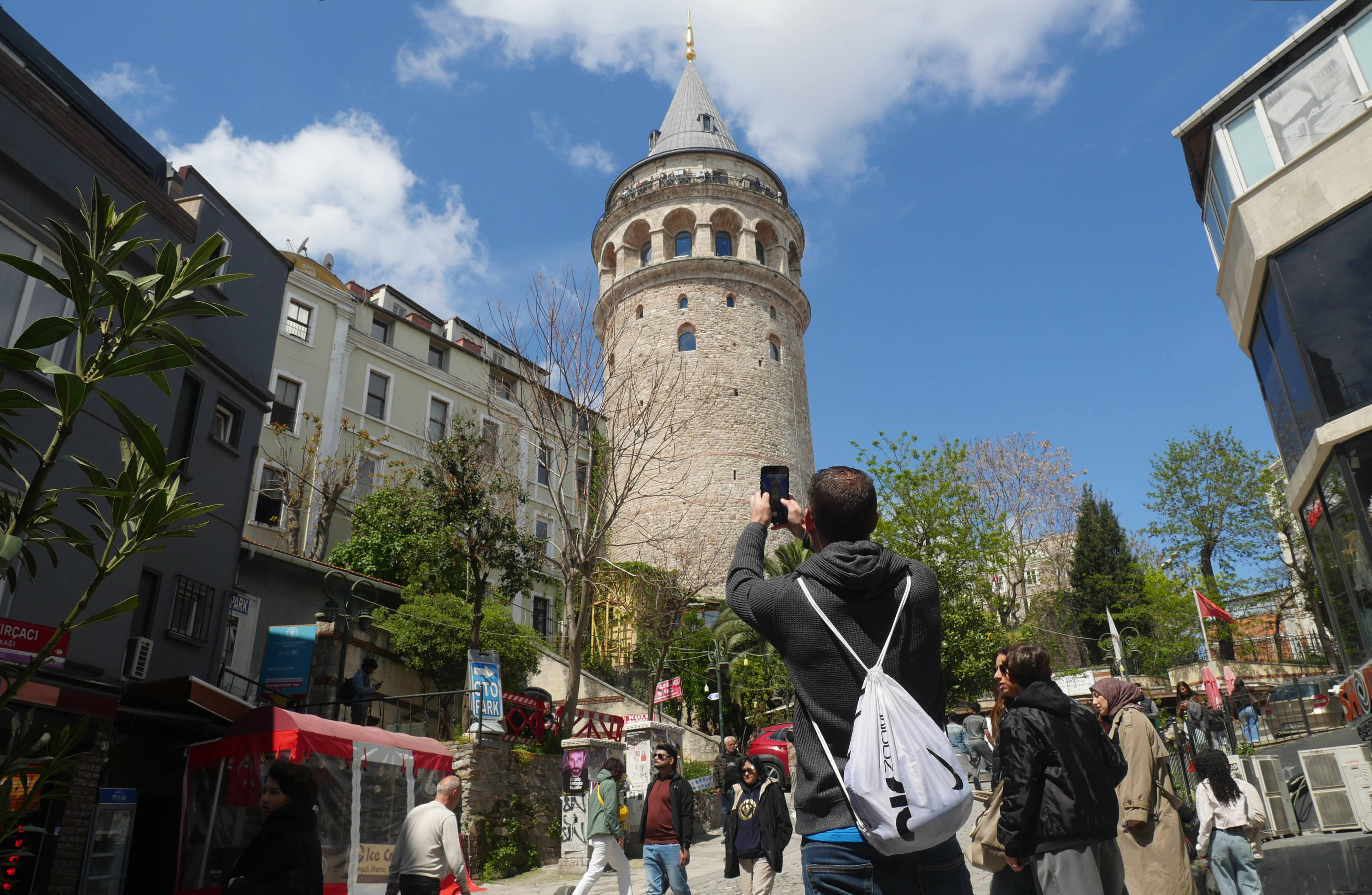

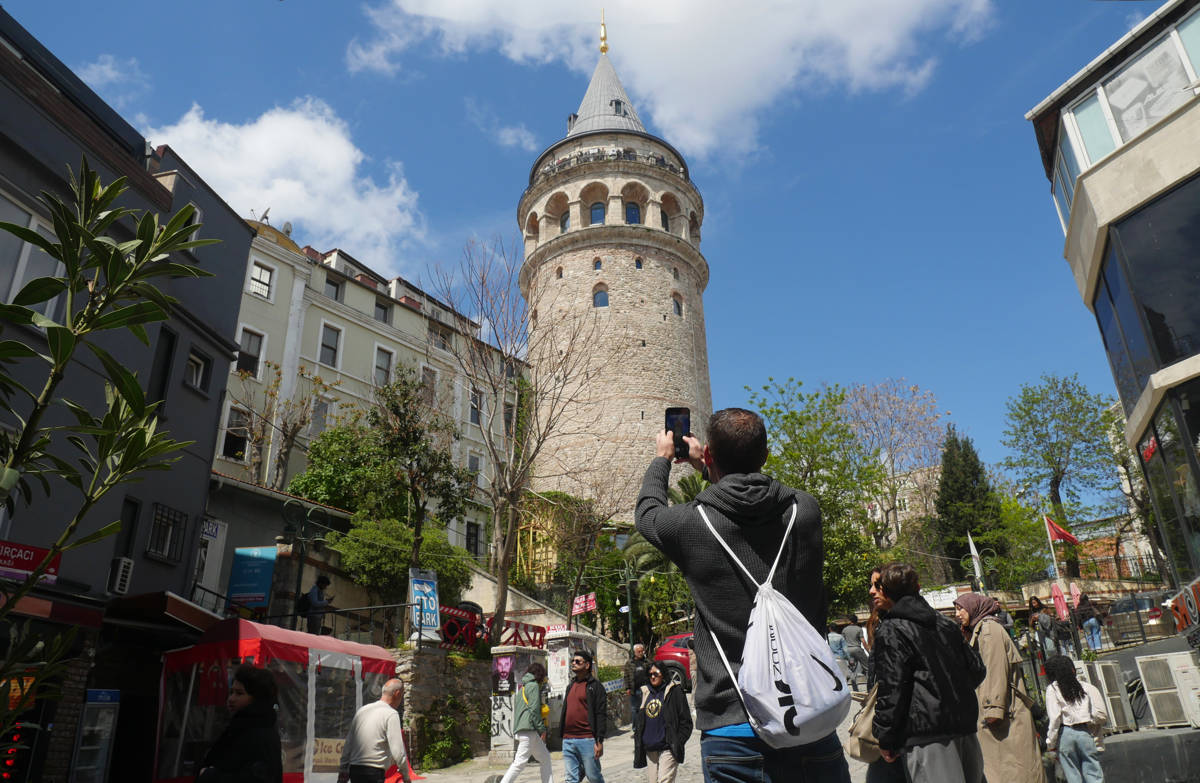



Early in the morning, before the tour groups gather beneath the tower and the café tables crowd the streets, a vision of old Galata emerges. The cobblestoned streets lie empty and silent, lined by ghostly 19th-century Levantine buildings. Symbols of Galata’s layered history reveal themselves—faint outlines of old lettering, Greek and Armenian script carved into marble, while church bells from no fewer than four historic congregations echo through the narrow, winding passageways.
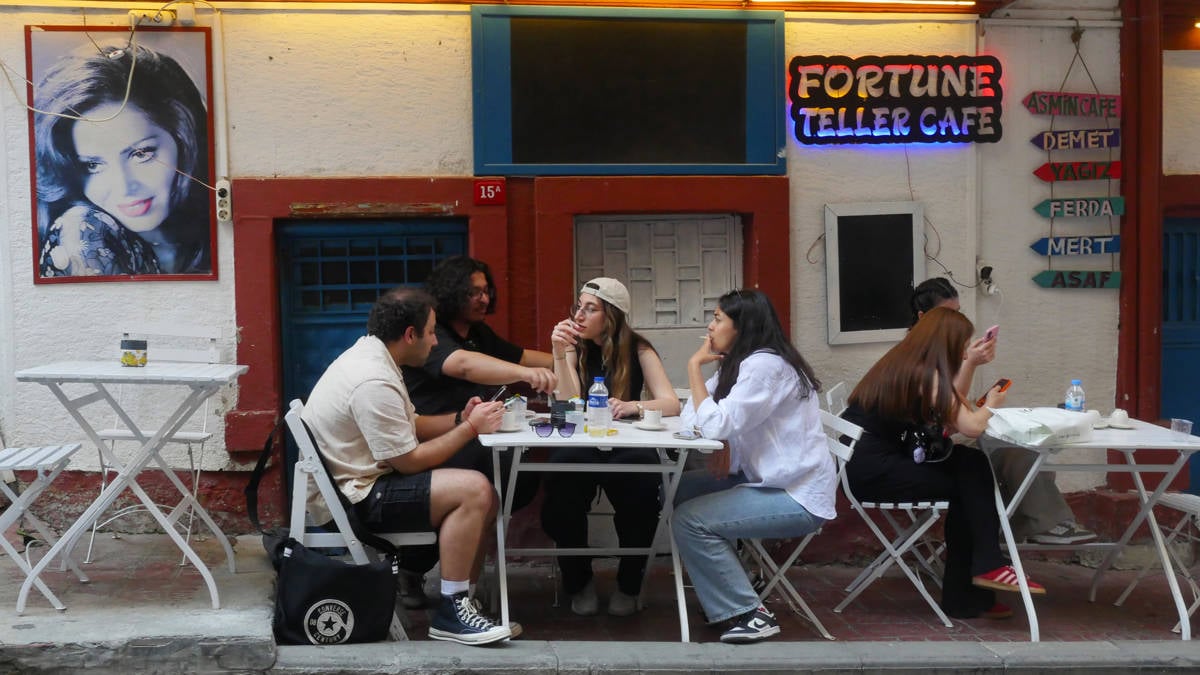
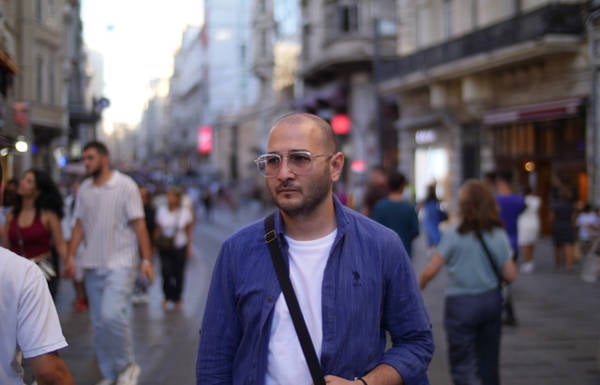
But by midday, this glimpse of the past vanishes, as the landmark neighborhood transforms into one of İstanbul’s busiest tourism corridors—crowded, commercial, and increasingly challenging for the people who have built their lives and businesses there.
Few places in İstanbul reveal the city’s contradictions as sharply as Galata—heritage and speculation, creativity and consumption, belonging and displacement. Over the past half-century, it has shifted from a working-class and bohemian district of migrants, artisans, and long-established minority families into a global destination shaped by gentrification, social media trends, and relentless foot traffic.
Stories of three long-time Galata business owners trace the transformation from different angles: Bayram, who arrived in the 1970s and moved from the fruit trade into the café economy; Sertaç, whose clothing boutique flourished during a quieter, more creative period; and Fatih, a graphic artist seeking to create a Galata legacy through a museum dedicated to İstanbul’s street cats. Their stories explore what it takes to adapt and reinvent in a neighborhood where survival is never guaranteed.
The Patriarch: Bayram Sezgin and the Old Days of Galata
Bayram was twelve years old and orphaned when he arrived in İstanbul from Siirt in 1974. Accompanied by his four brothers, the Sezgin siblings went straight to work on the streets of Galata.
“We first started selling fruit from handcarts in the square,” recalls Bayram, now sixty-five.
Selling fruit was a common path for Kurdish migrants from Siirt, many of whom followed one another into the wholesale produce trade centered around Unkapanı. The handcart business proved lucrative, and before long the brothers opened a physical shop in the Selimbey building. They bought the space for five thousand dollars from a local restaurant owner struggling with poor business.
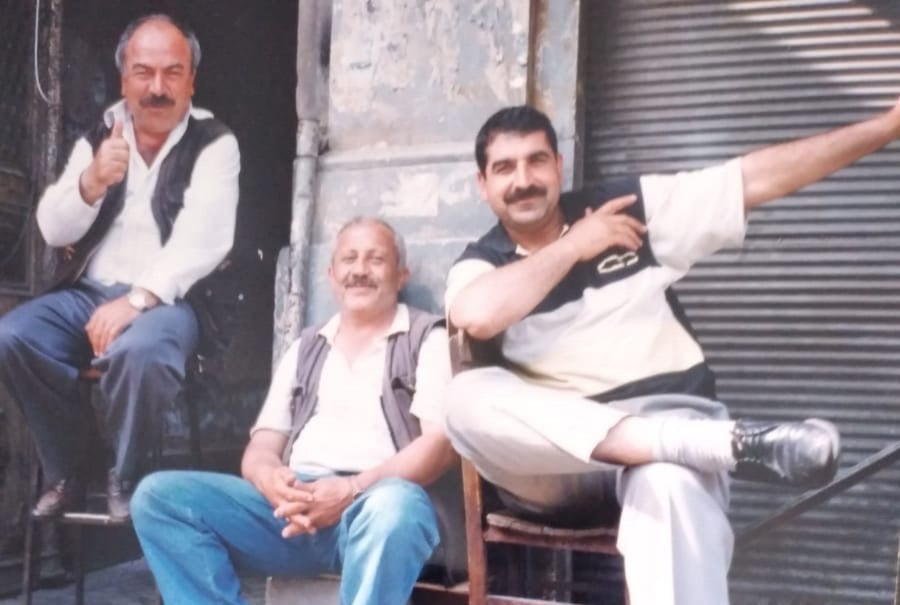
Bayram paints a vivid picture of Galata in the 1970s and 80s—a neighborhood that was deeply cultured and simultaneously dangerous.
“The area was in such bad shape back then that people wouldn’t have lived here even if the apartments were offered for free.”
Despite crime and drugs, Bayram describes Galata during that time as tight knit, diverse, and rich with culture. He remembers the Jewish fish sellers, the long-established Armenian families, the network of artisans. The neoclassical buildings may have been crumbling, but there was a unique social fabric that held the neighborhood together.
In the late 1990s and early 2000s, architects and investors began buying and restoring many of Galata’s historic buildings, including the Selimbey building—now owned by İKSV—which housed the brothers’ first shop. When the building changed hands, they relocated to a smaller space around the corner. Rents began to rise, and the neighborhood once considered uninhabitable was suddenly seen as valuable.
From wholesale markets to café culture
For decades, Bayram’s manav shop was a neighborhood anchor, serving local residents and the modest stream of tourists on their way to the tower. But by the 2010s, Galata’s economy had shifted decisively toward tourism. As long-time residents moved out and ateliers closed, demand changed.
“Before, people actually lived in Galata, so it was easy to sell fruit,” he explains. “But as the neighborhood evolved, I knew I had to adapt to the new market in order to survive.”
He admits that rising rents forced him to rethink his business, yet he also sees the current crowds as a source of opportunity. In 2025, Bayram left the fruit trade behind, took over a prime space near the square on Büyük Hendek Street, and opened Rodinya Galata Café.
“When I first came to Galata, it would have been impossible to open a café. No one would sit!” he says wryly, seated at his cafe and looking toward the crowds that now fill the square.
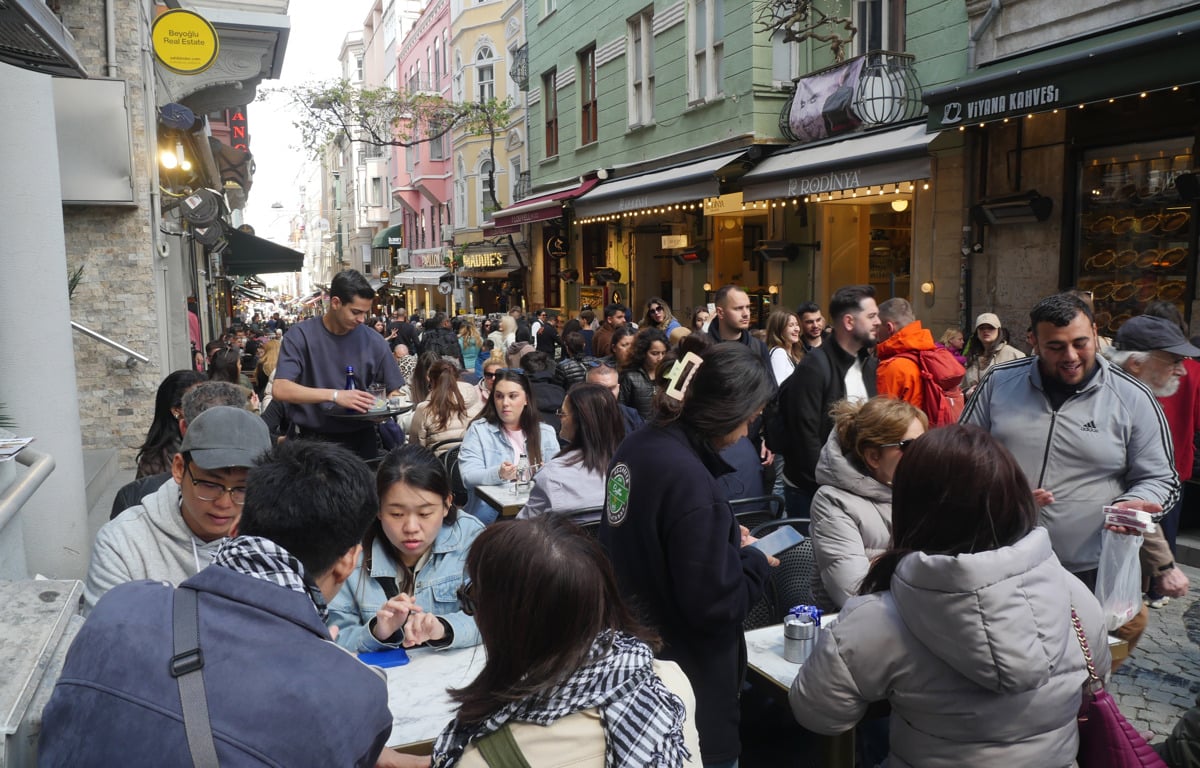
When he talks about the old days, it’s not with a sense of loss. Bayram prefers Galata as it is today.
“There is peace and safety now,” he says pragmatically. “And life is better. When I was in the fruit business, we had to wake up at 6:00 a.m. to pick the best produce at the wholesale market. Running the café is easier. The foot traffic makes it more sustainable.”
He now employs sixteen people at the café, many of them young Kurds from the Siirt region.
The secret to success
Bayram attributes his decades of business success in Galata to knowing the area intimately and adjusting to each new reality. He observes that many newcomers open gift shops or cafés but struggle because they don't understand the neighborhood's rhythm. Some are forced to stay open until 3 am just to cover their costs.
When asked if he plans to retire, Bayram laughs. “Never”. His children want him to slow down, but he has no intention of stopping. He claims he has never taken a vacation in his four-decade career.
“Hard work is my solace,” he says. “And to make it in Galata, you must love to work.”
The Fashion Pioneer: ParisTexas and the Death of Bohemia
If Bayram Sezgin set the work ethic in the Galata business community, Sertaç Haznedaroğlu provided its aesthetic soul. When she moved to Galata from Ankara in 2008, she found a low-key, unpolished enclave.
“I chose Galata because the area was still untouched,” she says from her current pop-up shop on İlk Belediye Street. She describes the neighborhood then as quiet and bohemian, attracting artists because of its cheap rents and cavernous apartments where they could both live and work.
“Galata Tower was still rough around the edges, managed by a neighborhood family,” she remembers. “There were ateliers everywhere—lighting shops, woodworkers, upholsterers—and no tourist shops at all. Zero.”
At that time, the customers were not really in Galata yet. But Sertaç saw the potential and opened her ParisTexas clothing boutique in a former carpenter’s space on Camekan Sokak.
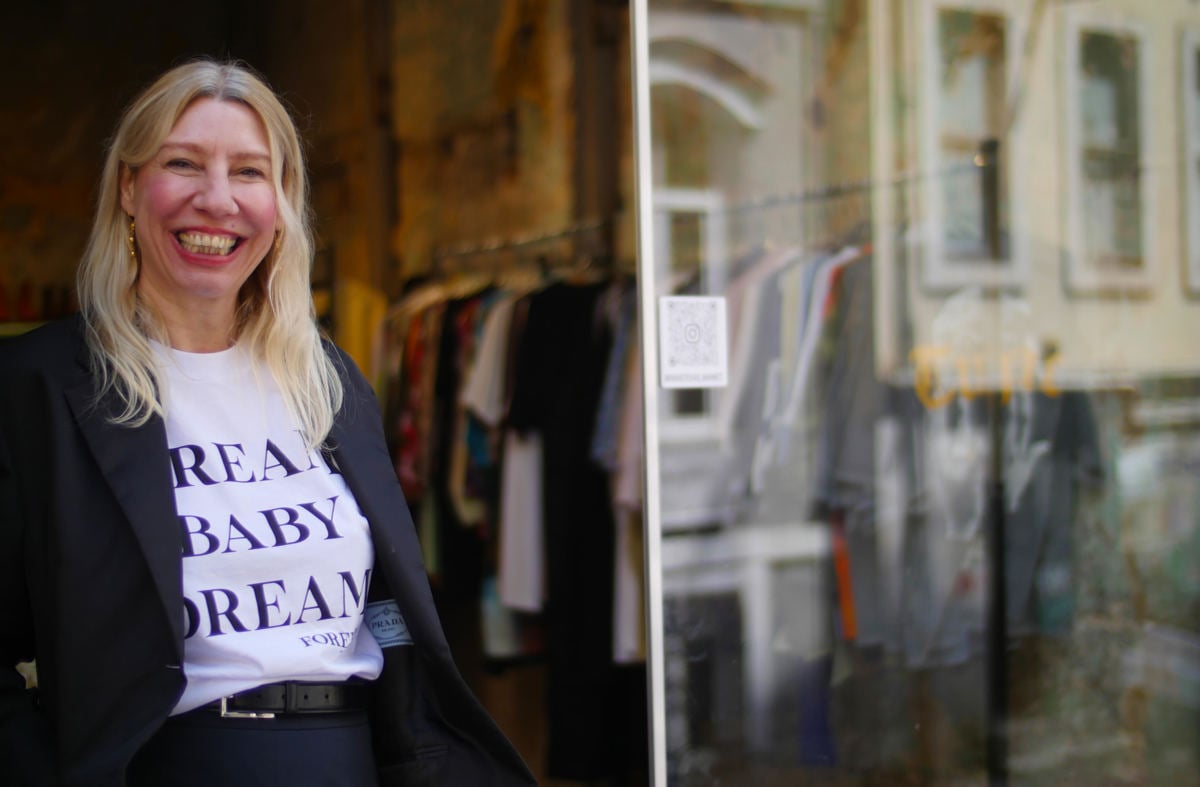
“We had a steady stream of locals and tourists coming to the store, and they were all very interesting,” she recalls. The success allowed her to expand to three boutiques, each housed in a historic space she carefully renovated.
“I loved the process of creating something new and interesting while preserving the original architecture.”
As ParisTexas gained a following, other independent designers and handmade boutiques followed her lead, setting up shops on the same narrow street.
Commercialization and the rise of the selfie economy
Galata’s popularity was growing, drawing the attention of the municipality, which began plans to commercialize the neighborhood through fashion markets, themed streets, and visibility-driven branding campaigns. These initiatives brought more visitors, but they also altered the area’s character.
Long-term residential housing started to get replaced by Airbnb units. Workshops, artist studios, and music stores were priced out, making way for businesses catering to a faster pace of consumption.
“People were now coming to Galata because they saw it on social media,” Sertaç says. “This new crowd was not interested in buying fashion or handmade items. They were interested in cafés, desserts, and taking selfies.”
To survive, Sertaç branched into interior design to support the shops’ finances. By 2017, seeing the direction the neighborhood was taking and unable to keep up with rising rents, she made the decision to close. She describes the current state of Galata as a replacement—where those with significant capital are systematically displacing the independent business owners who gave the area its character.
“For the belediye, the goal was to have more visitors, more tourists,” she says. “So in their eyes, they think they did a good job. But they didn’t consider sustainability, or the quality of life for locals—the traffic, the effect the crowds would have on the hospital, the strain on infrastructure.”
The post-pandemic world
Sertaç recalls how, during COVID, shops struggled with little external support, while neighbors and business owners stepped up to help one another. Some landlords even deferred rent.
“I didn’t know of any Galata businesses that closed,” she says. “Turkish people are good at adapting. We are used to it. If you cannot adapt, you cannot survive.”
Reflecting on the post-pandemic boom, she notes that tourism and demand have not simply returned, they have tripled. In her eyes, this hyper-commercialization has brought more than cultural loss—it has also created safety concerns. With cafés spilling onto sidewalks and streets packed to capacity, she worries about the physical limits of the neighborhood. “If something happens—like a fire—there’s nowhere to escape. It’s actually dangerous.”
Recently, Sertaç reopened ParisTexas as a five-month pop-up on Galata’s İlk Belediye Street, not far from its original location. She enjoys being back on the street, having missed the visibility of a physical shop and the daily interaction with people. But she is clear-eyed about the future. The current rent climate and Instagram-driven customer base mean that the creative community can no longer afford to call Galata home.
“Creative people need affordable spaces, and Galata’s rents no longer allow them to live and open businesses here. So the neighborhood will continue to become more and more commercialized.”
The Curator: Fatih Dağlı and the Art of Reinvention
Fatih Dağlı of Aponia and Cat Museum İstanbul has been a business fixture of Galata for fifteen years, always holding the line for the local, creative and non-commercial.
Born in Eskişehir, Fatih moved to İstanbul in 1998 to study at İstanbul University. He worked as a graphic designer before traveling to thirty-four countries as a professional tour guide.
“Traveling was an experience that really shaped my eye for design and commerce,” he says.
In 2009, he opened Aponia near Galatasaray with partners Orçun Cetinkaya and Yavuz Öztürk, setting out to offer something distinct from the cheap souvenirs he saw on his travels. The shop sold creative keepsakes and bold graphic T-shirts, often with a humorous, satirical edge. The business grew, with Aponia’s designs produced by the city’s vibrant small textile workshops—an industry that has since been hollowed out by rising costs and currency fluctuations.
“There was a lot of optimism in İstanbul when we first opened Aponia,” Fatih remembers. “The city had just been named 2010 European Capital of Culture. Tourism was steady, and there was a real ‘United Nations’ mix of visitors.”
The evolution of a neighborhood brand
In 2013, Fatih moved Aponia to a prime spot on Galip Dede Street, the historic artery carrying visitors from İstiklal Avenue toward Galata Tower. Little did he know that he was signing the lease just two weeks before the Gezi Park protests. But instead of dampening business, it galvanized it.
“People came to İstanbul during that time specifically because of Gezi, to support the protestors and for the ‘Occupy’ energy,” he recalls. “They were drawn to Galata and wanted to support local, creative brands—to buy small-batch designs they couldn’t find anywhere else.”
Throughout the 2010s, tourism and foot traffic increased, and his business was strong for a decade. He even felt confident enough to open a second store—in the middle of the pandemic.
“I didn’t have any government support during that time, but I had Russian tourists buying T-shirts who didn’t care about COVID and couldn’t go to Europe.”
Aponia survived the pandemic, and the first year after restrictions lifted was unexpectedly strong. But the post-COVID boom did not last. Inflation accelerated, rents sky-rocketed, and the costs to run his two locations soared. The economics of doing business in Galata were changing fast.
“It became much more expensive to visit İstanbul, so tourists began spending differently,” he explains. “Accommodation and food absorbed more of their budgets. They didn’t have enough money to buy a T-shirt, so they bought a postcard instead.”
Fatih realized that this new economy demanded total reinvention. However, he refused to sell out his aesthetic to the fast-consumption selfie crowd now filling the streets. Instead of catering to the new market, he shuttered his Aponia storefronts and created what is perhaps the most quintessentially İstanbul project imaginable: a museum dedicated to the city's street cats.
Cat Museum Istanbul
Cat Museum Istanbul is a small-scale startup on Serdar-ı Ekrem Street that combines cat-themed art and design, a printing workshop, and a refuge for street cats. It operates as a social enterprise, with fifty percent of its profits directed towards supporting street animals.
To Fatih, the museum is a way to create meaning in a neighborhood being taken over by unchecked commercialization, a deliberate attempt to force slow culture into a fast tourism corridor. And in a district where many older forms of belonging have been displaced, he is using his space to build a sense of community beyond cheesecake and selfies.
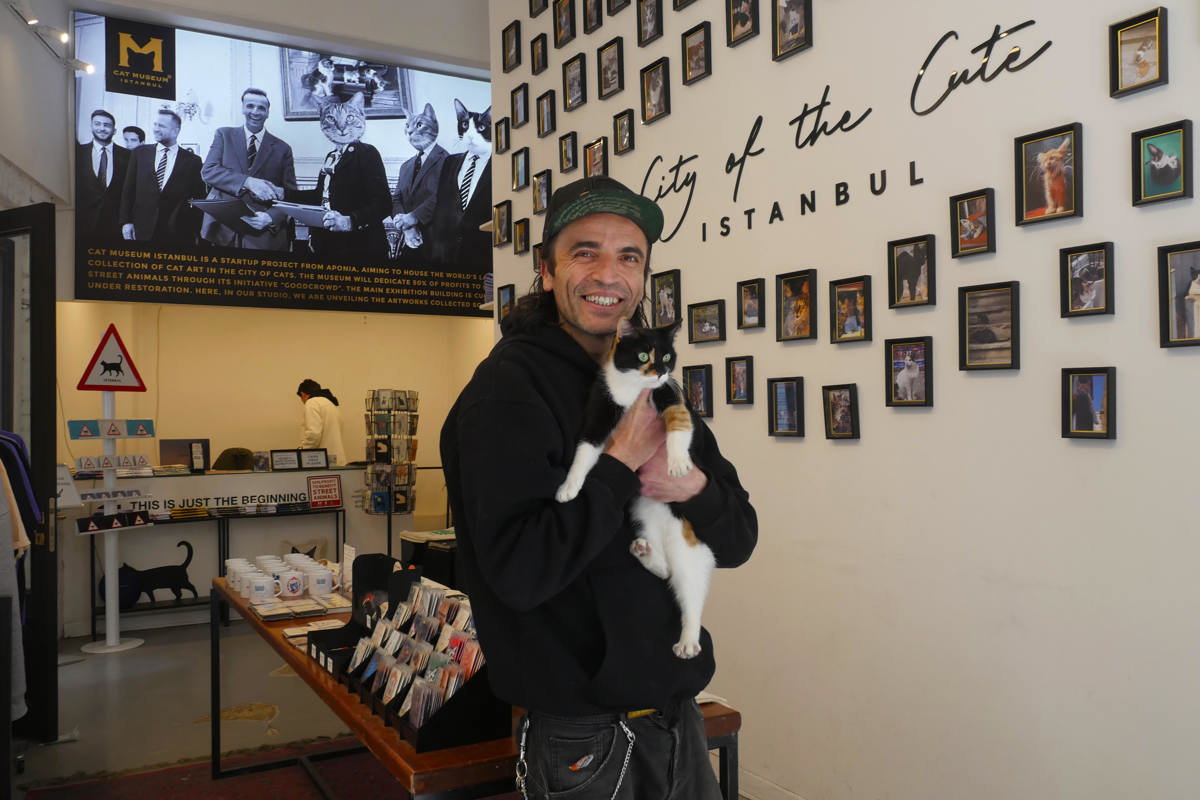
“Aponia was a personal project,” he says. “But Cat Museum İstanbul feels more like a responsibility—a legacy.”
Despite the pressures facing the neighborhood, he remains optimistic. Pointing to Barcelona’s Gothic Quarter as a model, he imagines a future where Galata expands into a more layered ecosystem of independent shops and cultural spaces. For him, the issue is not tourism itself, but its homogenization—a narrowing of a once diverse urban identity into a single, repeatable consumption model.
Fatih admits that the weight of running a mission-driven museum has brought a difficult economic reality, and getting ahead financially feels like a relentless game of cat and mouse. Yet he sees Cat Museum İstanbul as both a civic duty and a business.
“I’m a big İstanbul patriot,” he declares. “At the museum, I feel like a host of the Old Galata. And if guests are coming, I should prepare my house.”
For centuries, merchants have built livelihoods in the same cobblestoned streets where Bayram’s café, Sertaç’s pop-up, and Fatih’s museum stand today. But today, these independent owners are doing more than just earning a living—they’re fighting for the neighborhood’s right to remain itself. In an era of generic replacements, their decision to reinvent and remain isn't just a business model. It is a quiet, stubborn war for the soul of Galata. (TM/VK)