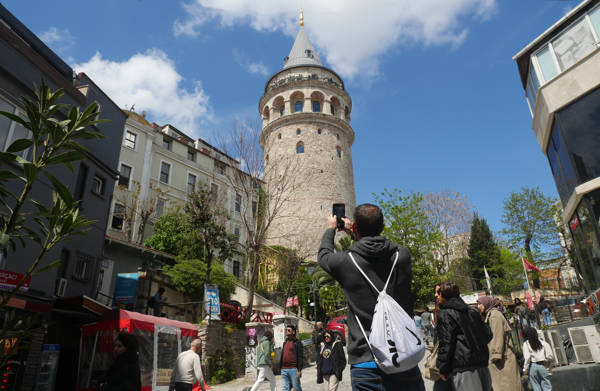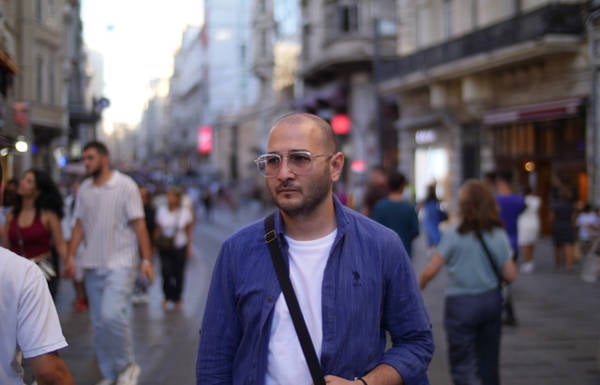








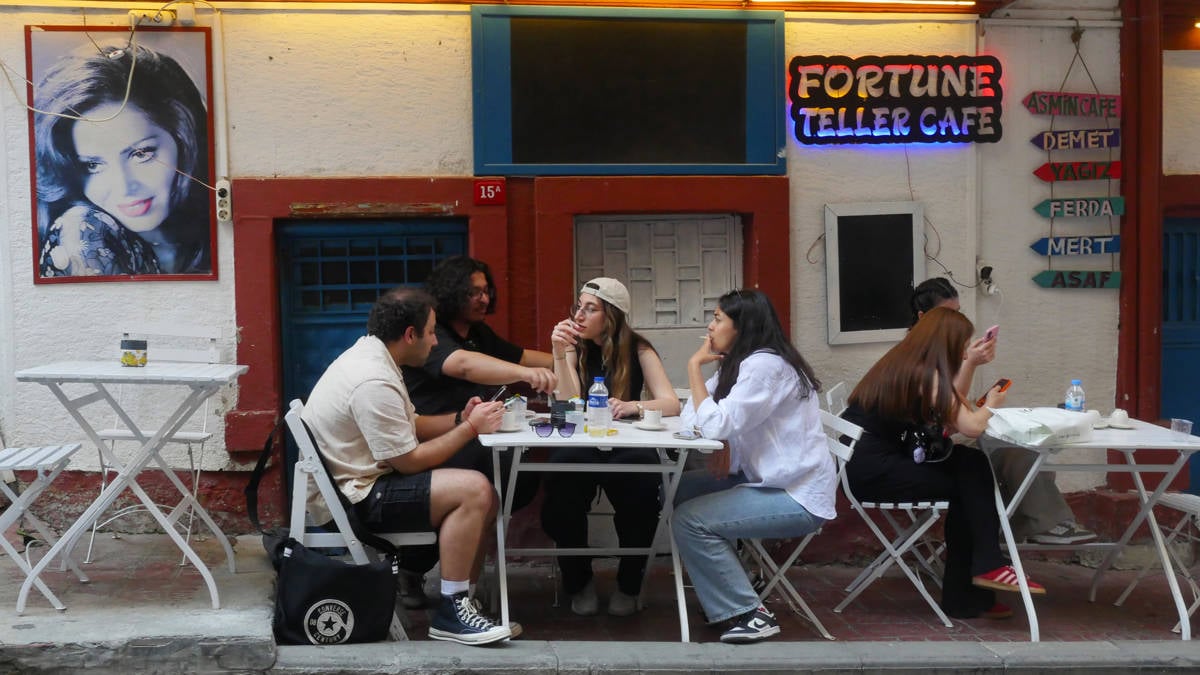



Divination has deep roots in Anatolia and the Ottoman world, where practices such as coffee-cup reading, palmistry, and dream interpretation have been passed down through generations. Historically, these traditions took place in the home, often among friends and family. In contemporary İstanbul, however, they have moved into cafés and storefronts, evolving from informal social rituals into a thriving commercial trade.
On Ayhan Işık Sokak, a narrow side street just off İstiklal Avenue known colloquially as Falcılar Sokağı (“Fortune-Teller Street”), fal cafés line the pavement competing for customers. Many are run by Kurdish migrants or their children, whose families left eastern and southeastern Anatolia for İstanbul during the regional conflict in the 1990s. Over the last three decades, these entrepreneurs have transformed the small street into one of the city's best-known areas for fortune-telling.
The popularity of these cafés suggests that fortune telling is no longer viewed solely as entertainment, supernatural curiosity, or a relic of Anatolian folk tradition. For many İstanbulites, it has become a way of managing anxiety and seeking guidance in a city shaped by economic strain, rapid social change, and pervasive uncertainty about the future.
Asmin Café — from Diyarbakır to Falcılar Sokağı
One of the most popular stops on Falcılar Sokağı is Asmin Café, a family-run establishment that has operated from the same location since 1999. Its owner, 61-year-old Nazım Gemsiz, arrived in İstanbul in 1992 from a village near Silvan, Diyarbakir, during the height of the violence between the Turkish state and the Kurdistan Workers’ Party (PKK).
"My family’s migration to İstanbul wasn't only economic," Nazım says, sitting at an outdoor table at Asmin on a busy Friday night. "It was also political. The 1990s were very difficult. Kurdish villages were burned, and people were killed every day. There was turmoil everywhere, so many left for Turkey’s big cities.”
After arriving in İstanbul, Nazım and his family moved through a succession of informal, short-term business ventures, like many Kurdish migrants of that era. Eventually, he managed to purchase a commercial property on Ayhan Işık Sokak, then quiet and residential and far from the busy bar and café scene it is today. A few Kurdish-run fortune-telling cafés were already operating on the street.
“I wouldn’t say that fortune-telling is a profession belonging to Kurds,” he says. “The street became populated with fal cafés through a network of solidarity. Existing Kurdish business owners guided their relatives and neighbors from their villages, helping them build a new life.”
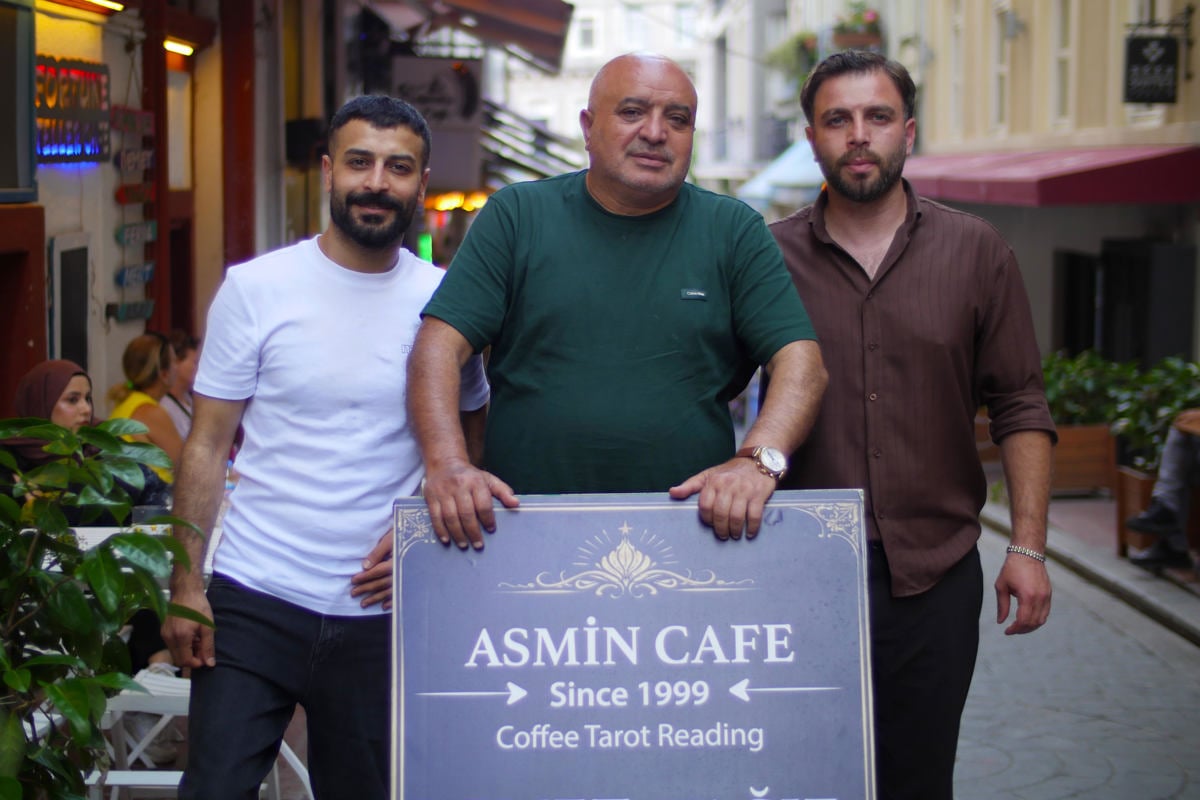
Nazım believes that the café offers more than fortunes. “Asmin is a place where people come to relax, meet friends, and forget their troubles.”
The Gemsiz family also contributes to the neighborhood in another quietly meaningful way. Behind the scenes, they provide daily meals to local people facing financial hardship.
“Whoever is hungry can eat,” Nazım says. “We know what it means to struggle.”
Seeking guidance in uncertain times
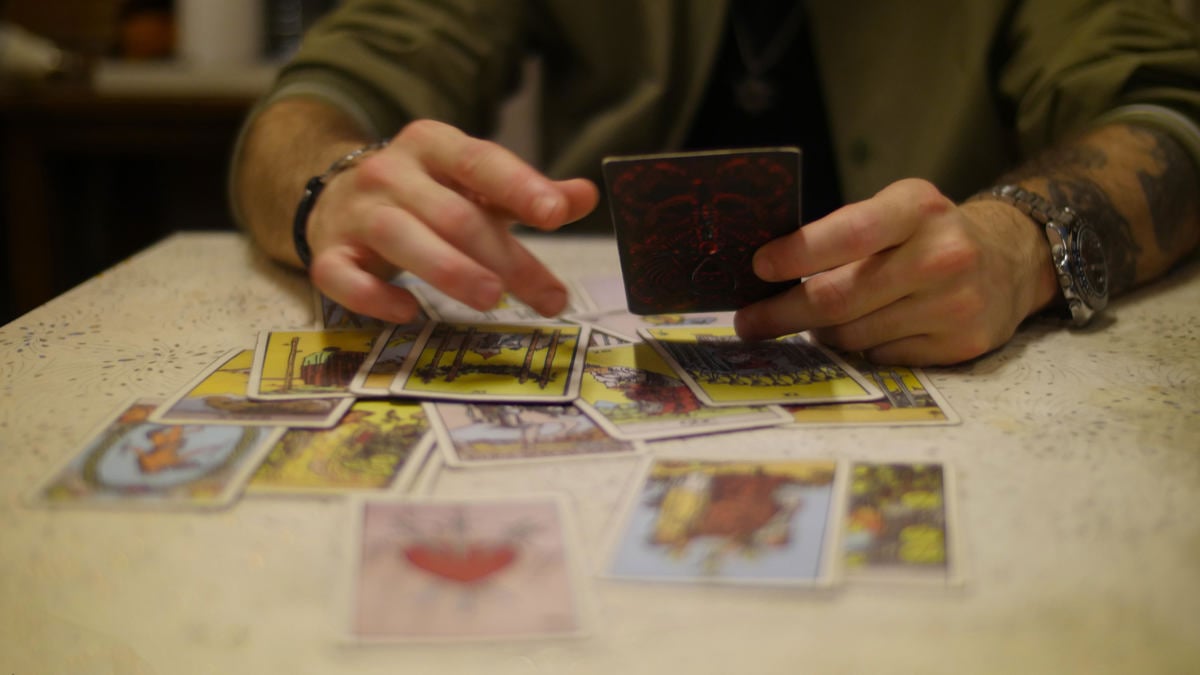
Customers from all walks of life come to Asmin Café to have their fortunes read via coffee grounds, tarot cards, or water divination. The price of a reading averages 400 liras for a 10-20 minute session.
“People under thirty tend to ask mostly about love,” says Yağız*, a thirty-year-old fortune-teller working at Asmin with over 13 years of experience. “Older clients are usually more concerned with money and work. Some want to know whether they'll have better prospects if they migrate and leave Turkey.”
Serhat Gemsiz, Nazım's son and the café's operations manager, says celebrities and foreign royals have had their fortunes read at Asmin. Judges, police officers, and senior military figures have also frequented the café, asking questions that often mirror the volatile institutional changes of contemporary Turkey: the outcome of court cases, the fate of major projects, or whether they might lose their positions during a bureaucratic reshuffle.
“My clients want insight into the future, but I don’t just look to the cards for answers,” Yağız says. “Tarot reading involves intuition and reading energy.”
Despite a very high customer retention rate, Asmin Café enforces a strict and unusual operational boundary: clients are forbidden from consulting the same fortune teller more than once in a 30-day period.
Serhat views this rule as vital to maintaining the integrity of the service.
“If you return before that time period, it dilutes the reading,” he explains. “The details of your life simply haven’t had time to change. We turn away eager repeat customers every single day for this reason. They are welcome to try someone new in the interim, but they must wait out the month if they want a session with their regular reader.”
The need to be heard
Zeynep*, a 35-year-old journalist in İstanbul, consults an astrologer on a regular basis.
“A few years ago, I was in a period where I felt lost and didn't know what to do with my life,” she says. “I first went to a therapist, which helped, but I still wasn’t confident when making decisions. I needed guidance. That's when I started seeing an astrologer.”
When asked how the two experiences compare, she says they serve different purposes. “You can't really compare them,” Zeynep says. “I benefited from both.”
She pauses, then laughs. “My therapist was also seeing an astrologer.”
While therapy is becoming increasingly more common in Turkey, cost and access remain barriers for many people. For some, fortune-tellers and astrologers fill a gap that occupies a space between therapist, life coach, confidant, and friend.
According to Serhat, most clients arrive at Asmin Café carrying emotional burdens.
“People come in stressed, heartbroken, worried about money, worried about relationships,” he says. “Our job is to lift them up, encourage them, and shift their mindset through positive motivation. On average, just one of our readers speaks to roughly 30 people a day. When you deal with that volume of human emotion daily, you develop an almost hyper-intuitive ability to read people and guide them.”
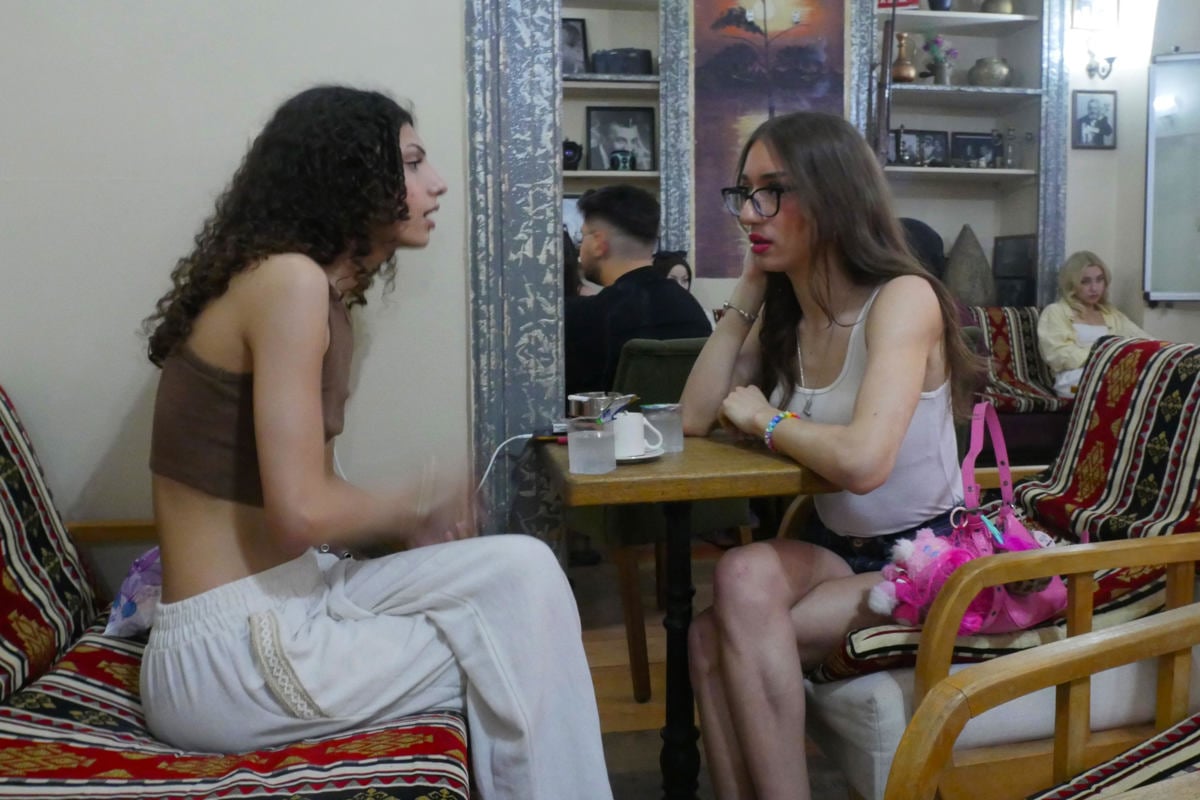
One of Asmin’s most loyal regulars, he adds, is a prominent academic and practicing clinical psychologist with degrees from Turkey, the United Kingdom, and the United States. Every month, she returns for a coffee-ground reading from a woman who learned the practice from her grandmother in eastern Turkey.
For Serhat, the fact that a psychologist of this calibre seeks out readings reflects a broader pattern.
“Many customers,” he says, “are not necessarily seeking predictions, but something more therapeutic. The best fortune-tellers operate from a raw human intuition and emotional connection rarely found in formal counselling settings.”
But not all readers are comfortable with the boundaries this can blur. Çisel Akın is a karmic astrologer who draws on Carl Jung’s theories to add a psychological dimension to her natal chart practice. And yet, she is careful not to cross the line into anything resembling talk therapy.
“If I see that a client is relying on me in a way that goes beyond what my readings are designed to offer,” she says, “I discontinue the relationship.” However, Çisel adds, most of her clients are just looking for help in deciding which direction to take in their lives.
Fortune-telling in the time of TikTok
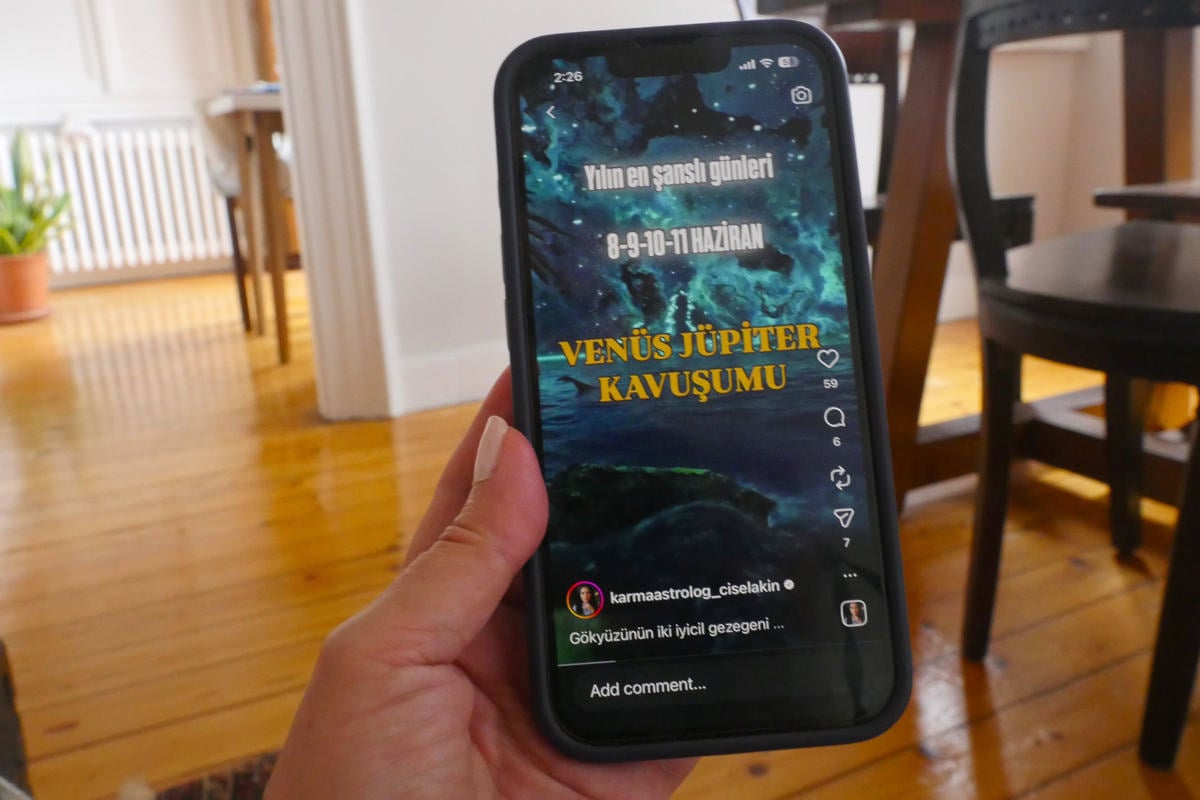
Although fortune-telling and astrology have deep roots in Turkish society, social media platforms like Instagram and TikTok have reshaped, amplified, and commercialized these practices for a new generation.
“Social media is boosting astrology's mainstream appeal because a lot of the content online uses mathematical approaches and a systematic rationale for predictions.” Çisel says. “This makes it more credible to people who are skeptical of traditional supernatural beliefs such as jinns and muska.”
Spiritual influencers now attract online audiences numbering in the hundreds of thousands, and users can access astrological consultations or tarot card readings without ever leaving home.
Rather than viewing this shift as a threat, Serhat has embraced it. He developed a mobile application, Asmin Fal, which connects users with 47 live, professional fortune-tellers based in Turkey and abroad. And while many in the industry worry that artificial intelligence could replace human practitioners, Serhat remains unconcerned.
“The market is facing a lot of disruption from AI-generated fortune-telling apps," Serhat says. "But our selling point is real human connection. AI operates like a rigid machine. Authentic fortune-telling requires genuine emotion, intuition and empathy."
The experience of displacement and instability during the 1990s Kurdish conflict left emotional and psychological scars on the Gemsiz family that lingered long after they arrived in İstanbul. So the worries and existential anxieties that customers bring into the café are not unfamiliar to them.
“We see our own history reflected in many of the stories our customers share,” Nazım says.
In a society navigating economic volatility, demographic change, and persistent uncertainty, that shared understanding may help explain why people continue to return to Asmin Café and Falcılar Sokağı.
And yet, despite more than two decades spent around fortune-telling, Nazım is careful not to claim certainty about what lies ahead.
"Only God knows the future." (TM/VK)
*These names have been changed to protect the privacy of the interviewees