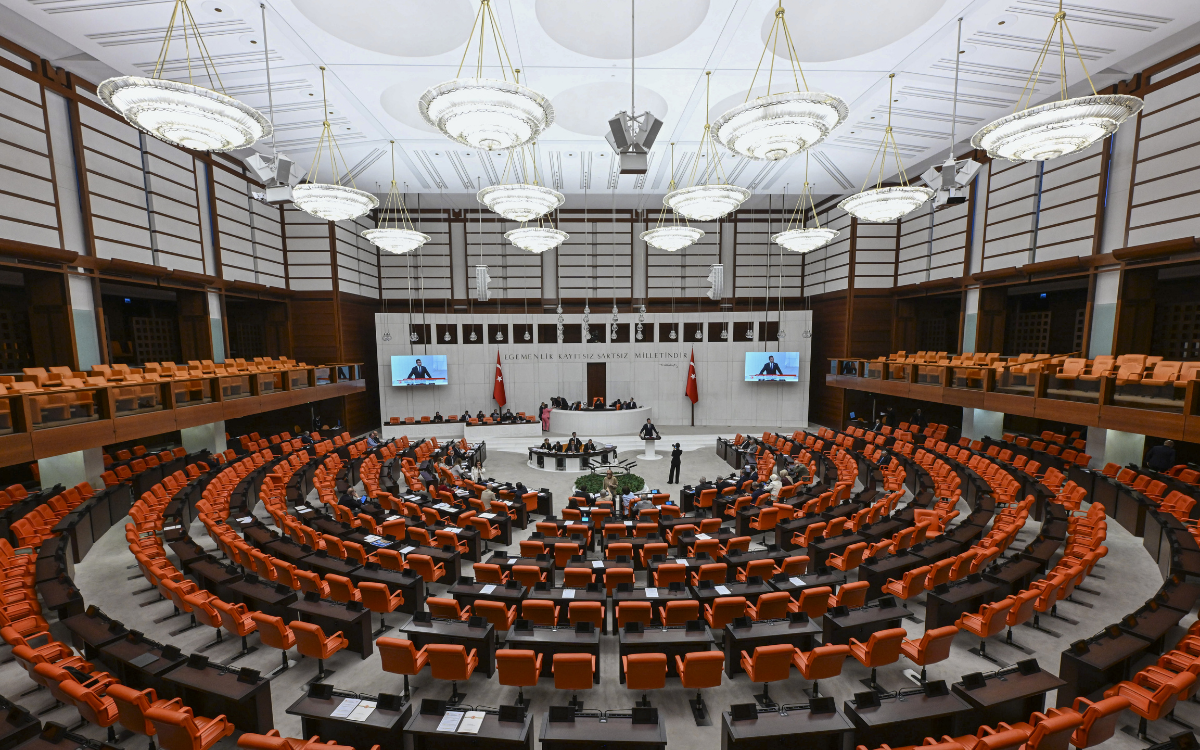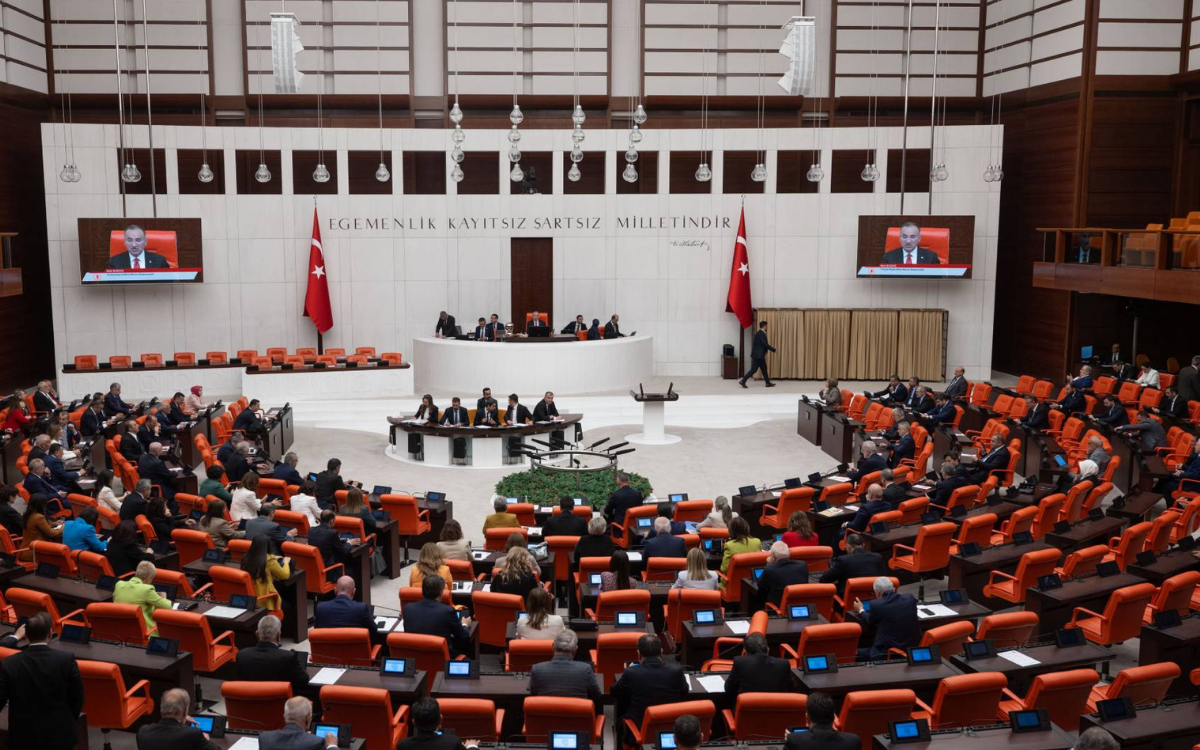









Parliament approved legislation late yesterday allowing legal proceedings and sentences in cases involving the Kurdistan Workers’ Party (PKK) to be suspended for five or 10 years, marking the first legislative step in the Kurdish peace initiative that began in 2024.
The bill, titled “Strengthening National Solidarity and Social Integration,” passed with 467 votes in favor, 87 against and seven abstentions after about 12 hours of debate.
The provisions will take effect on the condition that the National Security Council (MGK) confirms the PKK has laid down its arms. When this confirmation is complete, the group's designation as a "terrorist organization" will be removed.
It excludes the "intentional killings" committed as part of PKK activities, as well as offenses carrying an aggravated life sentence which were committed before Jun 1, 2005. This means the group's leader, Abdullah Öcalan, as well as many others, are not within the scope of the law.
DEM urges swift implementation
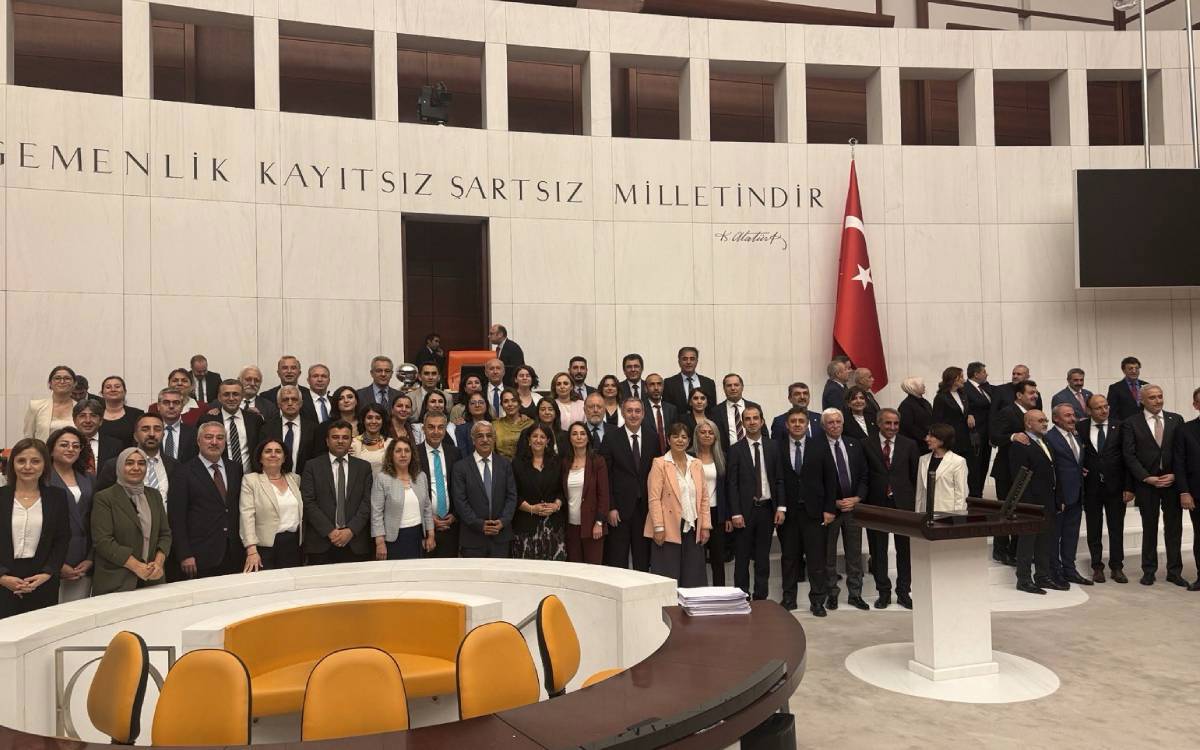
Pro-Kurdish DEM Party co-chair Tülay Hatimoğulları said the party supported the law as a first step and called for its swift implementation:
“We see this law as establishing a framework and as a first step toward achieving peace in these lands in the period ahead. That is why we supported it.
“The concrete steps to be taken after this law are crucial. For the law to be implemented, it is just as important and vital as its passage that the National Security Council (MGK) prepare its report and publish it in the Official Gazette, and that the law thereby enter into force.
"We expect parliament to take stronger steps in the first days after it reconvenes, both through concrete measures toward Turkey’s democratization and through new legislation.”
Criticism from PKK
A day before the bill was submitted to parliament, the PKK issued a statement under the name “Movement Leadership,” which its leadership has used since announcing the group’s dissolution, criticizing what it described as shortcomings in the legislation:
“This law contains serious flaws and shortcomings. The recommendations on democratization and resolving the Kurdish issue contained in the report prepared by the parliamentary commission have not been reflected in this law. In this respect, it has failed to fully achieve its purpose. Referring only to disarmament without using the term Kurdish indicates that the issue has not been addressed in a comprehensive manner.”
The statement noted that nationalist leader Devlet Bahçeli, a key government ally who initiated the process in 2024, had proposed a role for Öcalan as “Coordinator of the Peace Process and Political Transition,” but that this was also absent from the bill:
“The framework law does not specify the role Rêber Apo will play in this process. It merely states, in vague terms, that the board to be established under the chairmanship of the vice president may form subcommittees. Unless Rêber Apo is able to live and work freely and serve as the coordinator of this board, many of the provisions set out in the law will not be realized.”
The statement also argued that the PKK’s disarmament could not take place without the possibility of engaging in democratic politics:
“The guerrillas are being asked to disarm and return. If, upon returning to Turkey, they cannot engage in democratic politics based on freedom of expression and association, and if they are prosecuted and imprisoned because of what they say and the organizations they establish, then not only will the guerrillas be unable to come down from the mountains, but even politicians who were forced to go to Europe will be unable to return. This is only one concrete example. There are, of course, many other dimensions to democratization and resolving the Kurdish issue.”
Vote breakdown
Deputies from the ruling Justice and Development Party (AKP) cast 258 votes in favor, while the Nationalist Movement Party (MHP), its ally, contributed 44. The pro-Kurdish Peoples’ Equality and Democracy (DEM) Party cast 55 votes in favor, the New Path (Yeni Yol) Party 16 and the Workers’ Party of Turkey (TİP) three.
The Republican People’s Party (CHP) cast 29 votes in favor and two against. All 29 lawmakers from the nationalist Good (İYİ) Party who took part in the vote opposed the bill.
Deputies from the main opposition New (Yeni) Party, a slinter group from the CHP, cast 35 votes in favor and 54 against. The party leadership said before the vote that their MPs were free to make their decisions.
Parliament went into recess following the vote and will reconvene on Oct 1.
Background
The peace initiative to end the fource-decade armed conflict began in Oct 2024, when MHP leader Devlet Bahçeli proposed that jailed PKK leader Abdullah Öcalan be granted the “right to hope” in exchange for the group laying down its arms. The newly adopted law does not include any provision concerning the right to hope.
Öcalan called on the PKK to disarm in Feb 2025. The group later convened a congress in May 2025 and decided to dissolve itself. A symbolic disarmament ceremony was held two months after the congress.
A parliamentary committee established to prepare the legislative framework for the initiative spent the second half of the year working on the issue. Civil society groups, including the Saturday Mothers/People, as well as academics and journalists, were heard by the committee.
In January, the Syrian Democratic Forces (SDF), seen by Turkey as an extension of the PKK in Syria, made an integration deal with the Turkey-backed Damascus government. As the integration nears comletion, the SDF and the People's Defense Units (YPG) are expected to declare their dissolution. (VK)