








Newroz, a festival of deep meaning for the Kurdish people and the peoples of Mesopotamia, was marked once again this year as a symbol of resistance and hope. For Kurds, Newroz represents standing up to oppression, light against darkness, dignity against domination, and freedom in the face of subjugation. Rooted in the myth of Kawa the Blacksmith overthrowing the tyrant Dehaq, Newroz is seen as a new day — a day of liberation and victory against tyranny.
From the legendary Kawa to contemporary figures like Mazlum Doğan, who died in prison on Newroz in 1982, Newroz has become a powerful emblem of resistance for Kurds. In the Kurdish freedom struggle, many young people have turned their bodies into the fire of Newroz, becoming lasting symbols of defiance within their communities.
This year, Kurds celebrated Newroz during a politically significant period. Once again, they confronted the dominant forces that challenge their status and identity, renewing their resolve to push back with a spirit of resistance. Under the banners of “Newroz of Freedom and Democratic Unity” and “Newroz of Freedom and Democracy,” celebrations took place in villages, towns, and cities across all four parts of Kurdistan as well as in the diaspora. Over several days, the Kurdish people filled squares with vibrant displays of color and sound.
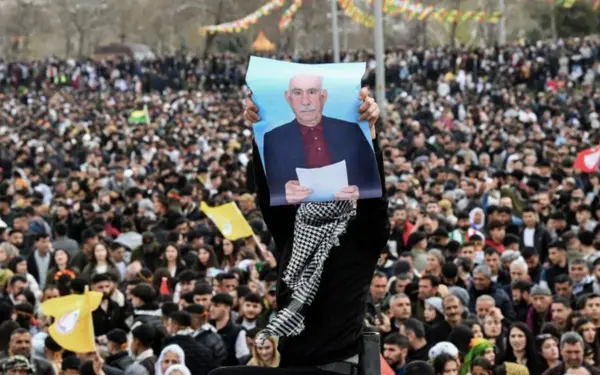
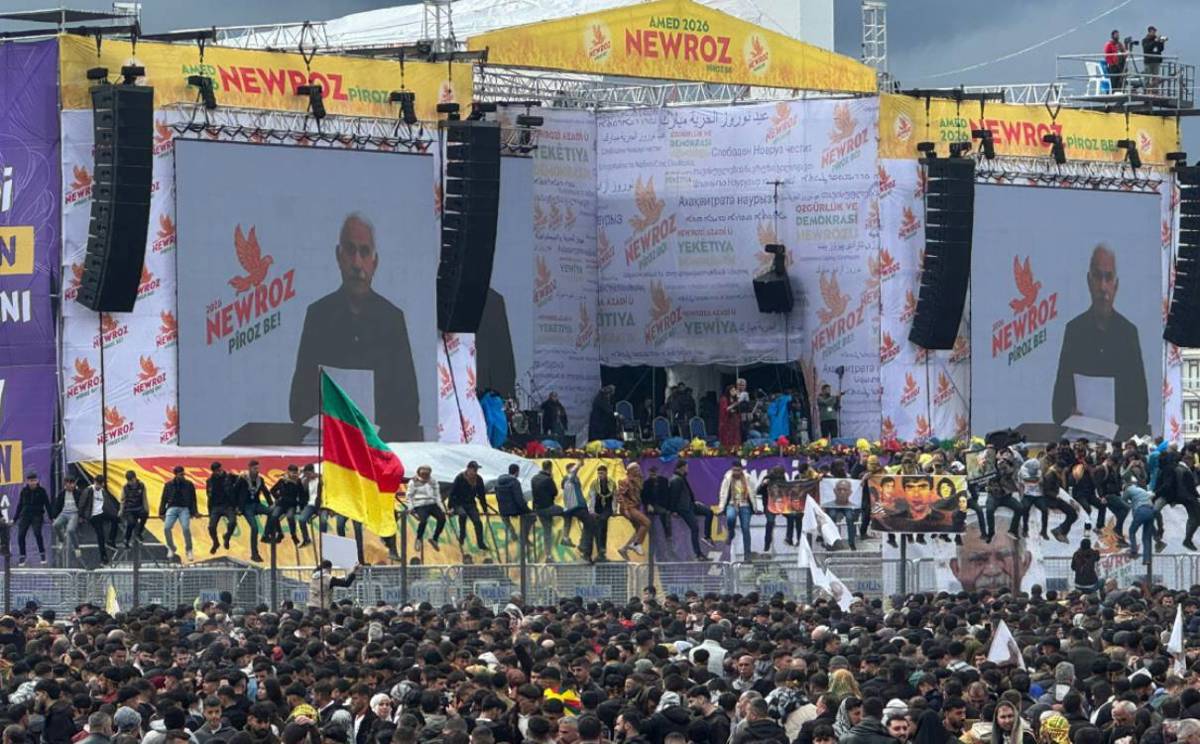
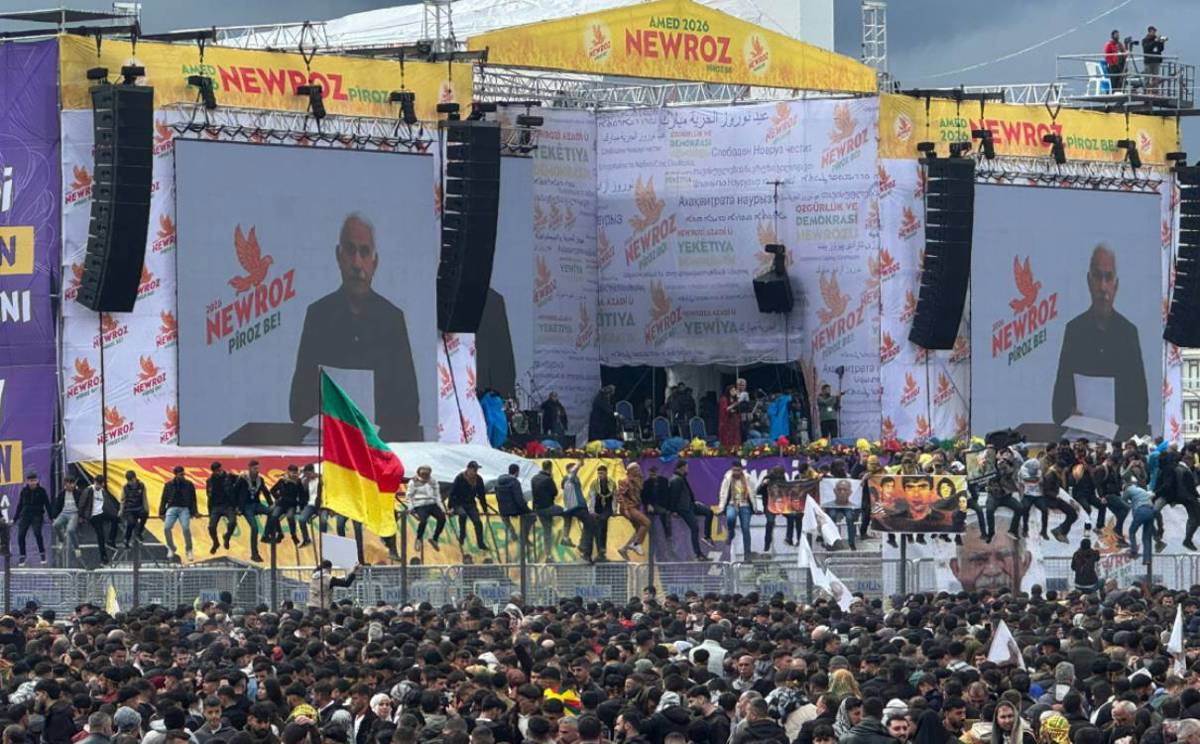
One of the largest and most symbolic celebrations took place in the city of Diyarbakır (Amed). Despite cold and rainy weather, thousands gathered at the Newroz square, dressed in traditional clothes and waving colorful flags. From children to the elderly, people of all ages joined the festivities.
The official program began at 10.00 am local time (GMT+3) with a performance by a kemenche music group. The Newroz organizing committee then greeted the crowd. Speeches followed from prominent Kurdish politicians and activists including Ayla Akat Ata from the Free Women’s Movement (TJA), Free Party chair Ayetullah Aşti, Çetîn Arkaş, Peoples' Equality and Democracy (DEM) Party co-chair Tuncer Bakırhan, and Kurdish politician Leyla Zana. Speakers emphasized the significance of Newroz and its role in Kurdish collective memory and struggle.
A message from Abdullah Öcalan, the imprisoned leader of the Kurdistan Workers’ Party (PKK), was also read aloud. The Kurdish version of the message was delivered by Veysî Aktaş, who was recently held in İmralı Prison alongside Öcalan. The Turkish version was read by TJA activist Medya Aslan. In the message, Öcalan highlighted the symbolic importance of Newroz and its connection to the vision of “Peace and Democratic Society.”
“I celebrate the holy month of Ramadan with our people and hope that the spirit of the holiday strengthens peace and unity,” Öcalan stated. “This is the first time Newroz 2026 is being celebrated by our people in a spirit of democratic integration, peace, and unity. I fully support this spirit and determination, and I hope that this Newroz, which rightfully deserves to be celebrated as a ‘New Day,’ becomes a foundation for a powerful march in the years ahead. I wish peace for all our people. I send you all my love.”
The crowd responded with applause, chants, and emotional reactions.
Messages of support were also sent by İlham Ehmed, co-chair of the Executive Committee of the Autonomous Administration's Foreign Relations Department, as well as Nechirvan Barzani, President of the Kurdistan Region of Iraq, and Bafel Talabani, leader of the Patriotic Union of Kurdistan (PUK). Their messages extended Newroz greetings to the Kurdish people, emphasizing themes of peace, unity, and freedom.
The celebration also featured musical performances. Artists such as Agirê Jiyan and Zinar Sozdar received a particularly warm welcome from the crowd. Despite the cold, participants danced traditional Kurdish dances in front of the stage, filling the square with a lively and determined energy. (RB/VK)