












The Constitutional Court has annulled a legal provision that allows for the payment of indefinite alimony to a divorced spouse.
The Antalya 12th Family Court had applied to the high court after a case it heard last year, requesting the annullment of the provision regarding poverty alimony in Article 175 of the Turkish Civil Code.
The objection requested the annulment of the phrase "...indefinitely..." in the first paragraph of the article, which states, "The party who will fall into poverty due to divorce may request alimony from the other party indefinitely in proportion to their financial power for their livelihood, provided that their fault is not heavier."
The Constitutional Court general assembly discussed the application today and reached a verdict. It decided that the annulment will take effect nine months after the reasoned decision is published, which will be written later. During this nine-month period, the parliament will prepare a new regulation to replace the annulled provision.
The high court had previously rejected a similar application in 2012.
Justice minister welcomes decision
Justice Minister Akın Gürlek welcomed the decision in a statement on social media, saying that the government was already working to amend provisions regarding divorces as part of an upcoming judicial reform package:
“Establishing a balanced and fair model that would both protect the rights of the parties involved in post-divorce proceedings and avoid undermining social harmony and the integrity of the family institution was one of our top priorities.
“In response to the high demand from our citizens and in line with practical applications on the ground, this issue constituted one of the core topics of the Judicial Package, to which we had already contributed with great care during its preparation.
“In this context, we consider the Constitutional Court’s decision to annul the provision on ‘perpetual alimony’ in the Turkish Civil Code to be of the utmost importance in the name of justice and fairness.
“Taking into account the legal process established by the Constitutional Court, we will submit a new legal regulation—one that does not subject either party to an unfair lifelong obligation and is in line with fairness—to the esteemed Grand National Assembly for its consideration.”
Turkey's family minister voices opposition to 'indefinite' alimony payments
'Contrary to principle of equality'
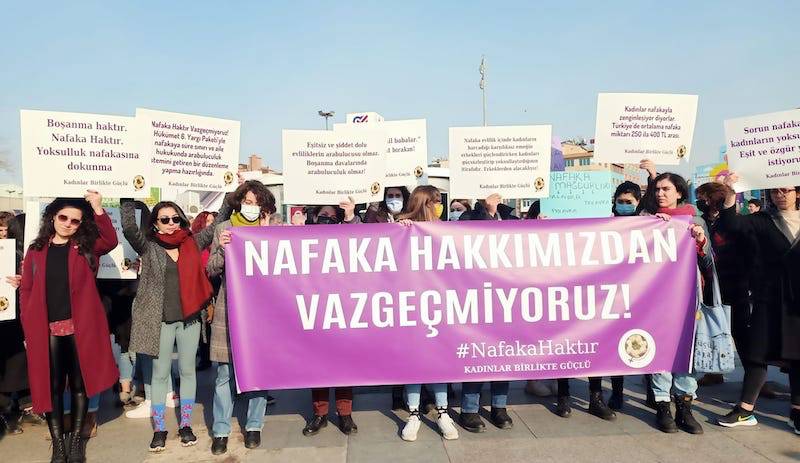
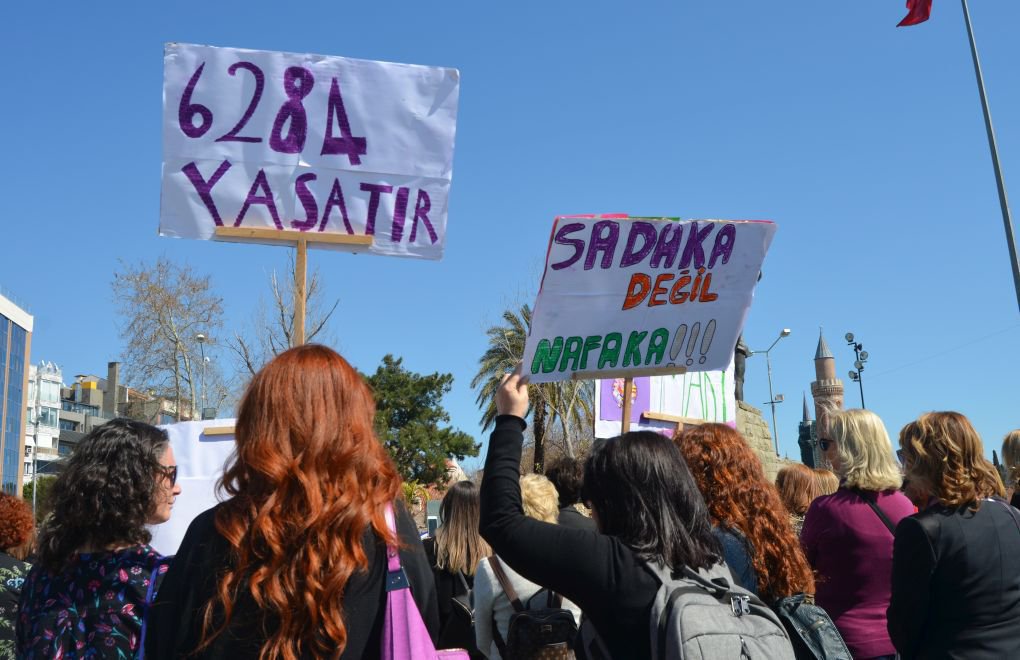
Women's organizations criticized the decision in statements on social media, arguing that it is against gender equality.
The Women's Platform for Equality (EŞİK) said the decisison was unacceptable. "While women in Turkey are still struggling with unequal employment conditions, unpaid care labor, and deepening poverty, the solution is not to narrow women’s existing rights, but to eliminate inequalities."
Turkey's high inflation erodes alimony payments, leaving women in financial hardship
The İstanbul Bar Association Women's Rights Center asserted that the decision violated the Constitution. "The annulment decision regarding poverty alimony is contrary to the principle of equality regulated in Article 10 of the Constitution. We are not giving up on our right to alimony."
The Women's Assembly of the Peoples’ Equality and Democracy (DEM) Party, the second-largest opposition party argued that the verdict lacked legal basis, adding that limiting the right to alimony could drag women into poverty and leave them in a cycle of violence.
'Alimony right is not indefinite under all conditions'
Legal expert Nazan Moroğlu evaluated the decision, noting that the public perception does not reflect reality as alimony was already not indefinite under all conditions.
"Alimony automatically ends if one of the spouses dies or if the alimony creditor remarries. It can also be lifted by a court decision in cases of living de facto as married, leading a dishonorable life, or financially leaving the state of poverty," Moroğlu said.

LAWYERS PASİNLİ & AKKAYA
Legal amendment ‘aims to prevent divorce’ by limiting right to alimony
Arguing that the problems experienced in short-term marriages stem from practice rather than the law, Moroğlu said, "In such cases, solutions like lump-sum payments are possible."
Moroğlu also noted that alimony is not a right exclusive to women, and men can also benefit from this right.
(EMK/VK)

