







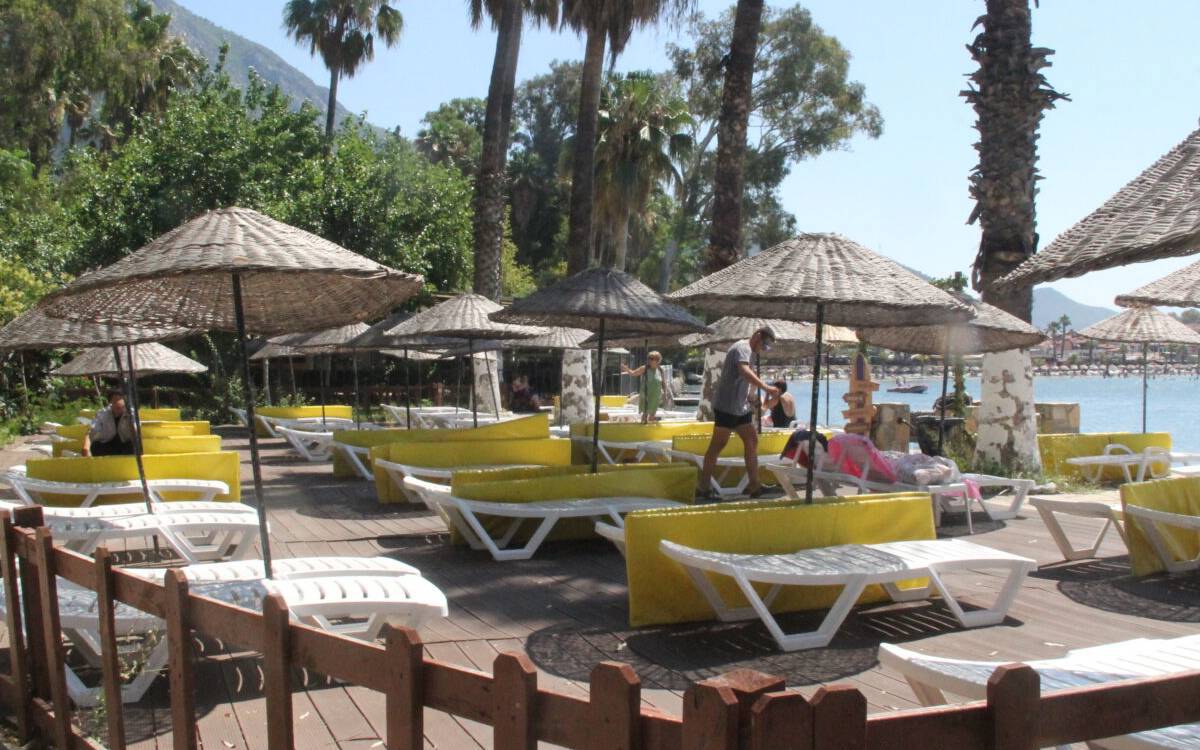



Activists in the resort city of Muğla have recently filed multiple criminal complaints over coastal encroachments as a campaign against restrictions on public beach access expands along Turkey’s Aegean and Mediterranean coasts.
Serdar Denktaş, a member of the Gökova Ecology Assembly in Muğla, told bianet that the commercialization of coastal areas is alienating residents from their own communities by turning beaches into exclusive spaces accessible only for higher-income people:
“We feel and experience our shared living spaces shrinking by the day. Nearly all the coastal areas that we used freely for years, and whose status as public spaces was supposedly protected by the Constitution and the Coastal Law, have now been privatized. We can no longer use these places, and we feel increasingly alienated from the town where we live.”
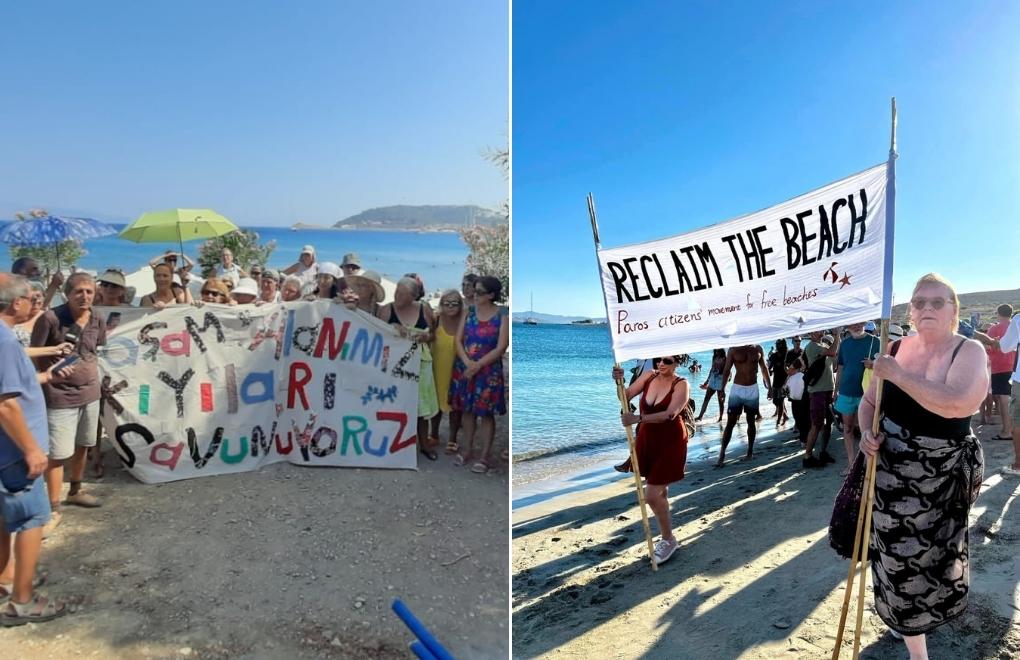
Coastal preservation movements rise in Greece, Turkey against commercialization
Criminal complaints
Denktaş noted that the years-long campaign in Akyaka had achieved tangible results. He recalled that activists had been acquitted in previous trials and had reopened occupied areas to the public:
“At the Akyaka Forest Camp, an area of the coast that had been fenced off and turned into a ‘beach club’ was returned to public use by a court ruling after our campaign. The ‘Forest Cafe’ established by the Ula Municipality in the Forest Camp area, along with the surrounding fences, was removed. Two lawsuits filed by Akyaka residents against unlawful occupations in the Forest Camp are still ongoing.
“We filed 17 separate criminal complaints with the Chief Public Prosecutor’s Office over coastal occupations we identified at several locations, including Kadın Azmağı, Akçapınar Beach, Akyaka Forest Camp and Akyaka Public Beach. We have also launched a new effort concerning the occupations in the Maden Pier area.”
Protesters face harassment
Denktaş cleimd that business owners resorted to pressure and provocation during protests, using people with ties to them disguised as customers:
“Business owners generally claim that their customers are disturbed by our protests and that we are disrupting their peace. For example, people who lie on sun loungers pretending to be customers, but who are actually connected to the business owners, may harass protesters.”
Abuse of public use quotas
Denktaş said exceptions in coastal regulations and the 50 percent public-use quota legitimized commercialization. He listed their demands for a lasting solution:
“Under the Coastal Law, the public interest must be the guiding principle in all arrangements concerning the coast, and coastal areas must be made fully available for free public use. Municipalities must provide basic facilities such as showers, toilets and shaded areas free of charge.
"Sun loungers and businesses should operate not on the shoreline, but at their licensed premises farther inland. Allowing 50 percent of the coast to remain freely accessible means taking the other 50 percent away from the public and commercializing it. The entire coastline should be freely accessible.”
(FY/VK)