











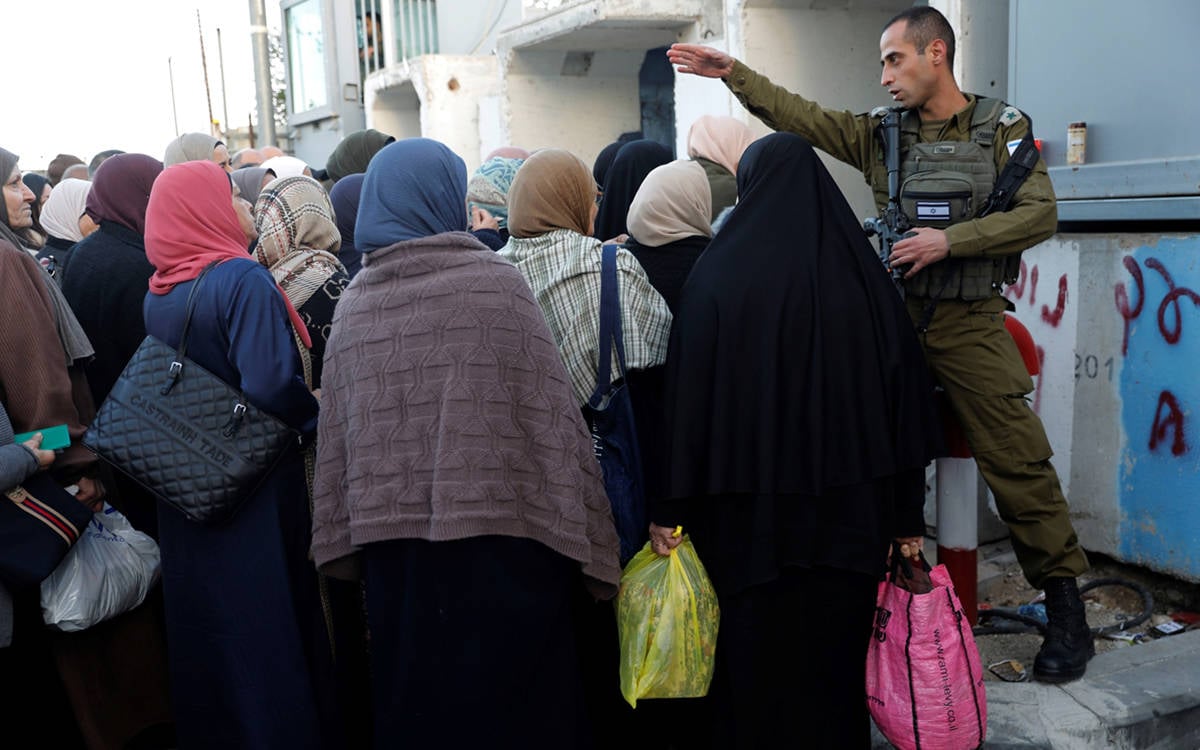



The Israeli presence in the West Bank, which the International Court of Justice (ICJ) has described as a "military occupation continuing since 1967", has today transformed daily life for Palestinians into a life of severely restricted freedom of movement, surrounded by checkpoints and raids. Nahel al-Kubari, a 31-year-old living in Ramallah, describes her experiences by saying that "There is no mercy or humanity, we are not treated as human beings".
The West Bank was divided on paper into A, B, and C zones with the 1993 and 1995 Oslo Agreements. According to these agreements, Zone A is entirely under Palestinian administrative and security control. In Zone B, administrative control is Palestinian, while "security" is Israeli. Zone C is entirely under Israeli control.
However, since the 2020s, the West Bank has become a region where almost every street is closed off to the outside. According to data from the United Nations Office for the Coordination of Humanitarian Affairs (OCHA), in 2026, the number of permanent and temporary checkpoints restricting the movement of Palestinians has exceeded 900.
New illegal settlement plan
On Jul 2, the Israeli cabinet approved a plan to establish 13 new settlements in the central occupied West Bank. These settlements are planned for the Binyamin area, one of the largest settlement blocs in the West Bank. This area lies on Route 60, a central north-south axis connecting Palestinian cities such as Nablus, Ramallah, and Bethlehem, as well as important Israeli settlements.
Route 60 is one of the key components of the highway network built by Israel to allow Jewish settlers living in illegal settlements in the West Bank to access Israel or other settlements directly without passing through Palestinian cities. Palestinians, however, face checkpoints and obstacles when trying to use this road. According to OCHA data, there are more than 120 such obstacles on Palestinian access roads.
The Binyamin Plan came to light following reports that settler movements were preparing to target Area A, which is entirely under Palestinian control. The Jerusalem Governorate stated that the plan aims to tighten Israeli control over strategic hills and further restrict Palestinian territorial integrity. In its statement, the Governorate said the plan “aims to create new geographical realities on the ground,” warning that this expansion “would undermine the possibility of establishing a geographically contiguous Palestinian state”.
‘Why are you leaving the city?’
Nahel al-Kubari, a 31-year-old resident of Ramallah, says living in the city doesn’t make her feel safe. She explains that Israeli forces can enter the city suddenly and without announcement, causing her to feel constant panic and fear.
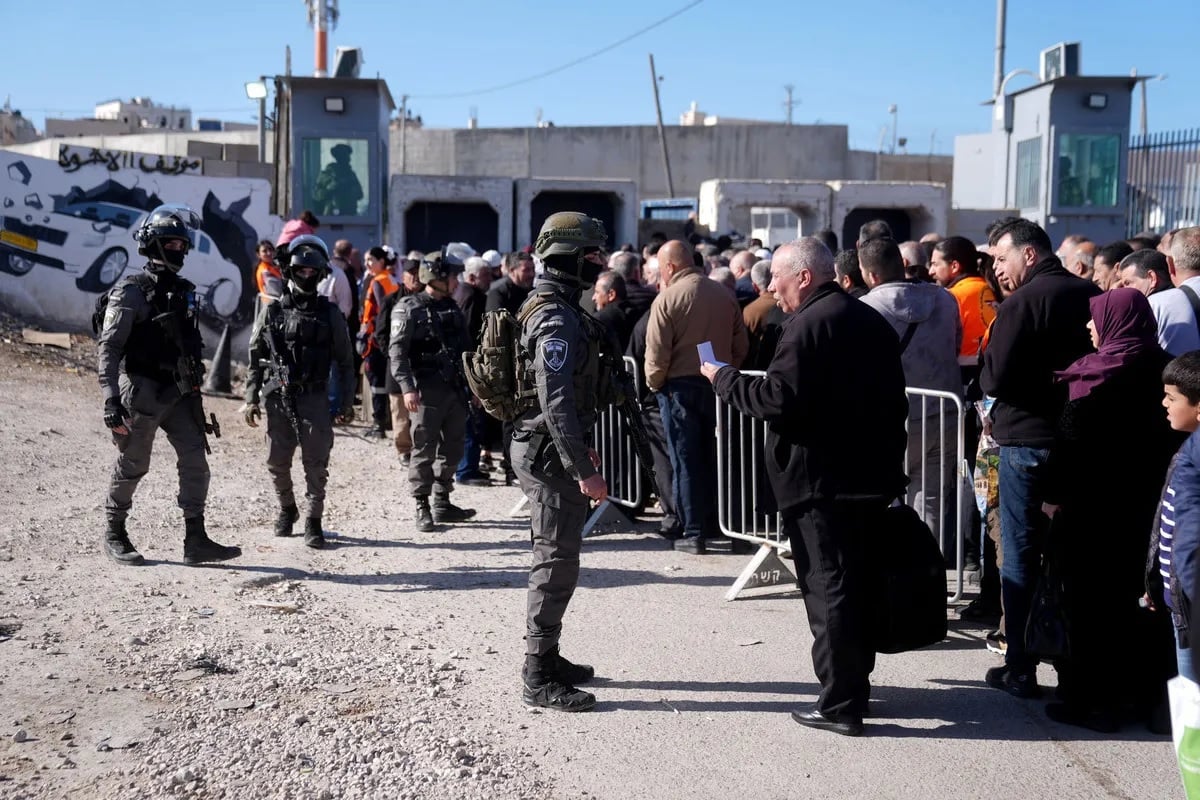
According to al-Kubari, today, a Palestinian travelling from Ramallah to Nablus means passing through countless checkpoints and waiting for hours. Border controls, settler attacks, and home raids mean that Palestinians living in the West Bank have to live their daily lives with the constant thought of "something will happen".
When we want to visit our relatives outside the city, it's not always possible because of the countless checkpoints. If we have to go outside of the city, we are subjected to various searches and harassment, and the question is often, "Why are you going out?" There are numerous checkpoints in every area. For example, I live in Ramallah, and my sister lives in Jerusalem. When I want to go to her, I have to pass through more than seven checkpoints and wait for hours. Sometimes, money is stolen from us at the checkpoints, and we are beaten and made to stand for long hours at each one. –Nahel el-Kubari
According to OCHA data, by 2026, the number of permanent and temporary checkpoints restricting the freedom of movement of Palestinians in the West Bank will exceed 900. There are also more than 120 obstacles on Palestinian access roads. Between January 2025 and May 2026, 1029 people in Ramallah were displaced due to violence and access restrictions imposed by Israeli settlers.
‘Salaries are not a match for the quality of work’
Since Oct 7, 2023, the West Bank has been experiencing a deep and long-lasting economic downturn due to increasing movement and access restrictions, a decrease in customs revenue transfers from the Israeli government, and the cancellation of work permits for more than 170,000 Palestinian workers employed in Israel.
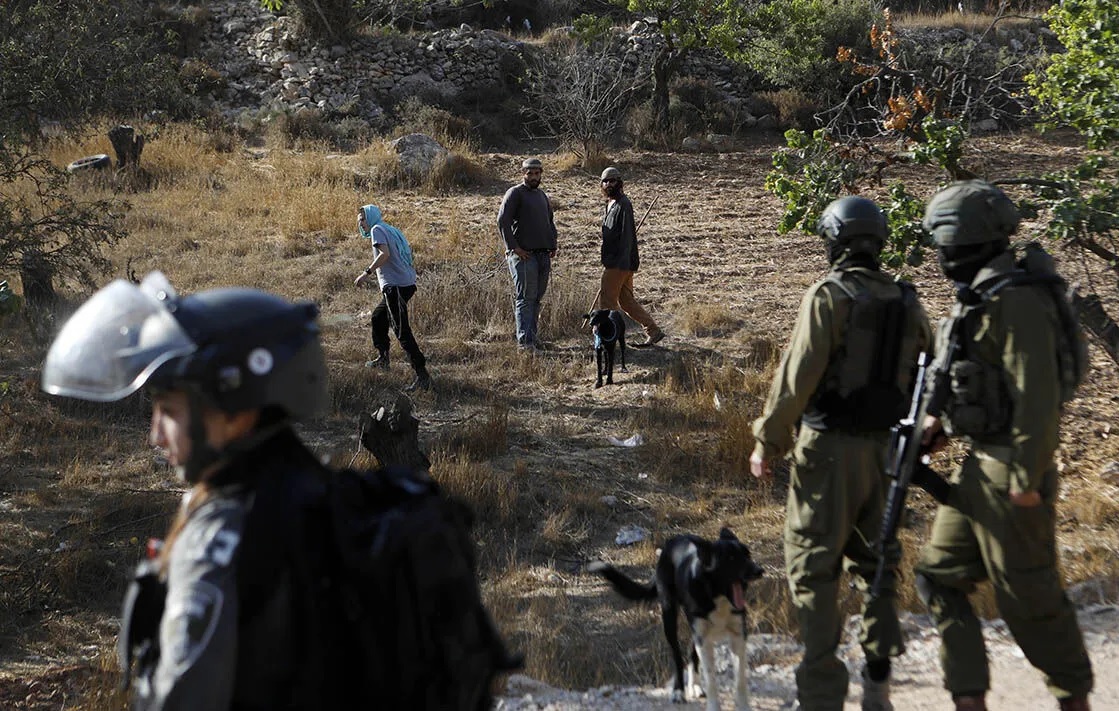
Israeli military raids and settler attacks also intensify the economic collapse. According to a report by the Palestinian Institute for Economic Policy Research (MAS), 18.7% of businesses have suffered direct physical damage. There have been significant declines in income, employment, and production.
Nahel al-Kubari says that the cost of living has increased due to the war, the value of money has decreased, and earning a living is becoming increasingly difficult.
There are very few good job opportunities, and if there are any, the salaries are not commensurate with the nature of the work and the effort required. Another problem is the closure of city hospitals covered by health insurance. An open-ended strike has been declared due to insufficient external funding and doctors not receiving their salaries. As a result, people with limited financial means cannot receive treatment.. –Nahel el-Kubari
According to the World Health Organization (WHO), the health system is experiencing staff shortages due to unpaid salaries. Stock levels of essential supplies are also nearing zero. According to Health Ministry data, 16% of essential medicines, 14% of medical supplies, and 9% of laboratory equipment are at zero stock.
“Merhamet veya insanlığa dair hiçbir şey yok”
Nahel el-Kubari, stating that Palestinians in the West Bank are subjected to strange treatments, says that what is happening targets human dignity:
There is no mercy or humanity; we are not treated as human beings.
Al-Kubari, stating that she wishes for the end of Israel's occupation of the West Bank and the ability to travel freely. She says, “I love my country deeply and I long to live and settle there. Only after the occupation ends will I consider visiting all the beautiful places in my homeland, such as Jaffa, Acre, and Jerusalem as we are currently not allowed to reach them. This is my final wish.”
Settler violence and displacement
According to OCHA data, from the beginning of 2026 to June 29, more than 2,300 Palestinians were displaced due to Israeli settler attacks. More than 1,000 of these people are children.
Between January 2025 and May 2026, a total of 40,702 Palestinians were displaced in the West Bank. Approximately 15,190 of these were children. 3,806 of these displacements were linked to settler violence and access restrictions, while 2,824 were related to lack of permits, punitive measures, and other demolitions.
During the same period, 2,803 settler attacks resulting in death or property damage were recorded in the West Bank. At least 295 Palestinians, including 67 children, were killed in these attacks. 5,255 Palestinians were injured, 862 of whom were children.
Meanwhile, according to official Palestinian data, since October 8, 2023, 1,173 Palestinians have been killed and 12,666 injured as a result of Israel's military escalation and settler violence in the West Bank. Nearly 23,000 Palestinians were detained during the same period.
(ABI/VC/VK)


