









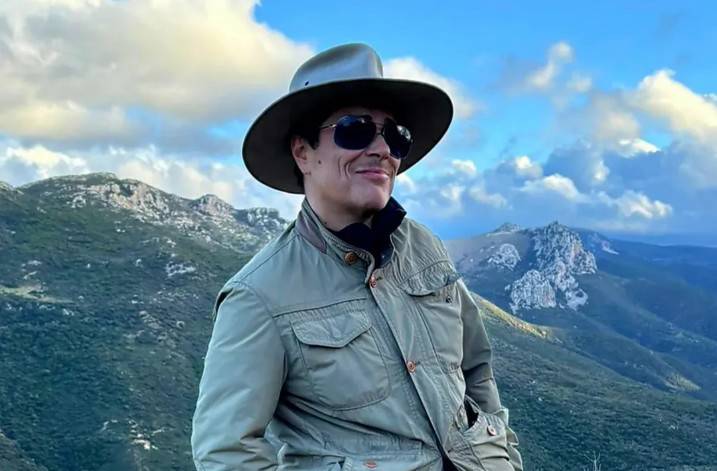



Alexey Rûyan Aydın, an academic, lawyer, author and LGBTI+ rights advocate, has died at the age of 56.
Aydın, a trans man, dedicated his academic and legal career to advancing LGBTI+ rights.
After graduating from Ankara University’s Faculty of Law in 1990, he pursued master’s studies at Ankara University and the University of Milan in Italy. He completed his doctorate in penal law at the University of Freiburg in Germany.
During his career, he worked as a visiting professor, researcher and fellow at several universities abroad.
Aydın spent many years at Hacettepe University’s Faculty of Law after he began lecturing there when the faclty was established in 2010. He was a founder of the university’s Health Law Center.
He also wrote the “Hacettepe Constitution Draft,” which was submitted to parliament’s Constitutional Commission during discussions on drafting a new constitution in Turkey.
As an associate professor and practicing lawyer, Aydın worked primarily in penal law and human rights.
He participated in national and international projects on penal law reform, freedom of expression, women’s rights, sexual rights and children’s rights. He also previously served on the Venice Commission.
Aydın was a a founder and a former chair of the Ankara Bar Association’s LGBTI+ Rights Center and an individual member of Transgender Europe.
He was also a member of the European Democratic Lawyers association and the Association for the Protection of Animals in Need. He was among the founding members of the Translators Association (ÇEVBİR).
He was a a founder and a former chair of the Ankara Bar Association’s LGBTI+ Rights Center.
He was forced to leave Hacettepe University’s Faculty of Law in 2021, after experiencing workplace harassment because of his gender identity and political views.
In an interview with bianet at the time, Aydın said the treatment had caused serious personal harm:
"I was forced to experience feelings of worthlessness. None of my achievements are mentioned. My meetings and publications are deliberately ignored.
"Even my resume was removed from the faculty’s website. I believe the reason for this is the LGBTIQ+ studies in my resume. The video recordings of the online courses I taught during the pandemic were deleted from the system."
Aydın advocated for stronger protections against discrimination against LGBTI+s within the legal profession. In an interview with KaosGL, he said regulations governing lawyers should explicitly address discrimination based on gender identity and sexual orientation:
“I believe that regulations regarding the prevention of LGBTQI+ discrimination should also be incorporated into the regulations governing the legal profession. Legal and administrative steps must be taken to provide safeguards for our colleagues who differ in terms of gender identity and sexual orientation.
"Including LGBTQI+ as a course in legal clerkship training is an absolute necessity ... There should be LGBTQI+ Rights Centers and Commissions not only in Ankara, İzmir, and Diyarbakır, but in all bar associations; these should convene at the national level when necessary and organize legal initiatives and reform activities.
"Language is also extremely important when it comes to LGBTQI+ issues. Just as women have begun to challenge masculine language, we must begin to challenge heteronormative and cisnormative language within the profession. Centers like ours are, in fact, the units that LGBTQI+ professionals can turn to for help with the issues they face in offices and at public and private institutions.
"We must also increase our efforts regarding the rights of LGBTQI+ lawyers. We say we support individuals—that is, citizens—but at its core, we are also supporting one another. We are “us” within the Bar Association; we have demonstrated this. “We are a source of solidarity for LGBTQI+ lawyers at the Ankara Bar Association.”
Alongside his work in law and academia, Aydın was active in literature. He wrote two novels, Eski Sinagog Meydanı and Ortaklar ve Hissedarlar. (VK)

