









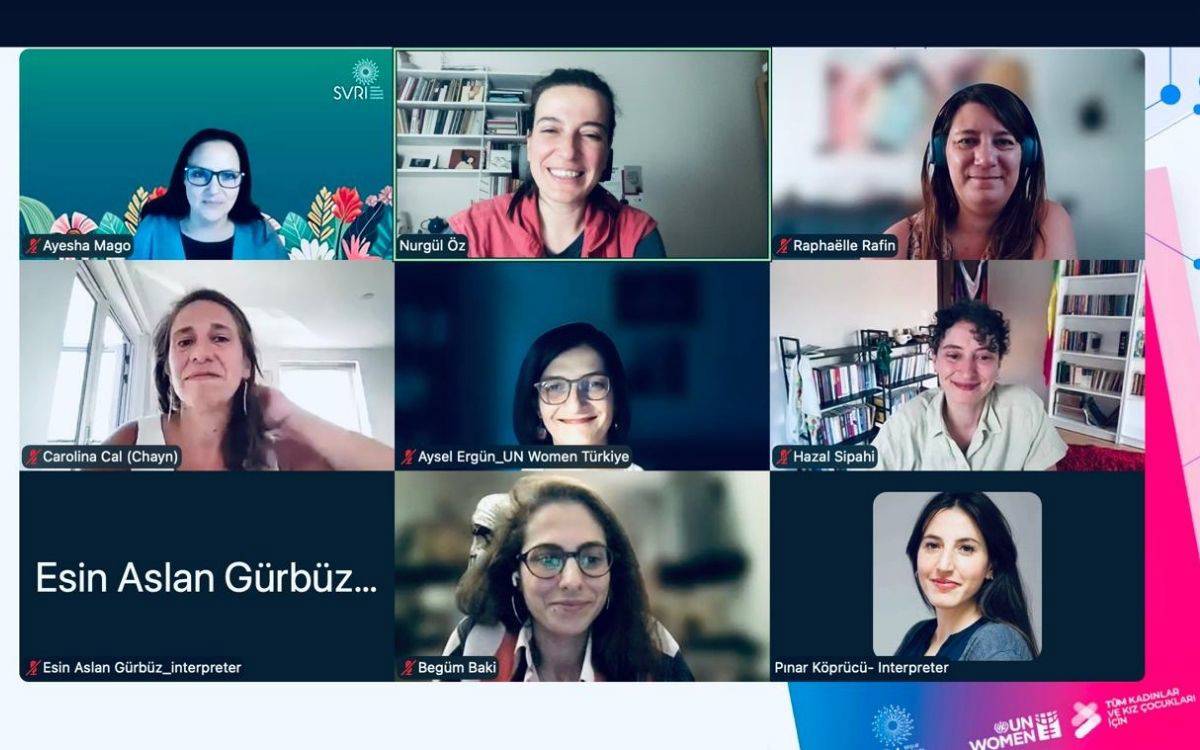



The Association for Struggle against Sexual Violence, UN Women, and the Sexual Violence Research Initiative (SVRI) launched the Turkish translation of a landmark report on technology-facilitated violence. The online event brought together experts from Turkey and abroad to discuss emerging forms of digital gender-based violence.
Rapidly evolving forms of abuse include AI-generated sexual content, image-based exploitation, online harassment, digital stalking, and doxxing. As digital technologies become part of daily life, online violence takes on new dimensions. This shift highlights the urgent need for stronger legal frameworks and survivor-centered support.
In response, the association translated the UN Women and SVRI report, "Global Trends to Prevent and Respond to Technology-Facilitated Violence Against Women and Girls: A Compendium of Emerging Practices." The Turkish edition was introduced during the webinar.
Webinar organizer Nurgül Öz said the report was chosen because it offers a comprehensive global overview. It brings together emerging research and promising policy practices from different regions.
Supported by the German Consulate General in İstanbul, the event convened international researchers and advocates. Discussions focused on artificial intelligence risks, international policy developments, and survivor-centered prevention models.
'Violence itself is not new, its tools are changing'
Hazal Sipahi, a board member of the Association for Struggle Against Sexual Violence, said digital technologies do not change the nature of violence. Instead, they change how it is expressed and perpetrated.
"Sexual violence is changing form alongside technology and finding new tools," Sipahi said. "Today, the digital realm is not a virtual world separate from the real world, it is real life itself. The impact is also real."
Sipahi stressed that online abuse is not just a series of isolated incidents. She noted that it reflects and reinforces existing gender inequalities, making digital platforms another arena where violence is reproduced.
'Knowledge production and partnerships are of critical importance'
Aysel Ergün, program analyst at UN Women Turkey, highlighted efforts to strengthen the local conceptual framework. She noted that UN Women Turkey worked with civil society to develop common terminology and launch public awareness campaigns.
Ergün emphasized that online violence directly affects the safe participation of women in digital life. This makes joint knowledge production and cross-sector collaboration increasingly important.
"We have created a conceptual network for digital violence," Ergün said. "This is an ongoing effort because as technology evolves, the concepts we use will also change."
She added that combining international knowledge with local experience creates valuable opportunities for evidence-based policymaking and civil society capacity building.
'Evidence-based policies must be developed'
Raphaëlle Rafin, policy specialist with UN Women in New York, said rapid digital evolution has outpaced the response capabilities of many countries.
"To ensure that prevention mechanisms keep pace, we need reliable data collection and knowledge sharing," Rafin said. "Half of all women worldwide experience digital violence. It must be addressed as a global policy issue."
She noted that the rapid expansion of artificial intelligence underscores the need for updated legal frameworks and coordinated international standards.
'A solution is not possible without global solidarity'
Ayesha Mago, global advocacy director at SVRI, said technology-facilitated gender-based violence requires a coordinated international response.
Mago noted that research from the Global South is often underrepresented. She said translating reports into different languages helps ensure knowledge justice. She added that the Turkish edition will serve as a valuable resource for organizations in Turkey.
"The compilation features best practices in prevention, advocacy, and launching movements," Mago said. "International networks that bring together researchers and feminist movements play a decisive role in developing effective policies."
She pointed to initiatives from Africa and Latin America, as well as SVRI's international network promoting collaboration among researchers and practitioners.
'Technology can also be a tool for healing'
Carolina Cal, support services facilitator at Chayn, highlighted how technology can support survivors when designed with a trauma-informed approach. Presenting the Bloom platform, she emphasized its positive role in recovery.
"When designed properly, technology enables survivors to access reliable information and continue healing at their own pace," Cal said.
Cal noted that these digital tools help bridge critical gaps in support, adding that the Bloom platform will soon be available in Turkish.
Building a collective response in Turkey
The webinar concluded with discussions on AI-assisted violence and ethical research methods. Participants underscored the importance of cross-sector collaboration and international knowledge exchange in addressing these threats.
The Turkish translation of the report will serve as a reference for lawyers, researchers, and civil society organizations. It aims to support common terminology and evidence-informed policies in Turkey.
The Association for Struggle Against Sexual Violence said it will continue working to bring international expertise to Turkey, strengthening collaboration among civil society, academia, and policymakers.
(VK)

